
Why 'Processed' Isn't a Single Category
When nutrition conversations warn against processed food, they rarely mean that frozen peas and cheese puffs deserve equal concern. The word processed technically applies to any food altered from its original state - which covers boiling, freezing, fermenting, milling, and canning alongside deep-frying and flavor engineering. Understanding the difference is the first step toward less anxious, more informed eating.
The NOVA classification system, developed by researchers at the University of São Paulo, organizes foods into four groups based on the extent and purpose of processing: unprocessed or minimally processed, processed culinary ingredients, processed foods, and ultra-processed foods. This framework has become widely referenced in public health research and gives a more useful lens than a blanket processed/unprocessed divide. Misreading this distinction is one of the most common ways good dietary intentions fall short.
| Criterion | Whole Foods | Processed Foods |
|---|---|---|
| Definition | Unaltered or minimally changed from natural state | Altered by industrial or culinary processes |
| Fiber content | Generally high (especially plant-based) | Often reduced or absent in ultra-processed |
| Additives | None or minimal | Ranges from salt/vinegar to dozens of industrial compounds |
| Nutrient density | Typically high relative to calories | Highly variable; ultra-processed often low |
| Convenience | Requires more preparation | Ready-to-eat or quick to prepare |
| Shelf life | Shorter; perishable | Extended, often significantly |
| Health research association | Linked to positive diet outcomes | Ultra-processed linked to elevated health risks |
The Spectrum in Practice
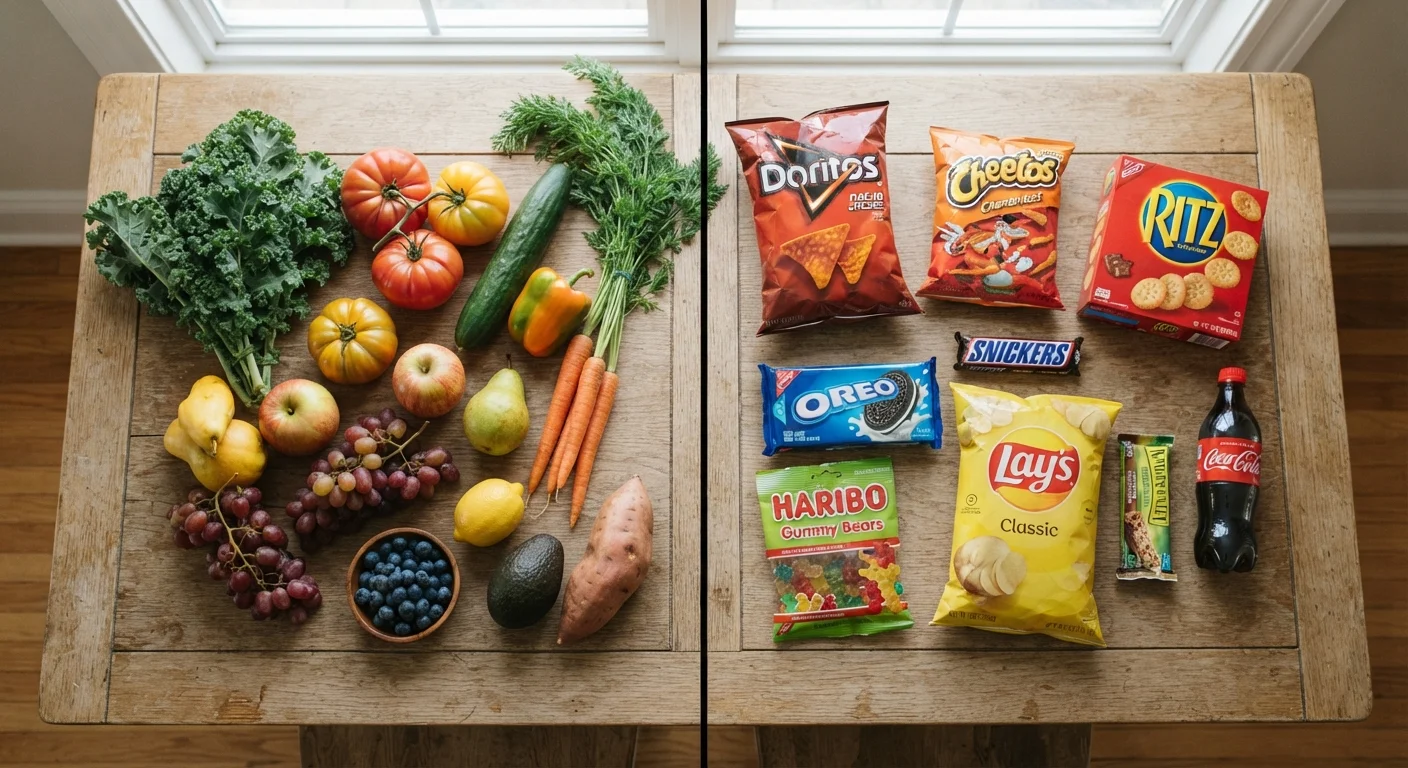
Minimally processed foods - fresh or frozen fruit, plain nuts, eggs, pasteurized milk, bagged salad greens - undergo only minor alterations like cleaning, cutting, or refrigeration. Their nutritional profiles remain largely intact. Processed culinary ingredients such as olive oil, salt, vinegar, and flour are extracted from whole foods and used in cooking, not typically eaten on their own.
Processed foods sit in the middle: canned tomatoes, smoked salmon, cheese, and simple breads. These have added salt, sugar, or fat to extend shelf life or improve taste, but they're still recognizable as food and often nutritionally serviceable. The critical distinction lies at the far end of the spectrum.
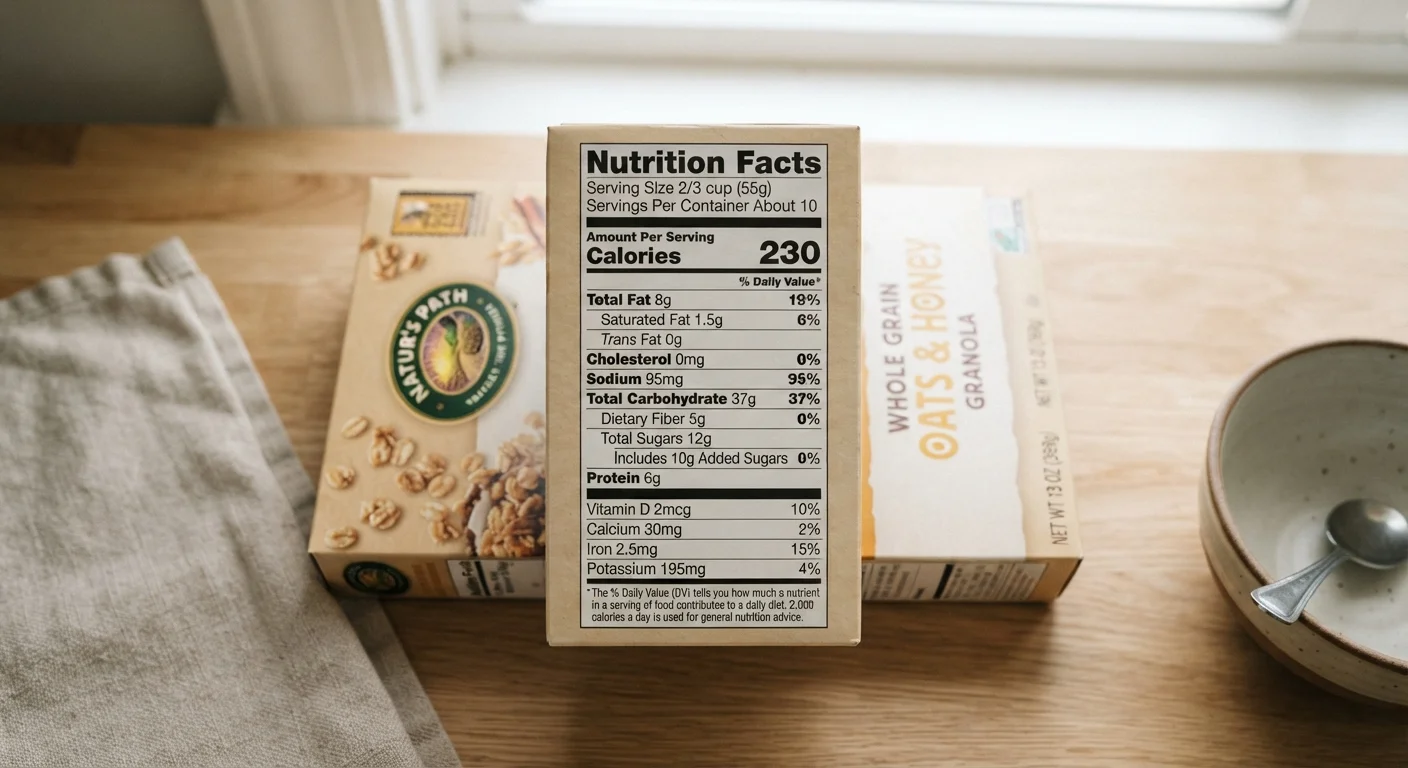
Ultra-processed foods - mass-produced packaged snacks, reconstituted meat products, sugary cereals, flavored chips, and many soft drinks - are formulated primarily from industrial substances (modified starches, hydrogenated oils, flavor compounds, emulsifiers) with little resemblance to the original ingredients. Research published in journals including The BMJ and JAMA Internal Medicine has linked high consumption of ultra-processed foods to elevated risks of cardiovascular disease, obesity, type 2 diabetes, and all-cause mortality. These associations are observational, not proof of direct causation, but they are consistent across multiple large studies. Learning to read nutrition labels clearly can help identify where a product falls on this spectrum.
57%
Share of US calories from ultra-processed foods
A study published in BMJ Open estimated that ultra-processed foods account for roughly 57% of total daily energy intake in the US diet.
32%
Higher all-cause mortality risk
A large prospective cohort study in JAMA Internal Medicine found participants in the highest ultra-processed food consumption quartile had a significantly elevated mortality risk compared to the lowest quartile.
4 groups
NOVA food classification categories
The NOVA system, developed at the University of São Paulo, organizes all foods into four groups based on the nature and extent of industrial processing.
What Whole Foods Actually Offer
Whole foods - vegetables, fruits, legumes, whole grains, eggs, unseasoned meat, and fish - deliver nutrients in the combinations and forms the body is well-equipped to use. Fiber, which supports gut health, blood sugar regulation, and satiety, is found almost exclusively in plant-based whole foods and is frequently stripped away or absent in ultra-processed products. Phytonutrients - the compounds that give plants their color and protective properties - largely survive minimal processing but tend to disappear through industrial reformulation.
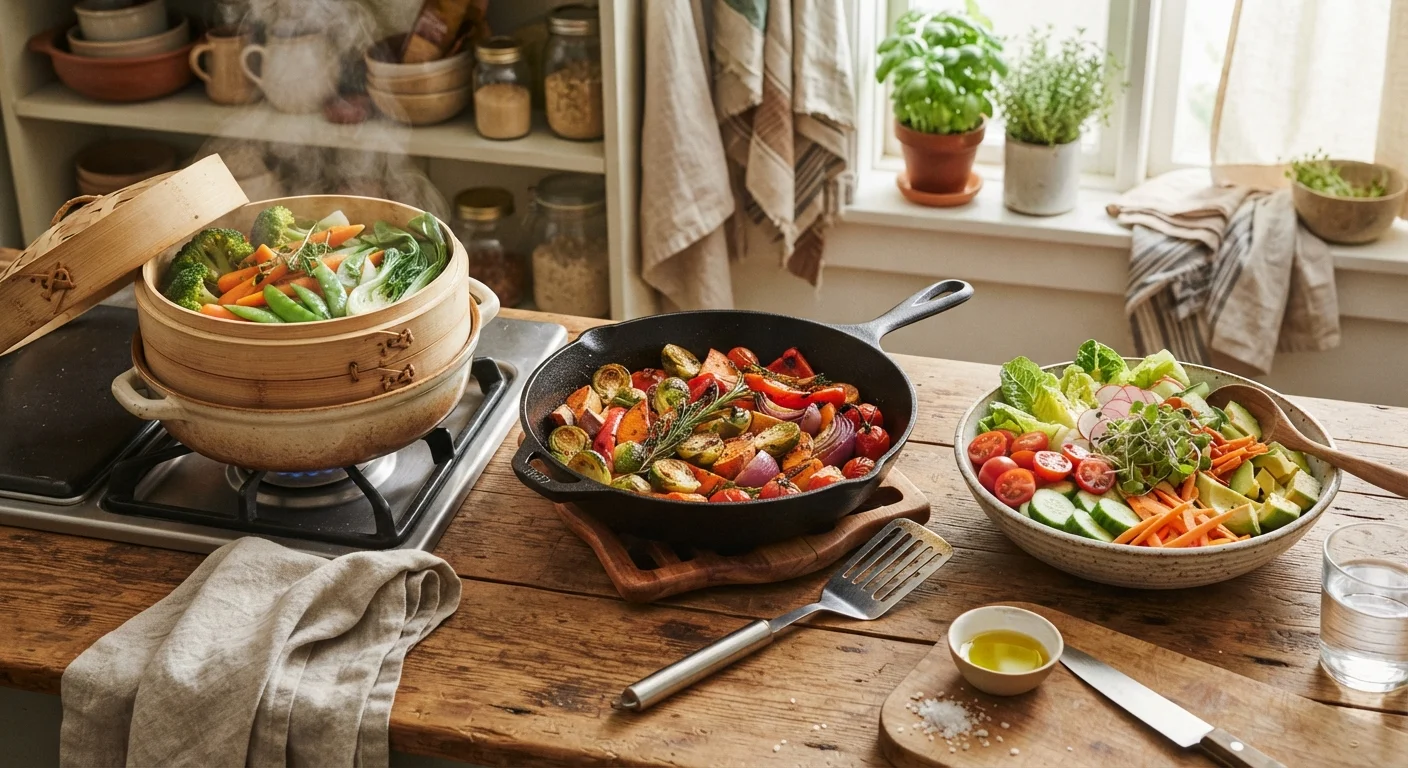
That said, whole food isn't a synonym for superior in every situation. A raw potato contains anti-nutrients that cooking neutralizes. Certain nutrients in tomatoes, like lycopene, become more bioavailable after heating - which means canned tomatoes can outperform raw ones on that specific measure. Cooking method matters too, altering nutrient availability in ways that cut across both categories.
For those exploring more plant-centered approaches to eating, a practical plant-based guide addresses how to build nutritional completeness without overcomplicating every meal.
Minimally Processed ≠ Nutritionally Inferior
Frozen vegetables, canned legumes, and plain yogurt are all technically processed - yet nutritional research consistently treats them as equivalent to, or in some cases more practical than, their fresh counterparts. Freezing vegetables shortly after harvest can preserve more vitamins than fresh produce that has spent days in transit. The key question isn't whether a food is processed, but how extensively and to what end.
Making Sense of It All at the Grocery Store
Practically speaking, aiming to make whole and minimally processed foods the majority of your plate - rather than chasing perfection - is the approach most consistently supported by nutrition science. Ultra-processed foods can be reduced without being eliminated entirely; context and frequency matter more than individual choices.
When evaluating packaged foods, a long ingredient list dominated by substances you wouldn't find in a home kitchen is a reasonable signal that a product is more industrial than whole. The distinction between added and natural sugars is another useful filter when comparing products. For a more structured approach to building a balanced, varied kitchen without overthinking it, see this grocery shopping guide.
The goal isn't to classify every bite - it's to understand the spectrum well enough to make choices that are genuinely informed rather than driven by marketing language or nutrition anxiety. These are the kinds of everyday habits that tend to compound into meaningful long-term patterns.
This article is for general informational purposes only and does not constitute medical or dietary advice. Consult a qualified healthcare professional or registered dietitian before making significant changes to your diet.