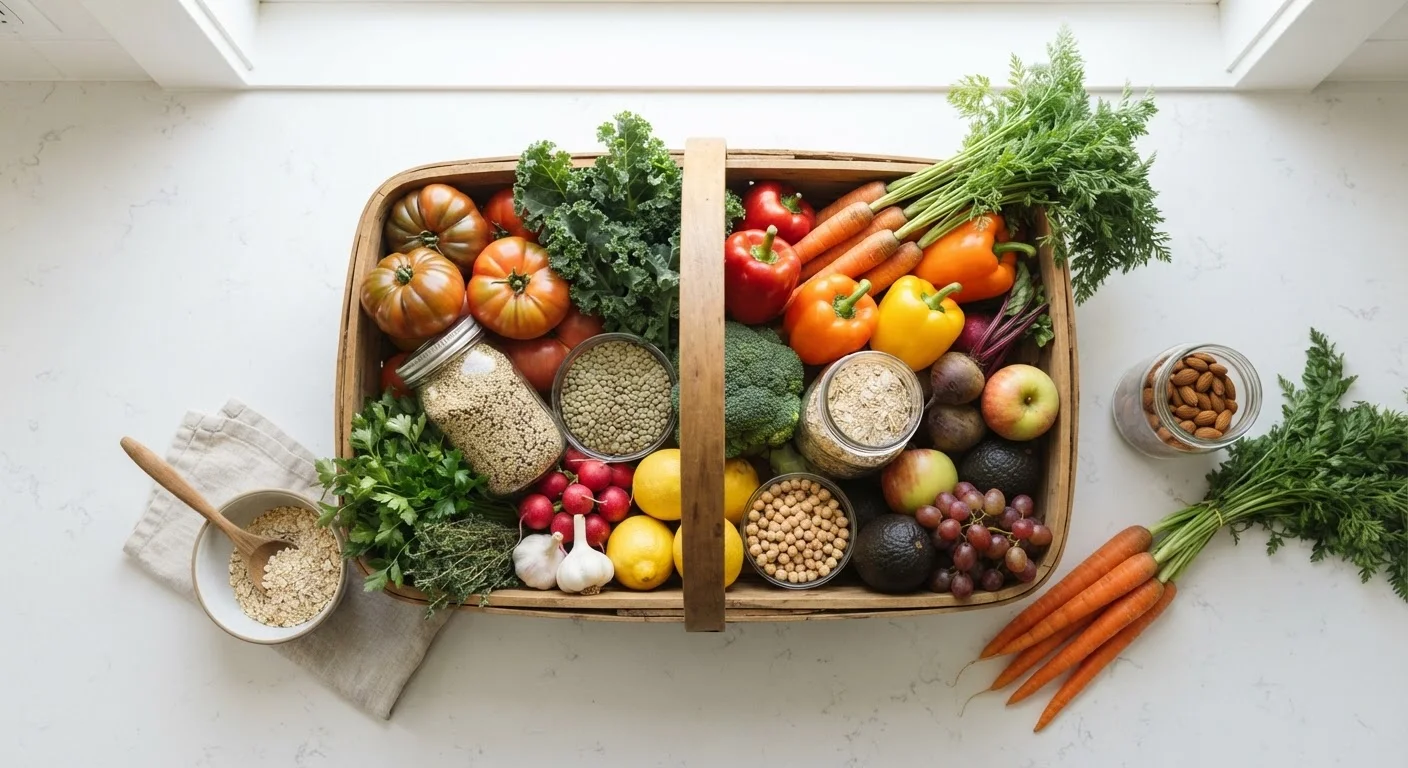
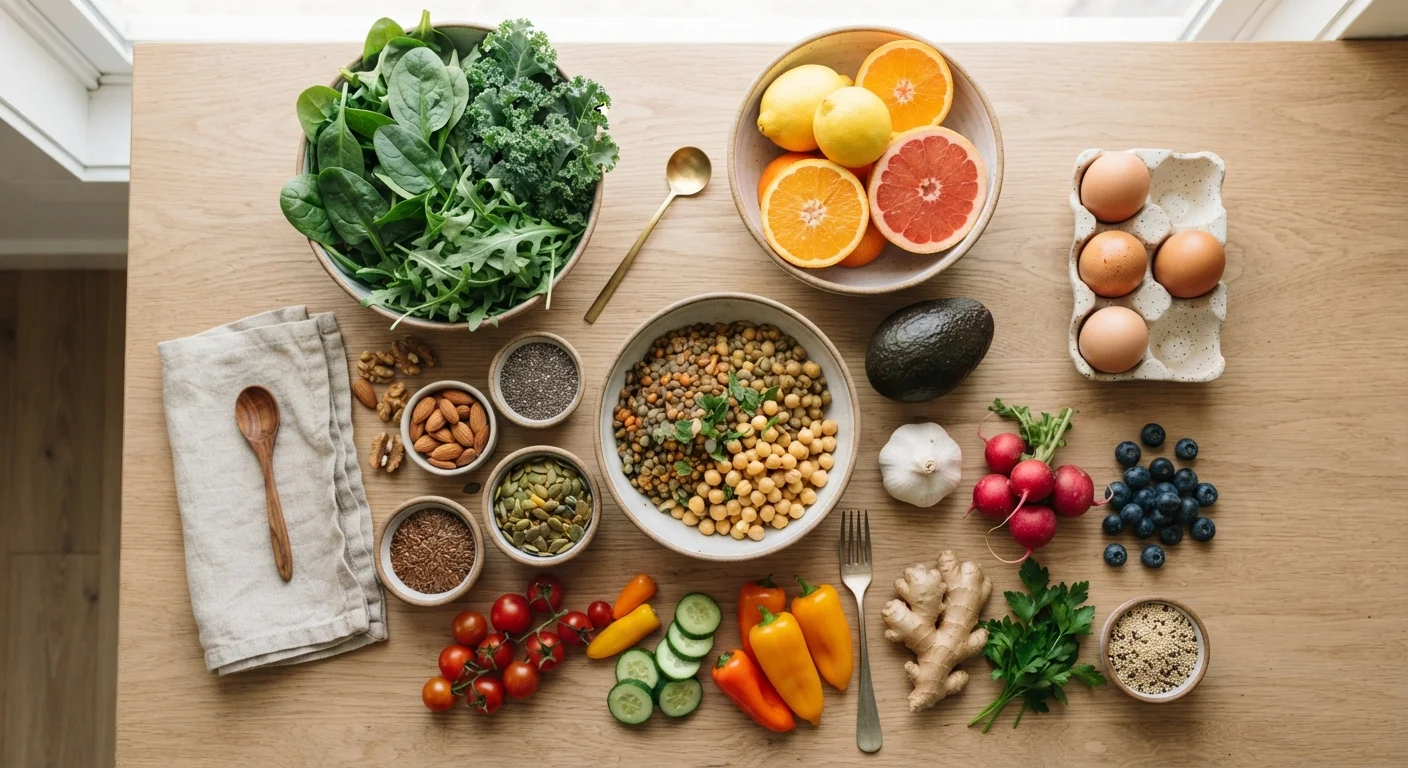
A practical checklist to help you stock a varied, nutritionally thoughtful kitchen without overcomplicating the process.
Key Takeaways
Shopping with a plan reduces impulse purchases and nutrient gaps in your weekly meals.
Variety across food groups - not perfection - is the practical goal of nutritional balance.
Reading ingredient lists and nutrition labels takes seconds but meaningfully improves food choices.
A well-organised kitchen makes it easier to cook and eat well consistently.
Whole foods and minimally processed options provide more nutrients per calorie in most cases.
Why Grocery Shopping Is a Nutritional Leverage Point
Most nutrition decisions are made not at the table, but at the store. What ends up in your cart shapes what's available in your kitchen - and what's available in your kitchen largely determines what you eat day to day. Yet grocery shopping often happens on autopilot: the same aisles, the same products, the same gaps.
This checklist is designed to interrupt that autopilot without making the process complicated. It's grounded in broad nutritional principles - eating a variety of whole foods across major food groups, limiting ultra-processed products, and covering your micronutrient bases - rather than any single dietary ideology. If you're curious about the specific vitamins and minerals behind those principles, see our guide to micronutrients for a concise reference.
Work through this checklist before and during your next shop to build a more intentional, balanced basket.
Required
Weekly meal planner (paper or app)
Maps out rough meals before you shop, so your list covers actual nutritional needs rather than guesswork.
Required
Grocery list (by store section)
Keeps your shop efficient and reduces impulse purchases that displace more nutritious items.
Required
Nutrition facts label (on packaging)
Provides sodium, sugar, and nutrient data needed to compare packaged products at the shelf.
Optional
Reusable insulated bag
Keeps perishables like proteins and dairy at a safe temperature during the journey home.
The Checklist: Building a Balanced Basket
The items below are grouped by stage and category. "Must" items reflect widely supported nutritional guidance; "should" and "nice to have" items help you go further when time and budget allow.
Before You Leave Home
Review what you already have by checking your fridge, freezer, and pantry before writing your list.Must
Plan rough meals for the week so your list reflects actual need rather than vague intention.Must
Write your list organized by store section (produce, proteins, grains, dairy/alternatives) to reduce backtracking and impulse additions.Should
Set a rough budget to guide portion sizes and avoid overbuying perishables that may go to waste.Should
Produce: Vegetables and Fruit
Choose at least three to four different colored vegetables to cover a broader range of vitamins and phytonutrients.Must
Include at least one dark leafy green (such as spinach, kale, or Swiss chard) for folate, iron, and vitamin K.Must
Add two to three types of fruit, prioritizing whole fruit over juice to retain fiber.Must
Pick up frozen vegetables or fruit as backup - they are typically flash-frozen at peak ripeness and retain most nutrients.Should
Protein Sources
Include at least one plant-based protein (legumes, tofu, tempeh, edamame) alongside any animal proteins to add fiber and variety.Must
Select lean or minimally processed animal proteins; limit processed meats such as deli cuts and sausages which tend to be high in sodium.Should
Add eggs if they fit your diet - they are a compact, versatile source of complete protein and several micronutrients.Should
Consider canned fish (such as sardines or salmon) as an affordable, shelf-stable omega-3 source.Nice to have
Grains and Carbohydrates
Choose whole grain versions of bread, pasta, rice, or cereal over refined equivalents to retain fiber, B vitamins, and minerals.Must
Stock at least one versatile whole grain you'll actually cook - oats, brown rice, quinoa, or barley are all reliable options.Must
Check ingredient lists on packaged grains: the first ingredient should be a whole grain, not enriched or bleached flour.Should
Dairy, Fats, and Pantry Essentials
Include a calcium source - dairy milk, fortified plant milk, or yogurt - and check the label to confirm fortification if using a plant alternative.Must
Add a source of healthy fats such as nuts, seeds, avocado, or olive oil to support fat-soluble vitamin absorption.Must
Stock a few pantry staples - canned tomatoes, low-sodium broth, dried lentils - that extend meal flexibility across the week.Should
Add a variety of herbs and spices; they contribute antioxidant compounds and make nutritious meals more appealing.Nice to have
At the Store: Label Reading
Scan the ingredient list on packaged foods: shorter lists with recognizable ingredients generally indicate less processing.Must
Check sodium content on canned and packaged goods; look for low-sodium or no-salt-added options where practical.Should
Note added sugars on the nutrition facts label, especially on items marketed as healthy - yogurts, granola bars, and sauces are common sources.Should
Healthy-Sounding Labels Can Mislead
Terms like "natural," "multigrain," and "made with whole grains" are not standardised and can appear on products that are heavily processed or high in added sugar. Always check the actual nutrition facts panel and the ingredient list rather than relying on front-of-pack claims. A package's marketing is not regulated to the same standard as its nutrition label.
Once your groceries are home, how you store and cook them matters too. Organising your kitchen to reduce daily friction makes it easier to use what you've bought - and different cooking methods affect nutrient retention in ways worth knowing.
For a broader picture of daily habits that support wellbeing alongside good nutrition, the Everyday Habits hub is a useful companion resource.
This article is for general informational and educational purposes only and does not constitute medical or dietary advice. Individual nutritional needs vary. Consult a registered dietitian or qualified healthcare professional for guidance tailored to your personal health circumstances.
Health Editorial Team is the collective byline for our editorial team and contributor network. Articles published under this byline or an editorial pen name are researched, written, and reviewed according to our editorial standards for clarity, consistency, and independence before publication.
The content on this site is for informational purposes only and is not a substitute for professional advice. Always consult a qualified professional for guidance specific to your situation.