

Why These Myths Stick
Budgeting has a reputation problem. For many people, the word alone conjures images of spreadsheets, sacrifice, and shame spirals after an unplanned dinner out. These associations don't come from nowhere-they're reinforced by well-meaning but rigid advice that treats budgeting as a moral test rather than a practical tool.
The result is that millions of people delay starting a budget-not because budgeting doesn't work, but because they've absorbed a version of it that was never going to work for them. Clearing up the most persistent misconceptions is often the single most useful first step. If you want a plain-language starting point before diving into the myths, this overview of core budgeting concepts covers the basics without assumptions.
Myth
Budgeting means giving up everything you enjoy.
Fact
A budget tells your money where to go-including toward things you value. It doesn't require eliminating discretionary spending.
This is probably the most damaging myth, because it makes budgeting feel like punishment before you've even started. In reality, a budget is a plan, not a prohibition. Spending on entertainment, dining, hobbies, or travel can be built in deliberately. The goal is awareness and intention, not austerity. Discretionary spending often reveals what genuinely matters to you-managing it honestly is more sustainable than pretending it doesn't exist.
Myth
Budgeting only works if you earn enough money.
Fact
Budgeting is most valuable precisely when money is tight-it helps prioritise limited resources rather than requiring an abundance of them.
The idea that you need to earn a certain amount before budgeting makes sense has it backwards. People on lower or variable incomes often benefit most from a spending plan because there's less margin for error. Knowing exactly how much you have available-and allocating it before spending begins-reduces the chance of running short on essentials. Freelancers and gig workers face this challenge acutely; budgeting strategies for irregular income adapt the same core logic to income that doesn't arrive on a fixed schedule.
Myth
You need to track every single penny for a budget to work.
Fact
Detailed tracking can be useful, but a budget functions on categories and estimates-not cent-by-cent accounting.
Obsessive tracking is one reason people burn out and quit. In practice, a budget works when you allocate income across meaningful categories-housing, food, transport, savings, discretionary-and stay broadly within them. Rounding to the nearest five or ten dollars is fine. Reviewing spending weekly or monthly, rather than logging every transaction in real time, is enough for most people. The goal is informed decisions, not forensic accounting.
Myth
Once your budget is set, you can't change it.
Fact
Budgets are living documents meant to be revised as circumstances shift-adjusting is a sign the system is working, not failing.
Many people abandon a budget the moment it stops matching reality-an unexpected car repair, a change in income, a new recurring expense. But a budget that no longer fits your life isn't broken; it just needs updating. Treating a budget as a rigid contract rather than a flexible framework is a setup for frustration. Budgeting approaches shift meaningfully across different life stages, so the structure that worked at 25 may need significant revision at 40.
Myth
You need special software or a complex spreadsheet to budget properly.
Fact
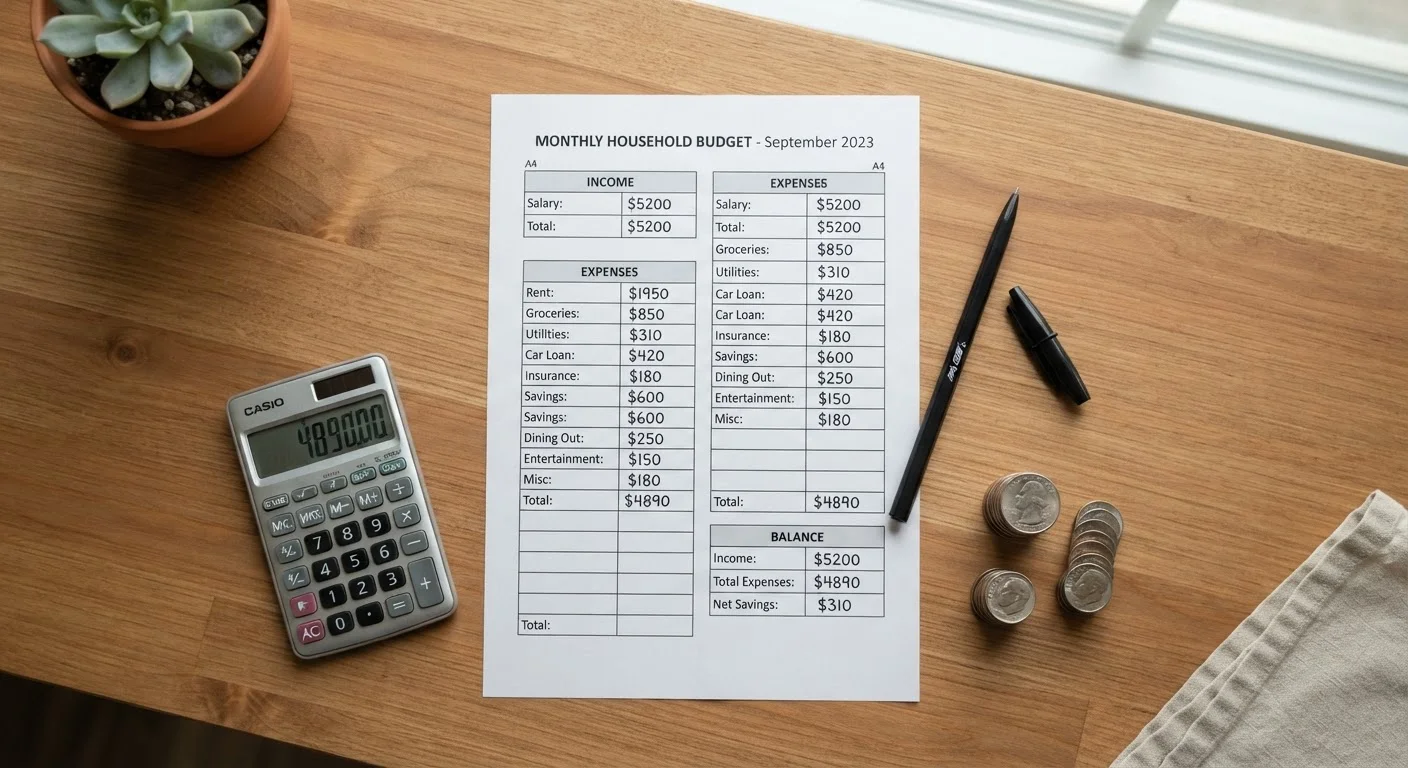
A pen, paper, and honest numbers are sufficient. Tools can help, but they're not what makes a budget work.
The budgeting app market is large and growing, but technology is not the active ingredient in a working budget. The active ingredient is the habit of intentional allocation. People maintained functional household budgets long before software existed. If a specific tool motivates you to engage with your finances, use it. If the tool itself becomes the project-spending more time configuring categories than actually budgeting-it's working against you. Familiarising yourself with core budgeting terms is more foundational than choosing the right app.
What Budgeting Actually Requires
Once the myths are out of the way, the practical picture becomes much simpler. A workable budget needs three things: a realistic picture of what comes in, an honest account of what goes out, and a deliberate decision about what to do with the difference. That's it. You don't need an app, a financial planner, or a pristine track record.
~32%
U.S. adults with a detailed household budget
Gallup polling has consistently found that fewer than one in three American adults maintain a detailed monthly budget, despite widespread awareness of the practice.
1 in 4
Americans with no emergency savings
Federal Reserve surveys have found roughly a quarter of U.S. adults would struggle to cover an unexpected $400 expense-an outcome a consistent savings allocation within a budget helps address over time.
Understanding the difference between fixed costs-rent, loan payments-and variable ones like groceries or dining out helps enormously when setting expectations. Fixed versus variable expenses is one of the most clarifying distinctions in personal finance, and getting it right removes a lot of the guesswork from category planning.
Don't Wait for the 'Right' Month to Start
A common delay tactic is waiting until after a holiday, a move, or a pay change before starting a budget. There's rarely a perfectly calm month. Starting with imperfect numbers during a messy month still gives you more information than waiting indefinitely. A rough first budget, revised the following month, is more effective than a perfect plan that never gets made.
For those ready to take action, building your first budget around debt and savings goals is a natural next step-especially if you're juggling repayment alongside trying to save. And if you find your plan starts to slip after the first few weeks, why budgets fall apart in month two explains the most common breakdowns and how to course-correct without starting over.
This article is for general informational and educational purposes only. It does not constitute personalised financial advice. For decisions specific to your financial situation, please consult a qualified financial professional.