
Why Maintenance Needs Change Over Time
A car isn't a static machine. From the day it leaves the lot, its components are subject to heat cycles, friction, vibration, and the slow accumulation of miles. Fluids degrade, rubber hardens, metal surfaces wear - and the services that matter most shift accordingly.
Understanding this progression means you're not just reacting to warning lights; you're anticipating what a vehicle needs at each phase of its life. That awareness saves money, prevents breakdowns, and extends how long a car stays roadworthy. For a broader look at what owning a vehicle actually costs over time, see what car ownership actually costs.
200,000+
Miles many well-maintained vehicles reach
Consumer and industry data consistently show that regular maintenance is the strongest predictor of vehicle longevity, often outweighing brand or model.
~$1,000
Average annual car maintenance cost for US drivers
According to AAA's annual Your Driving Costs study, maintenance and repair costs average roughly $1,000 per year for a typical passenger vehicle.
60-100K
Miles when timing belt replacement is typically due
Manufacturer intervals vary, but most automakers specify timing belt replacement within this range - skipping it risks catastrophic engine failure.
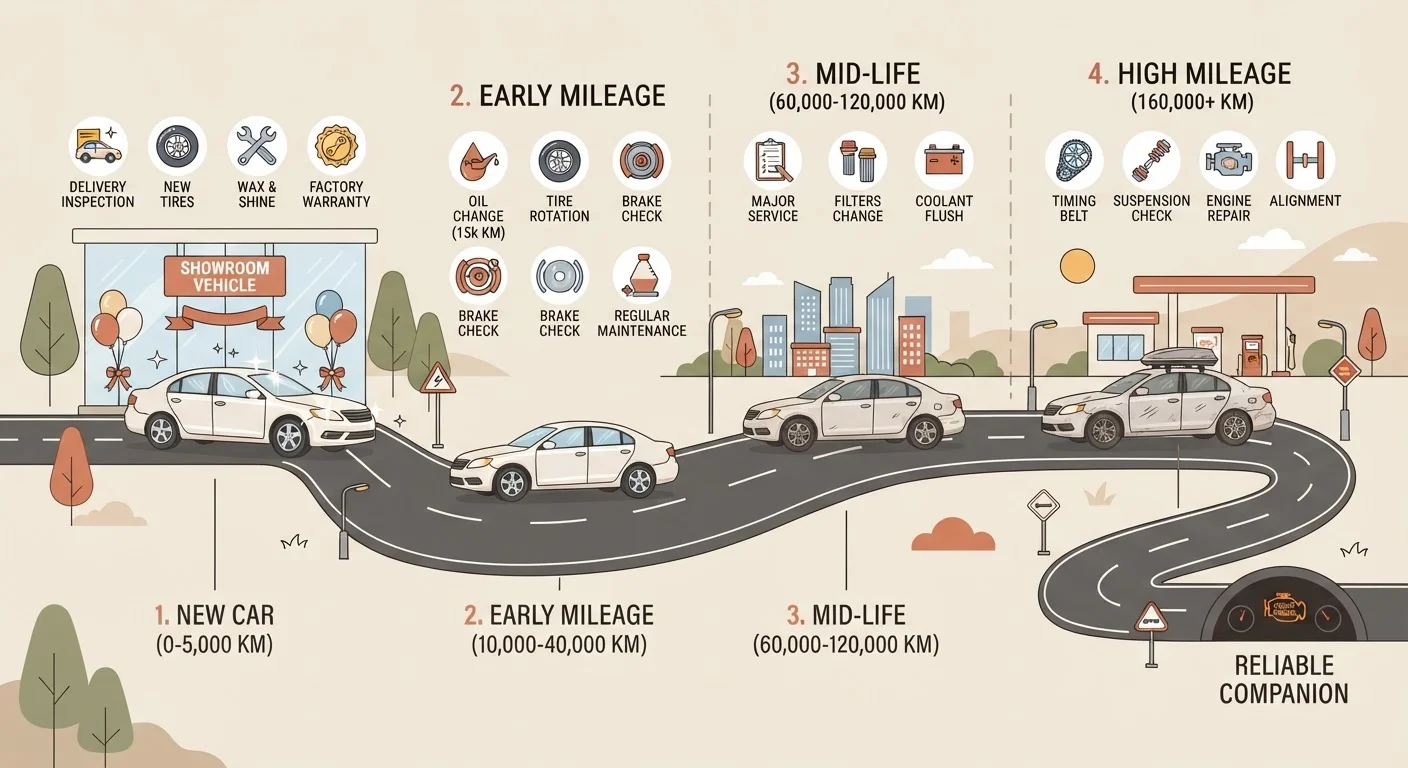
The Early Miles: 0-30,000
New vehicles typically arrive in excellent mechanical condition, but the first 30,000 miles are not maintenance-free. This phase is about establishing a healthy baseline and avoiding habits that create premature wear.
What to prioritize
- Oil changes: Follow the interval specified in the owner's manual - modern engines and synthetic oils often allow longer intervals than older 3,000-mile rules suggest. See which oil-change rules are myths for more context.
- Tire rotation: Typically every 5,000-7,500 miles. Uneven wear sets in quickly when rotation is skipped.
- Air and cabin filters: Often first replaced somewhere in this range, depending on driving environment.
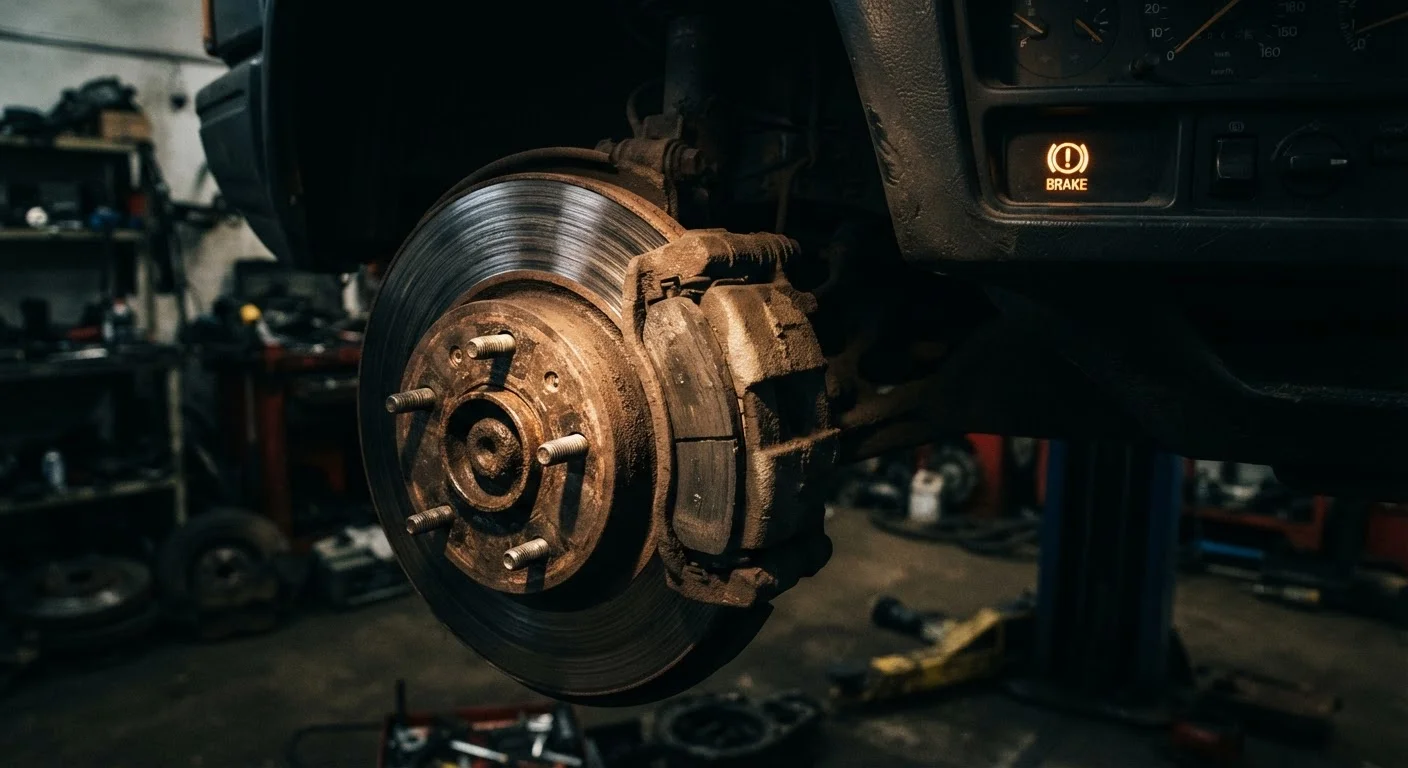
- Brake inspection: Have brake pads and rotors checked at least once in the first 30,000 miles, sooner if you do a lot of city driving.
Don't wait for a dashboard light to start tracking fluid levels. Check oil, coolant, and brake fluid visually every month - it takes two minutes and catches leaks before they become expensive.
Warning lights are reactive; they illuminate after a problem has already developed. Visual checks catch slow leaks and gradual fluid degradation before they affect performance.
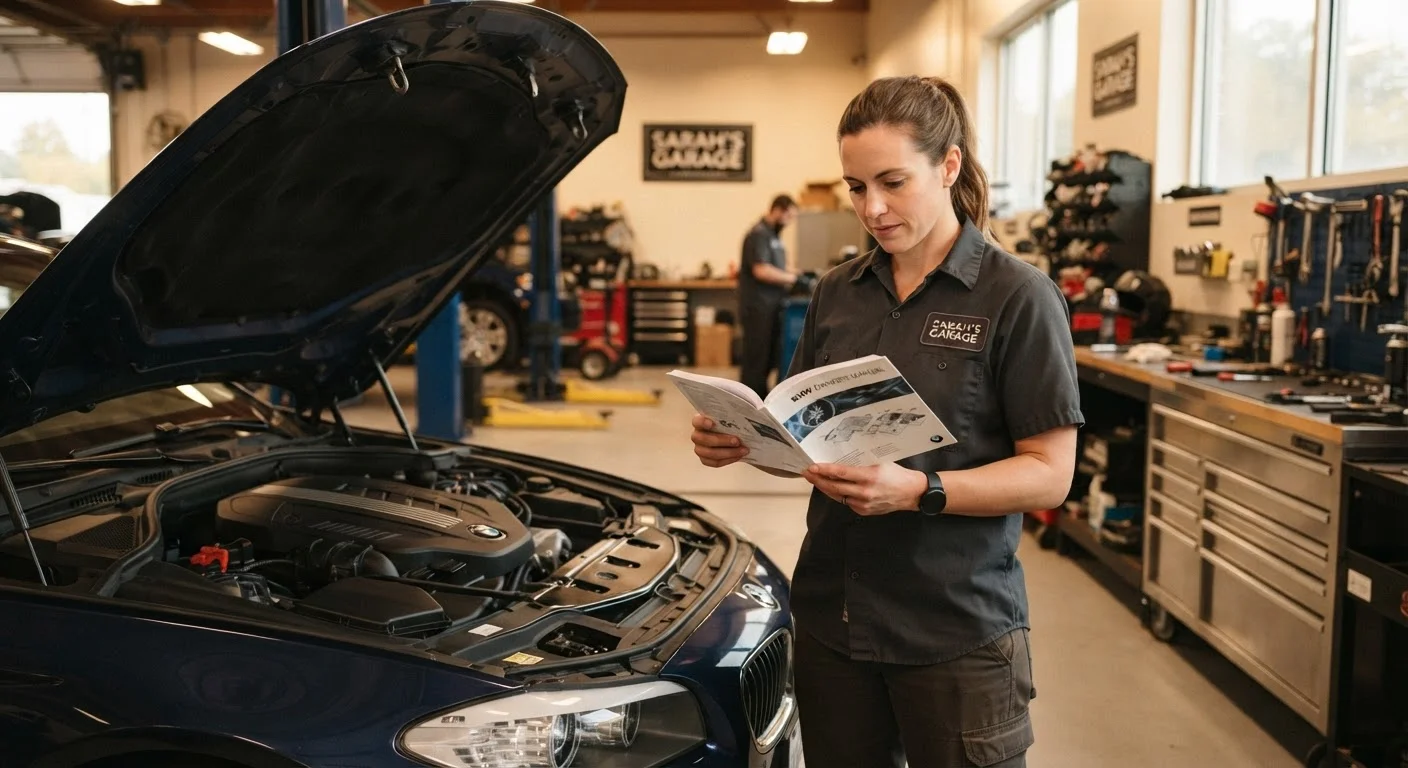
Keep your owner's manual in the car and actually use it. The maintenance schedule inside is calibrated for your specific engine and drivetrain - it overrides generic advice every time.
Generic interval advice (like the old 3,000-mile oil change rule) is often misapplied because it ignores differences in engine design, oil type, and driving conditions.
The owner's manual is the single most reliable maintenance reference for this period - it's written specifically for your engine, transmission, and climate requirements.
The Middle Years: 30,000-100,000 Miles
This is the longest and often most variable phase of a vehicle's life. Mechanical systems begin showing wear, and the services required become more substantial - and more consequential if skipped.
Key services in this window
- Spark plugs: Conventional plugs typically need replacement around 30,000-50,000 miles. Iridium or platinum plugs may last up to 100,000 miles - check your manual.
- Coolant flush: Coolant loses its protective additives over time. Many manufacturers recommend a flush every 50,000-60,000 miles.
- Transmission fluid: Often overlooked, but contaminated fluid is a major contributor to early transmission failure.
- Timing belt (if equipped): Typically due between 60,000 and 100,000 miles. A snapped timing belt can cause catastrophic engine damage - this is not a service to defer.
- Brake fluid: Absorbs moisture over time, reducing braking effectiveness. Many manufacturers suggest replacement every two years or 30,000 miles.
Bundle Services to Save Time and Money
When you're already paying for labor on one job, ask what else is due soon. Replacing coolant and spark plugs in the same visit often costs meaningfully less than two separate appointments. Your mechanic can flag upcoming services based on your mileage and service history.
Driving patterns affect wear rates significantly. Certain habits accelerate wear far beyond what mileage alone would suggest - worth reviewing if you do a lot of short trips or hard braking.
High-Mileage Territory: 100,000 Miles and Beyond
Crossing 100,000 miles is a milestone, not a death sentence. Many vehicles run reliably well past 200,000 miles when maintained consistently. But the nature of upkeep changes - prevention gives way to monitoring and targeted intervention.
What deserves closer attention
- Seals and gaskets: Rubber components harden with age and heat. Oil leaks and coolant seeps often originate here. Catching them early keeps minor issues from compounding.
- Suspension components: Shocks, struts, and bushings wear over time. If the ride feels noticeably different or the car pulls during braking, have the suspension inspected.
- Battery: Most batteries last 3-5 years. At high mileage, the battery and charging system should be tested annually - a failed battery can leave you stranded without warning.
- High-mileage oil: Some drivers switch to formulations specifically designed for engines over 75,000 miles. These typically contain seal conditioners and additives suited to higher-wear engines, though their benefit varies by vehicle.
High-Mileage Doesn't Mean High Risk - If You're Consistent
A 150,000-mile vehicle with complete service records is often more reliable than a 60,000-mile car with a maintenance gap. The mileage number matters less than whether the vehicle has been looked after. Before purchasing a used high-mileage vehicle, request a full service history and have an independent mechanic perform a pre-purchase inspection.
Building Habits That Protect Every Stage
Consistent recordkeeping amplifies the value of every service you perform. A detailed log makes it easier to track intervals, avoid duplicate work, and demonstrate care history to a future buyer. Why a service log matters covers this in depth.
Seasonal conditions also shape what your car needs. Tires, fluids, and battery performance all respond to temperature swings. A seasonal maintenance cycle gives a structured, month-by-month breakdown.
Finally, know which tasks you can handle safely at home and which genuinely require a shop. DIY versus professional tasks draws that line clearly and practically.
“The best predictor of how long a car will last isn't the brand on the badge - it's whether the owner followed through on routine maintenance. A neglected vehicle deteriorates; a maintained one compounds its reliability.”
— Automotive Engineering Perspective, General principle reflected across manufacturer engineering documentation and fleet management research
Knowing When to Repair vs. Replace
At some point, the math shifts. When cumulative repair costs approach or exceed the vehicle's market value - and reliability becomes unpredictable - keeping the car may cost more than replacing it. This calculation is highly individual: a paid-off vehicle with predictable maintenance costs often pencils out better than a new monthly payment, even with occasional repairs.
Depreciation is a major factor in this equation. How depreciation works can help frame what a vehicle is actually worth at various points in its life. And recurring ownership costs are worth reviewing before assuming a newer vehicle will be cheaper to run.
For a solid foundation on all the structural aspects of ownership - insurance, registration, financing - the Car Ownership Basics hub is a useful reference as your situation evolves.
This article is for general informational purposes only. Always consult a qualified mechanic for diagnosis and repair decisions specific to your vehicle.