
Why Car Maintenance Myths Persist
Automotive advice spreads quickly - from well-meaning relatives, old shop manuals, and habit carried over from a different era of vehicle design. The problem is that many widely repeated rules were sound advice decades ago but no longer apply to modern vehicles. Engine technology, lubricant chemistry, and fuel delivery systems have changed substantially since the 1980s and 1990s, but the advice hasn't always kept pace.
Understanding which practices are genuinely useful and which are outdated saves money, reduces unnecessary shop visits, and helps you make informed decisions about your vehicle. The myths below are among the most commonly repeated - and most commonly misapplied.
Myth
You need to change your oil every 3,000 miles, no exceptions.
Fact
Most modern vehicles can go 5,000 to 10,000 miles or more between oil changes, depending on the engine and oil type.
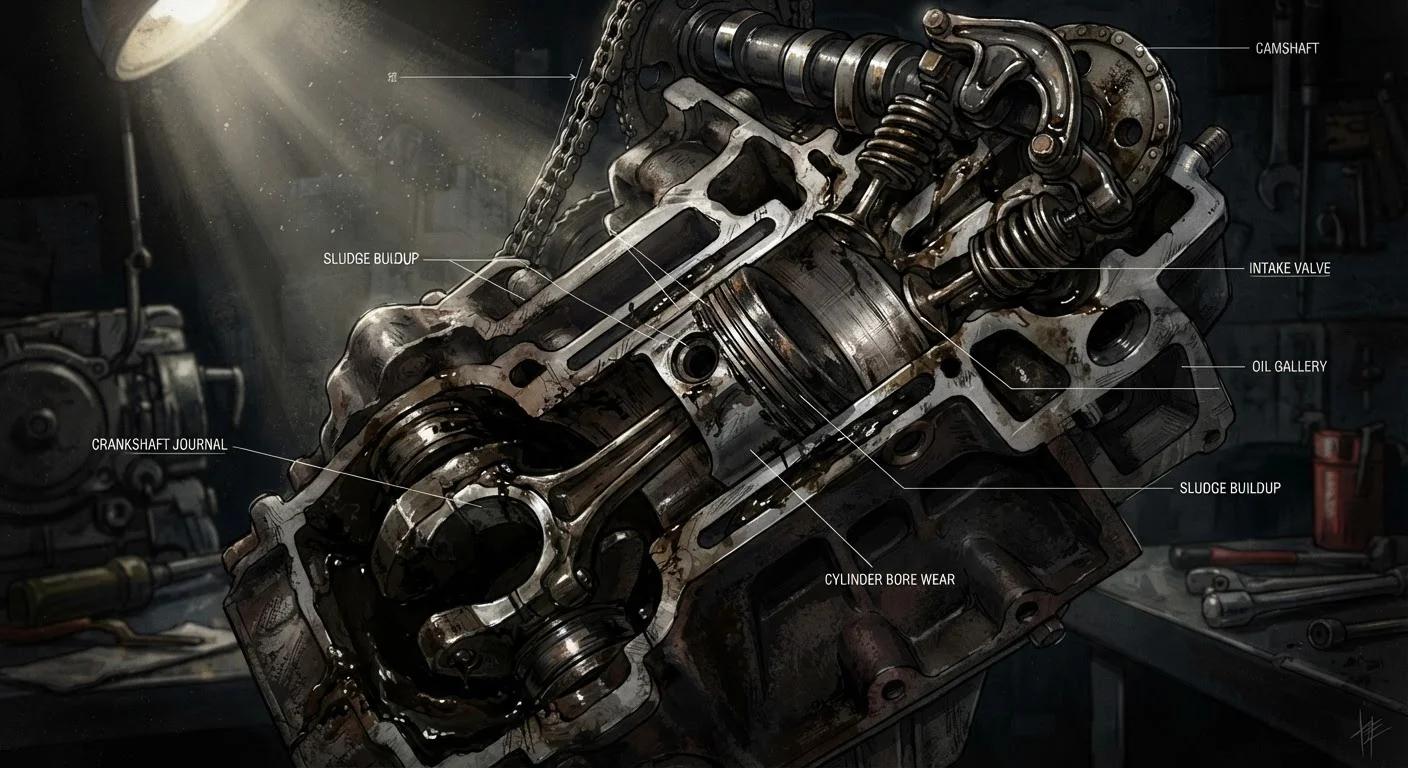
The 3,000-mile rule dates back to an era of older engine designs and conventional mineral oil. Modern engines are built to tighter tolerances, and full-synthetic motor oils are formulated to maintain their protective properties far longer. Your owner's manual will specify the correct interval - many manufacturers now recommend 7,500 to 10,000 miles, and some vehicles using full synthetic can go up to 15,000 miles under normal driving conditions. Changing oil more frequently than necessary wastes money without benefiting your engine. For a deeper look, see what actually happens inside your engine without an oil change.
Myth
You should let your engine idle for several minutes in winter to warm it up.
Fact
Modern fuel-injected engines warm up more effectively by driving gently, not by sitting idle in the driveway.
Carbureted engines of past decades genuinely needed idle warm-up time because the fuel-air mixture required temperature stabilization. Virtually every vehicle sold since the mid-1990s uses electronic fuel injection, which manages the fuel mixture automatically. Extended idling in cold weather washes oil off cylinder walls with unburned fuel, increasing engine wear - the opposite of what drivers intend. A 30-second idle to clear condensation from windows is reasonable; anything beyond that is unnecessary. Drive gently for the first few minutes and your engine reaches operating temperature faster than it would while stationary.
Myth
Premium gasoline makes any car run better and last longer.
Fact
Premium fuel only benefits engines specifically engineered to require or recommend it - using it in a standard engine provides no measurable advantage.
Premium fuel has a higher octane rating, which resists premature detonation (engine knock) in high-compression engines. If your owner's manual says "premium required," use it. If it says "premium recommended," regular fuel is generally fine, though some performance may be marginally reduced. If premium isn't mentioned at all, paying extra for it delivers no benefit - modern engine management systems are designed around the fuel grade the manufacturer specifies. Check your fuel door or owner's manual rather than defaulting to the most expensive option.
Myth
The pressure number on the side of your tire is what you should inflate to.
Fact
That number is the tire's maximum pressure rating, not the recommended operating pressure for your vehicle.
The correct tire pressure for your vehicle is on a sticker inside the driver's door jamb or in the owner's manual - not on the tire sidewall. Inflating to the sidewall maximum can make the tire rigid, reduce the contact patch with the road, and create a harsher, less controlled ride. Under-inflation is equally problematic, causing premature wear and reduced fuel efficiency. Check pressure when tires are cold (before driving), as heat from driving temporarily increases pressure readings. For a full primer on tire care, see tire care from the ground up.
Myth
Getting your car serviced somewhere other than the dealership voids your warranty.
Fact
Under the Magnuson-Moss Warranty Act, manufacturers generally cannot require you to use dealership service to maintain your warranty.
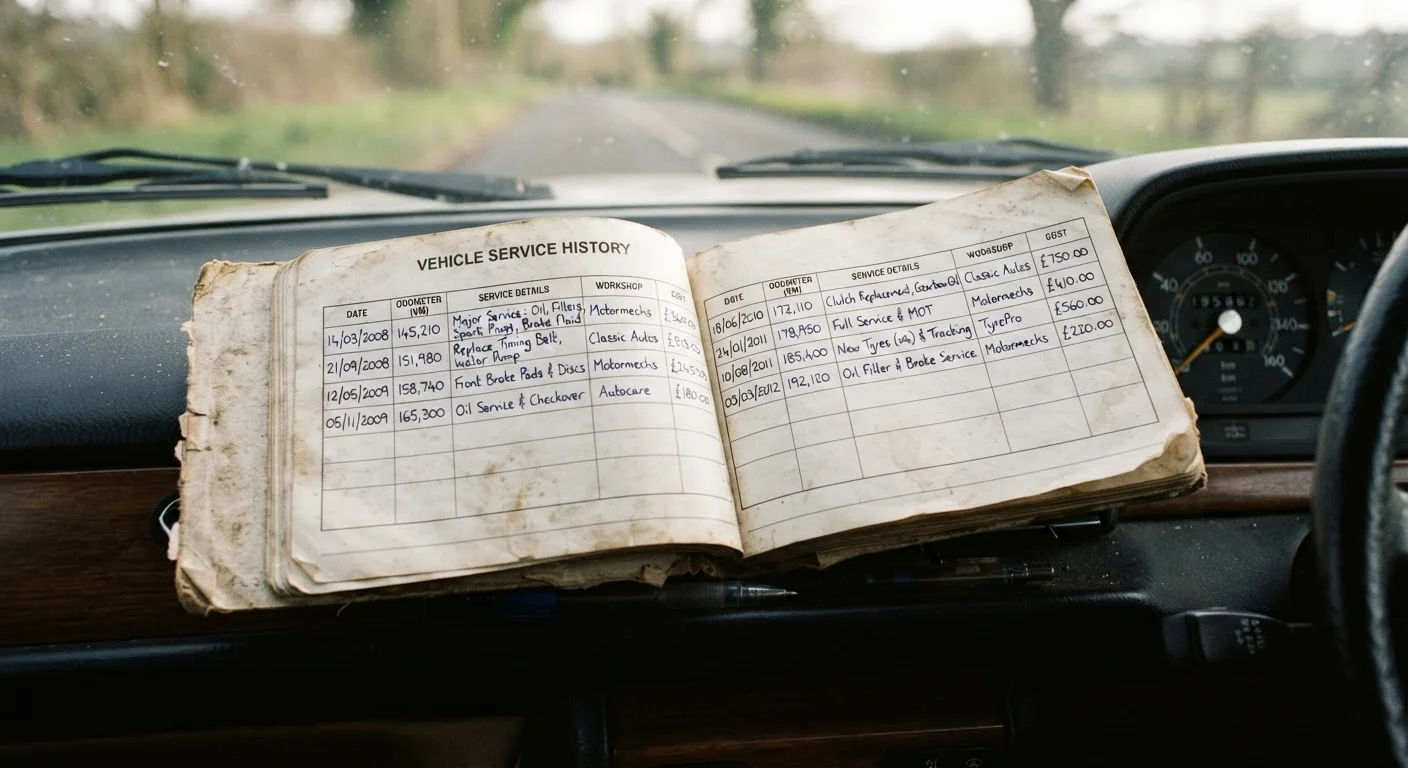
Independent shops and even DIY maintenance are generally permitted under federal law, provided you use parts and fluids that meet the manufacturer's specifications and keep documentation of the work. The key is maintaining a clear service record - receipts, mileage, dates, and the specifications of any parts used. A warranty claim can be denied if neglect or incorrect parts caused the specific failure, but simply using an independent mechanic is not, by itself, grounds for denial. See why keeping a service log matters for guidance on documentation.
Myth
If your car is running fine, you can skip routine maintenance.
Fact
Many maintenance items prevent problems before symptoms appear - by the time you notice something, wear may already be significant.
Fluids degrade, filters clog, and belts fatigue on schedules that don't always announce themselves with obvious symptoms. A timing belt, for instance, often fails suddenly with no prior warning - and the resulting engine damage can be severe. Brake fluid absorbs moisture over time, lowering its boiling point and reducing effectiveness even when brakes feel normal. Routine maintenance intervals exist because engineers established when components typically reach the end of their service life. Running fine today doesn't mean all systems are operating at full capacity. Checking in on habits that quietly wear out a car can help you spot what you might be overlooking.
How to Stay on the Right Maintenance Schedule
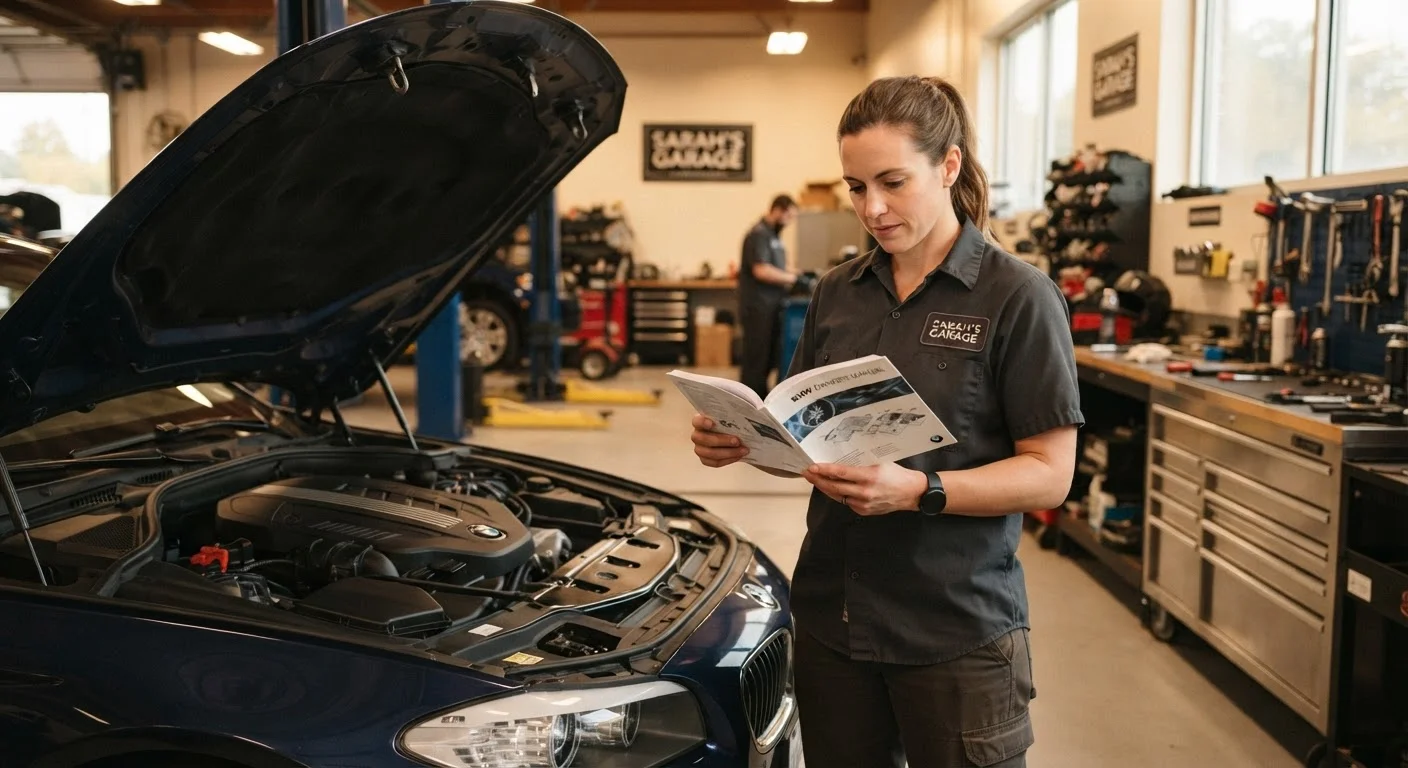
The single most reliable source for your vehicle's maintenance requirements is the owner's manual. It accounts for your specific engine, transmission, and climate recommendations in a way that no general rule can. If you've misplaced your manual, most manufacturers provide digital versions through their websites, and your vehicle identification number (VIN) can help a dealership locate the correct document.
Your Owner's Manual Overrides All Myths
Every maintenance interval and fluid specification in this article should be cross-referenced against your vehicle's owner's manual. Manufacturers design those intervals around your specific engine, driving conditions, and fluid formulations. No general rule - including anything written here - replaces that document.
Beyond the manual, a consistent service log is one of the most practical tools available. Recorded maintenance history makes it easier to track what's due, supports warranty claims, and adds demonstrable value if you ever sell the vehicle. For a broader view of how maintenance priorities shift over a vehicle's life, see maintenance across a vehicle's lifetime and the seasonal car maintenance cycle for time-of-year considerations.
5,000-10,000 mi
Typical modern oil change interval
Most vehicle manufacturers now specify intervals well beyond 3,000 miles; check your owner's manual for the exact figure.
26%
U.S. vehicles with at least one underinflated tire
According to the National Highway Traffic Safety Administration, a significant share of vehicles on the road are driven on underinflated tires at any given time.
30 seconds
Recommended cold-start idle time (modern engines)
Automotive engineers generally suggest brief idling only to allow oil to circulate before driving gently - not extended warm-up periods.
If you're unsure which tasks are reasonable to handle yourself and which genuinely require a professional, that line is worth knowing clearly. See which tasks need a mechanic for a practical breakdown.