
Why Tyre Condition Matters More Than Most Drivers Realise
Your tyres are the only part of your vehicle in contact with the road. Everything else - steering, braking, suspension - works through them. A tyre in poor condition undermines all of those systems, regardless of how well maintained the rest of the vehicle is.
Despite this, tyre care is one of the most overlooked parts of routine maintenance. Many drivers only notice a tyre problem when a warning light appears or a flat occurs. The good news: the four habits covered in this guide are quick, require minimal tools, and can be built into a monthly routine without much effort. For a broader look at where tyres fit in your overall maintenance schedule, see our seasonal car maintenance guide.
Tread depth
The distance between the top of the tyre's rubber surface and the bottom of its grooves. Greater depth means better grip, especially in wet conditions.
PSI
Pounds per square inch - the unit used to measure the air pressure inside a tyre in the United States.
Tread wear indicator
Small raised rubber bars built into tyre grooves at the 2/32-inch level. When tread is flush with these bars, the tyre has reached the legal minimum depth.
Tyre rotation
Moving tyres between wheel positions on the vehicle to even out wear patterns and extend the useful life of the full set.
Sidewall
The vertical section of a tyre between the tread and the wheel rim. It carries size, load, and age information, and is vulnerable to impact damage and cracking.
Hydroplaning
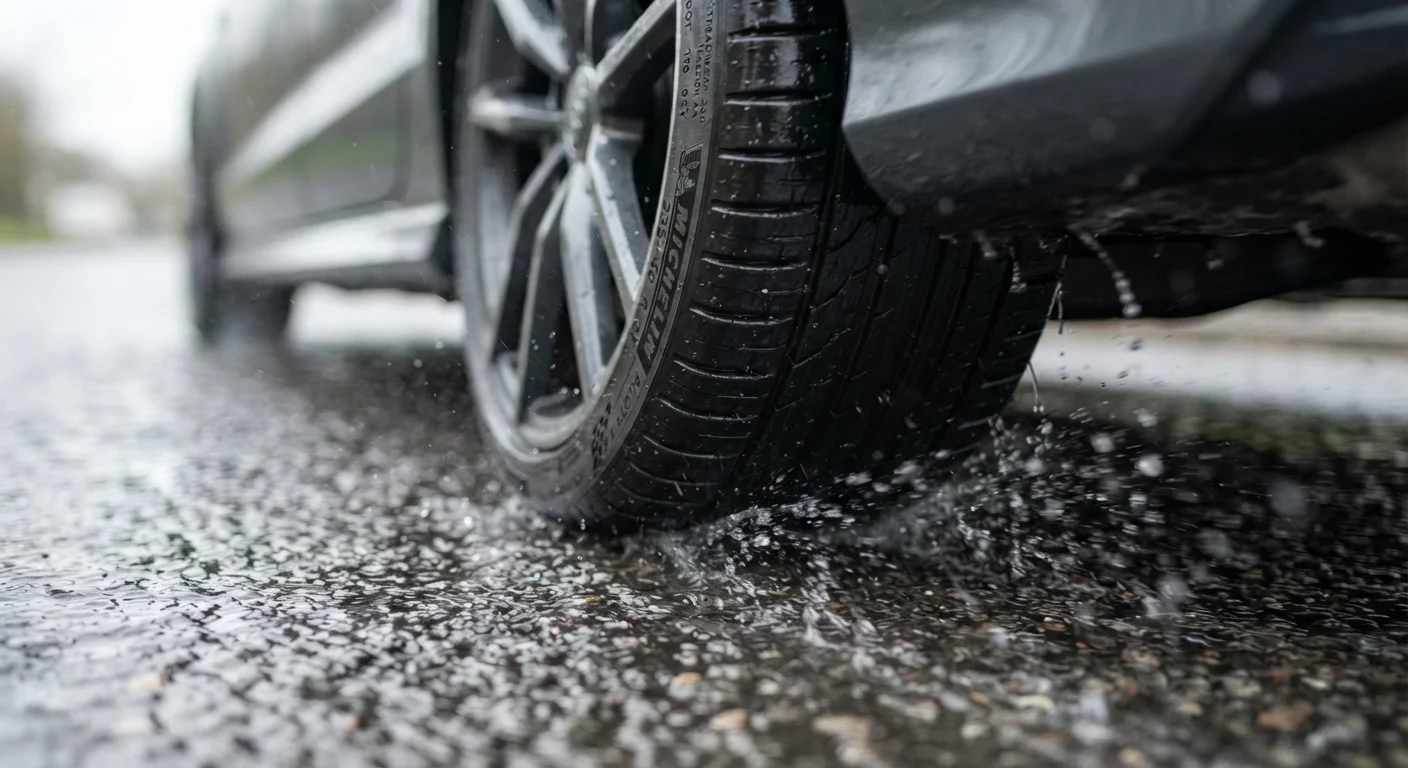
When a layer of water builds up between the tyre and the road faster than the tread can channel it away, causing the tyre to lose contact with the surface.
Checking Tread Depth
Tread channels water away from the contact patch between tyre and road. As tread wears down, that capacity shrinks - stopping distances lengthen and the risk of hydroplaning on wet roads increases.
In the US, the legal minimum tread depth is 2/32 of an inch. Most tyre safety organisations recommend replacing tyres at 4/32 of an inch on wet roads, since braking performance degrades noticeably before the legal limit is reached.
Two quick methods
- Quarter test: Insert a US quarter into a tread groove with Washington's head pointing down. If the top of his head is visible, you're at or below 4/32 inch.
- Tread wear indicators: Most tyres have small rubber bars moulded into the grooves at 2/32 inch. When the tread surface is flush with these bars, the tyre is at the legal minimum.
Check multiple grooves across the tyre width - uneven wear can indicate alignment or inflation problems that a mechanic should assess.
Make Tread Checks a Monthly Habit
Pair your tread check with your monthly tyre pressure check so neither gets skipped. It takes less than two minutes to walk around the vehicle and press a quarter into a few grooves on each tyre. Catching wear early also gives you time to budget for replacement rather than facing an urgent purchase.
Maintaining Correct Tyre Pressure
Underinflation is the most common tyre problem on US roads. It generates excess heat, accelerates edge wear, and reduces fuel efficiency. Overinflation reduces the contact patch, making handling less predictable and increasing the risk of damage from road hazards.
Find your vehicle's recommended pressure on the door-jamb sticker or in the owner's manual. This figure is given in PSI (pounds per square inch) and may differ between front and rear tyres. The number moulded on the tyre sidewall is the tyre's maximum pressure - not a target.
Pressure check habits
- Check pressure when tyres are cold - ideally before the vehicle has been driven more than a mile. Driving heats the air inside and raises readings artificially.
- Check at least once a month and before any long trip.
- Ambient temperature affects pressure - expect roughly a 1 PSI drop for every 10°F temperature decrease.
Before a long drive, tyre pressure is one of the key checks covered in our pre-journey vehicle check.
TPMS Is a Backup, Not a Replacement
Most vehicles built after 2007 have a Tyre Pressure Monitoring System (TPMS) that triggers a dashboard warning when pressure drops significantly - typically 25% or more below the recommended level. By that point, the tyre is already meaningfully underinflated. Manual monthly checks catch problems well before the warning light appears.
Rotating Your Tyres
Front and rear tyres wear at different rates depending on drivetrain, steering load, and vehicle weight distribution. Without rotation, some tyres wear out significantly earlier than others, meaning you replace a partial set rather than a full set - which costs more over time.
The general guideline is to rotate every 5,000 to 7,500 miles. Many drivers sync this with every second oil change. Your owner's manual will specify the recommended interval and the rotation pattern (straight swap, cross pattern, or X-pattern) appropriate for your drivetrain.
If your vehicle uses a full-size spare of matching size, a tyre professional can include it in the rotation, which extends the life of all five tyres. Space-saver spares are not suitable for rotation.
Don't Mix Tyre Types on the Same Axle
Running different tyre constructions or significantly different tread depths on the same axle can affect handling and stability, particularly during emergency manoeuvres. If you need to replace fewer than four tyres, consult a qualified tyre professional about the safest pairing for your vehicle and drivetrain.
Recognising When Replacement Is Overdue
Beyond tread depth, several other signs indicate a tyre needs to be replaced - regardless of how much tread remains.
Visual warning signs
- Sidewall cracks or crazing: Surface cracking is a sign of rubber degradation from age or UV exposure.
- Bulges or blisters: A bulge in the sidewall means the internal structure has been compromised. This is a failure risk and warrants immediate professional inspection - do not continue driving on a bulging tyre.
- Embedded objects: A screw or nail may hold air temporarily, but the tyre needs professional assessment before further driving.
Age-based replacement
Rubber compounds degrade over time even on low-mileage vehicles. The manufacture date is moulded into the sidewall as a four-digit code: the first two digits are the week, the last two are the year (e.g., 2318 = 23rd week of 2018). Most tyre manufacturers and the National Highway Traffic Safety Administration (NHTSA) advise inspecting tyres older than six years and considering replacement by ten years, regardless of appearance.
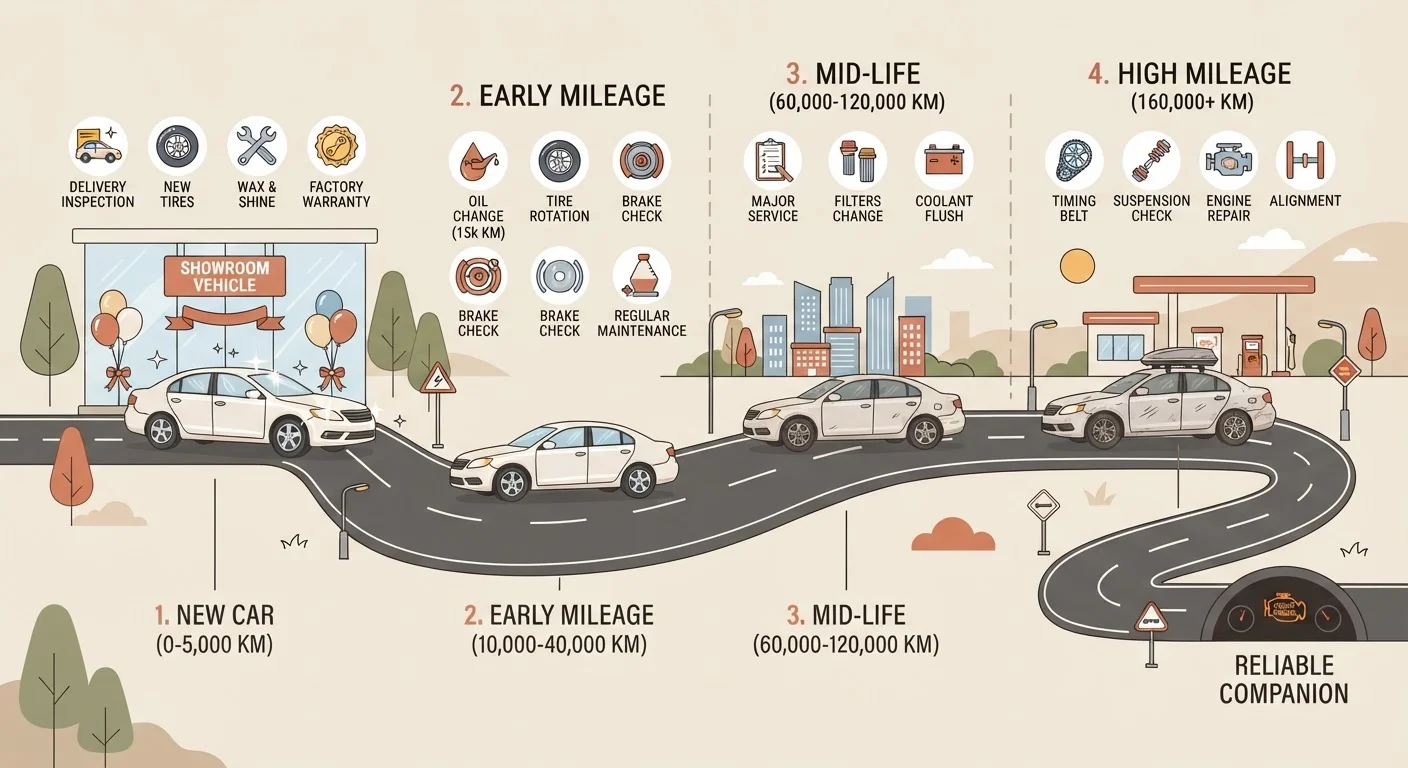
For a full picture of how maintenance needs - including tyres - shift across your vehicle's life, see Car Maintenance Across a Vehicle's Lifetime.
If you notice persistent vibration, pulling to one side, or unusual tyre noise, have the vehicle inspected by a qualified mechanic. These symptoms can point to alignment, balancing, or suspension issues as well as tyre wear.
NHTSA Tyre Safety Resources
The National Highway Traffic Safety Administration publishes plain-language guidance on tyre maintenance, recalls, and how to read the sidewall date code. A reliable first stop for US drivers.
Pre-Long-Journey Vehicle Check
A practical checklist covering tyres, fluids, lights, and emergency kit essentials before any extended drive - a natural next step once you have tyre care basics in place.