
Why Filters Matter More Than Most Drivers Realize
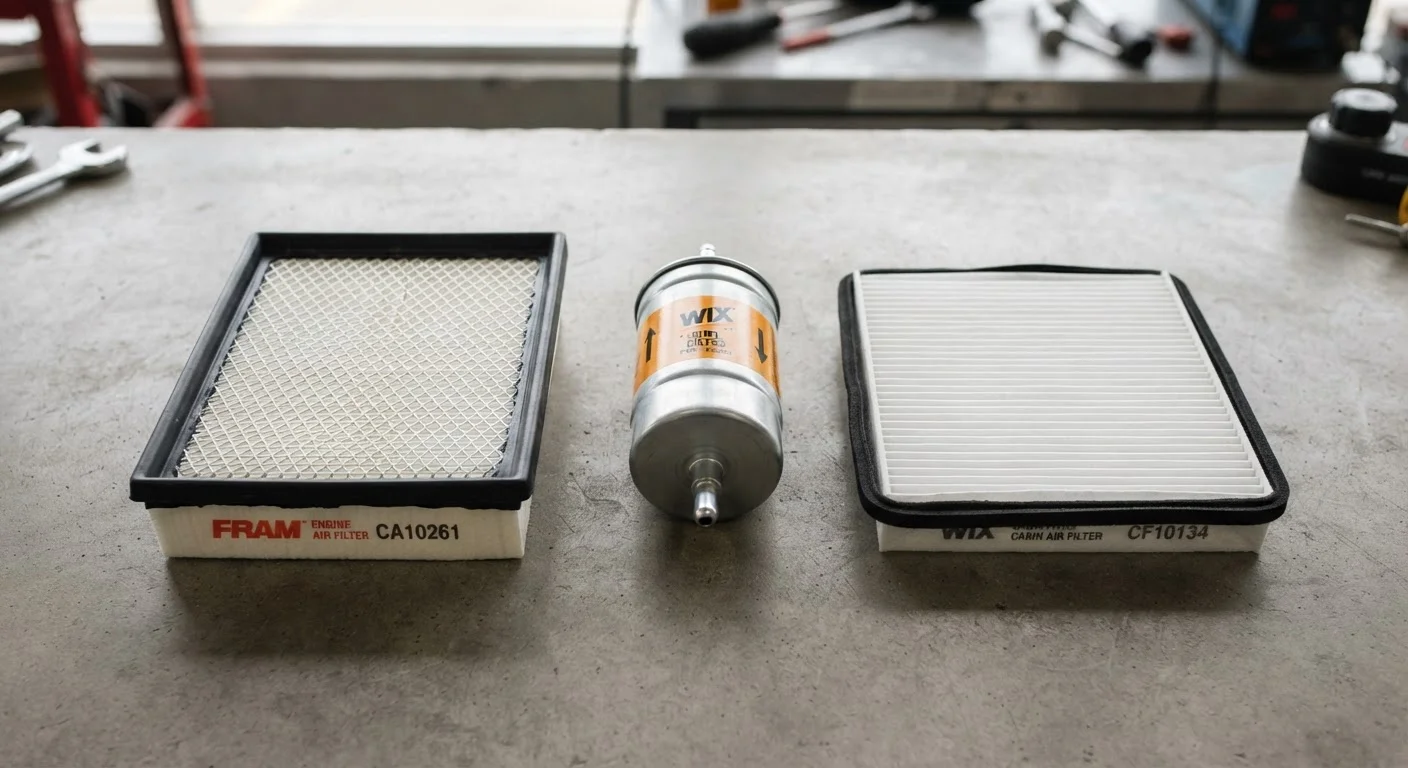
Your car has three distinct filters doing three completely different jobs - and none of them lasts forever. Skipping filter maintenance doesn't just reduce efficiency; it can accelerate engine wear, clog fuel injectors, and leave you breathing dirty air every commute. Understanding what each filter actually does makes it far easier to spot problems early and prioritize the right service at the right time.
For a broader look at how filter checks fit into routine upkeep, see our seasonal car maintenance guide.
| Number of filters covered | 3 - engine air, fuel, and cabin |
| Engine air filter interval | Every 15,000-30,000 miles (varies by vehicle) (Consult your owner's manual) |
| Cabin air filter interval | Every 15,000-25,000 miles (Consult your owner's manual) |
| Fuel filter (integrated type) | Often lifetime; others ~30,000-40,000 miles (Varies widely by make and model) |
| DIY-friendly filter | Cabin air filter (typically behind the glove box) |
| Professional recommended | Fuel filter (pressurized system - safety risk if done incorrectly) |
Engine Air Filter: The First Line of Defense
The engine air filter sits between the outside air and your engine's intake. Its job is straightforward: trap dust, pollen, insects, and debris before they enter the combustion chamber. A clean filter allows the correct air-to-fuel ratio. A clogged one restricts airflow, forcing the engine to work harder and burn fuel less efficiently.
Common signs of a restricted air filter include reduced acceleration, a drop in fuel economy, and in some cases a rough idle. Filters on vehicles driven in dusty or unpaved-road conditions wear out faster than those driven primarily on paved highways.
Typical replacement interval: Every 15,000-30,000 miles, though your owner's manual is the authoritative reference for your specific vehicle. Always confirm with a qualified mechanic if you're unsure.
Engine Air Filter
A filter that removes airborne contaminants from outside air before it enters the engine's combustion chamber. Keeping it clean ensures proper airflow and efficient combustion.
Fuel Filter
A filter in the fuel delivery line that traps sediment, rust, and debris before fuel reaches the injectors or carburetor. Protects precision fuel system components from premature wear.
Cabin Air Filter
A filter in the vehicle's HVAC system that cleans air entering the passenger compartment. Captures pollen, dust, and other particles to improve in-cabin air quality.
Air-to-Fuel Ratio
The proportion of air to fuel in the combustion mixture. A clogged engine air filter disrupts this balance, reducing efficiency and potentially increasing emissions.
Fuel Injector
A precision valve that delivers measured amounts of fuel into the engine's combustion chamber. Injectors are sensitive to contamination, making a functioning fuel filter essential.
Fuel Filter: Protecting Your Injectors and Pump
The fuel filter screens contaminants - rust particles, sediment, and other debris - out of the gasoline or diesel before it reaches the fuel injectors and pump. Modern injectors operate at very high pressures and have extremely tight tolerances; even small particles can degrade performance or cause premature failure.
Symptoms of a failing fuel filter can include hard starting, engine hesitation under acceleration, stalling at low speeds, or a noticeable drop in power. Because fuel systems operate under pressure, fuel filter replacement is typically a job for a qualified mechanic rather than a DIY task.
Typical replacement interval: Many modern vehicles have a filter integrated with the fuel pump assembly and are designed to last the vehicle's lifetime under normal conditions, while others call for replacement around every 30,000-40,000 miles. Check your owner's manual. Pair this knowledge with our look at what skips in routine maintenance cost engines for full context.
Fuel Filter Safety: Leave It to a Pro
Because fuel systems operate under significant pressure, replacing a fuel filter involves depressurizing the line and handling flammable fuel. This is not a recommended DIY task for most drivers. A qualified mechanic has the tools and training to do it safely and correctly.
Cabin Air Filter: What You're Actually Breathing
The cabin air filter cleans the air flowing through your car's heating, ventilation, and air conditioning (HVAC) system before it reaches the passenger compartment. It captures pollen, dust, mold spores, and other airborne particles - making it particularly relevant for allergy sufferers.
A clogged cabin filter reduces airflow from your vents, strains the blower motor, and can cause musty odors inside the cabin. It has no effect on engine performance, which is why it's easy to overlook - but neglecting it directly affects air quality for everyone in the vehicle. For context on how indoor air quality works more broadly, see what affects indoor air quality in a typical home.
Typical replacement interval: Every 15,000-25,000 miles, or roughly once a year depending on driving environment. Cabin filters are generally accessible and straightforward to replace - many are located behind the glove box - but confirm with your vehicle's manual before attempting it yourself.
15,000-25,000 mi
Typical cabin filter replacement interval
Most vehicle manufacturers recommend cabin filter inspection at least annually or at this mileage threshold, whichever comes first.
Up to 10%
Potential fuel economy impact of restricted engine air filter
The U.S. Department of Energy has noted that a clogged air filter can reduce fuel economy on older carbureted engines; modern fuel-injected engines may see reduced performance instead.
Telling Them Apart and Knowing When to Act
It's easy to mix these up at the service counter, so here's the short version: the engine air filter protects your engine, the fuel filter protects your fuel delivery system, and the cabin filter protects your passengers. They don't overlap in function, and neglecting one has no bearing on the condition of the others.
When a mechanic recommends a filter change, ask which one and why. A visual inspection - most filters are clearly dirty when overdue - is often all the confirmation you need. For a grounded take on which maintenance recommendations are real versus overstated, see our guide to separating car maintenance myths from reality.
Your owner's manual remains the most reliable source for replacement intervals specific to your make, model, and driving conditions. When in doubt, ask a licensed mechanic rather than relying solely on generalizations.