

Why Indoor Air Is More Complex Than It Looks
Most people assume that staying indoors means staying away from pollution. In reality, the air inside a typical home can carry a surprising mix of compounds - some from outside, many generated within the home itself. Understanding the main sources helps you make small adjustments that add up meaningfully over time.
| Primary pollutant categories | Biological (mold, dust mites), chemical (VOCs, combustion gases), and particulate matter (U.S. Environmental Protection Agency) |
| Key indoor sources | Cooking, cleaning products, furnishings, building materials, and moisture |
| Humidity target range | Roughly 30-50% relative humidity (general guideline) (American Society of Heating, Refrigerating and Air-Conditioning Engineers (ASHRAE)) |
| Off-gassing duration | Typically highest in first weeks; can continue for months in some materials |
| Ventilation impact | Adequate air exchange is considered the most effective broad strategy for diluting indoor pollutants (U.S. EPA Indoor Air Quality guidance) |
Indoor air quality is shaped by three overlapping factors: sources of pollutants, how well air circulates, and how quickly contaminants are removed. Address all three and you address the problem at its root.
The Biggest Sources of Indoor Air Pollutants
Cooking
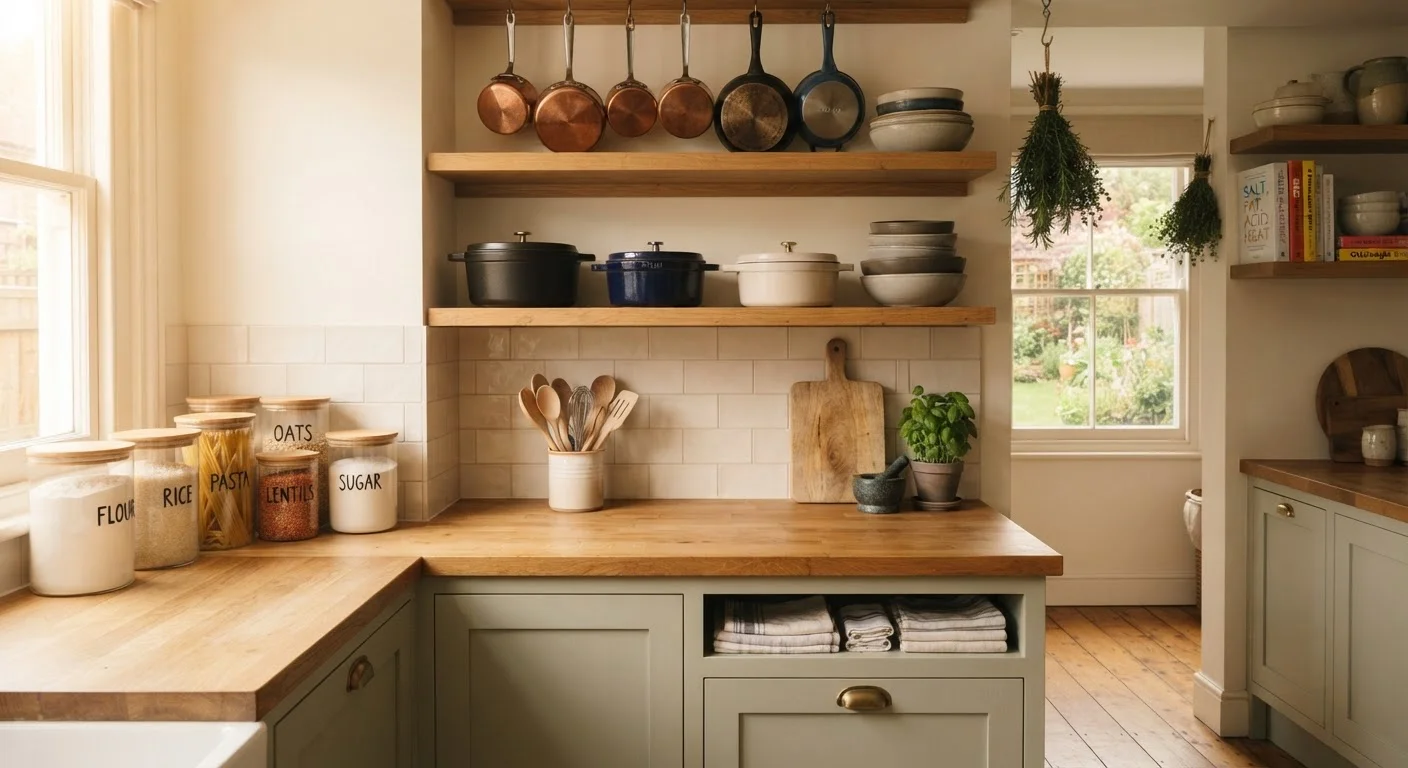
Cooking is one of the most significant contributors to short-term indoor air pollution. Frying, broiling, and roasting at high heat release fine particles, nitrogen dioxide (if you use a gas stove), and vaporised cooking oils into the air. Even toasting bread produces detectable particle levels. Using a range hood vented to the outside - not just recirculating - makes a real difference. See our guide to organising your kitchen for layout strategies that also support better ventilation habits.
Cleaning Products
Many household cleaners contain VOCs - airborne chemicals that evaporate at room temperature. Sprays and aerosols disperse these compounds widely. Even products labelled "natural" or "green" can include terpenes that react with indoor ozone to form secondary pollutants. Adequate ventilation during and after cleaning, and choosing fragrance-free or low-VOC formulations where practical, reduces exposure.
Furniture, Flooring, and Building Materials
New furniture, carpets, adhesives, and pressed-wood products release VOCs through a process called off-gassing. This is typically highest in the first weeks after purchase or installation and gradually tapers. Airing out new furniture outdoors before bringing it inside, or opening windows after a renovation, helps accelerate this process.
Moisture and Biological Pollutants
Excess humidity encourages mold, dust mites, and bacteria - all of which degrade air quality and can aggravate respiratory conditions. Bathrooms, basements, and kitchens are the most common problem areas. Keeping relative humidity between roughly 30-50% is a commonly cited general guideline, though individuals with specific health conditions should consult a healthcare professional for personalised guidance.
VOCs (Volatile Organic Compounds)
Chemicals that evaporate easily at room temperature and become airborne gases. Common sources include cleaning products, paints, adhesives, and new furnishings. Prolonged exposure to high concentrations can irritate airways.
Off-gassing
The gradual release of VOCs and other chemicals from solid materials like furniture, carpet, or flooring. It is typically most intense when materials are new and diminishes over time.
Particulate Matter
Tiny solid or liquid particles suspended in air, produced by cooking, combustion, and outdoor pollution. Fine particles (PM2.5) are small enough to penetrate deep into the lungs.
Relative Humidity
The amount of moisture in the air expressed as a percentage of the maximum moisture air can hold at that temperature. Very high or very low indoor humidity can both cause problems for comfort and air quality.
Mechanical Ventilation
Any powered system that moves air into, out of, or through a home - including exhaust fans, range hoods, and whole-house ventilation units. It supplements or replaces natural airflow in airtight buildings.
Ventilation: The Factor Most Often Overlooked
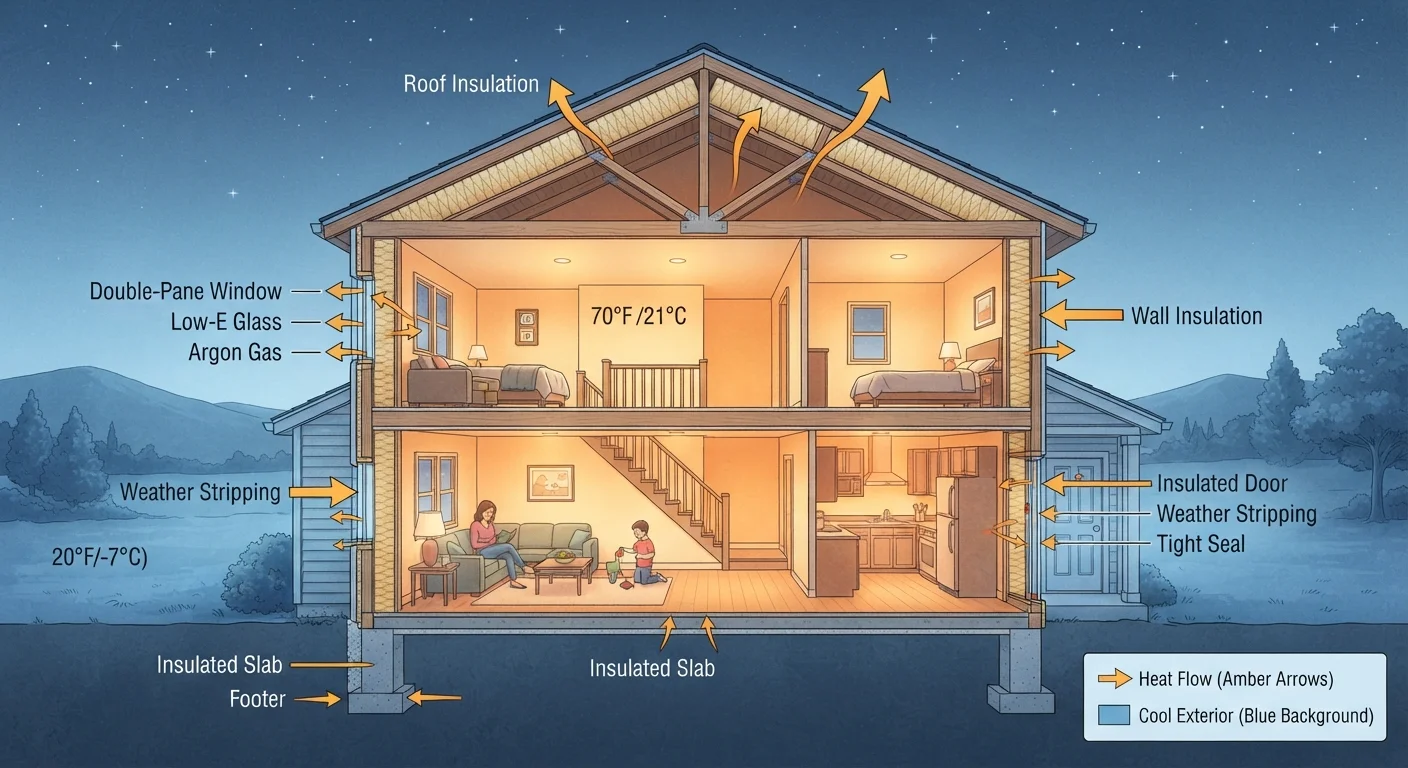
Pollutant sources matter less when air is exchanged frequently. Modern homes built to tight energy-efficiency standards trap air - and everything in it - more effectively than older, draftier construction. This is a meaningful trade-off: energy savings come with a ventilation cost. See how insulation and airtightness interact in our article on how homes retain or lose heat.
Mechanical ventilation - including bathroom exhaust fans, kitchen hoods, and whole-house systems - compensates when natural airflow is limited. Running bathroom fans for at least 15-20 minutes after a shower, and using kitchen ventilation during every cooking session, are two of the highest-impact habits available to most households.
HVAC Filters Need Regular Attention
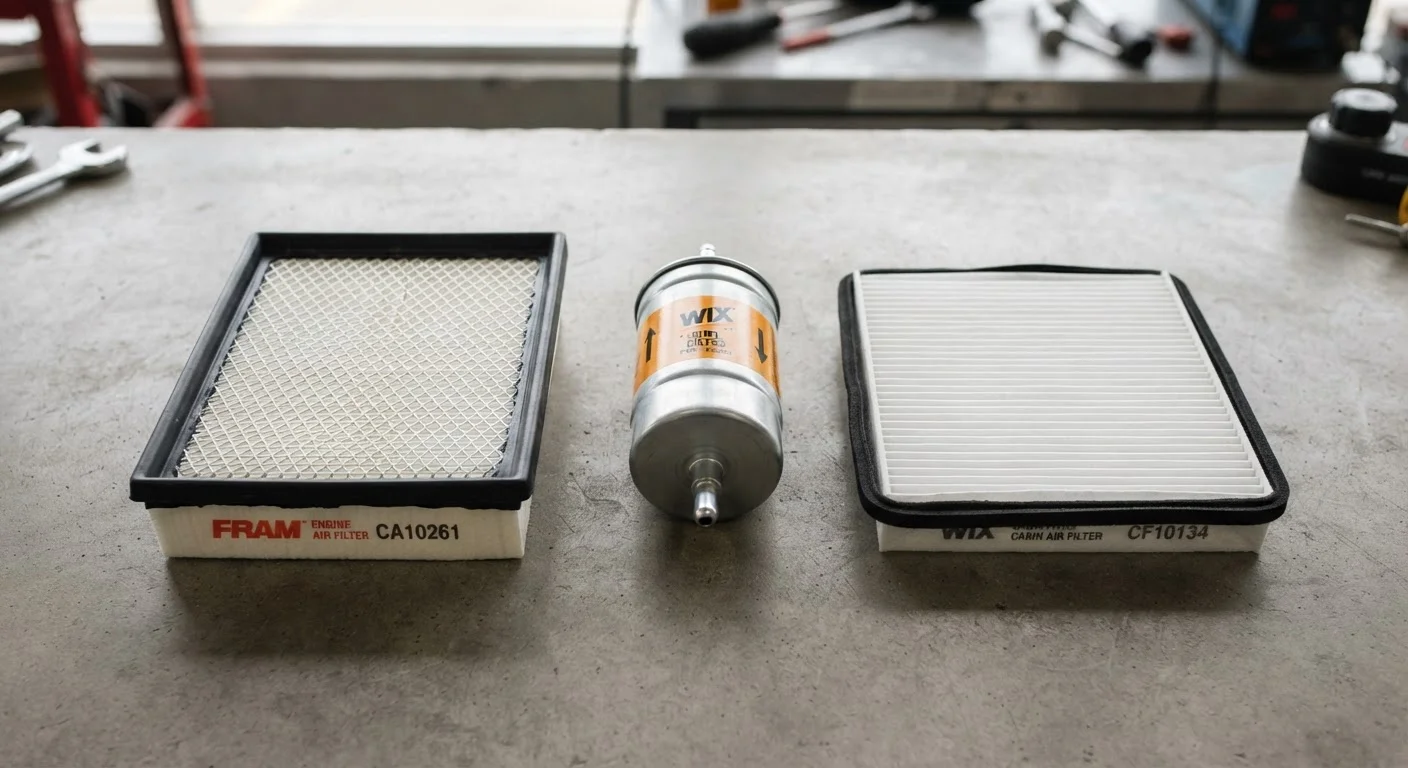
A clogged or low-rated HVAC filter may allow fine particles to circulate freely while simultaneously reducing airflow through the system. Most manufacturers recommend checking filters monthly and replacing them every one to three months depending on usage and household conditions. Check your system's documentation for the recommended filter rating (MERV rating) - too high a rating on an older system can restrict airflow and strain the unit.
Air filters in HVAC systems capture airborne particles, but their effectiveness depends heavily on the filter rating and how often they're replaced. A filter that's overdue for a change can actually restrict airflow without meaningfully improving air quality - a detail explored further in our guide to what air filters actually do.
Small Daily Habits That Quietly Shape Air Quality
Beyond major sources, a range of everyday behaviours influences what you breathe indoors. Tracking shoes through the home brings in outdoor pollutants, pesticide residues, and particulates. Candles and incense release fine particles and combustion byproducts. Dry-cleaned clothes off-gas solvents for a period after collection.
Some habits that seem unrelated - like the small routines that damage household surfaces - also affect air quality indirectly. Certain cleaning shortcuts, for example, involve stronger chemical products that increase VOC load. The Everyday Habits hub covers how daily routines compound into lasting outcomes, which applies equally well to the air environment you create at home.
Houseplants are often cited as air purifiers, but research suggests their effect in a typical room is modest at best. They contribute to humidity and can support psychological comfort, but they are not a substitute for ventilation or source control.
This article provides general educational information about indoor air quality and is not a substitute for professional assessment, medical advice, or guidance from a qualified indoor air quality specialist. If you have specific health concerns related to air quality in your home, consult a qualified healthcare professional or certified industrial hygienist.