
Why Layout Determines Cooking Effort
Most kitchen frustration isn't about skill or time - it's about friction. When the colander is in a different cabinet from the pasta pot, when spices are stacked four deep in a corner cupboard, or when the coffee maker occupies the only stretch of counter near the sink, small inefficiencies stack up into a daily drain. The layout of your kitchen silently dictates how much mental and physical effort every meal requires.
The goal of a well-organized kitchen isn't aesthetic tidiness. It's reducing the number of decisions, steps, and searches between deciding to cook and actually eating. This connects to a broader principle explored in why a tidy-looking home can still feel chaotic - surface order and functional organization are not the same thing.
Organization Looks Different in Every Kitchen
These principles apply to most kitchens, but your layout, household size, and cooking style all influence what works best. Adapt each suggestion to fit your actual habits rather than an idealized version of them. A system that works for a solo renter will look different from one shared by a family of four.
The Zone Principle: Organize by Task, Not Category
The single most effective shift in kitchen organization is moving from category-based storage (all baking items together, all plastics together) to task-based zones. A zone groups everything you need for one activity in one place, minimizing movement while that task is underway.
Common kitchen zones worth establishing:
- Coffee and breakfast zone: Mugs, coffee, kettle, toaster, and any morning supplements near an outlet and away from the main prep area.
- Prep zone: Cutting boards, knives, peeler, grater, and measuring tools within reach of the main countertop work surface.
- Cooking zone: Oils, frequently used spices, spatulas, tongs, and pot holders adjacent to the stove.
- Cleaning zone: Dish soap, scrubbers, and drying rack near or beside the sink.
For kitchens shared with others, organizing shared spaces requires that zones be clearly understood by everyone using the kitchen, not just the person who set them up.
Countertop Discipline: What Earns Its Place
Countertop space is your primary work surface. Every item that permanently occupies it reduces the effective workspace available for cooking. A useful test: if you don't use an item at least once a day, it likely doesn't belong on the counter.
Appliances and tools that genuinely earn permanent counter space for most households include a coffee maker, a knife block or magnetic strip, and perhaps one small appliance used at nearly every meal. Everything else - the stand mixer, the air fryer, the blender - should have a home in a cabinet, accessible but not consuming valuable real estate.
Use Vertical Space Intentionally
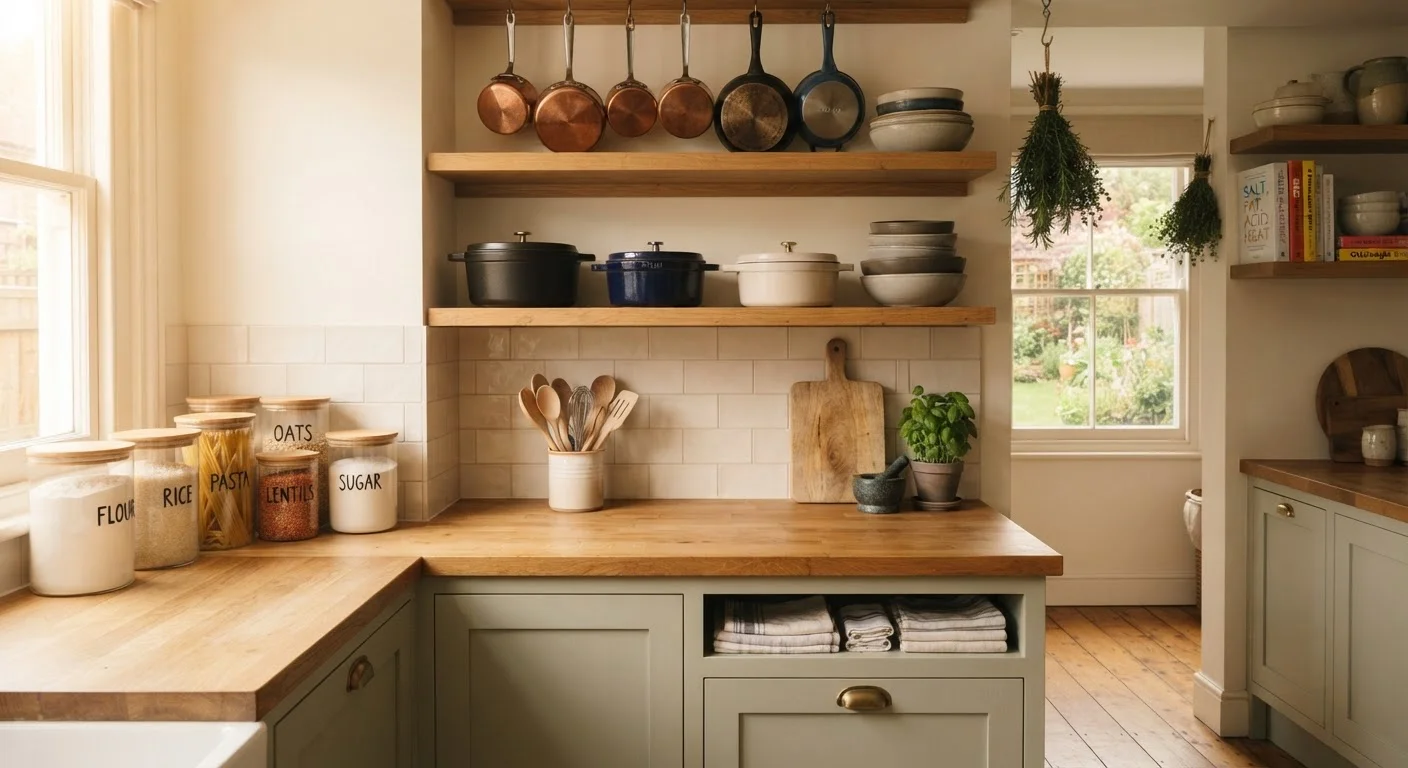
Wall-mounted magnetic strips, pegboards, and shelf risers can dramatically expand functional storage in small kitchens without requiring renovation. Assign vertical storage to frequently used tools so they stay visible and accessible without consuming counter space.
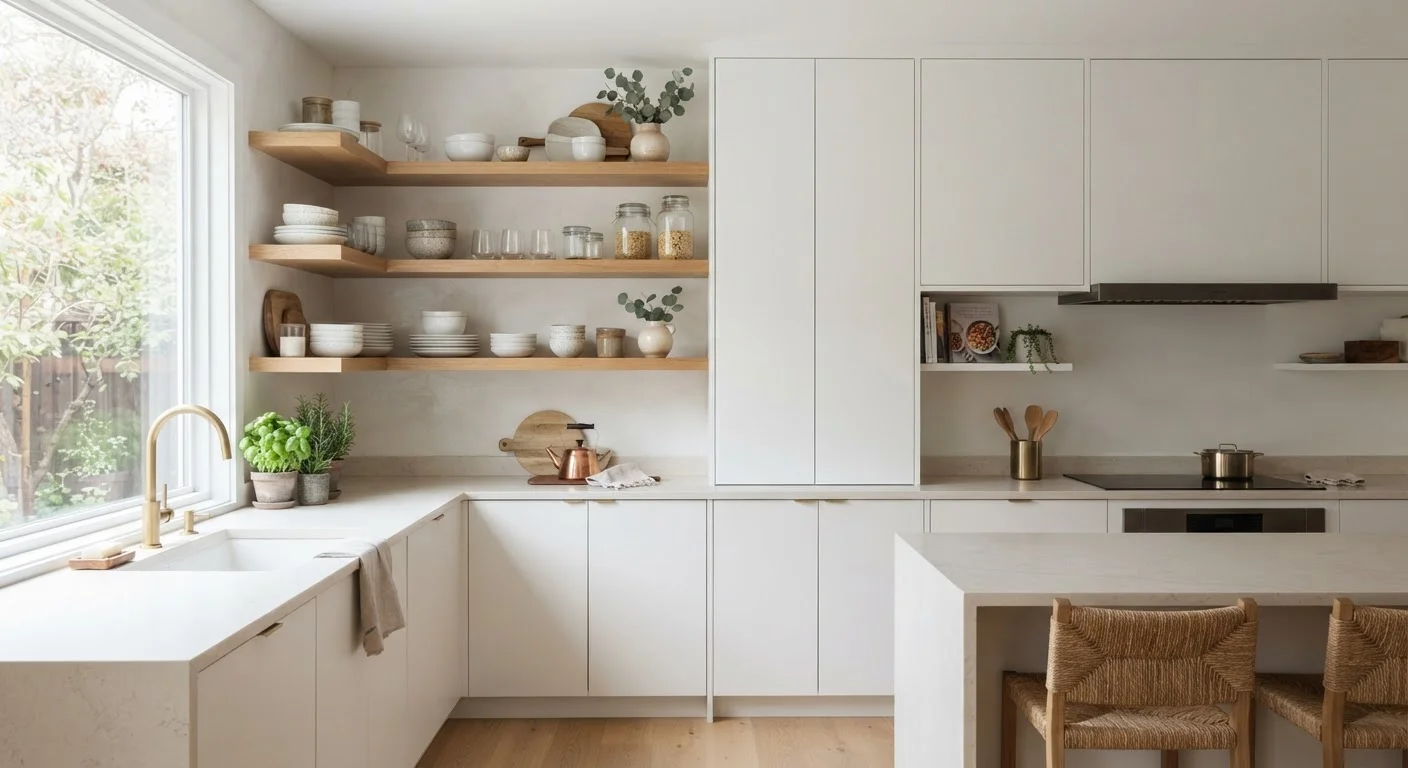
If your kitchen is small and storage is limited, open shelving vs. closed cabinets is worth considering as a deliberate choice rather than a default one.
Quick Wins You Can Act on Today
Reorganizing an entire kitchen is a project. But several high-impact changes take under fifteen minutes and deliver immediate results. Start with these before touching anything structural.
If the kitchen is part of a broader home organization effort, decluttering without the overwhelm offers a measured approach that prevents the process from becoming its own source of stress.
Sustaining Your System Without Constant Effort
A kitchen organization system only works if it's easy to maintain. The most common reason systems fail isn't that they were badly designed - it's that the reset routine was too demanding to sustain.
“The best kitchen organization is invisible. When everything has a home that makes intuitive sense, you stop thinking about where things are and start thinking about what you're cooking.”
— Sarah Williams, Professional kitchen organizer and home efficiency consultant
Build in a light daily reset: after cooking and cleaning up, return everything to its zone. This takes two to three minutes and prevents the slow drift that turns a functional kitchen back into a chaotic one. If items are consistently ending up in the wrong place, that's feedback - their assigned home may not be working, and it's worth adjusting the system rather than blaming the habit.
For households managing shared cooking responsibilities, approaches that reduce household friction can help align expectations around who maintains what and when.
30%
Time lost searching for items mid-cook
Research in applied ergonomics suggests a significant share of kitchen task time is spent locating items rather than preparing food, particularly in disorganized spaces.
72%
Home cooks report a cluttered kitchen reduces their motivation to cook
According to a survey by a US-based home organization platform, nearly three-quarters of respondents said countertop clutter discouraged them from cooking at home.