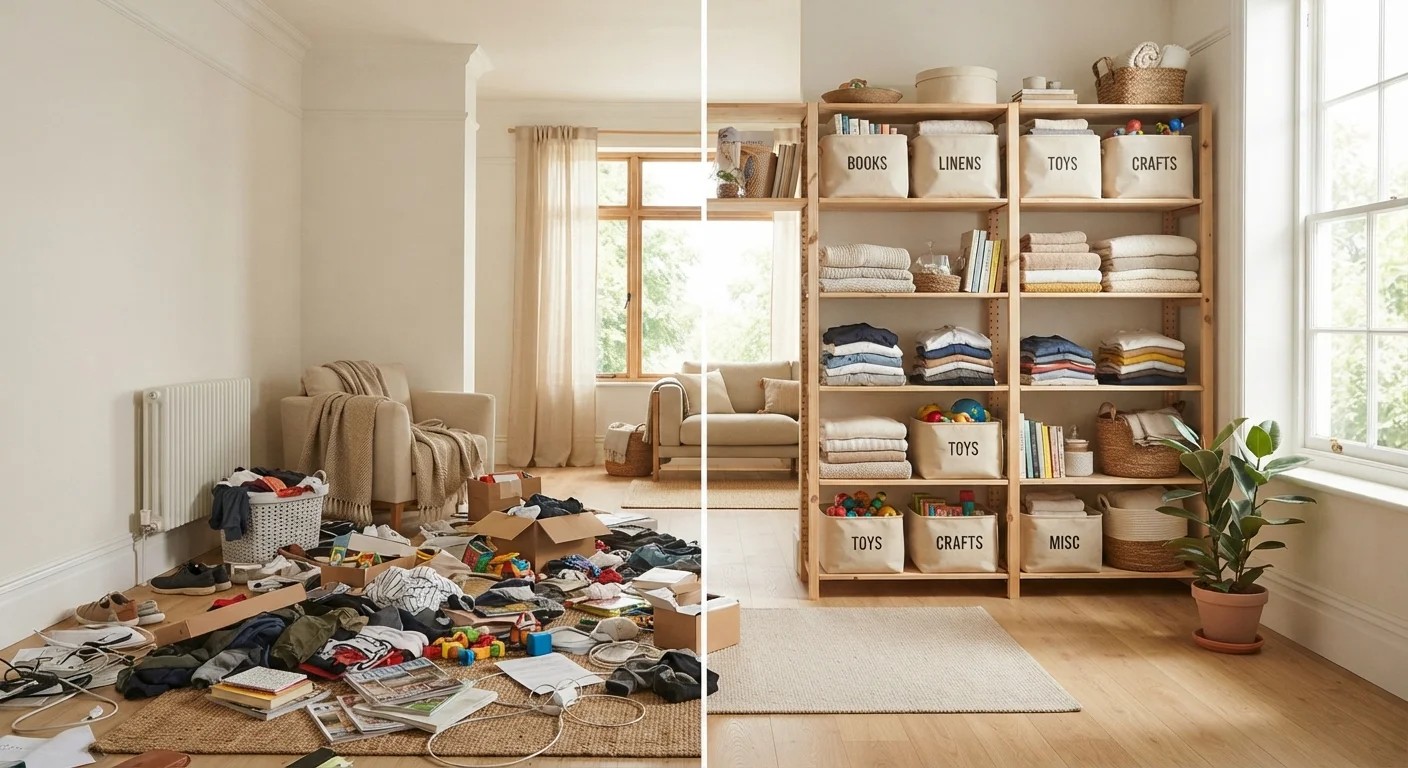


The Gap Between Looking Tidy and Feeling Calm
Many people have experienced the frustration of cleaning for an hour, stepping back to admire the result - and still feeling vaguely unsettled. The kitchen counter is clear. The living room is presentable. And yet something is off.
That unsettled feeling usually has a source: the home looks organized but isn't actually functional. Surfaces are clear because things were moved quickly into drawers, baskets, or spare rooms. The visual chaos is gone, but the underlying disorder - items without logical homes, systems that fight against daily habits, decisions deferred rather than made - is very much still there.
Understanding this gap is the first step toward addressing it. Decluttering and organizing are distinct processes, and confusing one for the other is one of the most common reasons homes feel chaotic even when they appear clean.
~23 min
Average time lost daily searching for items at home
Commonly cited in productivity and home organization research, though exact figures vary by study and household type.
~80%
Of clutter is estimated to be items never or rarely used
A frequently referenced figure in professional organizing literature, suggesting most stored items don't serve active daily needs.
Where Hidden Clutter Actually Lives
Hidden clutter tends to concentrate in a few predictable places. Catch-all drawers, overstuffed closets, the tops of wardrobes, spare rooms used as overflow zones - these are where quick tidying deposits the problem rather than solving it. Over time, these spaces become so dense that retrieving anything from them requires effort, which adds friction to ordinary daily tasks.
But hidden clutter isn't only physical. Decision fatigue is a real organizational cost: when nothing has a clear home, every interaction with an object - where to put it down, where to find it later - requires a micro-decision. Multiply that across a household and a day, and the mental load becomes significant even in a room that photographs beautifully.
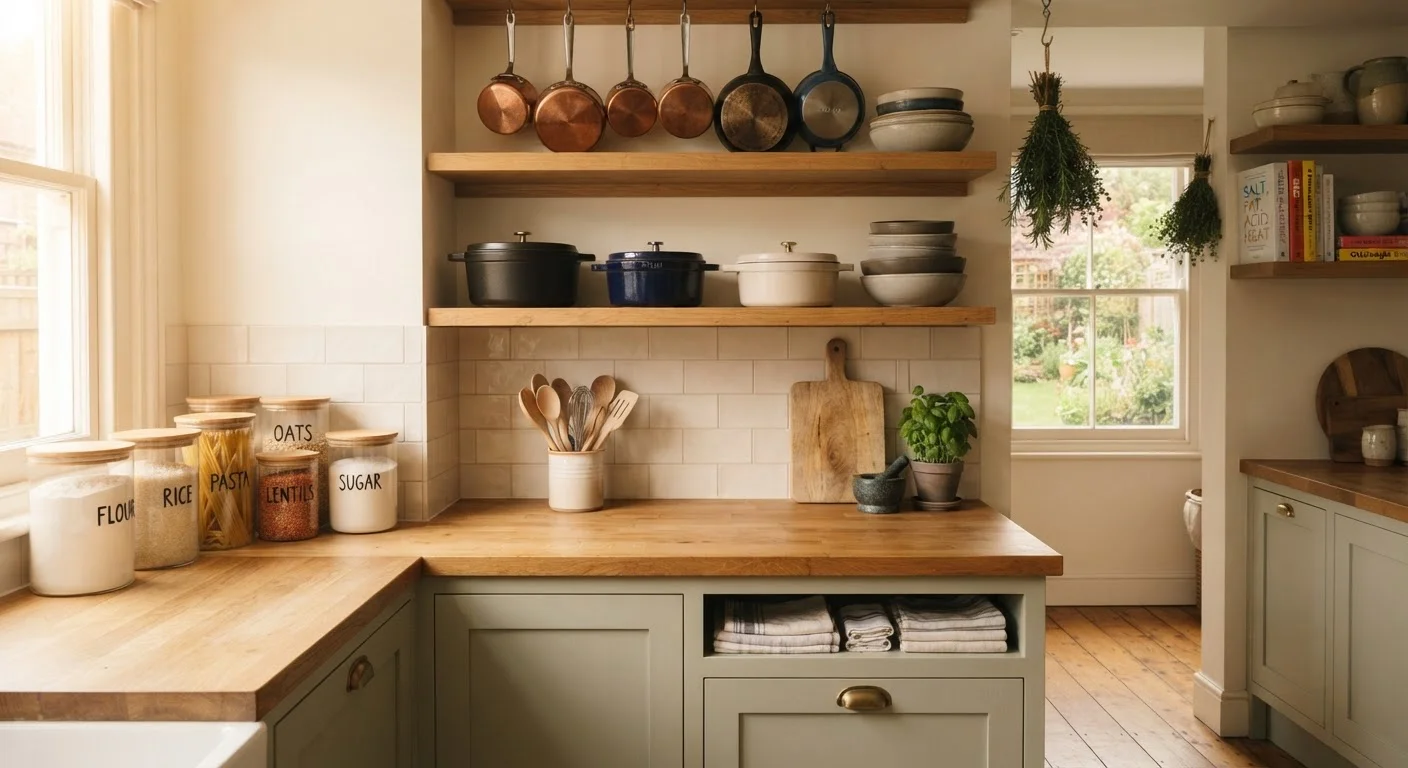
High-traffic zones deserve particular attention. How a kitchen is arranged directly affects how much energy daily meals require - the same principle applies to entryways, bathrooms, and home office areas. If the things you reach for most often aren't easy to access, the system is working against you regardless of how it looks.
Why Systems Break Down Even When They Start Well
A common pattern: someone invests a weekend in a thorough organization project. Everything is sorted, labeled, and stored. It looks great. Within three weeks, the space has reverted to its previous state - or worse, because now items are in the wrong containers.
The reason is usually a mismatch between the system and the actual behavior of the people using it. A filing system that requires three steps to return a document will be ignored in favor of the nearest flat surface. A kitchen layout that puts everyday items behind less-used ones creates the same problem. Labels and containers can help - or create more maintenance work depending on whether they match how the household actually operates.
Sustainable organization requires honesty about real habits rather than aspirational ones. When multiple people share a home, this challenge multiplies - a system one person finds intuitive can feel unworkable to another.
Test Your System Before Committing to It
Before investing in storage containers or labeling a new system, live with it informally for a week. Put items where you instinctively reach for them, then observe where they actually end up. The pattern that emerges reflects real behavior - and that's what your storage system should be designed around.
Addressing the Real Friction Points
Rather than another whole-home overhaul, the most effective approach is friction auditing: identifying the specific moments in your day when the home creates unnecessary effort. Where do you set things down because putting them away feels like too many steps? What do you search for every week? Where do things pile up within hours of being cleared?
Each of these moments points to a systems failure - not a personal failing. Once identified, most friction points can be addressed with targeted, modest changes: moving frequently used items to eye-level storage, reducing the number of steps required to complete a routine task, or simply committing to what a space is actually for rather than what it theoretically could store.
For a measured, sustainable approach to reducing clutter without a marathon session, practical decluttering methods that fit into daily life offer a realistic entry point. And if the whole house feels like it needs attention, a structured first approach can help you build momentum without burning out.
The goal isn't a home that looks perfect in photos. It's a home that quietly supports your daily life - where finding things, putting things away, and moving through your routines requires as little effort as possible.
“Organization is not about perfection; it's about efficiency, reducing stress and clutter, saving time and money, and improving your overall quality of life.”
— Christina Scalise, Author and professional organizer