
How Each Floor Is Actually Built
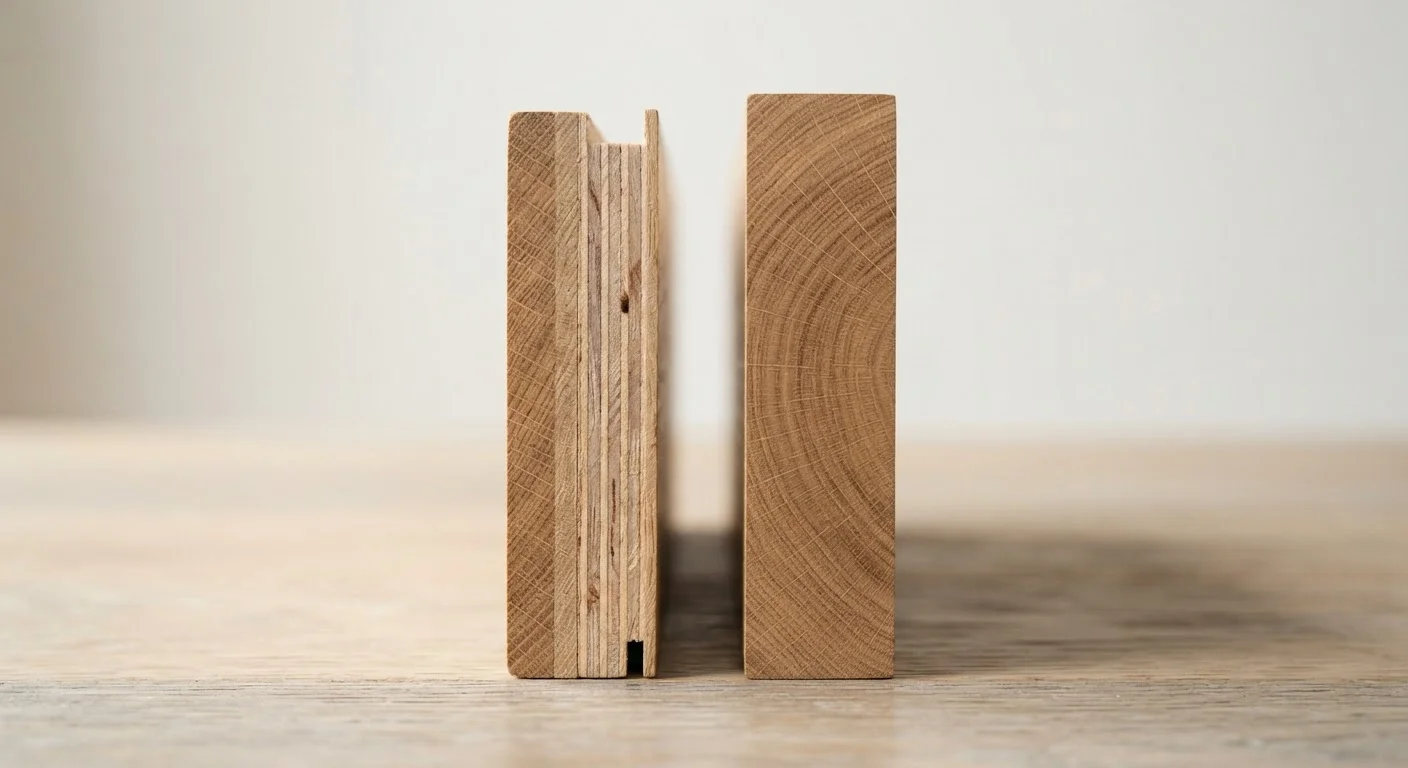
Understanding what's beneath your feet matters more than most homeowners realize. Solid hardwood is milled from a single piece of wood - typically 3/4 inch thick - from species like oak, maple, or hickory. Every plank is uniform wood from top to bottom, which is exactly what gives it refinishing longevity but also makes it sensitive to moisture.
Engineered wood, by contrast, is a layered composite. A real wood veneer (the wear layer) sits on top of multiple cross-directional plywood or HDF (high-density fiberboard) core layers. This cross-grain construction is what makes engineered flooring dimensionally stable - it resists the expansion and contraction that solid wood undergoes when humidity changes. Wear layer thickness varies, typically ranging from 1 mm to 6 mm, and that number directly determines how many times the floor can be sanded and refinished.
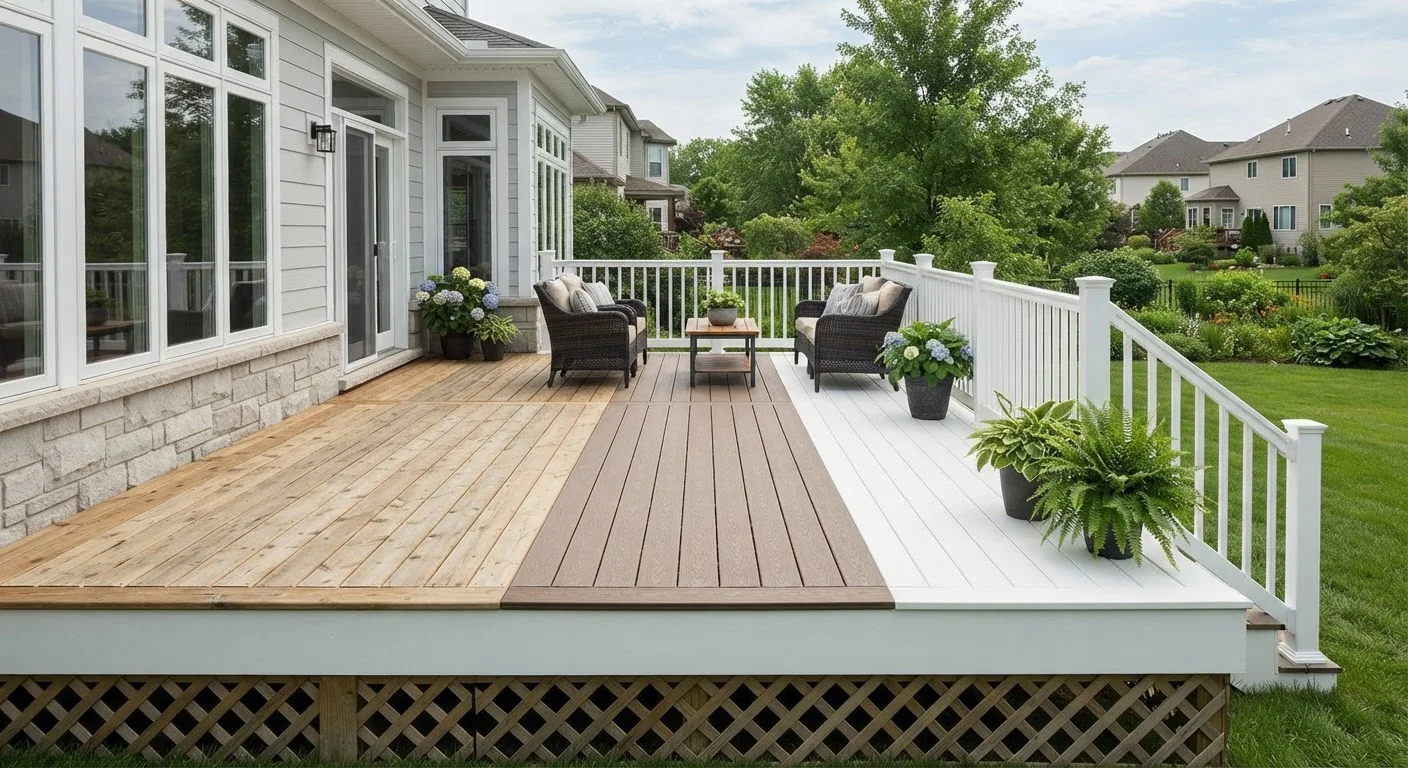
If you're comparing different flooring types for other areas of the home, our guide on outdoor decking materials covers a similar layered decision for exterior spaces.
Moisture, Stability, and Where Each Floor Can Go
This is where the two options diverge most sharply. Solid hardwood is generally not recommended for basements, over concrete slabs without a subfloor, or in rooms with significant humidity swings. Wood expands when it absorbs moisture and contracts when it dries - over time, this cycling causes gapping, cupping, or warping if conditions aren't controlled.
Engineered wood performs meaningfully better in these conditions. Its plywood core limits movement, making it suitable for below-grade installation, direct glue-down over concrete, or use over radiant floor heating systems. That said, engineered wood is not waterproof - standing water or flooding will still damage it. The advantage is tolerance for ambient humidity variation, not immunity to moisture.
| Criterion | Engineered Wood | Solid Hardwood |
|---|---|---|
| Construction | Veneer over plywood core | Single solid wood plank |
| Moisture resistance | Good - handles humidity variation | Poor - prone to swelling and warping |
| Below-grade installation | Yes, generally suitable | Not recommended |
| Radiant heat compatibility | Yes, most products | Limited - check manufacturer specs |
| Refinishing cycles | 1-3 times (wear layer dependent) | 5-8 times typically |
| Typical lifespan | 25-50 years | 50-100+ years |
| DIY installation ease | High - floating option available | Moderate - nail/staple required |
| Upfront cost | Generally lower | Generally higher |
Room selection should drive your choice as much as aesthetics. A main-floor living room in a climate-controlled home is suitable for either product. A finished basement or a kitchen with variable humidity generally favors engineered wood.
Installation Methods and Subfloor Requirements
Solid hardwood is typically nailed or stapled to a wood subfloor - it needs something to fasten into. This limits installation to above-grade spaces with plywood or OSB subfloors and makes it incompatible with direct concrete applications. Most solid installations also require the wood to acclimate in the home for several days before being laid.
Engineered wood offers more flexibility. Depending on the product, it can be nailed, stapled, glued down directly to concrete, or floated (clicked together and resting on an underlayment without adhesive). Floating installation makes engineered floors particularly DIY-accessible, though glue-down applications typically produce a more solid underfoot feel and reduce hollow sounds.
3-6 mm
Engineered wear layer thickness range
Thicker wear layers (4-6 mm) allow multiple refinishing cycles and are considered a key quality indicator when comparing engineered wood products.
3/4"
Standard solid hardwood plank thickness
This full-thickness construction is what enables solid hardwood to be sanded and refinished repeatedly over its lifespan.
3/16"
Common subfloor flatness tolerance
Most flooring manufacturers specify that subfloors must not deviate more than 3/16 inch over a 10-foot span to prevent squeaking and joint failure.
Both flooring types benefit from a flat, level subfloor. A subfloor with high spots or dips exceeding manufacturer tolerances - commonly 3/16 inch over 10 feet - can cause planks to flex, squeak, or separate at seams. Subfloor prep is often where renovation costs escalate, regardless of which flooring you choose.
Refinishing, Longevity, and Long-Term Cost
Solid hardwood's defining advantage is refinishing depth. At 3/4 inch thick, a well-maintained floor can typically be sanded and refinished five to eight times across its lifespan - enough to last 80 to 100 years or more in the right conditions. Each refinishing cycle can restore a scratched or worn surface to near-original condition.
Engineered wood's refinishing potential depends entirely on wear layer thickness. A 2 mm wear layer might allow one light sand; a 4-6 mm layer can support two or three refinishing cycles. Once the wear layer is consumed, the floor cannot be refinished and must be replaced. This doesn't make engineered wood a short-lived product - quality engineered floors often carry 25-50 year warranties - but the ceiling on longevity is lower than solid hardwood under ideal conditions.
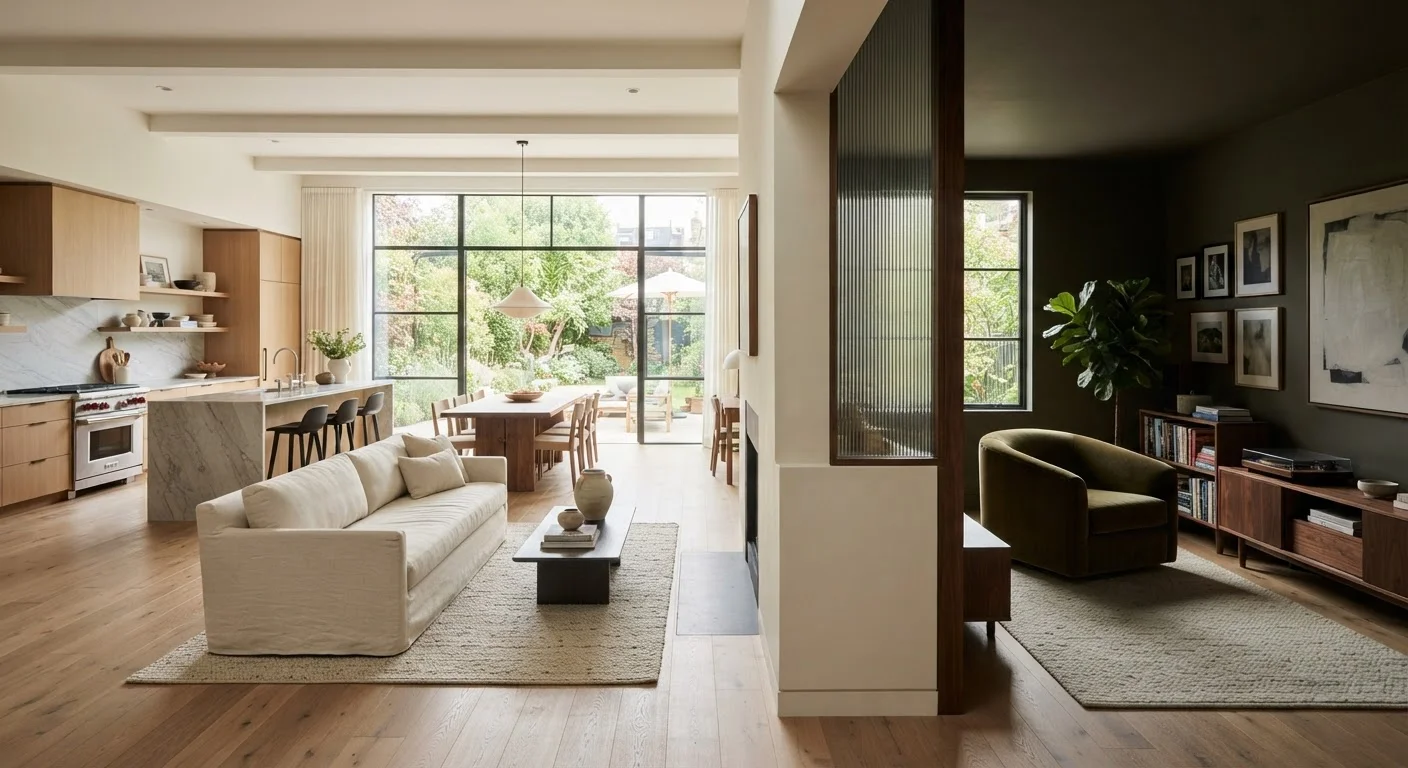
When planning long-term home improvements, layout decisions affect how your flooring performs visually too. See how open-plan versus defined room layouts interact with flooring continuity and light.
A Note on Surface Appearance
Once installed and finished, engineered wood and solid hardwood are visually indistinguishable to most observers. Both feature a real wood surface, and both take stain and finish in similar ways. The differences that matter - moisture behavior, refinishing depth, installation flexibility - are structural, not cosmetic. Don't let appearance alone drive your choice; evaluate the room conditions first.
From a cost perspective, engineered wood typically runs lower in both material and labor. Solid hardwood can cost more per square foot installed, but when amortized over a multi-decade lifespan with refinishing, the cost-per-year calculation may favor solid hardwood in stable environments.