
Why the Material Choice Matters More Than You Might Think
Decking isn't a decision you revisit every few years. A well-installed deck typically stays in place for two to three decades, which means the material you choose today shapes your maintenance schedule, your wallet, and your outdoor living experience for a long time. The three most common options - natural wood, composite, and PVC - each make legitimate sense in the right context. The challenge is matching each material's real-world traits to your specific situation rather than defaulting to whatever a neighbor used or a single price comparison suggests.
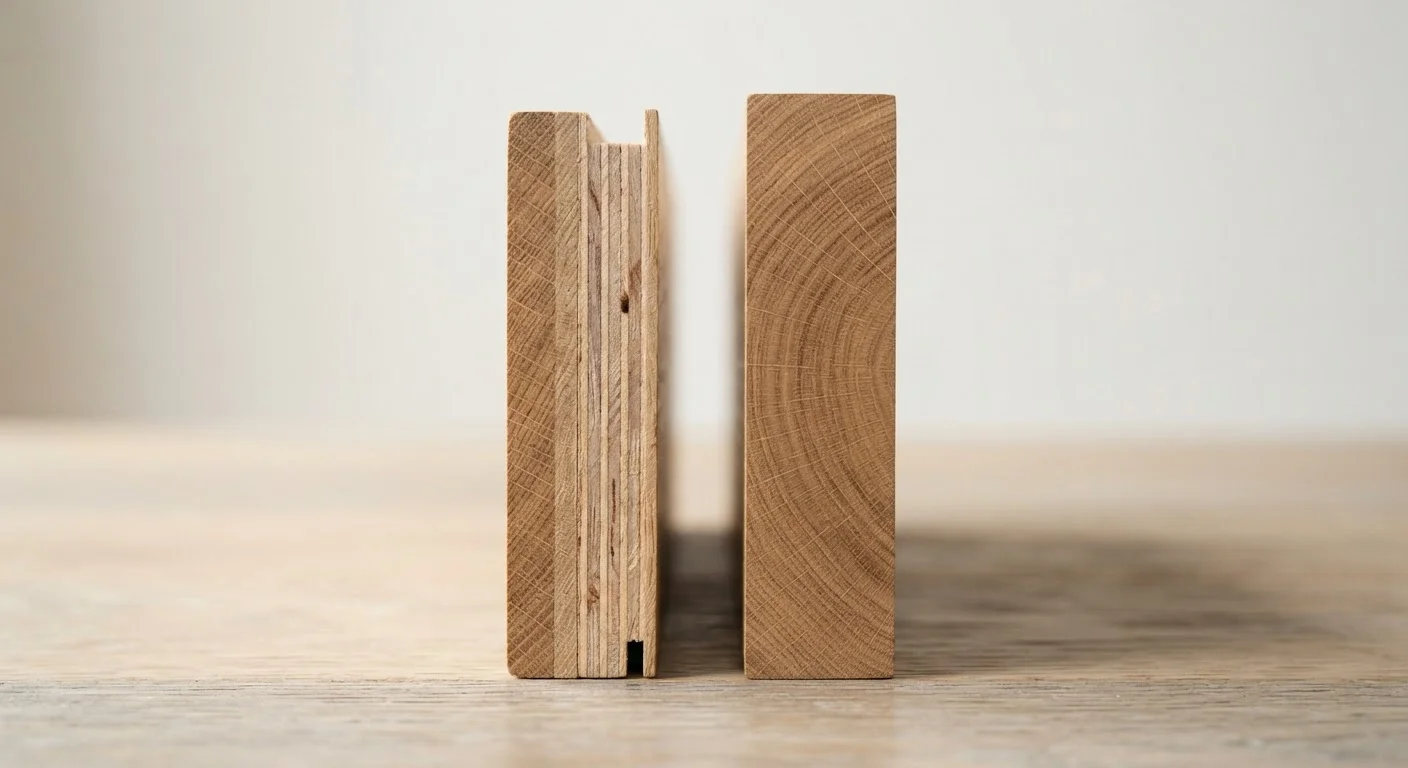
If you've ever compared engineered versus solid wood indoors, some of the same logic applies outdoors. Our practical flooring comparison explores how manufactured and natural materials behave differently under stress - a useful frame for understanding decking trade-offs too.
Natural Wood: The Classic With Ongoing Demands
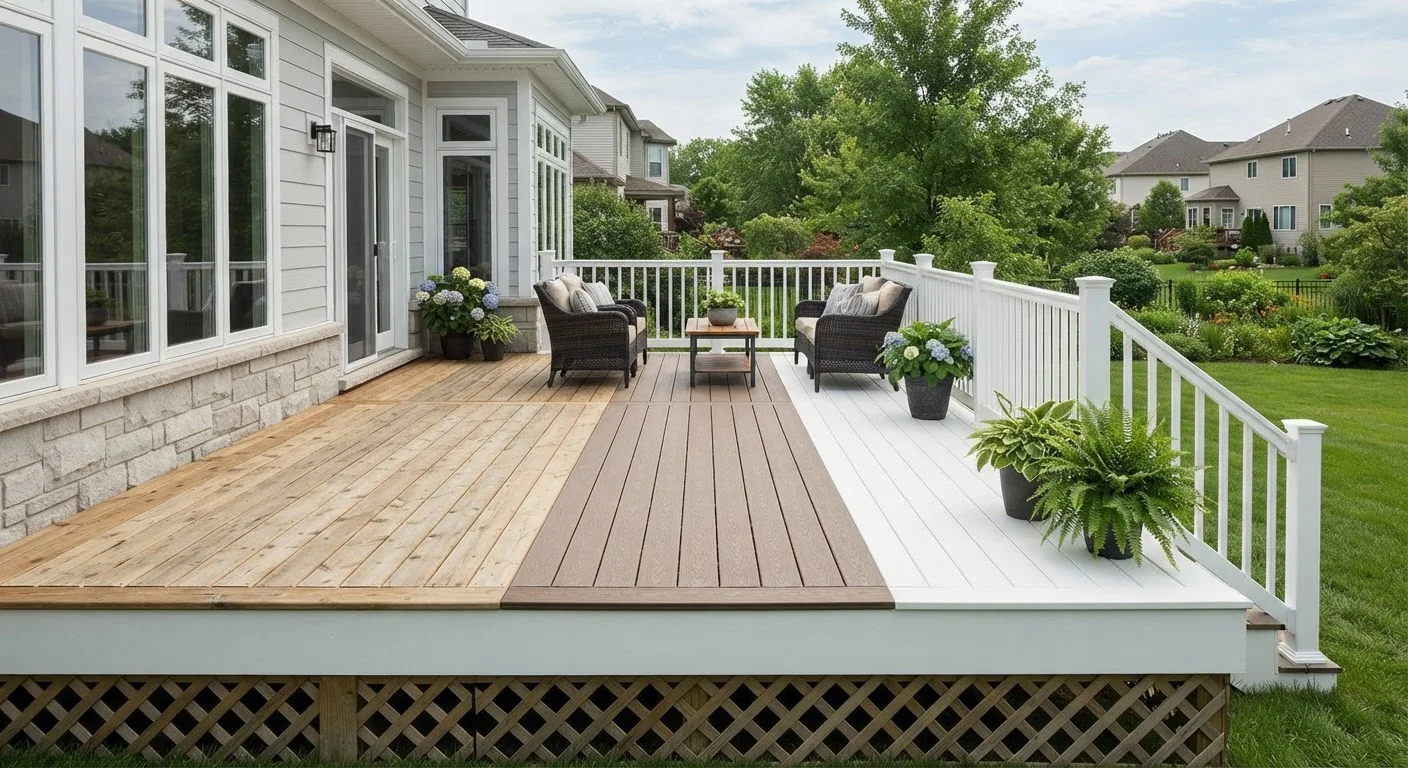
Natural wood decking - typically pressure-treated pine, cedar, or redwood in the US market - remains popular for good reasons. It has an authentic grain and warmth that manufactured materials approximate but rarely fully replicate. It's also the most accessible entry point cost-wise, with pressure-treated lumber generally representing the lowest upfront material cost of the three options.
The catch is maintenance. Wood requires sealing, staining, or painting every one to three years depending on climate and species. Without it, boards gray, crack, and eventually rot. Pressure-treated wood resists insects and decay by design, but it still needs surface protection from UV and moisture. Cedar and redwood are naturally more resistant but come at a higher material cost.
Don't Skip the Structural Inspection
Replacing surface decking boards is tempting as a DIY project, but the frame underneath is what keeps the structure safe. Rot in joists or a deteriorated ledger board - where the deck attaches to the house - can pose serious safety risks. A licensed contractor or structural inspection before any surface replacement is strongly advisable, and many jurisdictions require permits for deck work above a certain height or square footage.
Structurally sound deck framing is non-negotiable regardless of which surface material you choose. If you're replacing surface boards on an existing frame, have a qualified contractor inspect the joists, beams, and ledger board before proceeding. Permits may be required for structural changes in many US jurisdictions - check with your local building department.
Composite Decking: The Low-Maintenance Middle Ground
Composite decking is manufactured from a blend of wood fiber and recycled plastic. The result is a board that resists rot, doesn't splinter, and holds color far longer than untreated wood. Most composite products carry warranties ranging from 25 to 30 years, though actual performance depends heavily on the product's construction (capped composite, where a polymer shell encases the core, tends to outperform uncapped versions in stain and fade resistance).
Maintenance for composite is minimal - typically an annual wash with soap and water. It doesn't need staining or sealing. The trade-off is a higher upfront material cost than basic pressure-treated lumber, and composite can feel noticeably hotter underfoot on sunny summer days than wood. It also lacks the grain depth of real wood, though modern manufacturing has narrowed that gap considerably.
Check the Cap Before You Buy Composite
Not all composite decking is built the same. Capped composite - where a protective polymer shell wraps the core - resists staining, fading, and mold significantly better than uncapped versions. When reviewing product specifications, look explicitly for 'four-sided capping' or 'fully capped' language. It typically adds cost but meaningfully extends appearance and performance over time.
PVC Decking: Maximum Moisture Resistance
PVC (polyvinyl chloride) decking contains no wood fiber at all - it's a fully synthetic material. That composition makes it essentially impervious to moisture, rot, and insects, which is why it's frequently chosen for pool surrounds, docks, and coastal environments where humidity and water exposure are constant.
PVC holds up well to freeze-thaw cycles and doesn't absorb water, meaning it won't swell or contract as dramatically as wood. Like composite, it requires only occasional cleaning. However, PVC typically sits at the higher end of the material cost range, and it has the least natural appearance of the three. In very hot climates, thermal expansion can be more pronounced than with composite, so proper gapping during installation is important.
| Natural Wood | Composite | PVC | |
|---|---|---|---|
| Upfront Material Cost | Lower (pressure-treated) | Mid to high range | Higher range |
| Maintenance Required | High - seal/stain every 1-3 years | Low - annual cleaning only | Low - occasional washing |
| Moisture Resistance | Moderate (species-dependent) | Good (capped composite) | Excellent - no wood fiber |
| Typical Lifespan | 15-25 years with upkeep | 25-30 years (warranted) | 30+ years |
| Aesthetic (natural look) | Authentic grain and texture | Close approximation | Least natural appearance |
| Heat Retention | Moderate | Can run hot in direct sun | Can run hot; expands more |
| Environmental Footprint | Varies - FSC-certified preferred | Often uses recycled content | Petroleum-based, no wood waste |
One consideration worth noting: because PVC is a petroleum-derived product with no recycled content (in most formulations), some homeowners weigh its environmental footprint differently than wood or composite made with recycled materials.
Making the Decision for Your Specific Yard
Climate is the first filter. If you're in the Pacific Northwest, Gulf Coast, or anywhere with sustained humidity or rainfall, rot and mold resistance become primary concerns - pushing the comparison toward composite or PVC. In drier climates, wood performs more durably and the maintenance burden is lighter.
Budget across the full ownership period - not just purchase price - is the second filter. Wood's lower upfront cost can narrow or reverse over 20 years once you factor in regular staining, sealant, and occasional board replacement. Composite and PVC trade higher initial cost for reduced ongoing expense.
Finally, consider how you use the deck. A shaded dining area used primarily for entertaining looks excellent in cedar or a wood-look composite. A pool deck or waterfront surface has a stronger functional case for PVC. Whatever material you select, ensure installation meets local building codes, the frame is properly ventilated underneath, and fasteners are rated for exterior use. Those fundamentals matter more than any surface material decision.
This article provides general home improvement information for educational purposes. Always consult a licensed contractor and your local building department before beginning any deck construction or major repair project. Requirements vary by municipality.