
What You're Actually Choosing Between
The open-shelving-versus-cabinets debate is really a question about how you live in your kitchen day to day - not just how you want it to look in photos. Both systems store the same items. The difference is in access speed, maintenance load, visual noise, and how forgiving each is of real-life imperfection.
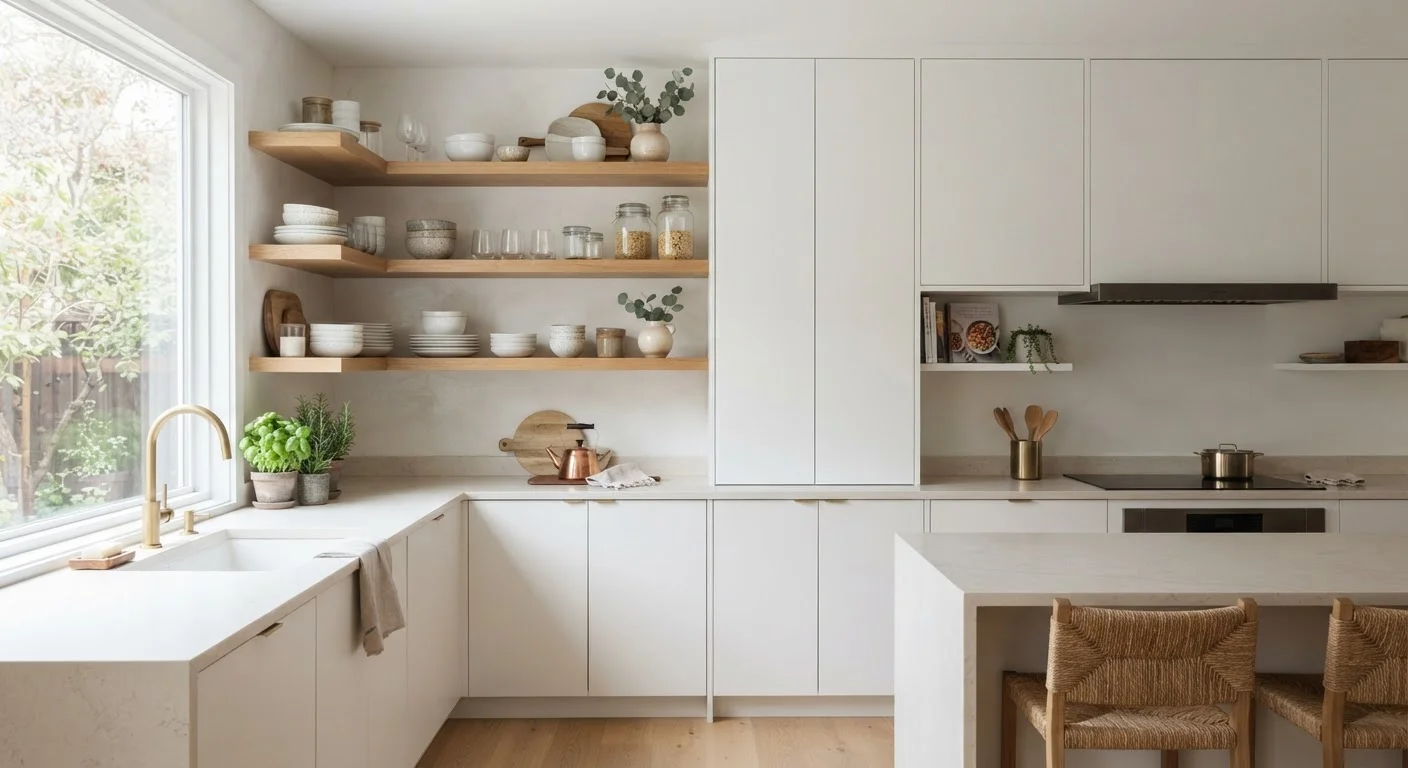
Open shelves remove doors entirely, placing everything in plain sight. Closed cabinets keep contents hidden behind doors, which may be solid, glass-fronted, or a mix. Many kitchens use both, and that hybrid model is worth considering before committing to one extreme. See our small-space storage strategies if your kitchen square footage is a limiting factor.
| Criterion | Open Shelving | Closed Cabinets |
|---|---|---|
| Item visibility | Everything in plain sight | Hidden behind doors |
| Access speed | Immediate, no doors to open | Requires opening cabinet |
| Dust & grease exposure | High - items need regular wiping | Low - doors protect contents |
| Visual tidiness | Requires consistent organization | Clutter hidden automatically |
| Room feel | Airier, more open sightlines | More enclosed, uniform look |
| Storage flexibility | Limited by what looks presentable | High - any item, any shape |
| Maintenance effort | Frequent light cleaning needed | Less frequent interior cleaning |
| Best for households | Disciplined, low-clutter users | Mixed habits, larger households |
The Real Cost of Open Shelving
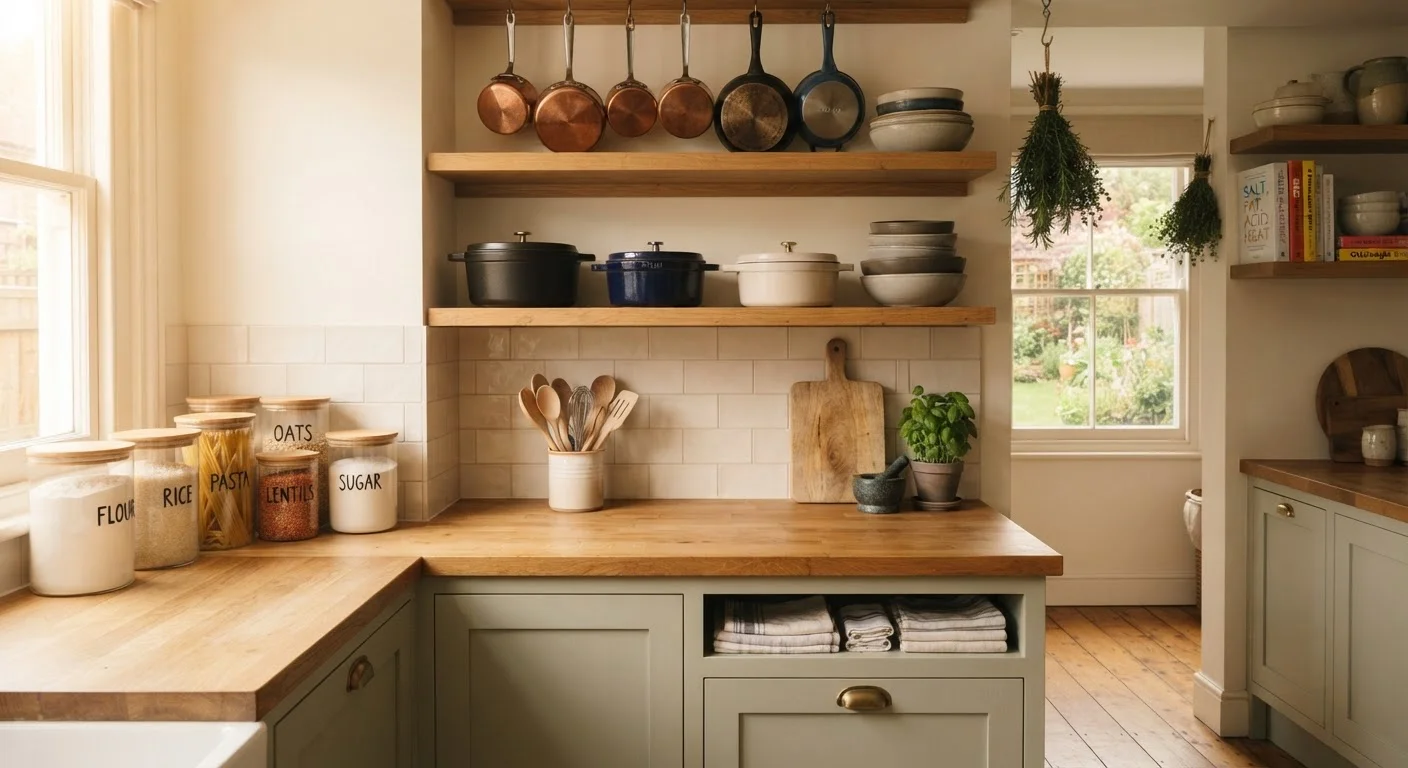
The appeal of open shelves is straightforward: items are visible, reachable, and the kitchen can feel lighter and more spacious without upper cabinet boxes crowding the walls. In practice, though, open shelving shifts maintenance from occasional deep-cleaning to continuous surface management.
Kitchens produce airborne grease and steam. On open shelves, that residue settles on dishes, glasses, and the shelf surfaces themselves - even when the kitchen is well-ventilated. Items that sit unused for a week or two will gather a light film. This isn't a dealbreaker, but it is a realistic ongoing task.
Open shelves also demand visual discipline. A cabinet hides a mismatched stack of Tupperware lids. A shelf puts it on display. If everyone in your household returns items consistently and neatly, this is manageable. If not, the aesthetic appeal of open shelving erodes quickly. Organizing shared kitchens with different tidiness standards is a challenge open shelving can amplify.
~70%
US kitchens with predominantly closed cabinetry
Industry surveys of kitchen remodels consistently show closed or semi-closed cabinetry as the dominant choice in American homes, reflecting practical maintenance preferences.
2-3×
More frequent wiping needed on open shelves
Home organization experts generally estimate open shelf surfaces in active cooking kitchens require cleaning two to three times more often than enclosed cabinet interiors.
Where Closed Cabinets Earn Their Place
Closed cabinets remain the default in most American kitchens for practical reasons. They contain visual clutter behind a uniform surface, protect stored items from grease and dust, and don't require any particular organizational discipline to look tidy from the outside.
The drawback is discoverability. Items pushed to the back of a deep cabinet can disappear from rotation entirely - you stop using the pasta maker because you forget it's there. This is a genuine storage inefficiency that affects many households, and it's worth addressing with interior organizers, lazy Susans, or pull-out drawers rather than dismissing it as a cabinet flaw. For more on this, our kitchen organization guide covers layout principles that reduce that daily friction.
Glass-fronted cabinet doors offer a middle path: the contents are visible and feel curated, while the glass still provides a layer of dust protection. This works especially well for items you're proud to display - vintage glassware, uniform container sets - while keeping less photogenic items fully hidden.
Making a Practical Decision for Your Kitchen
Rather than choosing one system wholesale, consider mapping your kitchen by use frequency. Items you reach for every single day - a go-to mug, the coffee grinder, everyday plates - are strong candidates for open shelving or a low cabinet with no door. Items used weekly or less, especially anything bulky or irregularly shaped, belong behind closed doors.
Your cleaning cadence matters too. If you wipe down surfaces every few days anyway, adding open shelves to that routine is low burden. If deep-cleaning happens monthly, closed cabinets will serve you better between sessions.
It's also worth questioning some of the assumptions driving the decision. Common storage myths often influence kitchen planning in ways that don't reflect how the space is actually used. More storage isn't always better storage - thoughtful placement of the right system beats maximizing either shelves or cabinet doors for their own sake.
Renting? Check Before Removing Doors
Open shelving is sometimes achieved by simply removing existing cabinet doors. If you rent, this requires landlord approval and you'll need to store the doors safely for reinstallation. Even in owned homes, removing doors from older cabinetry can expose unfinished interior surfaces not meant to be seen. Factor in any cosmetic remediation before committing.