
Why Small Spaces Need a Different Approach
Compact homes - studios, small flats, modest houses - amplify every organizational weakness. A single pile of unsorted mail reads as significant clutter when the total living area is limited. At the same time, small spaces respond quickly and visibly to improvement: clear one surface thoughtfully and the whole room feels different.
The temptation is to solve the problem by buying more storage: bins, baskets, organizers, shelving units. But as the storage myths that keep homes feeling cramped shows, accumulating more containers without editing what you own usually makes the problem worse. What actually works in tight square footage is a combination of using overlooked space, making furniture pull double duty, and building habits that prevent clutter from rebuilding.
The strategies below are practical, adaptable to renters and owners alike, and don't require a full renovation to implement.
Renting? Check Before You Install
Many vertical storage solutions - wall-mounted shelving, pegboards, or rail systems - require drilling into walls. If you rent, review your lease terms and check with your landlord before making any permanent modifications. Freestanding alternatives, over-door organizers, and tension-rod systems can often achieve similar results without wall anchoring.
Six Storage Approaches That Work in Compact Homes
Go vertical on every available wall
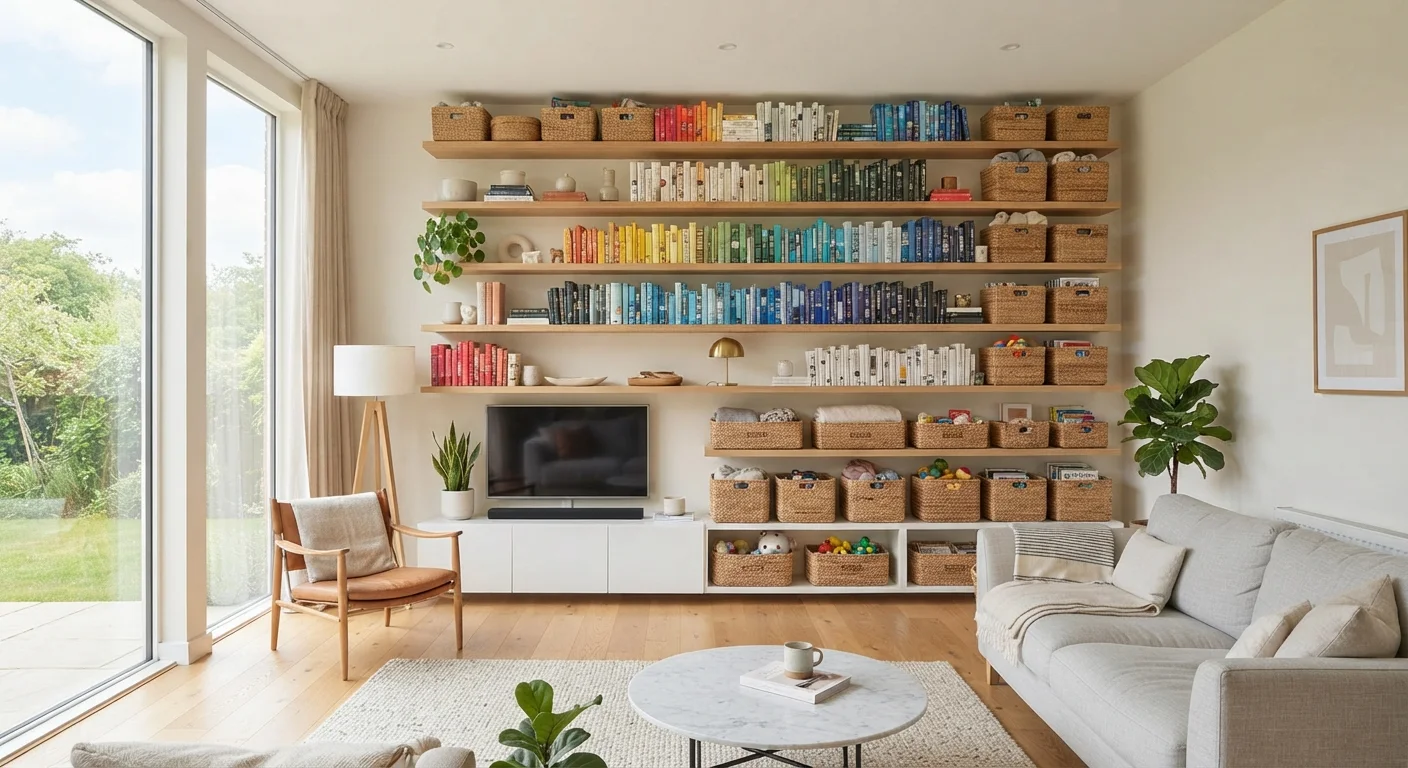
Floor space is finite in a compact home, but wall height is frequently ignored. Installing shelving that runs close to the ceiling - not just at eye level - dramatically increases usable storage without consuming any floor area. Open shelves work well for everyday items; closed wall cabinets suit anything you'd rather keep out of sight.
Hooks, pegboards, and rail systems mounted on bare walls can hold bags, tools, cleaning supplies, and kitchen equipment. The goal is to treat walls as active infrastructure, not decoration. For a deeper look at this approach, see our guide to vertical space - a dimension most homes never fully use.
Walls are active infrastructure, not just decoration - treat them accordingly.
Choose furniture with built-in storage
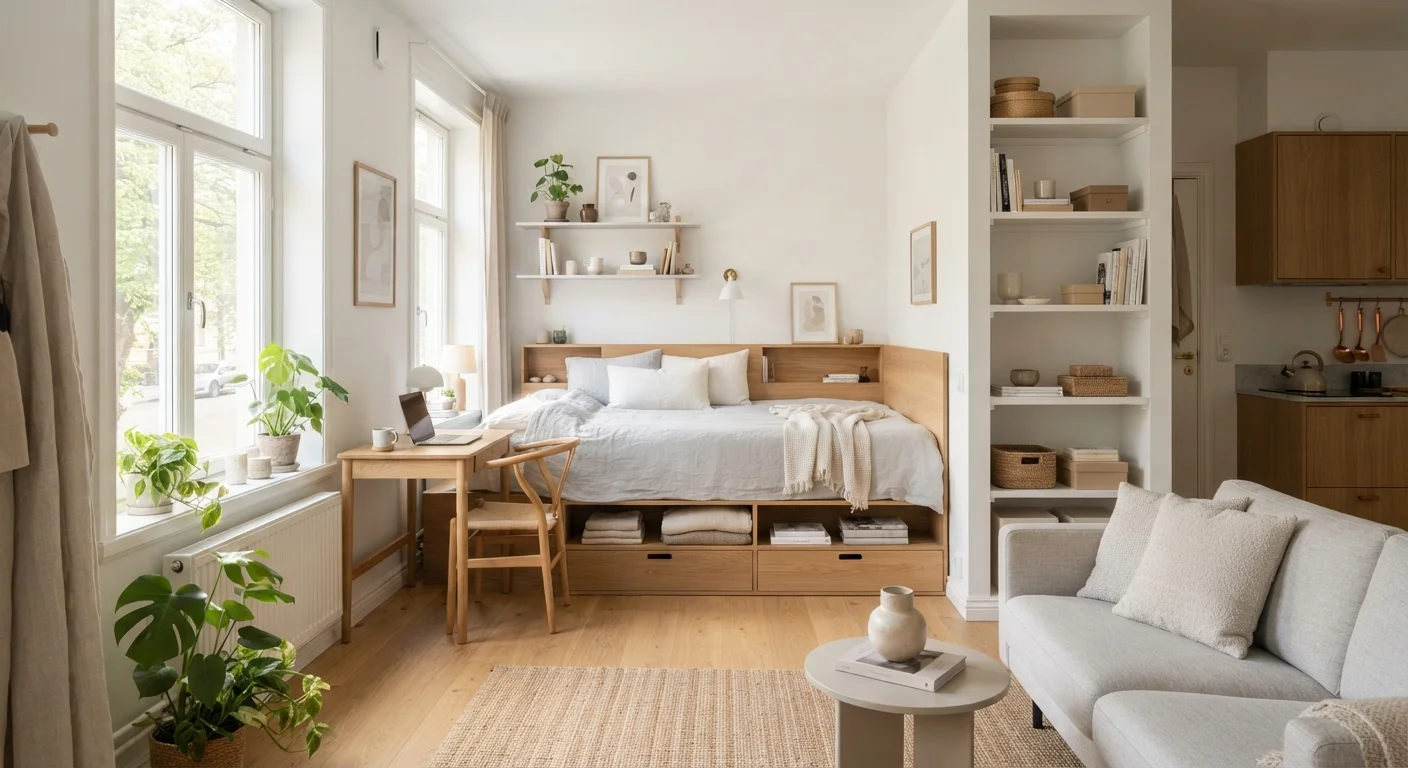
Every piece of furniture in a small home should earn its place twice over. Beds with drawers or lift-up bases, ottomans with interior compartments, benches with storage beneath the seat, and dining tables with shelves underneath all serve dual purposes. A sofa with a console behind it can house books and remotes without a separate shelving unit.
When selecting new furniture, measure your space carefully and prioritize pieces where hidden storage is a core design feature, not an afterthought. A bed frame with under-bed drawers, for example, can replace the need for a separate dresser in a small bedroom.
Every furniture piece in a compact home should serve at least two functions.
Use the insides of doors
The backs of closet doors, pantry doors, and even cabinet doors hold substantial storage potential. Thin over-door organizers can hold shoes, cleaning supplies, pantry staples, craft materials, or bathroom essentials - all without claiming an inch of shelf space. In small bathrooms especially, the inside of a vanity door can hold hair tools, extra toiletries, or a small first-aid kit.
Measure door clearance carefully before installing anything, particularly inside closets, to make sure items won't interfere with closing. Shallow pocket organizers tend to work best in tight clearances.
The inside of a door is a storage surface most homes never use at all.
Rotate seasonal items out of prime space
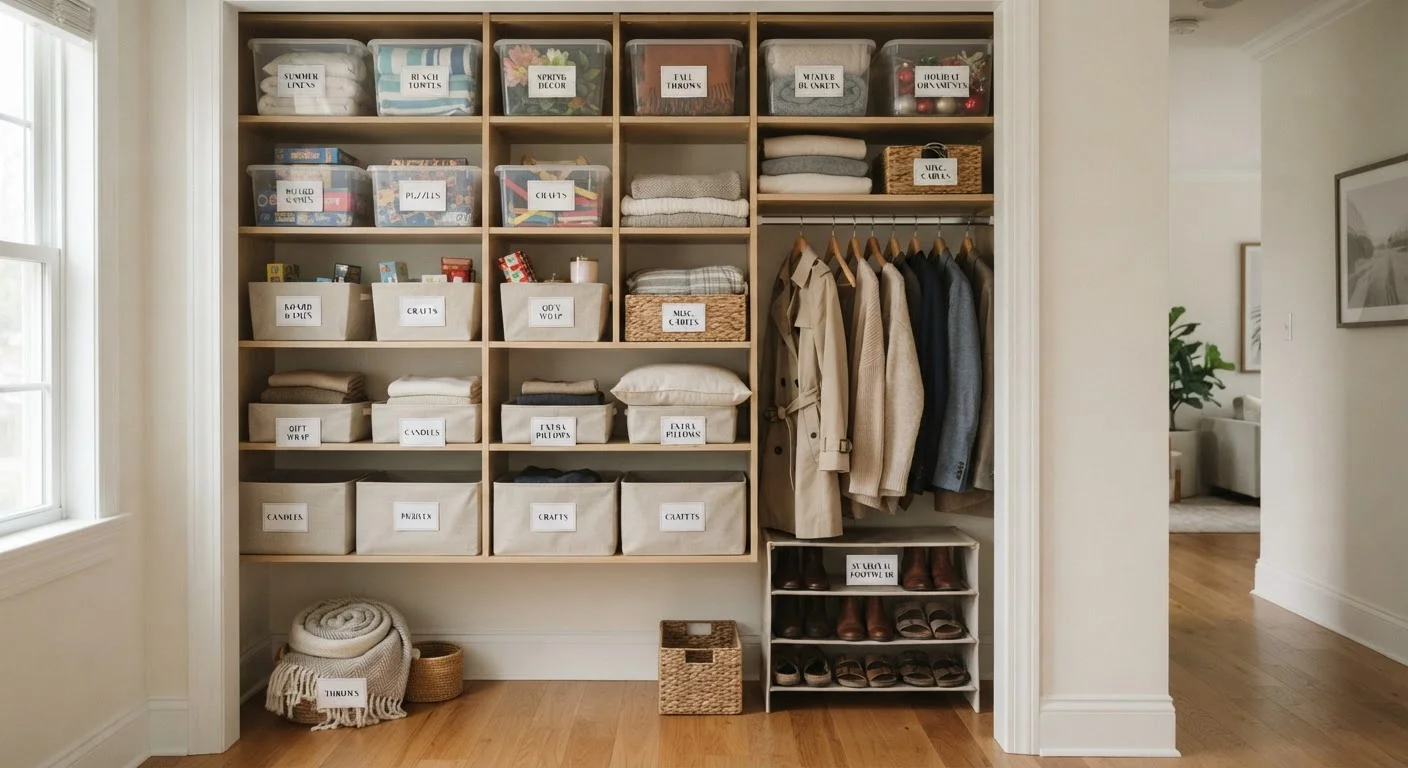
Not everything you own needs to be accessible every day of the year. Winter coats, holiday decorations, spare bedding for occasional guests, and summer sports gear can move to higher shelves, under-bed boxes, or a designated off-season area when not in use. This frees your most accessible storage spots - eye-level shelves, hall closets, everyday drawers - for the things you actually reach for regularly.
A practical seasonal organization approach makes this rotation manageable rather than burdensome, cycling items in and out a couple of times a year rather than reorganizing constantly.
Reserve your most accessible storage for things you use every single week.
Edit ruthlessly before adding storage
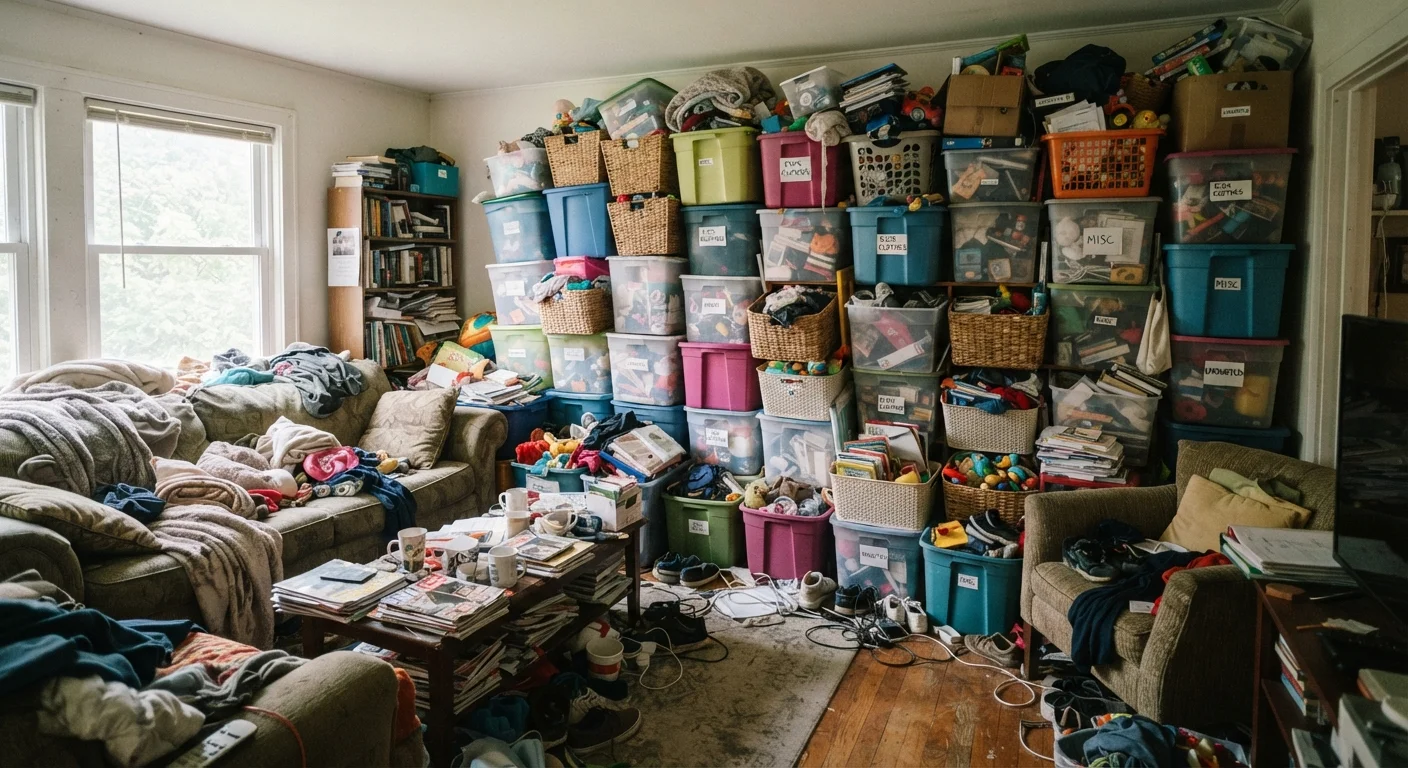
More containers do not solve a clutter problem - they reorganize it. Before investing in any new storage solution, take a clear-eyed look at what you actually own. Items that are unused, duplicated, broken, or kept out of obligation rather than need are consuming space someone else's belongings could fill more usefully.
This is not about minimalism as a philosophy; it is about proportion. A small home simply has less room to absorb excess. The storage myths that keep homes feeling cramped often come down to buying more without first removing more. Once you've cleared out what doesn't belong, the actual storage problem is usually much smaller than it seemed.
More containers reorganize clutter - they don't eliminate it.
Build habits that prevent clutter from rebuilding
Even the most thoughtful storage system will fail if incoming items accumulate unchecked. A small home has very little tolerance for gradual drift. Simple habits - returning items to their designated place after use, doing a brief weekly reset, and being deliberate about what enters the home - preserve the results of any organization effort far better than periodic overhauls.
Approaches like the one-in, one-out principle - where something leaves the home whenever something new arrives - are particularly well-suited to compact spaces. Our article on habits that keep clutter from coming back covers practical ways to make this sustainable over time.
A small space has no buffer for gradual drift - daily habits matter more than storage solutions.
Start With One Zone, Not the Whole Home
Trying to reorganize an entire small home at once tends to create temporary chaos and decision fatigue. Instead, pick a single zone - one closet, the area under the bed, or a kitchen cabinet - and complete it before moving on. Small wins build momentum and reveal what approaches actually work for your space and routines.
Putting It Together Without Feeling Overwhelmed
Small-space storage works best as a system rather than a collection of isolated fixes. Vertical shelving, dual-purpose furniture, and seasonal rotation all reinforce each other: when you create enough organized space, maintaining it becomes far easier than rebuilding it from scratch after things pile up.
If you share your compact home with others, the organizational challenge adds a layer of negotiation. Our article on organizing a home with others offers practical guidance for navigating different standards without constant friction. And for day-to-day household management, the everyday living hub covers a range of useful routines and approaches suited to real home life.
The most important step is usually the first one: pick a single area, apply one strategy, and build from there. Compact homes reward consistent, thoughtful action more than ambitious overhauls that are hard to sustain.