

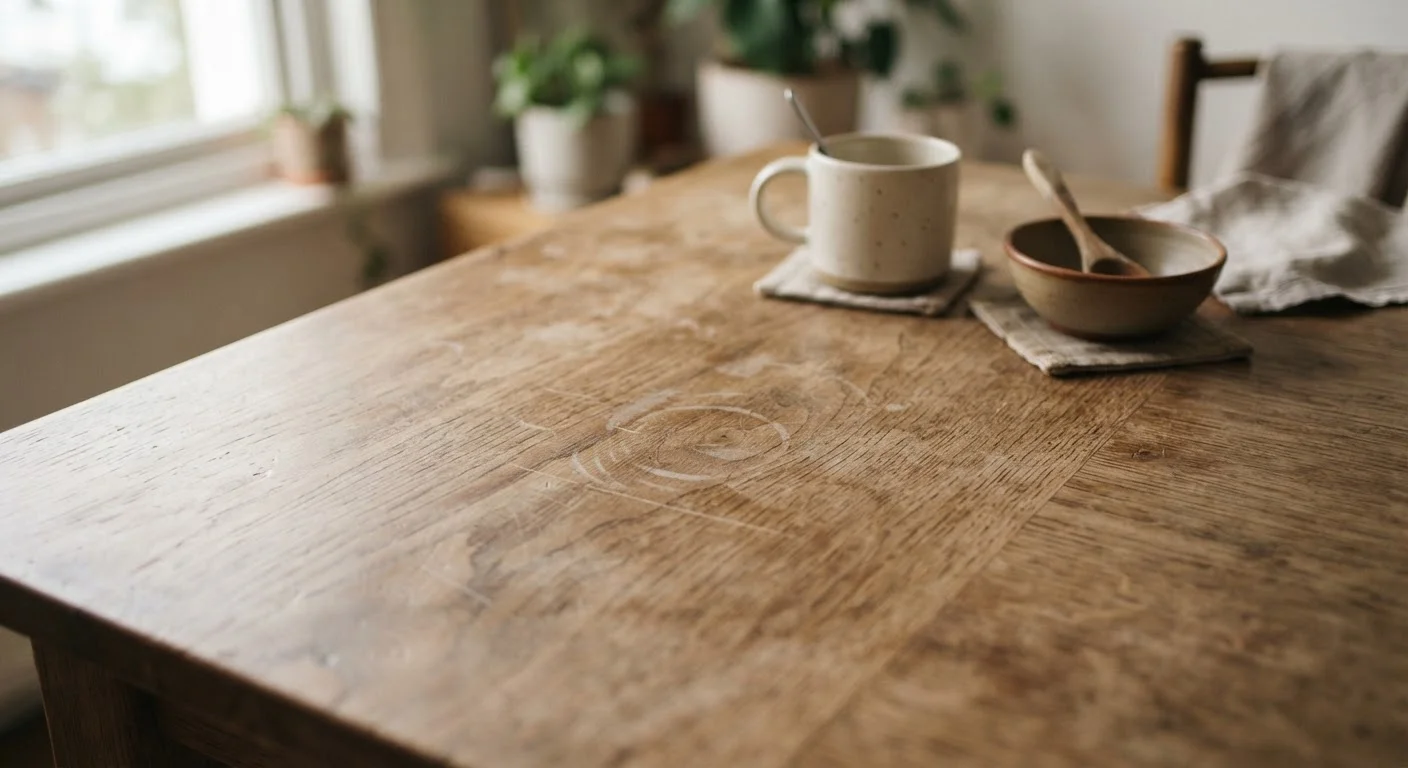
Why Small Habits Are the Biggest Threat to Your Surfaces
A single scratch or water stain rarely feels like a crisis. But surfaces don't degrade all at once - they wear down through repetition. The same small action, repeated daily for months, compounds in ways that are nearly invisible until the damage crosses a threshold and becomes undeniable.
The habits that cause this kind of quiet damage are usually not careless. They're just routine. And because they don't produce immediate, obvious consequences, there's no feedback loop to prompt a change. This is precisely why understanding the mechanisms behind surface damage is more useful than a simple list of rules - when you know why something harms a surface, the corrective habit becomes intuitive rather than a chore to remember.
The same logic applies across the home. Just as small organizational habits keep clutter from returning, small protective habits keep surfaces looking and functioning well without requiring intensive maintenance efforts.
The Most Damaging Everyday Habits - and How to Correct Them
The mistakes below cover the most common ways household surfaces are quietly degraded. Each one is easy to overlook and, with a small adjustment, equally easy to prevent.
Setting wet glasses or dishes directly on wood surfaces without a coaster.
Why it happens: It feels like a minor, temporary thing - the glass is only there for a moment. But moisture seeps into wood finishes quickly, especially on older or less-sealed surfaces.
Using an all-purpose cleaner on surfaces it wasn't designed for.
Why it happens: Multi-surface sprays feel convenient and universal, so people assume they're safe on everything from granite to hardwood to stainless steel.
Dragging heavy objects across floors or countertops instead of lifting them.
Why it happens: Lifting feels like extra effort, especially for appliances, pots, or furniture being repositioned just a short distance.
Leaving spills - especially acidic ones - to sit on surfaces for more than a few minutes.
Why it happens: Spills get noticed but not always treated immediately, particularly during meal prep or entertaining when attention is elsewhere.
Using abrasive scrubbers on delicate surfaces.
Why it happens: Tough stains trigger the instinct to scrub harder. Steel wool or rough scouring pads feel effective, but they leave behind microscopic scratches.
Placing hot cookware directly on countertops without a trivet or pad.
Why it happens: After cooking, setting a pan down quickly feels natural - finding a trivet takes an extra moment that most people skip.
Damage Often Can't Be Undone
Many types of surface damage - deep scratches in hardwood, etching on stone countertops, or heat discoloration on laminate - are permanent or require professional refinishing to correct. Prevention is nearly always less costly and less disruptive than repair. When in doubt about a cleaning product or method, test it in an inconspicuous area first.
One theme connects most of these habits: the gap between when the action happens and when the damage becomes visible. Unlike a broken tile or a dent in the wall, etching, micro-scratches, and moisture infiltration accumulate silently. Building awareness of that delay is the first step toward changing behavior.
Never Mix Cleaning Products
Combining household cleaners - even common ones like bleach and vinegar - can produce harmful fumes or chemical reactions. Beyond the health risk, the resulting mixture can discolor, etch, or corrode surfaces. Always use one product at a time and rinse thoroughly before switching to another. For guidance on how cleaning products affect your indoor environment, see what affects indoor air quality.
Building Habits That Protect Rather Than Degrade
Protecting household surfaces long-term doesn't require a complicated maintenance schedule. It requires small defaults - a coaster kept in a fixed spot, a trivet always placed beside the stove, a quick wipe reflex after spills. The goal is to reduce the friction between good intentions and consistent action.
90%
Of surface wear caused by routine habits
Home maintenance professionals commonly note that the majority of premature surface wear they see results from repeated daily habits rather than single incidents or accidents.
2-5 min
Time for acidic liquids to etch stone surfaces
Stone industry guidance notes that acidic substances like lemon juice or vinegar can begin to etch unsealed marble or limestone within just a few minutes of contact.
Think of it as environmental design: the easier the protective behavior is to perform in the moment, the more reliably it happens. If a coaster requires opening a drawer, it won't get used. If it's sitting on the table, it will. The same principle that underlies sustainable everyday habits applies equally well to how you care for your home's surfaces.
For a broader look at how daily decisions affect your home's condition and livability - not just its surfaces - explore our home improvement guidance. The upkeep habits that feel smallest are often the ones with the most durable impact over time.