
Why Clutter Always Comes Back
Most people have experienced the short-lived satisfaction of a big declutter - and the quiet frustration of watching clutter gradually return. The problem isn't willpower. It's that clearing out is a one-time event, while accumulation is an ongoing process. Without habits that work in the opposite direction, belongings naturally multiply.
As our piece on surface tidiness versus functional organization notes, a home can look orderly and still feel chaotic if the underlying systems aren't working. The goal of anti-clutter habits isn't to maintain a showroom - it's to reduce the invisible friction that makes daily life harder.
The habits below aren't complicated. What makes them effective is consistency, not intensity.
Core Practices for Keeping Clutter at Bay
These approaches are most effective when they become automatic rather than deliberate - small decisions that happen in the background of daily life.
Apply the one-in, one-out rule to every new purchase or acquisition.
Without a counterbalance, belongings accumulate by default. Pairing each incoming item with an outgoing one keeps total volume stable and forces a quick evaluation of what you already own. Over time, this shifts the mindset from acquisition to curation.
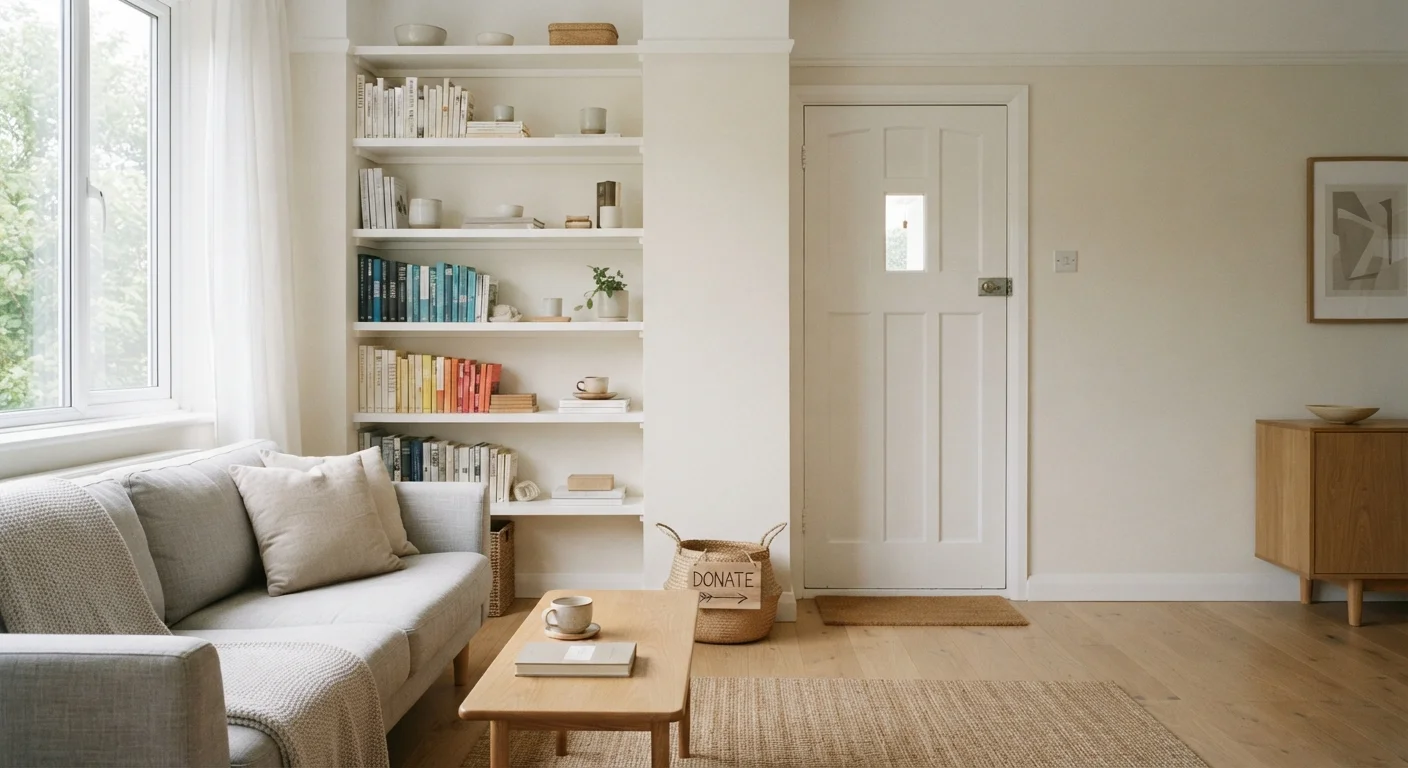
Keep a visible, accessible donation spot in your home at all times.
Friction is the enemy of letting things go. When the step between 'I don't need this' and 'it's out of the house' involves finding a box, labeling it, and storing it somewhere out of the way, the item usually stays. A permanent, easy-to-reach donation container removes that barrier.
Do a five-minute reset at the end of each day.
Clutter compounds. What starts as a few items on a counter becomes a visual norm that attracts more. A brief daily sweep returns items to their designated spots before disorder becomes entrenched, keeping the effort manageable.
Assign a home to every category of item before it enters the house.
Items without a designated place become clutter by default. When there's no answer to 'where does this live?', objects land on counters and tables indefinitely. Deciding in advance - even loosely - eliminates that hesitation.
Schedule a brief quarterly review of storage areas, not just visible surfaces.
Closets, cabinets, and drawers absorb clutter invisibly. Without regular check-ins, storage areas become holding zones for items you've forgotten you own. A quarterly pass keeps these spaces functional and prevents long-term buildup.
Quick Wins You Can Start Today
You don't need to overhaul your home to start making progress. These immediate actions create visible momentum and build the habit loop that makes longer-term organization easier to sustain.
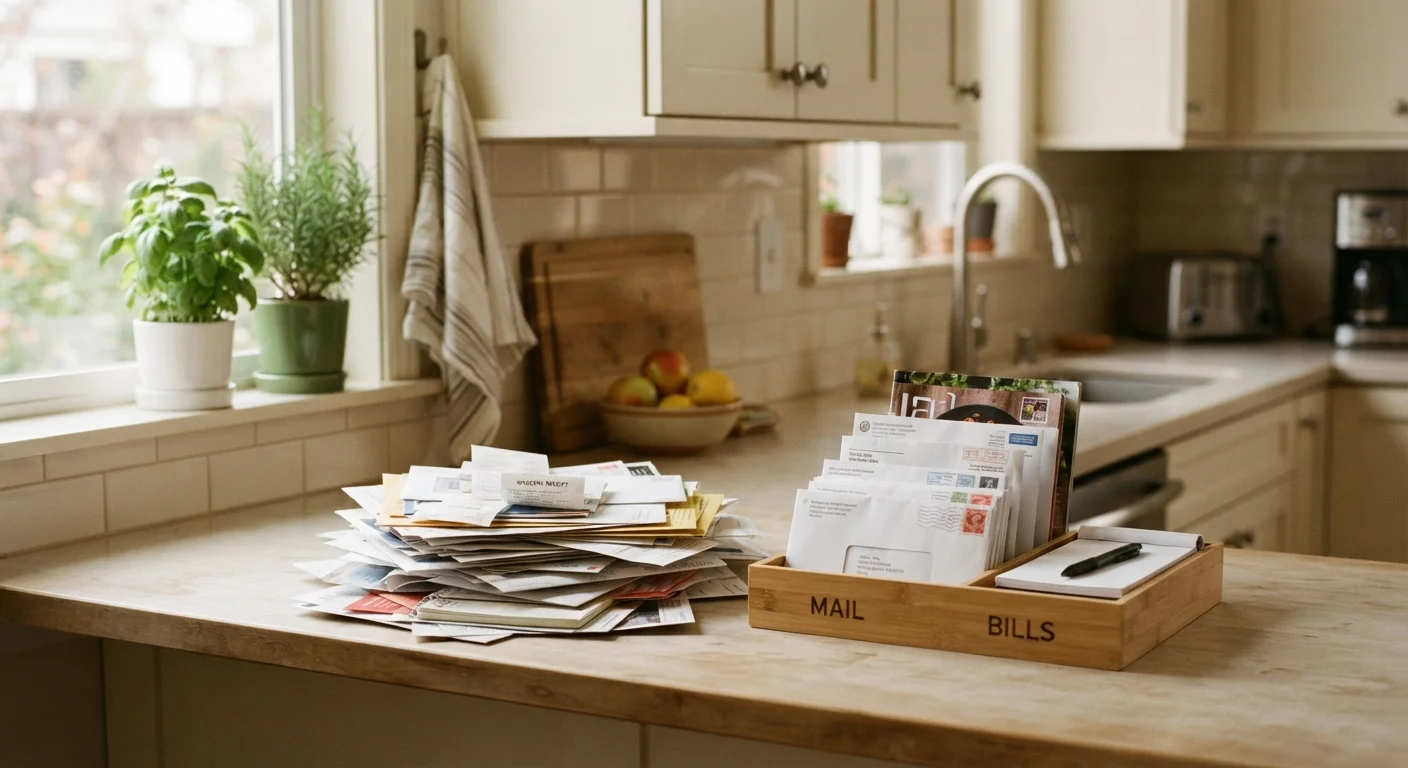
If paper is a particular source of buildup, our guide on stopping paper pile-ups walks through a simple, low-maintenance system for mail, receipts, and documents.
Making It Work in a Shared Home
Anti-clutter habits are straightforward when you live alone. In shared households - with partners, roommates, or children - different tolerance levels and different ownership of items add complexity. The solution isn't to impose a single standard but to agree on shared zones and shared rules.
Start With Shared Rules, Not Shared Standards
In a household with mixed tidiness preferences, trying to get everyone to care equally is unlikely to work. Instead, focus on agreeing to a small number of rules about shared spaces - like the kitchen counter stays clear overnight or bags don't stay on the dining table. These specific, bounded agreements are far easier to sustain than general expectations about cleanliness. Even small children can participate when the rule is concrete and the 'home' for an item is clearly marked.
Designating a drop zone near the entrance (a hook, a tray, a small shelf) gives everyone a consistent place to deposit items without spreading them through the house. A weekly household reset - even just 15-20 minutes as a shared activity - can help prevent the gradual drift that undoes an otherwise well-organized home.
For households where tensions around tidiness run deeper, organizing a home with others who have different standards offers practical starting points that go beyond storage solutions.
Seasonal and Long-Term Maintenance
Some clutter management has a natural rhythm. Seasonal transitions - putting away winter coats, swapping out holiday items, rotating sports equipment - are natural checkpoints to reassess what's still earning its place. Rather than waiting for things to pile up, use these moments to evaluate and donate proactively.
Rotating seasonal items in and out of accessible storage is one of the most effective ways to keep everyday living spaces functional without requiring constant management. The less that's out, the less there is to maintain.
If you're starting from a more disorganized baseline, the first-approach guide to organizing a disorganized home can help you build momentum before these maintenance habits take hold. Long-term organization isn't about reaching a fixed end state - it's about keeping the systems simple enough to maintain without thinking too hard about them.