

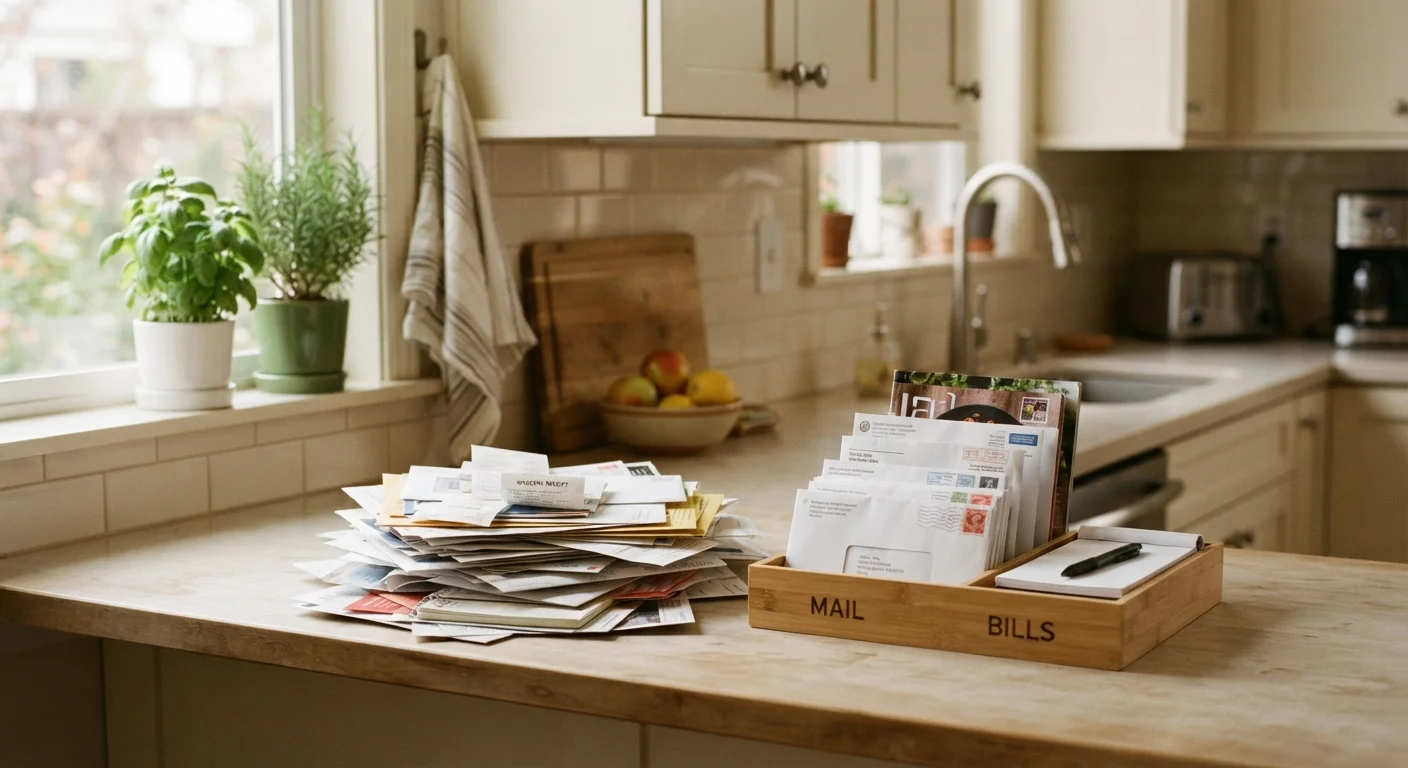
Why Paper Clutter Keeps Coming Back
Paper clutter isn't a tidiness problem - it's a systems problem. Most homes have no defined place for paper to go when it arrives, so it lands wherever there's space: the counter, the table, the bag by the door. Over days and weeks, those temporary spots become permanent ones. As explored in why a tidy-looking home can still feel chaotic, surface disorder is often a symptom of missing functional systems, not missing effort.
The main sources of household paper are predictable: daily mail, school and childcare forms, medical paperwork, financial statements, instruction manuals, and receipts. Each type has different urgency and different retention needs, which is exactly why a single pile doesn't work - it forces you to re-read and re-evaluate every item every time you interact with the pile.
The good news is that building a functional paper system doesn't require a weekend overhaul. If you're starting from a place of general household disorganization, starting from scratch offers a broader framework for building momentum room by room. For paper specifically, the approach below is designed to be set up in a single session and maintained in minutes per week.
Desktop inbox tray or wall-mount file pocket
Gives incoming paper a single, designated landing spot so it doesn't spread across surfaces.
Accordion folder or binder with labeled tabs
Organizes papers that need to be filed by category (bills, insurance, household, school) for quick retrieval.
Cross-cut shredder
Safely destroys sensitive documents before disposal to protect personal information.
Recycling bin
Placed at the sorting spot to immediately dispose of junk mail and non-sensitive waste paper.
Permanent marker or label maker
Clearly labels folders and categories so the filing system is easy for the whole household to use.
Scanner or scanning app
Creates digital backups of important documents, reducing the volume of physical papers you need to store.
Setting Up Your System: Step by Step
Before you begin, gather your prerequisites and choose your paper station location. Then follow the steps below.
What you will need
Gather every loose paper in the house
Do a single sweep of every surface, drawer, and bag where paper tends to accumulate - kitchen counters, the dining table, junk drawers, tote bags, and car seats. Bring everything to one location. You cannot build a system around paper you haven't accounted for. Don't sort yet; just collect.
Sort into three categories: Act, File, Recycle
Work through the pile and place each item into one of three groups:
- Act: Requires a response or action - an unpaid bill, a form to complete, a permission slip to sign.
- File: Worth keeping for reference - an insurance policy, a warranty, a tax document.
- Recycle (or shred): No longer needed - expired coupons, catalogs, envelopes, old receipts.
If you hesitate on an item, ask: Would I ever actually look for this again? Most of the time, the honest answer is no.
Set up your permanent paper station
Choose a fixed location and equip it with an inbox tray (for incoming paper), labeled folders or an accordion file (for the File category), and a shredder and recycling bin nearby. Label each folder with a clear category: Bills, Medical, Insurance, School, Home, Taxes. Every piece of paper in your home should have an obvious destination in this system.
Reduce paper coming in at the source
Contact billers, banks, and subscription services to switch from paper statements to email or online delivery. Opt out of unsolicited mail through services such as the USPS Informed Delivery program or the DMAchoice mail preference service, which can reduce unwanted catalog and promotional mail. Fewer papers entering the home means less work maintaining the system.
Process the inbox on a regular schedule
Set aside ten minutes once a week - the same day each week works best - to sort anything in the inbox tray into Act, File, or Recycle. Handle quick actions on the spot (signing a form, paying a bill online). File anything that belongs in storage. Shred and recycle the rest. A consistent weekly habit prevents the pile-up from ever returning.
Apply simple retention rules to your filing system
Most households over-retain paper out of vague anxiety. As a general starting point, many financial advisers suggest keeping tax returns and supporting documents for several years, while documents like active insurance policies and property records should be kept as long as they're relevant. Everyday receipts, instruction manuals for items you no longer own, and expired warranties can go immediately. Scan and store digital copies of critical documents if physical storage space is limited.
Shred Before You Recycle
Any paper containing your name, address, account numbers, or Social Security information should be shredded before disposal - not simply tossed in recycling. Identity theft most commonly begins with discarded mail and financial documents. A basic cross-cut shredder handles this quickly and is a worthwhile addition to any paper management setup.
Make the Recycling Bin the First Stop
Position a recycling bin directly beside your mail sorting spot. Junk mail, envelopes, and obvious promotional material can be discarded before they ever reach a surface. Removing obvious waste at the point of entry is the single fastest way to reduce paper volume.
Once your physical system is running smoothly, consider extending the same logic to your digital life. Organising your digital life applies the same sorting-and-pruning principles to apps and files on your devices, which often accumulate in parallel with physical paper. For habits that keep any clutter from returning over time, one-in, one-out habits offers a practical set of maintenance routines that work alongside a paper management system. And if this project is part of a larger effort to simplify your home, decluttering without the overwhelm gives a measured approach that fits into ordinary daily life.
Don't Discard Before You Verify
Before going paperless or purging old files, confirm what records your household genuinely needs to keep. Tax-related documents, property records, insurance policies, and medical records often carry multi-year or permanent retention requirements. When in doubt, consult a financial or legal professional rather than guessing.