
Where the Line Falls
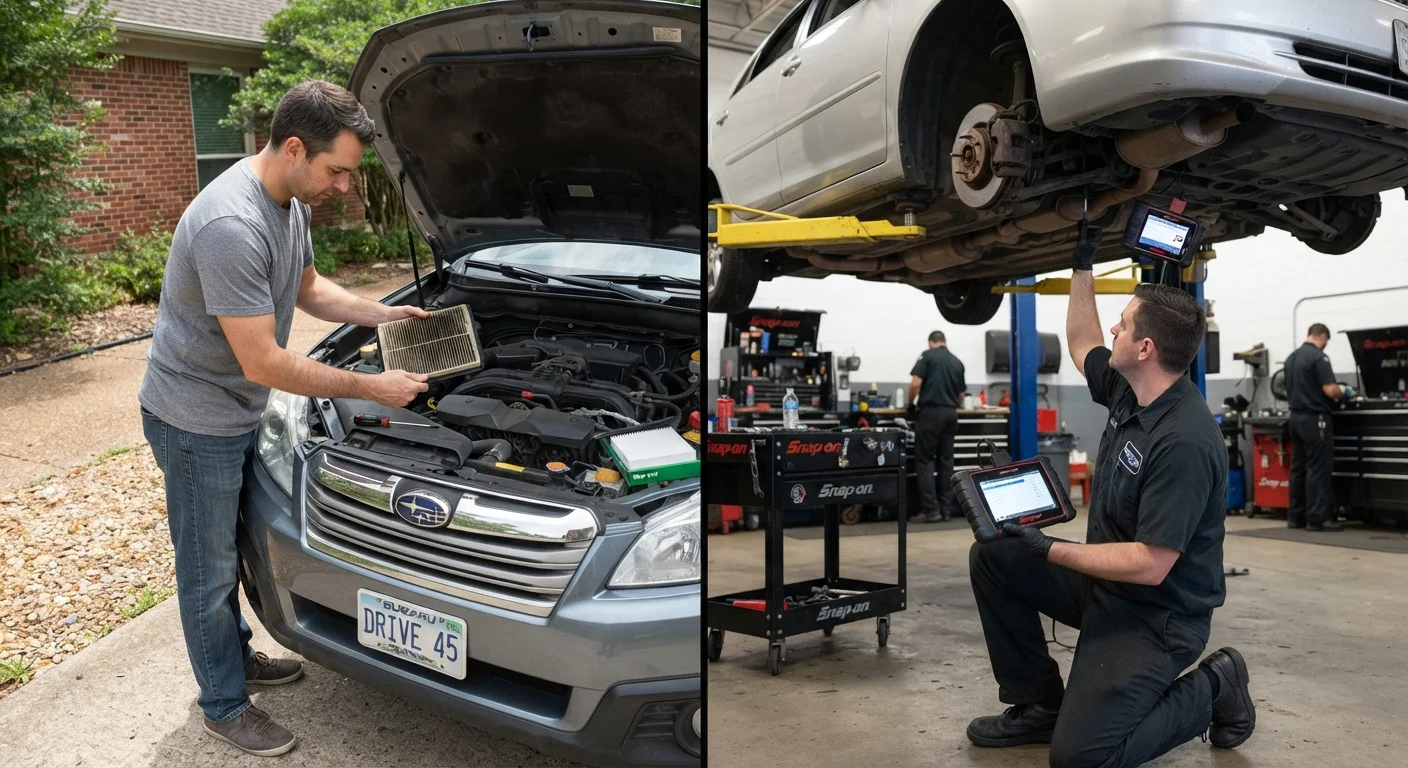
Most drivers sit somewhere between two extremes: those who change their own oil and those who hand the keys over for every light bulb swap. Neither extreme is wrong, but understanding where true risk begins helps you spend wisely and stay safe.
The dividing line isn't really about mechanical ability - it's about tools, safety systems, and consequences. A job that goes sideways in your driveway might mean a sticky windshield; a botched brake job can mean an accident. That asymmetry is what matters most when deciding what to take on yourself.
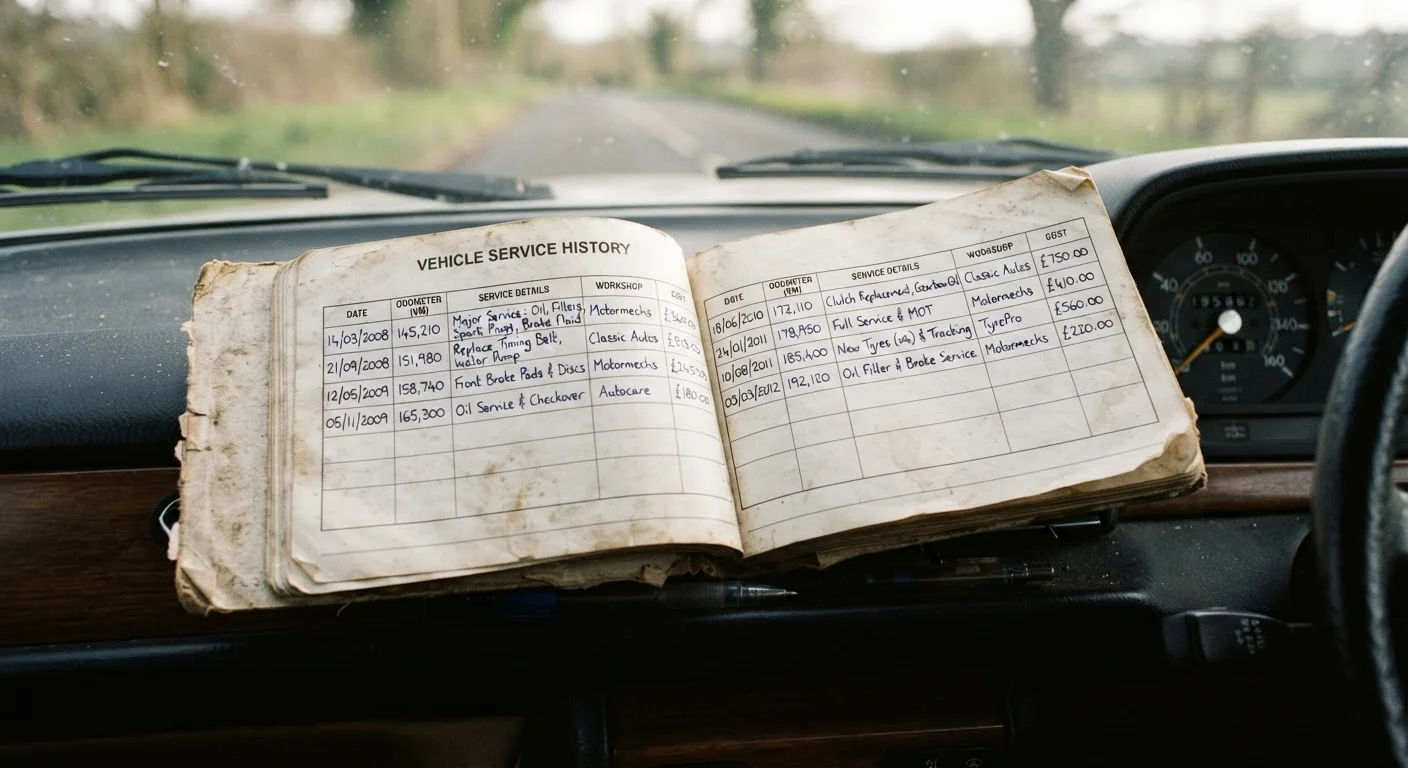
It's also worth keeping a running record of what you do and when. A car service log protects your vehicle's resale value and helps a mechanic diagnose problems faster if something does go wrong.
Tasks Most Drivers Can Handle Themselves
These jobs require basic tools, a little time, and a careful read of your owner's manual. None of them involve safety-critical systems or hazardous disassembly.
- Engine air filter replacement: Usually a matter of unclipping a housing, swapping the filter, and snapping it back. Check your manual for the recommended interval.
- Windshield wiper blades: Most modern blades click onto a standard hook arm. The process takes under five minutes and requires no tools.
- Cabin air filter: Often located behind the glove box. Removal and replacement typically requires no tools and improves interior air quality noticeably.
- Battery replacement: Disconnecting and reconnecting terminals is manageable at home. Just note that some vehicles may need a relearn procedure afterward - check your manual or a reliable forum for your specific model.
- Oil and filter change: Requires a jack, drain pan, and the correct oil specification for your engine. Straightforward, but be sure to dispose of used oil at a recycling center - never pour it down a drain.
- Tire inflation and rotation checks: Monitoring tire pressure takes seconds. Tire rotation itself is possible at home with a floor jack and jack stands, but only if you're confident working safely under a raised vehicle.
Read Your Owner's Manual First
Before attempting any maintenance task, check your vehicle's owner's manual for the manufacturer's recommended procedure, fluid specifications, and torque values. What works on one car may not apply to another - even within the same model year. Many manuals are also available as free PDFs from automaker websites.
These tasks fit well into a broader seasonal rhythm. The seasonal car maintenance cycle lays out a schedule for when each check belongs on your list.
Jobs That Belong in a Professional Shop
The following tasks either involve your vehicle's safety systems, require specialized equipment, or carry serious injury risk if performed incorrectly. A qualified mechanic has the training, tools, and liability framework to handle them properly.
- Brake system repairs: Pad replacement at the front wheels is sometimes listed as a DIY task, but any work involving brake lines, calipers, ABS (anti-lock braking system) modules, or rear drum brakes should go to a professional. Brake failure is catastrophic - this is not a place to learn through trial and error.
- Airbag and SRS (supplemental restraint system) components: Airbags carry explosive charges. Improper handling can cause accidental deployment, which causes serious injury. Leave anything involving airbag sensors, clocks springs, or modules to a certified technician.
- Transmission service: Fluid changes on some automatic transmissions are accessible, but internal transmission work requires specialized equipment and precise tolerances. A mistake here typically means a very expensive rebuild.
- Timing belt or chain replacement: This job requires precise engine timing alignment. If done incorrectly, the engine can sustain severe internal damage the moment it starts.
- Electrical diagnostics: Modern vehicles run on complex controller area network (CAN) systems. Fault codes pulled from an OBD-II reader give a starting point, but accurately diagnosing intermittent electrical faults often requires factory-level scan tools and training.
- Suspension and steering components: Worn ball joints, tie rods, and wheel bearings directly affect vehicle control. Replacement involves torque specifications and alignment settings that require a proper alignment rack to verify.
Don't Let Cost Override Safety
It's tempting to attempt a complex repair to avoid a shop bill, but some mistakes compound quickly. A stripped brake caliper bolt or a misaligned timing mark can turn a repair into an engine replacement. If you're unsure about a job, get a professional estimate before starting - not after something goes wrong.
The Comparison at a Glance
The table below summarizes how DIY and professional service compare across the factors that matter most to everyday drivers.
| DIY Maintenance | Professional Mechanic | |
|---|---|---|
| Typical cost | Lower parts cost, labor is free | Higher total cost including labor |
| Tools required | Basic hand tools for most tasks | Specialized equipment often needed |
| Safety risk | Low for routine tasks | Managed by trained professionals |
| Best for | Filters, wipers, fluids, battery | Brakes, airbags, transmission, timing |
| Error consequences | Minor inconvenience to moderate repair cost | Prevented by expertise and warranty |
| Diagnostic capability | Basic OBD-II code reading | Factory-level scan tools and experience |
As your vehicle ages, the balance of these factors shifts. Higher-mileage cars tend to develop more complex issues that benefit from professional diagnosis. The full vehicle lifetime maintenance guide covers how to adjust your approach as your car gets older.