
Two Tools, One Financial Plan
People often treat an emergency fund and a budget as separate projects - one is savings, the other is spending control. In practice, they are interdependent. A budget without an emergency fund is fragile: one unexpected car repair or medical bill can erase weeks of careful spending decisions. An emergency fund without a budget tends to stall, because there is no reliable mechanism to build or restore it.
Together, they form the backbone of a stable financial life. Understanding how they interact is more useful than mastering either in isolation. This guide explains the relationship plainly, so you can work on both at once without overcomplicating things.
This article provides general financial information for educational purposes only. It is not personalized financial advice. Consider consulting a licensed financial professional for guidance specific to your situation.
What Each One Actually Does
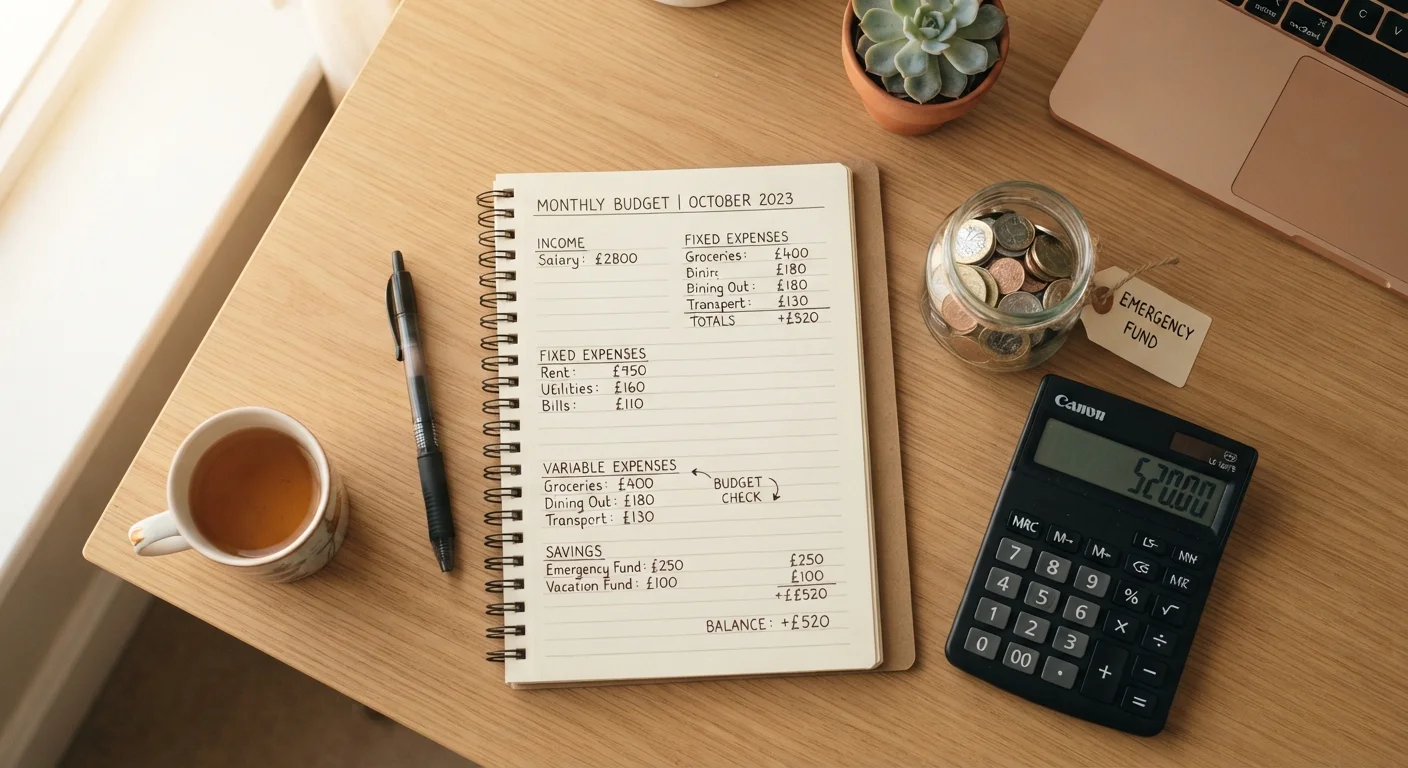
A budget is a forward-looking plan that assigns your expected income to specific categories - housing, food, transportation, savings, and so on. It answers the question: Where should my money go this month? A budget helps you make intentional choices before the money arrives, rather than wondering where it went afterward.
An emergency fund is a reserve of liquid cash set aside exclusively for genuine financial shocks - job loss, a major appliance failure, an urgent medical expense. It answers a different question: What happens when something I didn't plan for threatens my finances?
The key distinction is time horizon. Budgets operate month to month. Emergency funds sit quietly in reserve, sometimes untouched for years, until they are genuinely needed. For a deeper look at what an emergency fund is and how much is commonly recommended, see Emergency Fund Basics.
~57%
Americans unable to cover a $1,000 emergency
A Bankrate survey found that a majority of U.S. adults could not pay for an unexpected $1,000 expense from savings without borrowing or selling something.
3-6 months
Commonly recommended emergency fund size
Most mainstream financial guidance suggests holding three to six months of essential living expenses in a liquid, accessible account.
1 in 3
Households with no dedicated emergency savings
Federal Reserve survey data has consistently shown that a significant share of U.S. households report having no rainy-day fund at all.
How Your Budget Builds the Fund
The most practical way to grow an emergency fund is to treat it as a non-negotiable budget line - the same way you treat rent or a utility bill. When a contribution is optional, it is the first thing cut during a tight month. When it is fixed, it compounds steadily over time.
How much you allocate depends on your current savings level and income stability. A common starting point is to contribute enough each month to reach one month of essential expenses within six to twelve months. From there, most financial guidance suggests building toward three to six months of essential expenses - though the right amount varies by individual circumstance.
Automate your emergency fund contribution on the day your paycheck lands, before you pay anything else. This removes the temptation to redirect that money when other spending competes for it.
Behavioral research consistently shows that automatic transfers dramatically outperform manual saving, because they bypass the decision-making step where most people fall short.
Set a specific savings target in dollars, not just a vague goal to 'save more.' Knowing you need $4,500 to cover three months of essentials gives you a finish line and makes monthly contributions feel purposeful.
Concrete, defined goals are significantly more likely to be achieved than open-ended intentions, according to goal-setting research in behavioral economics.
If your income varies month to month, this requires a different approach. Rather than a fixed dollar amount, consider contributing a percentage of whatever you earn. Budgeting on an irregular income explores strategies designed specifically for that situation.
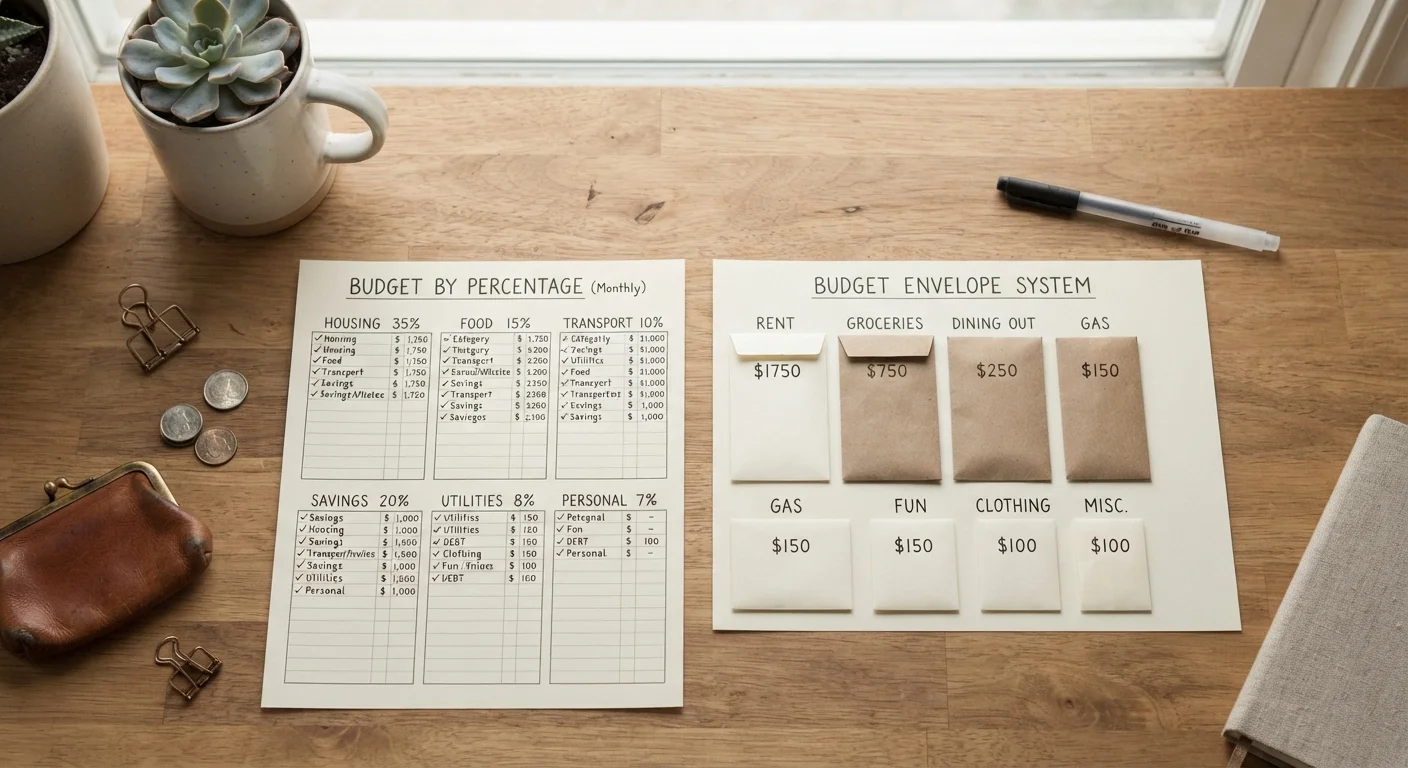
Choosing the right budget framework also matters. Some structures make it easier to carve out a savings line than others. The 50/30/20 rule vs. envelope budgeting can help you identify which structure fits your habits.
Using the Fund Without Wrecking the Budget
When a genuine emergency occurs, the fund exists precisely to be used. Tapping it is not a failure - it is the system working as intended. The budget's role during this moment is to absorb as much of the shortfall as possible from discretionary categories, reducing how much you need to withdraw.
Define 'Emergency' Before You Need To
Write down two or three specific scenarios that would qualify as emergencies for your household - job loss, a medical bill over a set dollar amount, a critical home repair. Having a written definition makes it much easier to say no to withdrawals that don't fit. Review and update the list once a year as your circumstances change.
The critical discipline is definition. Not every unpleasant or inconvenient expense qualifies as an emergency. A car breakdown that prevents you from getting to work qualifies. A sale on flights you want to take does not. Keeping this boundary clear prevents the fund from being slowly depleted by spending that a tightened budget could have covered.
Understanding how your expenses break down - which are fixed obligations and which are variable - makes it easier to see where budget flexibility exists when you need it. Fixed vs. variable expenses covers this distinction in practical detail.
Rebuilding After a Withdrawal
Once you have drawn on your emergency fund, rebuilding it becomes a temporary budget priority. The approach is the same as building it initially: re-establish a contribution line in your budget and hold it there until the reserve is restored.
How aggressively you rebuild depends on your other financial obligations. If you are also carrying high-interest debt, you may need to balance replenishment against debt payments rather than directing all surplus toward savings. There is no universal rule here - the right balance depends on your specific numbers and risk tolerance.
A Depleted Fund Is a Risk, Not Just a Number
An emergency fund that has been drawn down and not replenished leaves you exposed in the same way as never having one. If a second unexpected expense arrives before the fund is rebuilt, the only options are debt or disruption to other financial obligations. Treat replenishment with the same urgency as building the fund originally.
What matters most is that replenishment is intentional. Without a budget line pointing at it, the fund often stays depleted - leaving you exposed the next time something unexpected happens.
Common Mistakes That Undercut Both
A few recurring errors tend to weaken both the budget and the emergency fund simultaneously:
- No clear definition of emergency. Vague criteria lead to frequent, small withdrawals that drain the fund without any single dramatic event.
- Skipping contributions during tight months. This is the most common pattern that stalls fund growth. Even a reduced contribution maintains the habit and prevents the line from disappearing entirely.
- Keeping emergency savings in a spending account. Money that is easily accessible alongside daily spending tends to get spent. A separate account adds a small but effective friction.
- Abandoning the budget after a setback. Budgets frequently fall apart after a stressful month. Why budgets fall apart in month two addresses the most common reasons and how to prevent them.
“A budget is telling your money where to go instead of wondering where it went.”
— Dave Ramsey, Personal finance author and radio host
The two tools reinforce each other when both are maintained. A funded emergency reserve makes it easier to stick to a budget, because unexpected costs no longer blow up your monthly plan. And a working budget is what keeps the fund funded. Neither works as well alone.