

What an Emergency Fund Actually Does
An emergency fund functions as a financial shock absorber. When something unexpected and necessary happens - your transmission fails, your hours get cut, or you face an out-of-pocket medical expense - the fund absorbs that cost so you don't have to reach for a credit card or take out a personal loan.
Without one, even a relatively modest surprise expense can cascade. A $900 car repair charged to a high-interest credit card can take months or years to fully pay off, costing significantly more than the original bill. The emergency fund breaks that cycle before it starts.
It's worth being clear about what an emergency fund is not. It isn't a general savings account for things you want to buy. It isn't a buffer for overspending on discretionary items. It's strictly for unplanned, unavoidable costs. Treating it that way - and keeping it in a separate account - preserves its purpose. For a broader look at how this fits into a spending plan, see how emergency funds and budgets work together.
Emergency Fund vs. Sinking Fund
An emergency fund covers the unexpected. A sinking fund is money you deliberately set aside in advance for a known future cost - like annual car registration, a planned appliance replacement, or a holiday budget. Both are useful tools, but they serve distinct purposes and should be tracked separately to avoid confusion about what's actually available for a true emergency.
How Much Is Enough?
The most commonly cited guideline - three to six months of essential living expenses - is a useful benchmark, but it's not a universal prescription. Your essential expenses are the non-negotiable costs: rent or mortgage, utilities, groceries, minimum debt payments, transportation, and insurance. To know what that number looks like for you, it helps to understand the difference between fixed and variable expenses and how they make up your monthly baseline.
Several factors can shift the target up or down:
- Income stability: Freelancers, contractors, and commission-based workers generally benefit from a larger cushion than salaried employees with predictable pay.
- Dependents: Supporting children or other family members raises the stakes of any income disruption.
- Job market conditions: Fields where re-employment takes longer warrant a larger fund.
- Health and insurance coverage: Higher out-of-pocket exposure increases your potential emergency costs.
If the full three-to-six-month target feels distant, set an intermediate goal. A starter fund of $500 to $1,000 is a recognized first milestone precisely because it handles a large share of common emergencies - most car repairs, minor medical bills, a broken appliance - without requiring you to borrow.
~37%
Americans who couldn't cover a $400 emergency with cash
According to the Federal Reserve's Report on the Economic Well-Being of U.S. Households, a significant share of adults would need to borrow or sell something to cover an unexpected $400 expense.
3-6 months
Commonly recommended months of expenses to save
This range is cited by the Consumer Financial Protection Bureau and most mainstream financial education resources as a general target for emergency fund adequacy.
$1,000
Widely cited starter emergency fund milestone
Many personal finance educators treat $1,000 as a meaningful first goal because it covers most common single-incident emergencies without requiring any new borrowing.
Balancing Emergency Savings and Debt Payoff
One of the most common tensions in personal finance is deciding whether to save or pay off debt first. The answer most financial educators land on: do both, in proportion. A rigid either/or approach carries real risks either way.
Paying off debt with every spare dollar while keeping no reserves means one setback can force new borrowing - often at the same high interest rates you were working to escape. On the other hand, stockpiling savings while carrying high-interest debt means that debt is compounding against you. A balanced approach typically looks like building a small starter fund first, then splitting available resources between debt payoff and growing that fund gradually.
This balance is worth thinking through carefully. Saving for a goal while in debt involves real tradeoffs, and understanding them helps you make a deliberate choice rather than defaulting to one extreme. For practical help setting this up, building your first budget around debt and savings goals offers a concrete starting framework.
Automate Before You Can Spend It
Set up an automatic transfer to your emergency fund account on the same day your paycheck hits. Treating savings like a fixed bill - something that goes out before discretionary spending - is one of the most reliable ways to build consistency. Even small amounts accumulate significantly over time when transferred automatically every pay period.
Building the Fund Without Overwhelming Yourself
The mechanics of building an emergency fund are straightforward. The psychological side is where most people struggle. Here's what tends to work:
- Automate transfers. Schedule a small automatic transfer to a dedicated savings account on each payday. Even $30 or $50 per paycheck adds up without requiring a decision each time.
- Use windfalls deliberately. Tax refunds, work bonuses, or gifts are natural opportunities to make a meaningful jump toward your target without affecting your regular budget.
- Keep it separate. A distinct account - ideally at a different institution from your checking account - reduces the temptation to dip into it for non-emergencies.
- Replenish after use. If you draw on the fund, treat rebuilding it as the immediate next financial priority before resuming other goals.
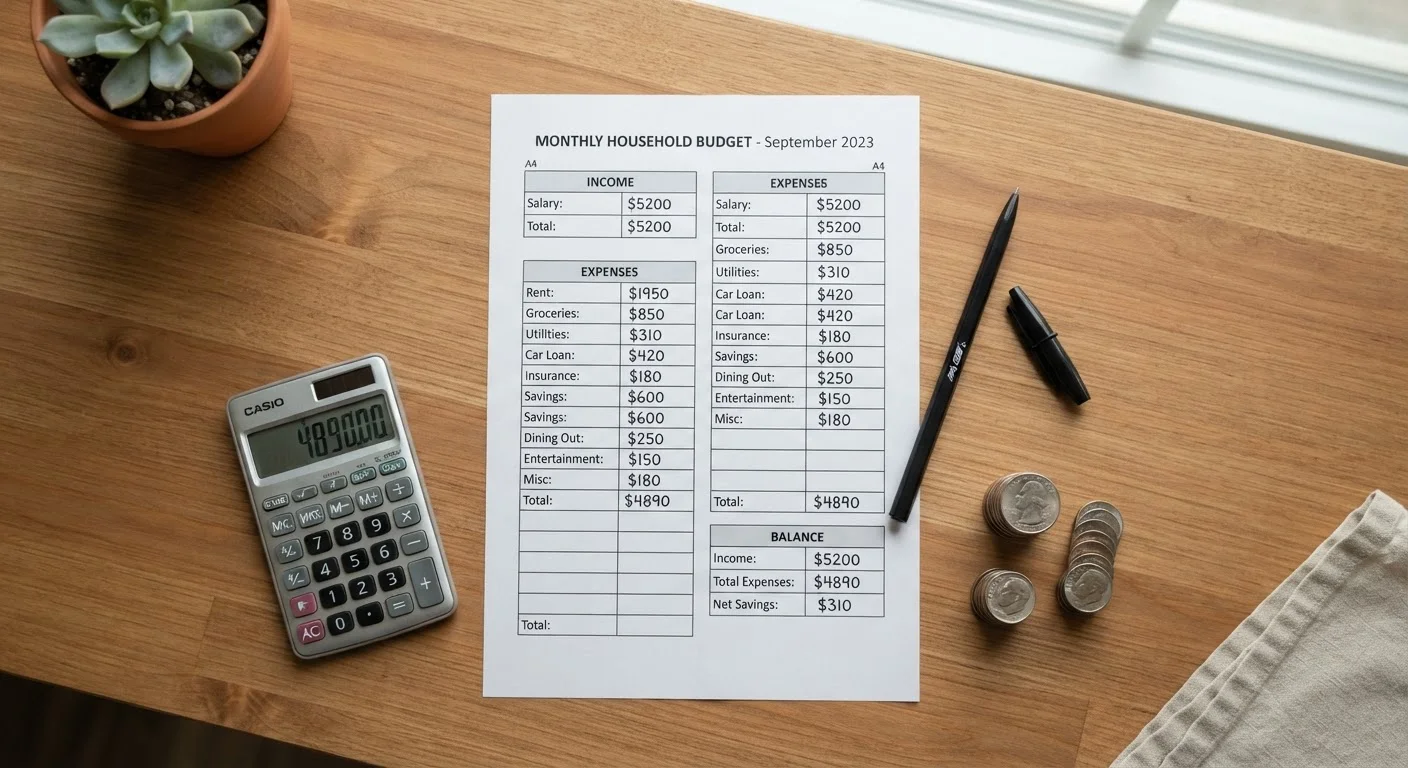
If you're not yet clear on how much room your monthly cash flow actually has for savings, reviewing your budgeting basics is a useful first step. Understanding the full picture of what comes in and what goes out each month makes it far easier to find a realistic contribution amount.
For definitions of terms like liquidity, net worth, or APR that come up in this kind of planning, the glossary of debt and savings terms is a practical quick reference.
This article is for general informational and educational purposes only and does not constitute personalized financial advice. For guidance specific to your situation, consider consulting a qualified financial professional.