
Why the Hour Before Bed Is So Critical
Sleep doesn't switch on like a light. Your brain begins preparing for rest well before you close your eyes - winding down alertness, dropping core body temperature, and releasing melatonin. Screens disrupt nearly every part of that process.
The most studied mechanism is blue light, the short-wavelength light emitted by phones, tablets, and laptop displays. Research consistently shows that exposure to blue light in the evening delays melatonin secretion and can shift your internal clock later. The result: you feel wired when you should feel drowsy, and the sleep you do get may be shorter or less restorative.
But blue light is only part of the story. The content you consume matters just as much. Scrolling heated social media threads, watching fast-paced video, or checking work email keeps your prefrontal cortex engaged and your stress hormones active. That mental arousal lingers, often past the point when you've finally put the device down. Understanding this two-pronged problem - light and stimulation - is where a smarter wind-down strategy starts. For a look at how sleep timing ties into hormone rhythms and daytime focus, see what a consistent sleep schedule does to your body.
Not All Screen Use Is Equal
A calm video call with a close friend differs considerably from doomscrolling news headlines. When avoiding all screens before bed is genuinely impractical, prioritizing low-stimulation, low-light content is a reasonable middle ground. The goal is reducing cognitive and light-based arousal - not achieving perfection. Consider checking common sleep hygiene myths if you're unsure which advice to trust.
Best Practices for Reducing Evening Screen Time
The practices below are designed to be realistic - adjustments you can layer in gradually rather than lifestyle overhauls that collapse after three days.
Set a firm screen-off time at least 45-60 minutes before bed.
Giving your brain a consistent cue to stop processing screens accelerates the shift into pre-sleep mode and reinforces your natural circadian rhythm over time. Consistency matters more than perfection - even five or six nights out of seven produces meaningful benefit.
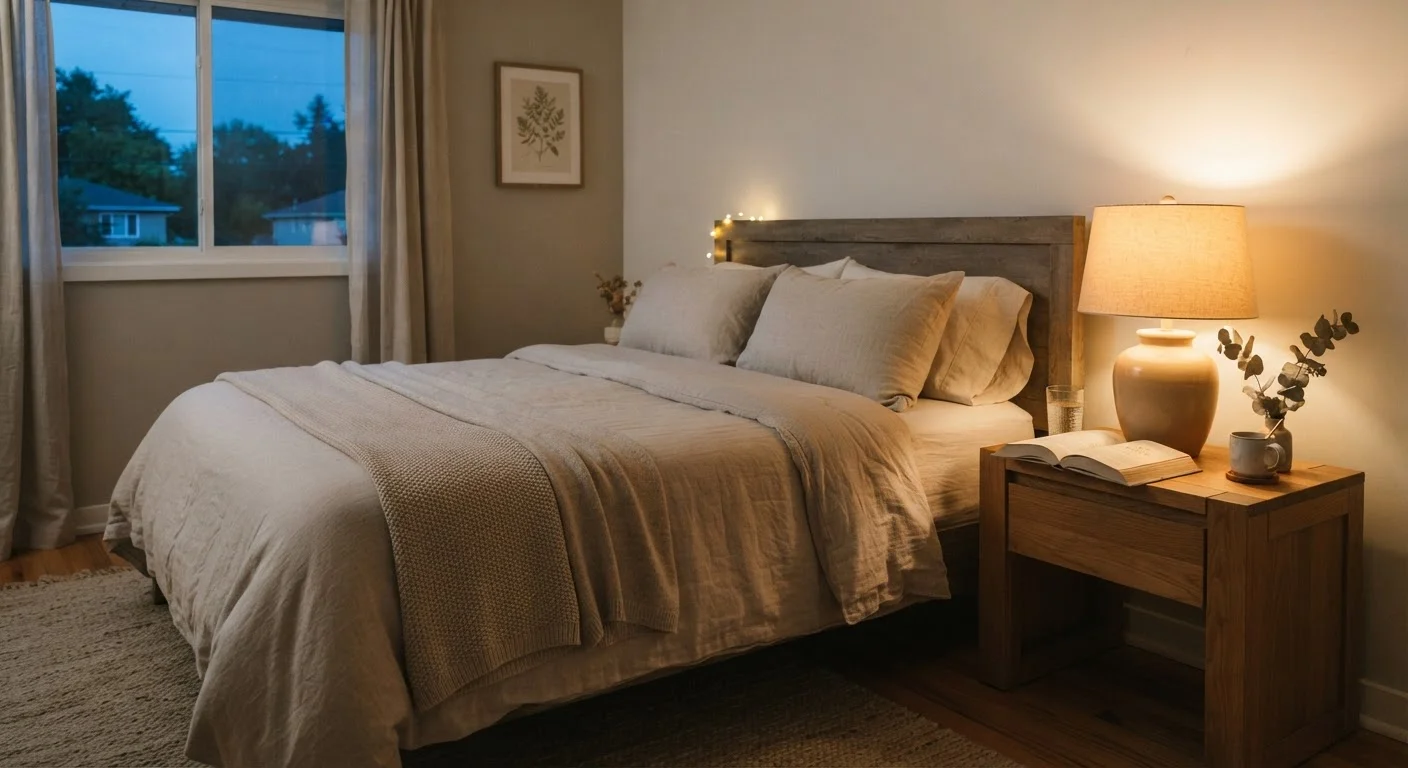
Switch to warm, dim lighting in the rooms you use before bed.
Overhead cool-white lighting activates the same alerting pathways as screen blue light. Dimming to warm-toned lamps signals the brain that evening has arrived and melatonin release can begin.
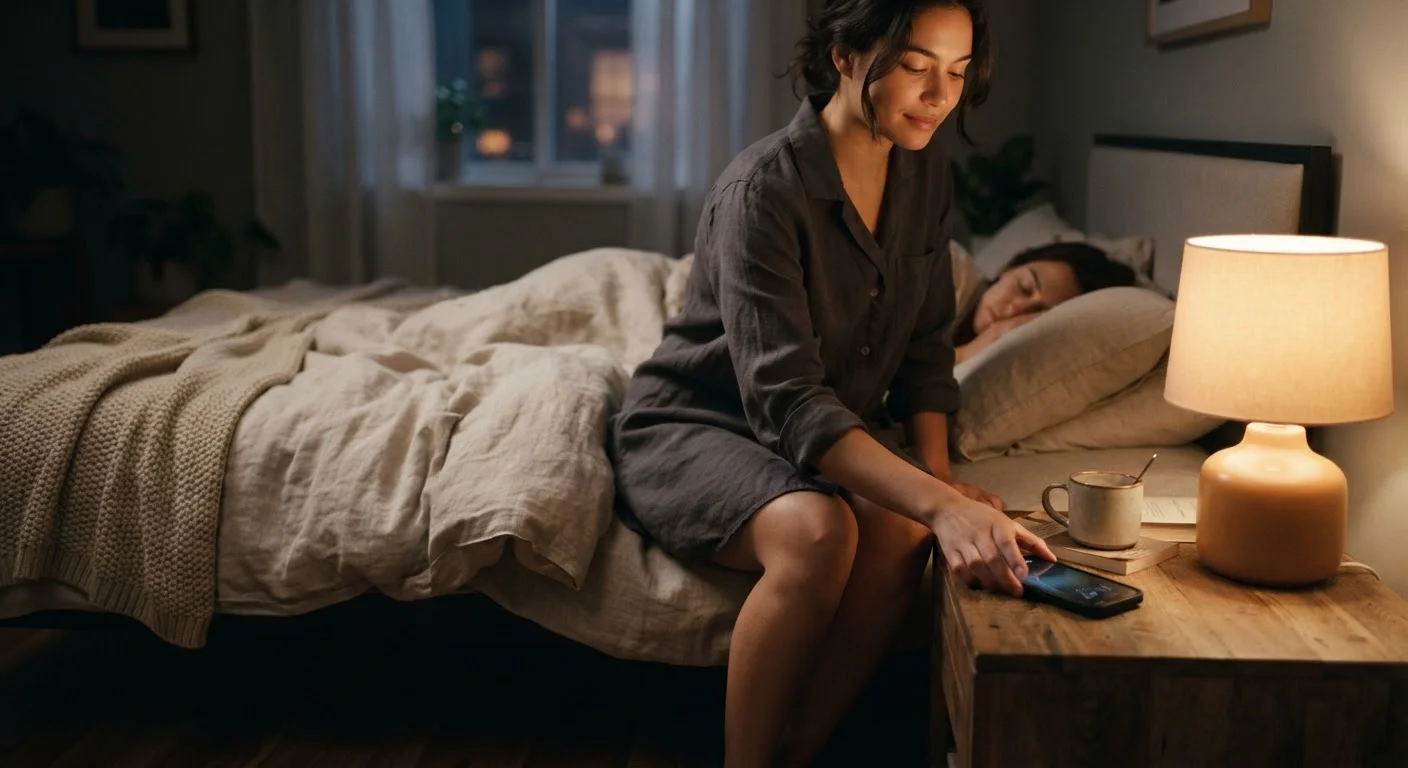
Keep your phone outside the bedroom, or at minimum across the room.
Physical distance reduces the pull to check notifications out of habit. If your phone is your alarm, that justification keeps it close - and close means accessible. A simple bedside clock removes the excuse.
Replace passive scrolling with a low-stimulation alternative that fills the same time slot.
Willpower alone rarely defeats habit. Pairing the 'stop scrolling' cue with an alternative activity - reading printed material, gentle stretching, journaling - gives your brain something to move toward rather than just something to move away from.
Use device features to reduce stimulation when you can't avoid screens entirely.
Night mode and grayscale settings on most smartphones reduce blue light intensity and make content visually less engaging - both lower the arousal cost of necessary evening screen use.
Quick Wins You Can Try Tonight
You don't need a perfect system to start seeing results. These immediate actions lower your screen exposure with minimal friction:
If you're ready to build these individual changes into a connected evening sequence, building an evening wind-down routine from scratch offers a practical framework. And if stress or anxious thoughts are a bigger obstacle than screen habits alone, structuring a wind-down routine for nervous system regulation addresses the mental wellness angle directly.
This article is for general informational purposes only and does not constitute medical advice. If you have concerns about your sleep or health, consult a qualified healthcare professional.