

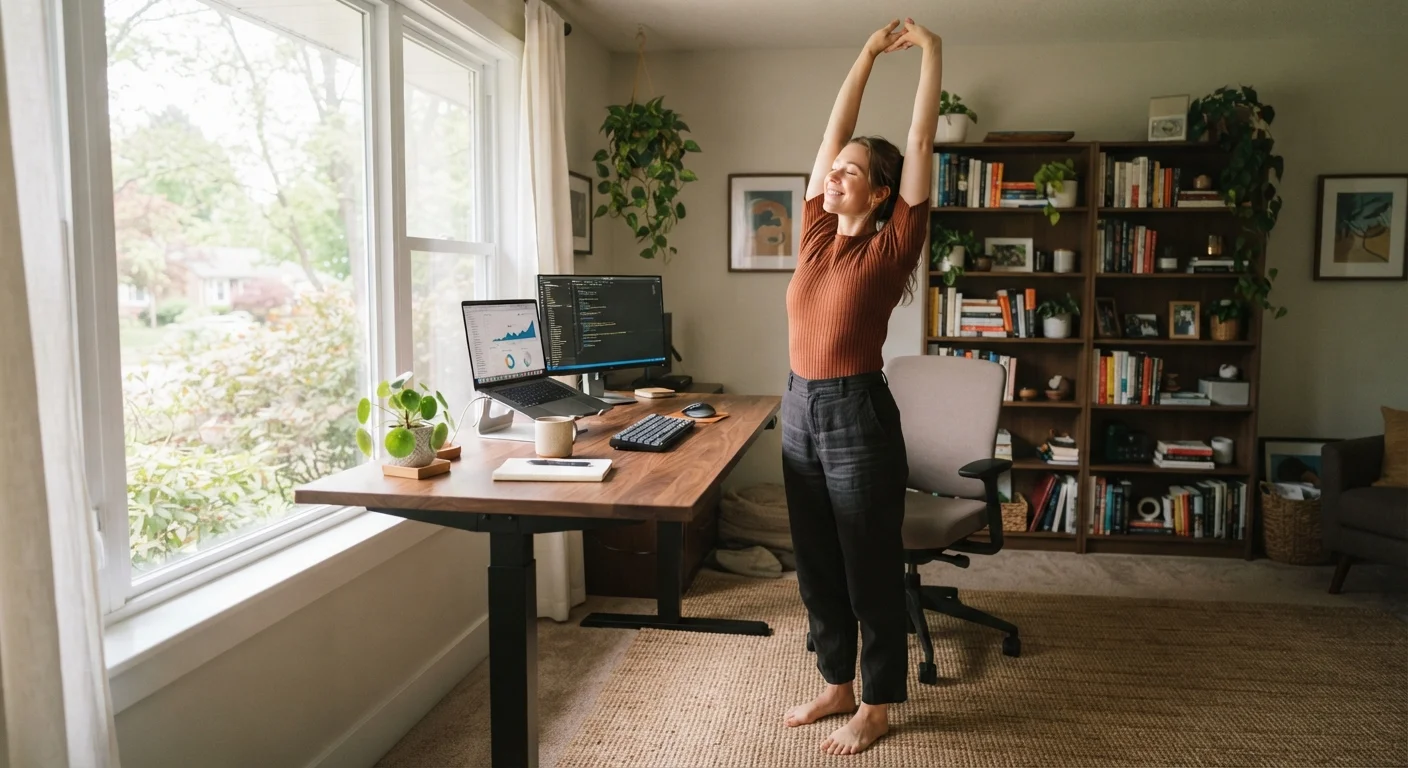
Why Sedentary Time Deserves Specific Attention
Regular exercise is valuable, but public health research increasingly distinguishes between overall physical activity and prolonged uninterrupted sitting. Evidence suggests that extended sedentary time is associated with its own health risks - including elevated blood sugar, poor circulation, and musculoskeletal discomfort - somewhat independently of whether a person meets general exercise recommendations. In other words, an hour at the gym in the morning does not fully cancel out eight hours of continuous sitting.
For people with desk-based jobs, this creates a practical challenge: the work itself requires sitting and sustained focus, and stepping away can feel counterproductive. But short, structured movement breaks are not the same as losing concentration. Studies on cognitive performance suggest that brief physical interruptions can actually support sustained attention rather than undermine it.
For a broader look at how low-intensity daily movement contributes to wellbeing, see our article on what daily walking actually does for you. Movement breaks and walking complement each other well as part of a broader active-lifestyle approach.
Not a Substitute for Medical Advice
The stretches and movement suggestions in this article are general wellness information, not medical guidance. If you have a musculoskeletal condition, chronic pain, or recent injury, consult a qualified healthcare professional before starting any new movement routine. Stop any stretch that causes sharp or worsening discomfort.
What to Do and When to Do It
The steps below are designed to be genuinely low-lift. You do not need a yoga mat, a gym, or a dedicated wellness app - just a timer, a few square feet of space, and the willingness to pause for two to five minutes at a time.
What you will need
Phone or computer timer
Set recurring reminders to prompt movement breaks throughout the day.
Standing mat
Provides cushioning underfoot if you perform standing stretches on hard flooring.
Water bottle kept at your desk
Serves as a natural cue to stand and refill - building movement into hydration.
Set a realistic break frequency
Start with a goal you will actually keep. Research on sedentary behaviour generally suggests breaking up long sitting periods, with some guidelines recommending a brief movement pause every 30 to 60 minutes. For most people, starting with one intentional break per hour is manageable without feeling disruptive.
Set a recurring timer on your phone or computer. Keep the interval consistent for at least two weeks before adjusting it.
Choose two or three stretches to anchor your break
Keeping your break routine simple and repeatable reduces the friction of starting. A short sequence of two to three targeted stretches - covering the neck, shoulders, and lower back - addresses the areas most commonly stressed by desk posture. Rotate sequences weekly if variety helps you stay engaged, but avoid building a routine so complex it requires planning every time.
Good starting stretches include: a gentle chin tuck (drawing the head straight back to counteract forward neck posture), a chest opener (clasping hands behind the back and lifting slightly), and a seated spinal twist (rotating the torso toward the armrest while keeping feet flat).
Add one minute of light movement
Stretching addresses muscle tension, but your cardiovascular system also benefits from a brief change in activity. After your stretches, spend 60 seconds walking to refill your water bottle, doing slow marching in place, or standing and shifting your weight side to side. This does not need to be vigorous - the goal is simply to interrupt sustained stillness.
Anchor breaks to existing cues in your workday
The most durable movement habits are attached to things that already happen reliably. Common anchors include: the start or end of a video call, finishing a document draft, brewing or refilling a hot drink, or receiving a specific recurring notification. Identifying two or three of these natural cues and committing to standing up each time they occur removes the need to rely entirely on willpower or timers.
Track consistency, not perfection
Missing a break does not erase your progress. Keep a simple tally - even a sticky note with a tick per break - for the first few weeks. Visible streaks encourage follow-through, but the goal is overall consistency across the week, not a flawless daily record. If you consistently miss breaks at a specific time of day, revisit your cues rather than criticising the habit itself.
Pair Movement Breaks With Habit Stacking
Attaching a new behaviour to something you already do reliably is one of the most evidence-supported ways to make it stick. Try linking your movement break to an existing cue - standing up every time you start a new task, or stretching while a file loads. Our guide to habit stacking explains the method in detail.
Avoid Forcing Range of Motion
Desk stretches should feel like gentle relief, not strain. Never push a stretch to the point of pain, and avoid bouncing or jerking movements. If a particular stretch consistently causes discomfort, skip it - there are always alternatives.
If you find that structured movement breaks improve your daytime energy, you may also benefit from looking at the ends of your day. Our guide to building an evening wind-down routine pairs naturally with daytime movement habits by addressing how recovery and rest contribute to next-day energy. Likewise, breathwork as a daily practice can complement short breaks - a few slow breaths during your movement pause adds a mental-reset dimension without adding time.
This article provides general health and wellness information only and is not a substitute for professional medical advice. If you have any health concerns or conditions, consult a qualified healthcare professional before making changes to your activity routine.