
Why Cooking Method Matters Nutritionally
Most people focus on what they eat - the specific vegetables, proteins, or whole grains on their plate. Far fewer consider how cooking transforms those ingredients at a nutritional level. Heat, water, fat, and time all act on the chemical structure of food, and the changes they cause aren't trivial.
Nutrients fall into two broad categories relevant here: water-soluble (like vitamin C and the B vitamins) and fat-soluble (like vitamins A, D, E, and K). Water-soluble nutrients are far more vulnerable to cooking losses - they can dissolve into cooking water or break down under sustained heat. Fat-soluble nutrients are more stable but can be affected by extremely high temperatures or prolonged exposure to air and light during cooking.
Understanding these dynamics doesn't mean obsessing over every meal. It means making informed choices that, over time, support a more nutritionally complete diet. For context on the broader picture of food quality, see our guide on whole foods vs. processed foods.
50%+
Vitamin C lost when boiling vegetables
Research consistently shows boiling can cut vitamin C content in vegetables by half or more, depending on cooking time and water volume.
~30%
B vitamin reduction in roasted meat
Studies indicate that roasting and baking can reduce heat-sensitive B vitamins in meat by roughly 30%, varying by temperature and cook time.
2-3×
Lycopene bioavailability increase after cooking
Research has found that processed or cooked tomato products yield significantly higher lycopene absorption compared to raw tomatoes.
Boiling, Steaming, and Microwaving: The Water Factor
Boiling is one of the most common cooking methods - and one of the least nutrient-friendly for vegetables. When produce is submerged in hot water, water-soluble vitamins leach out into the liquid. Studies have shown that boiling can reduce vitamin C content in vegetables by 50% or more, depending on time and temperature. Minerals like potassium also migrate into the water. If you do boil, using the cooking liquid in soups or sauces recovers some of what's lost.
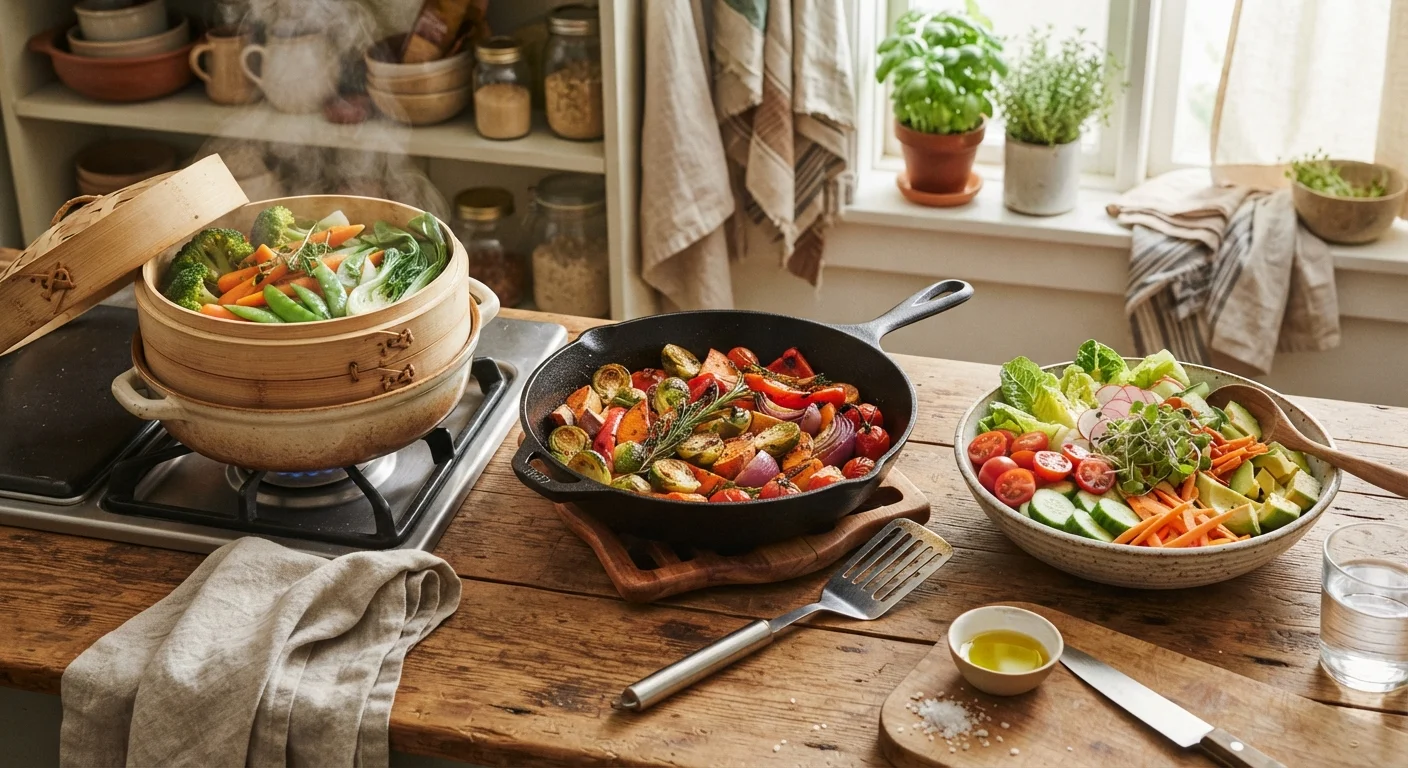
Steaming avoids direct water contact, keeping more nutrients in the food itself. It's consistently among the top-performing methods for preserving vitamin C, folate, and other sensitive compounds. Quick steaming - just until tender - yields the best results.
Microwaving is frequently underestimated. Because it uses short cooking times and typically little water, it preserves water-soluble vitamins remarkably well. Research has shown microwaved broccoli retains more vitamin C than boiled broccoli. It's a practical option that doesn't deserve its poor nutritional reputation.
Preserve More Nutrients When Boiling
If boiling is your preferred method, use the smallest amount of water possible and keep cooking times short. Even better, repurpose the cooking water in stocks, soups, or sauces - many of the leached vitamins and minerals remain in the liquid. A well-organised kitchen makes it easier to build these habits into your routine; see our tips on organising a kitchen so cooking feels less like a chore.
Roasting, Grilling, and Frying: The Heat Factor
Roasting and baking use dry heat at moderate-to-high temperatures. They cause some loss of heat-sensitive vitamins - particularly B vitamins in meat - but generally preserve fat-soluble nutrients well. Roasting also concentrates flavor through caramelization without adding significant fat, making it a practical middle-ground method.
Grilling can create high-heat compounds called heterocyclic amines (HCAs) and polycyclic aromatic hydrocarbons (PAHs), particularly when meat is charred or cooked over an open flame. Marinating proteins and avoiding excessive charring are commonly recommended ways to reduce this exposure, though the overall dietary risk depends on frequency and overall diet patterns.
Frying introduces substantial added fat and significantly higher calorie density. High-temperature frying also degrades certain vitamins and, in starchy foods like potatoes, can produce acrylamide - a compound that forms when sugars and an amino acid react under intense heat. Occasional frying isn't cause for alarm, but it's worth knowing it's not a method that enhances nutritional value.
Poor cooking habits are one of several patterns explored in our article on common dietary missteps.
When Cooking Actually Improves Nutrition
It's easy to assume raw is always better - but cooking genuinely enhances the nutritional value of certain foods. Lycopene, the antioxidant in tomatoes linked to cardiovascular health in observational studies, becomes significantly more bioavailable after cooking. Heat breaks down the cell walls that trap it, making it easier for the body to absorb.
Similarly, beta-carotene in carrots is more accessible after cooking, and cooking spinach reduces its oxalic acid content, which can otherwise bind to minerals like iron and calcium and limit their absorption. Legumes must be cooked to neutralize lectins and other antinutrients that interfere with digestion.
This is why dietary variety - including a mix of raw and cooked foods - serves nutritional goals better than any single approach. Variety across the week covers more bases than any single "optimal" method could. Planning this well starts with a thoughtful kitchen setup; see our guide to grocery shopping with nutritional balance in mind.
This article is for informational purposes only and is not a substitute for personalized nutrition advice. Consult a registered dietitian or qualified healthcare professional for guidance tailored to your individual health needs.