

Why Good Intentions Alone Don't Change Eating Habits
Most people who try to eat more healthily aren't lacking willpower or desire - they're navigating a genuinely confusing landscape. Conflicting headlines, misleading product labels, and one-size-fits-all diet trends create conditions where even well-researched efforts can quietly backfire. Understanding where things commonly go wrong is often more useful than another list of foods to eat or avoid.
The patterns below aren't about blame. They reflect how dietary change actually works - or doesn't - based on what nutrition research consistently shows. Recognizing them is the first step toward building an approach that holds up beyond the first few weeks.
This Is General Information, Not Medical Advice
The guidance in this article is intended for general education only. Individual nutritional needs vary significantly based on health status, age, medications, and other factors. Before making meaningful changes to your diet - especially if you have a chronic condition or take medication - consult a registered dietitian or qualified healthcare provider.
The Most Common Mistakes - and What to Do Instead
The following errors appear repeatedly across different eating approaches and demographics. Each one is addressable with a shift in framing rather than a dramatic change in effort.
Attempting a total dietary overhaul all at once rather than making gradual changes.
Why it happens: Motivation tends to spike at the start of a health goal, making sweeping changes feel manageable in the moment.
Trusting health claims on packaging without checking the full nutrition label.
Why it happens: Front-of-pack labels use phrases like 'natural,' 'low-fat,' or 'high-protein' that are designed to appeal but often don't reflect the product's overall nutritional quality.
Classifying entire food groups as 'off limits' based on trending advice.
Why it happens: Popular diet culture frequently demonizes one macronutrient or food category - carbohydrates, fats, dairy - making blanket elimination feel like the logical choice.
Underestimating how much is eaten by failing to account for portions, sauces, and drinks.
Why it happens: People tend to recall meals in broad categories rather than precise quantities, and calorie-dense additions like dressings, oils, and sweetened drinks are easy to overlook.
Treating nutrition as separate from sleep, stress, and hydration.
Why it happens: Dietary advice is often delivered in isolation, leading people to expect food choices alone to drive energy, mood, and body composition outcomes.
Following overly restrictive plans found online without professional guidance.
Why it happens: The internet offers an endless supply of diet plans, often promoted by voices with little or no nutritional credentials, making it hard to distinguish evidence-informed advice from marketing.
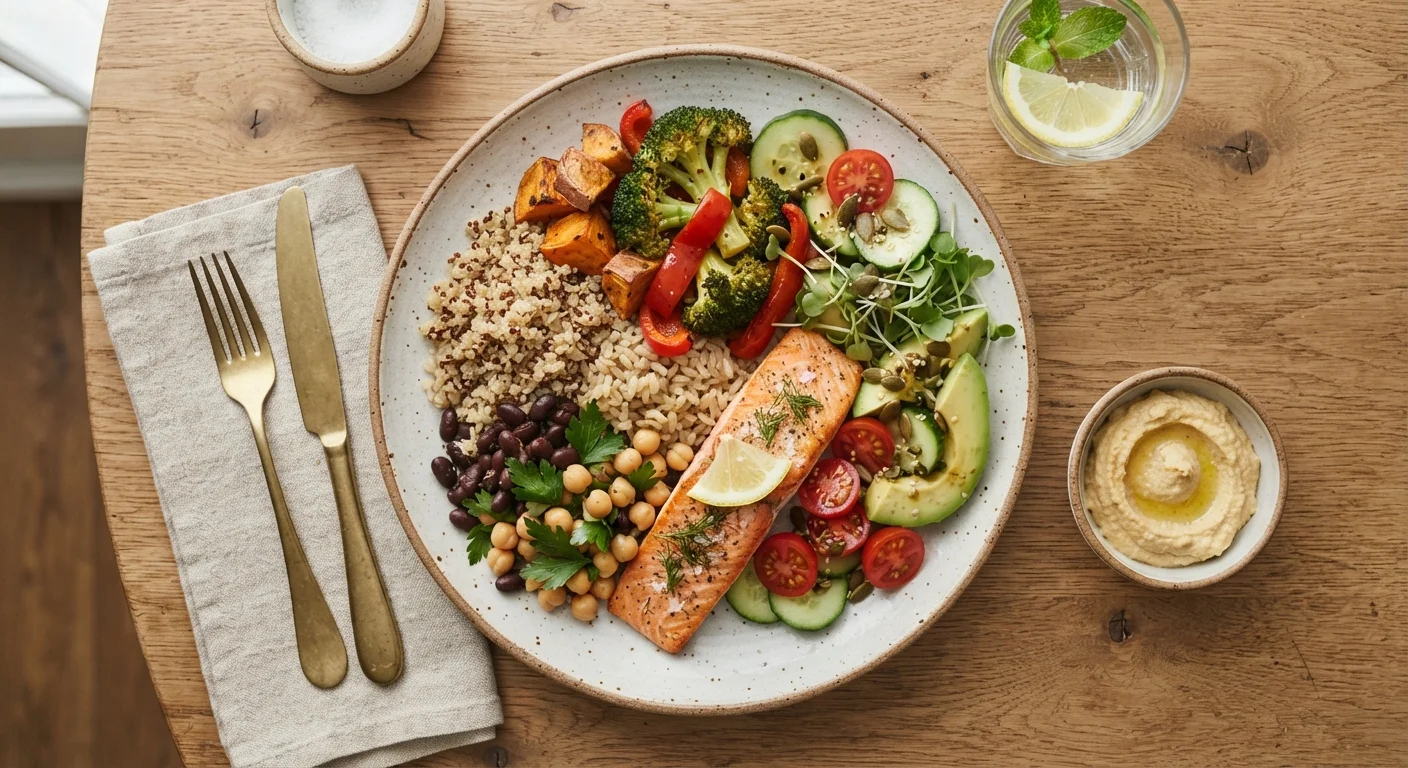
For a grounded look at what a nutritionally varied meal actually looks like in practice, evidence-informed plate principles offer a useful reference point without the prescriptive rigidity of popular diets.
80%
Of adults who attempt dietary changes relapse within weeks
Behavioral nutrition research consistently identifies early abandonment as the most common obstacle to sustained dietary improvement, often linked to overly restrictive initial approaches.
~73%
Of the US food supply is ultra-processed
A study published in BMJ Open estimated that ultra-processed foods account for roughly 73% of the US food supply, highlighting how normalized heavily processed options have become.
Building a More Durable Approach
Sustainable healthy eating rarely looks like perfection. It looks like a pattern of choices that tilts, over time, toward variety, whole foods, and reasonable portions - with room for flexibility. Research into dietary adherence consistently finds that enjoyment and practicality are stronger predictors of long-term success than nutritional precision alone.
If you're curious about expanding the range of foods in your diet, plant-based eating as a starting point is worth exploring - not as a mandate, but as one framework for increasing variety. For the practical side of putting these principles into action at the store, grocery shopping with nutritional balance in mind provides a structured approach without overcomplicating the process.
It's also worth examining beliefs that feel like facts but aren't well-supported - from meal timing myths to assumptions about snacking. Common myths about eating habits and daily energy separates what the evidence actually shows from what has simply been repeated often enough to feel true.
This article is for general informational and educational purposes only and does not constitute medical or dietary advice. Always consult a qualified healthcare professional or registered dietitian before making significant changes to your diet.