
Why 'Balanced' Is Worth Defining
Nutrition advice fills social feeds, podcasts, and grocery store packaging - often contradicting itself. Eating 'balanced' sounds sensible, but what does it actually mean in practice? The term risks becoming so vague it loses value.
Evidence-informed nutrition frames balance not as a rigid formula but as a consistent pattern: adequate macronutrients (carbohydrates, proteins, and fats), sufficient micronutrients (vitamins and minerals), appropriate caloric range for the individual, and a diet composed mostly of whole or minimally processed foods. For a deeper look at what the research actually supports - and where it is still evolving - our guide on common nutrition myths is a useful companion to this article.
This article is for general informational and educational purposes only and is not a substitute for personalized advice from a qualified healthcare professional or registered dietitian.
The Core Food Groups and What They Do
Understanding the role of each food group removes the guesswork from meal construction.
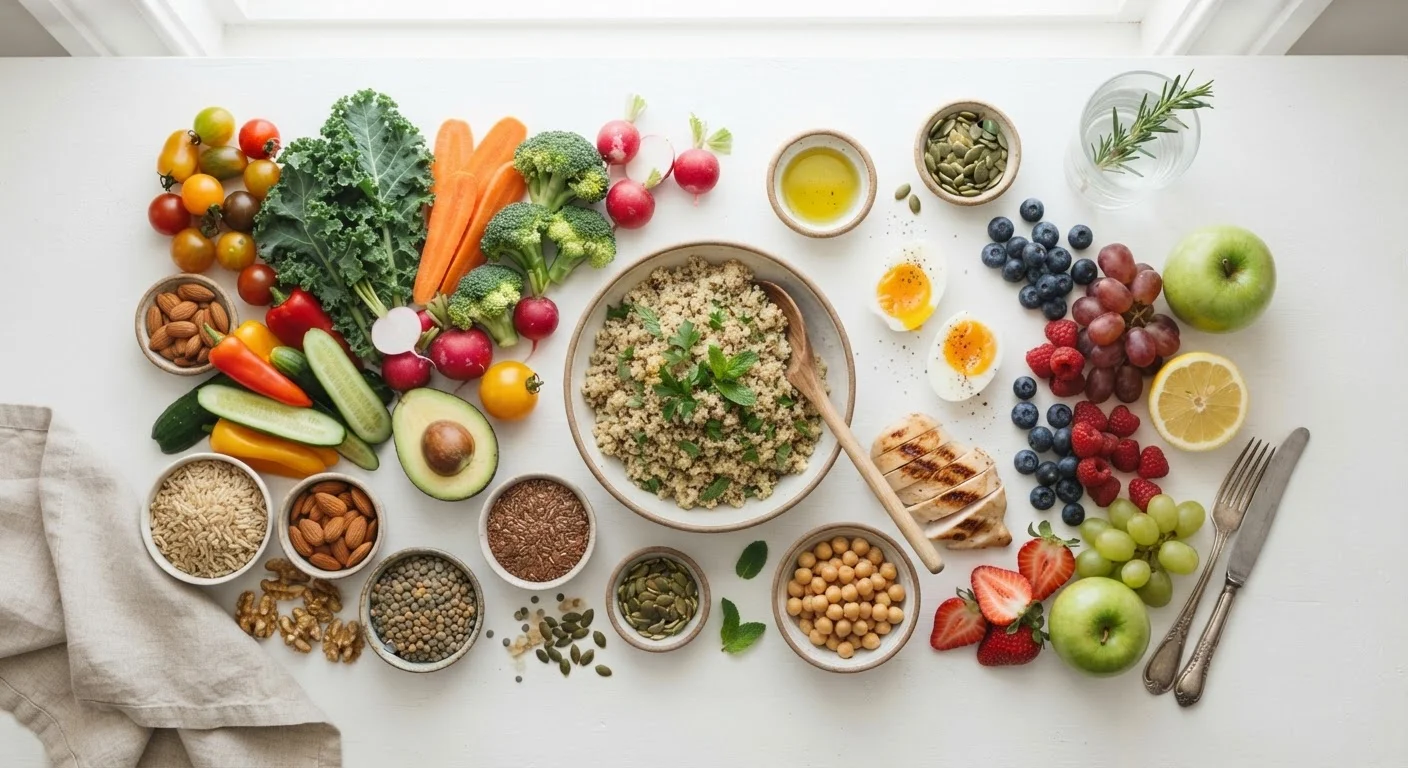
- Vegetables and fruits supply fiber, vitamins (notably C, folate, and potassium), antioxidants, and water. Variety across colors generally reflects variety across nutrients.
- Whole grains (oats, brown rice, quinoa, whole-wheat products) provide complex carbohydrates, B vitamins, iron, and fiber. They digest more slowly than refined grains, producing a more gradual blood sugar response.
- Proteins - whether from legumes, fish, poultry, eggs, dairy, or lean meat - support tissue repair, immune function, and satiety. Plant proteins often come with additional fiber and phytonutrients; animal proteins tend to supply complete amino acid profiles and certain micronutrients like B12 and heme iron more readily.
- Healthy fats from sources such as nuts, seeds, avocado, and olive oil are essential for fat-soluble vitamin absorption (A, D, E, K) and cellular function. Fat is not optional - the type and context matter more than elimination.
- Dairy or fortified alternatives contribute calcium, vitamin D, and protein. Those avoiding dairy should look for fortified plant-based options and ensure adequate calcium from other sources.
When building a plate, start with vegetables first - fill half the plate before adding anything else. This single habit naturally shifts proportions without requiring calorie counting.
Starting with the lower-calorie, higher-fiber component makes it structurally harder to crowd out vegetables, which most people under-consume relative to guidance.
Rotate your protein sources across the week rather than defaulting to the same one daily. Aim to include legumes at least two or three times weekly alongside other sources.
Dietary variety in protein sources broadens the range of amino acids, micronutrients, and fiber (from plant proteins) the body receives, reflecting the pattern seen in well-studied healthy dietary patterns.
Proportions: The Practical Blueprint
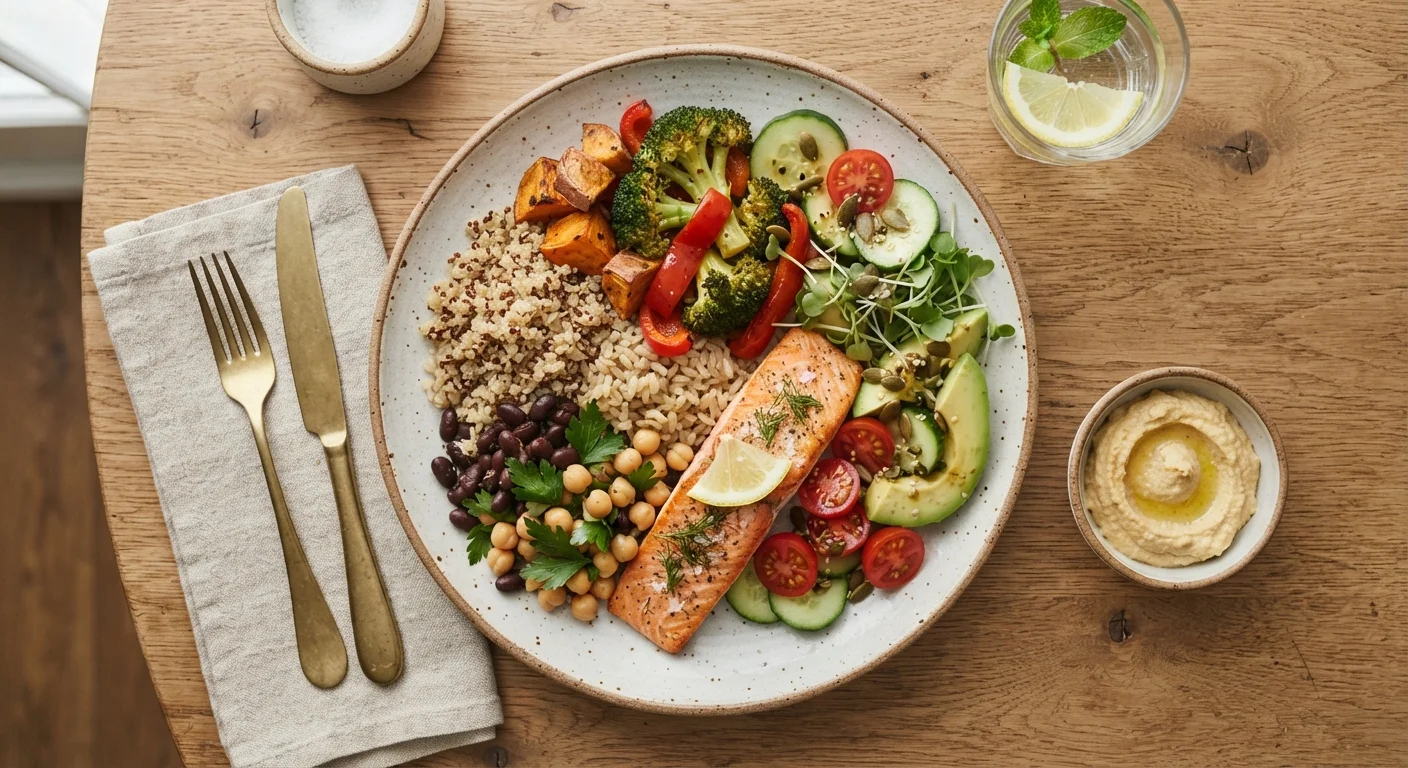
Translating food group knowledge into actual meals is where many people get stuck. The Healthy Eating Plate, developed by Harvard T.H. Chan School of Public Health, offers a widely referenced visual model:
- Half the plate: vegetables and fruits, with an emphasis on vegetables and variety over fruit alone.
- A quarter of the plate: whole grains rather than refined carbohydrates.
- A quarter of the plate: protein from a range of sources, with processed meats kept to a minimum.
- A side or incorporated component: healthy fats in moderate amounts.
- Beverages: water, unsweetened tea, or coffee as primary choices; sugary drinks minimized.
These proportions are a guide, not a rule enforced at every sitting. A salad-heavy lunch can balance a grain-forward dinner. Thinking in terms of daily or weekly patterns rather than individual meals reduces the perfectionism that often derails good intentions.
~90%
Americans not meeting vegetable intake recommendations
According to the U.S. Centers for Disease Control and Prevention, only about 1 in 10 American adults consume sufficient vegetables daily.
3x
More fiber in whole grains vs. refined grains
Whole grains retain the bran and germ layers stripped in refining, which significantly increases fiber, B vitamins, and mineral content per serving.
~30%
Of daily calories from ultra-processed foods in typical US diet
Research published in peer-reviewed nutrition journals has estimated that ultra-processed foods contribute a substantial share of energy intake in the average American diet.
What Evidence Says About Eating Patterns
Decades of nutritional epidemiology - despite its known limitations - consistently point to a few broad eating patterns associated with better long-term health outcomes. The Mediterranean diet (high in vegetables, legumes, whole grains, fish, and olive oil, with modest dairy and limited red meat) has one of the strongest bodies of evidence behind it. Dietary approaches such as DASH (Dietary Approaches to Stop Hypertension) also consistently appear in research supporting cardiovascular and metabolic health.
“The best diet is one that is predominantly plant-based, rich in whole foods, and low in ultra-processed products. The evidence for this pattern is more consistent than for any single nutrient or food.”
— Walter Willett, Professor of Epidemiology and Nutrition, Harvard T.H. Chan School of Public Health
The common thread across well-studied dietary patterns is not a single 'superfood' but an overall composition: plant-forward, minimally processed, varied, and moderate in added sugar, refined carbohydrates, and saturated fat. If you're curious about plant-based eating as a practical approach, the evidence base for it overlaps substantially with these broader patterns.
It's also worth understanding how energy balance interacts with food quality. Our article on what the calories-in, calories-out framework gets right and wrong covers this nuance in depth.
Common Pitfalls and How to Avoid Them
Good dietary intentions don't always produce good dietary outcomes. Several patterns quietly undermine an otherwise reasonable approach:
Watch Out for Nutrition Perfectionism
Striving for a 'perfect' diet at every meal can create unnecessary stress and, for some people, contribute to disordered eating patterns. Nutrition researchers broadly agree that overall dietary patterns across weeks and months matter far more than the composition of any single meal. If you find food-related anxiety is affecting your quality of life, speak with a healthcare professional.
- Over-relying on 'healthy' packaged foods: Marketing labels like 'natural,' 'low-fat,' or 'high-protein' don't guarantee nutritional balance. Reading ingredient lists matters more than front-of-pack claims.
- Neglecting vegetables in favor of protein: Protein is important, but crowding out vegetables narrows fiber and micronutrient intake considerably.
- Skipping fats out of habit: Fat-phobia persists despite evidence that unsaturated fats support health. Very low-fat diets can impair fat-soluble vitamin absorption.
- All-or-nothing thinking: Treating one 'imperfect' meal as a failure often leads to abandoning the broader pattern. Consistency over weeks matters far more than any single sitting.
For a closer look at these habits and how they form, our article on where people go wrong when trying to eat more healthily explores the patterns in detail.
Putting It Together: Realistic Next Steps
Translating principles into a functioning kitchen starts with what you buy. Planning meals around the proportions above - and stocking accordingly - removes daily decision fatigue. Our practical grocery shopping guide offers a straightforward checklist for doing exactly that.
Start Small for Lasting Change
Rather than overhauling your entire diet at once, pick one meal per day to build around the balanced-plate proportions. Once that feels routine - typically after a few weeks - add a second meal. Gradual changes are more likely to become permanent habits than wholesale dietary transformations.
If meal timing is something you're thinking about, the evidence comparing intermittent fasting with conventional meal schedules is more nuanced than most headlines suggest. The foundational principles here apply regardless of when you eat.
Balanced eating is also part of a broader set of everyday habits that support lasting wellbeing - it rarely works in isolation from sleep, movement, and stress management. Progress, not perfection, is both the realistic and evidence-supported goal.
Always consult a registered dietitian or qualified healthcare provider before making significant changes to your diet, particularly if you have a medical condition, are pregnant, or are managing a chronic health concern.