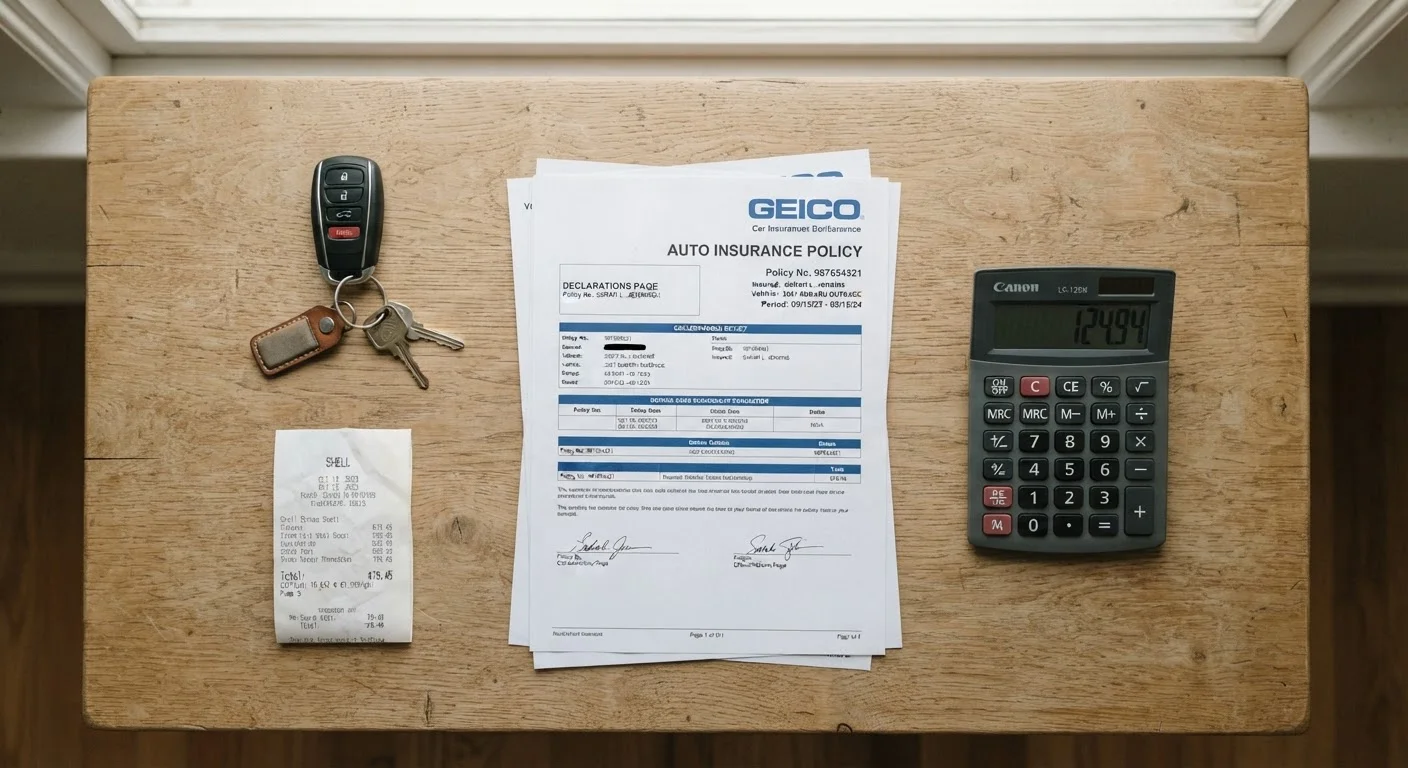

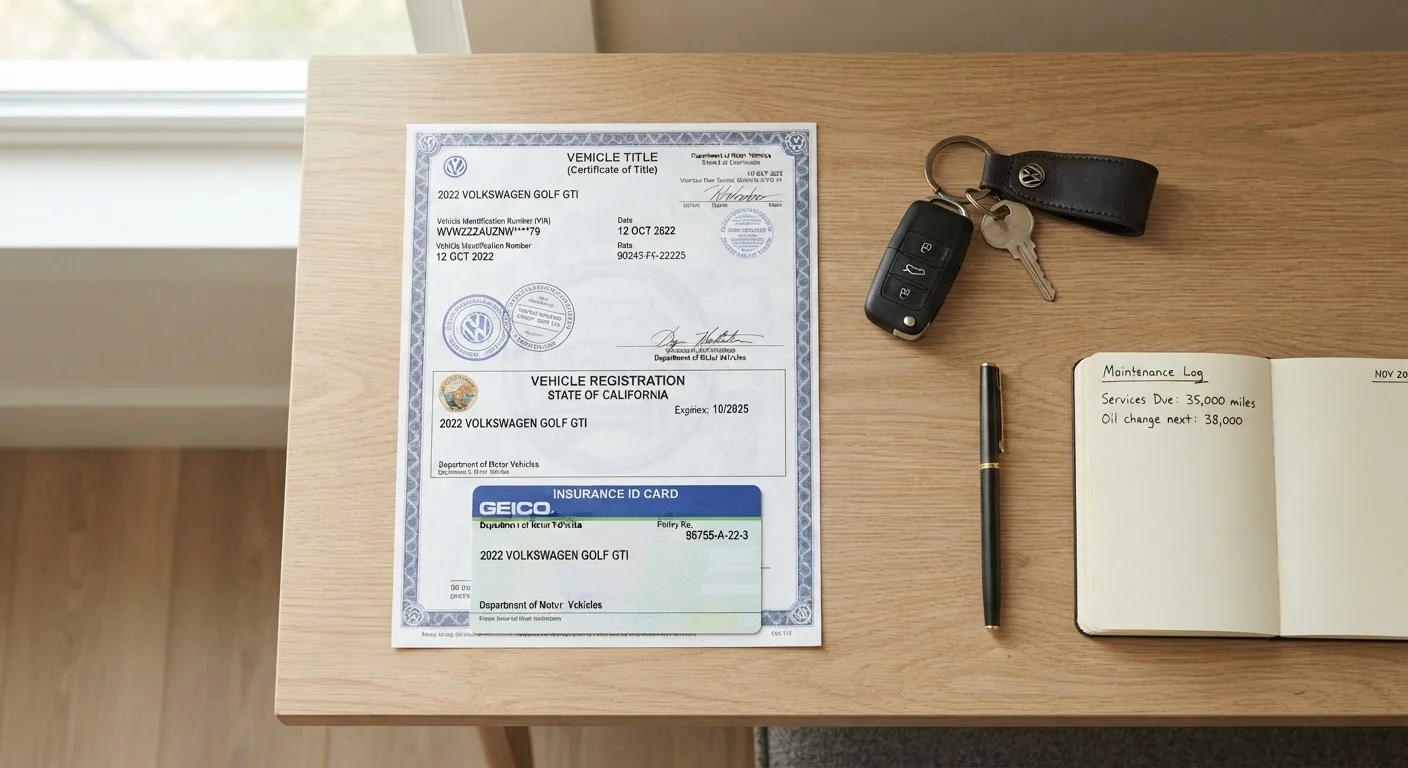
Why This Glossary Exists
Buying, financing, registering, and insuring a vehicle involves a surprising amount of paperwork - and a lot of terms that dealers, lenders, and DMV clerks throw around without explanation. This glossary covers 40 of the most common words and phrases you'll actually run into as a vehicle owner in the US. Think of it as a quick-reference lookup, not a comprehensive legal guide.
For a deeper look at how these financial concepts play out in real dollars, see what car ownership actually costs beyond the sticker price and how financing and leasing compare.
| Terms covered in this glossary | 40 |
| Categories covered | Financing, title/registration, insurance, dealer, maintenance |
| VIN character length | 17 characters (NHTSA standard) |
| Recall lookup tool | nhtsa.gov (search by VIN) (National Highway Traffic Safety Administration) |
| OBD-II required since | Model year 1996 (US EPA and CARB mandate) |
| States requiring liability insurance | Nearly all 50 states (State laws vary; verify your state's minimums) |
Financing and Loan Terms
These are the terms you'll encounter when borrowing money to purchase a vehicle or reviewing a loan agreement.
APR (Annual Percentage Rate)
The yearly cost of borrowing money, expressed as a percentage. It includes both the interest rate and certain fees, making it a more complete picture of loan cost than the interest rate alone.
Amortization
The schedule by which a loan is paid down over time. In the early months of an auto loan, a larger share of each payment goes toward interest; over time, more goes toward the principal balance.
Principal
The original amount borrowed, separate from interest. Paying down the principal faster reduces total interest paid over the life of the loan.
Down payment
Money paid upfront at the time of purchase, reducing the amount that needs to be financed. A larger down payment generally results in lower monthly payments and less interest paid overall.
Residual value
The projected value of a vehicle at the end of a lease term. Higher residual values typically mean lower monthly lease payments, since you're only financing the depreciation during the lease period.
Money factor
The lease equivalent of an interest rate, expressed as a small decimal (e.g., 0.00125). Multiply by 2,400 to convert it to an approximate APR for easier comparison.
Capitalized cost (cap cost)
The agreed-upon price of the vehicle in a lease - essentially the purchase price used as the basis for calculating monthly payments. Negotiating the cap cost down reduces lease payments.
Balloon payment
A large lump-sum payment due at the end of certain loan structures. Some financing agreements have lower monthly payments but require a significant balloon payment at the end of the term.
Prepayment penalty
A fee some lenders charge if you pay off a loan ahead of schedule. Not all auto loans include this clause, but it's worth checking before making extra payments.
Credit score
A numerical summary of your credit history used by lenders to assess lending risk. Higher scores typically qualify for lower interest rates on auto loans.
Loan-to-value ratio (LTV)
The ratio of the loan amount to the vehicle's appraised value. A high LTV means you're financing a large percentage of the vehicle's worth, which can affect loan approval and terms.
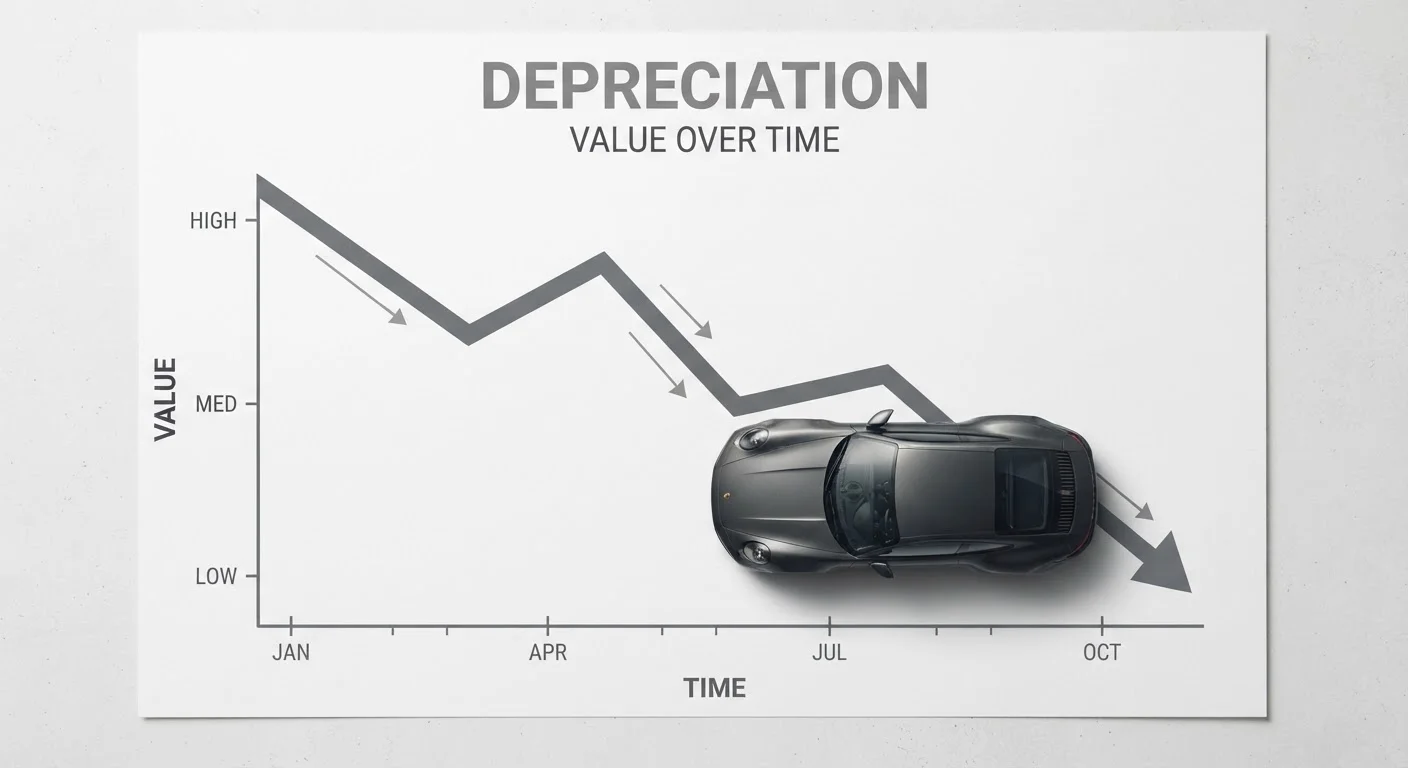
Depreciation
The decline in a vehicle's market value over time. New vehicles typically lose a significant portion of their value in the first few years of ownership, which affects resale value and insurance payouts.
Understanding how depreciation interacts with your loan balance is especially useful when evaluating GAP insurance or deciding how much to put down. Personal finance terms like APR also appear in other borrowing contexts - our related debt and savings glossary covers the broader picture.
APR vs. Interest Rate: Not the Same Thing
A loan's interest rate and its APR are related but different. The interest rate is the base cost of borrowing; APR folds in certain fees (like origination charges), giving a fuller picture of the loan's total cost. When comparing loan offers, APR is generally the more useful figure. Always read the loan agreement to understand which fees are included.
Title, Registration, and Ownership Documents
Once a purchase is finalized, a separate layer of paperwork transfers legal ownership and puts the vehicle on public record.
- Title: The legal document proving who owns the vehicle. Held by the lienholder while a loan is active; transferred to you upon payoff.
- Lien: A lender's legal claim on the vehicle until the loan is repaid in full.
- Title transfer: The formal process of moving ownership from seller to buyer, typically handled at the DMV or through a licensed dealer.
- Bill of sale: A written record of the transaction - price, date, parties involved. Often required during private-party sales.
- Registration: State authorization to operate the vehicle on public roads; renewed annually in most states and tied to license plates.
- VIN (Vehicle Identification Number): A unique 17-character code that permanently identifies a specific vehicle. Appears on the title, registration, insurance documents, and the dashboard.
- Odometer disclosure: A legally required statement of the vehicle's mileage at time of sale, used to prevent odometer fraud.
- Power of attorney (automotive): A document allowing someone else to sign title paperwork on your behalf - commonly used in remote or out-of-state purchases.
If you're new to all of this, our first-time owner guide walks through registration deadlines and documentation step by step.
Insurance Terms
Car insurance policies use precise language that affects what you're actually covered for - and what you'll owe out of pocket when something goes wrong.
- Premium: The amount you pay for coverage, typically monthly or semi-annually.
- Deductible: What you pay before your insurer covers the rest of a claim.
- Liability coverage: Pays for damage or injuries you cause to others. Required in nearly every US state.
- Collision coverage: Pays to repair or replace your vehicle after an accident, regardless of fault.
- Comprehensive coverage: Covers non-collision damage - theft, weather, falling objects, animal strikes.
- GAP insurance: Covers the difference between what you owe on a loan and what the car is worth if it's totaled. Most relevant when a loan balance exceeds the vehicle's current market value.
- Uninsured/underinsured motorist coverage: Protects you if you're hit by a driver with no insurance or insufficient coverage.
- SR-22: A certificate your insurer files with the state verifying you carry minimum required coverage - often required after certain violations.
- Actual cash value (ACV): What your insurer determines the vehicle is worth at the time of a claim, after depreciation.
- Named insured: The person (or people) specifically listed on the policy as the primary covered party.
For a full breakdown of what each coverage type does - and doesn't - protect, see car insurance explained.
Dealer and Purchase Terms
Dealerships and private sellers use a range of terms during the buying process that are worth knowing before you sign anything.
- MSRP (Manufacturer's Suggested Retail Price): The price the manufacturer recommends; the actual transaction price is often different.
- Invoice price: What the dealer paid the manufacturer for the vehicle - a reference point in price negotiations, though not the dealer's true cost.
- Out-the-door price: The total you'll actually pay, including taxes, fees, and add-ons. Always ask for this number.
- Trade-in value: What a dealer offers for your current vehicle, applied toward the new purchase price.
- Negative equity (being underwater): Owing more on your current loan than the vehicle is worth - a factor when trading in.
- Doc fee (documentation fee): A dealer charge for processing paperwork. Amounts vary by state and dealer.
- As-is: Sold without warranty or guarantee of condition. Common in private-party sales and some used-car transactions.
- Certified pre-owned (CPO): A manufacturer- or dealer-backed used vehicle that has passed an inspection and includes some warranty coverage.
- Dealer add-ons: Optional products or accessories bundled into a deal - paint protection, extended warranties, etc. These are negotiable.
- Spot delivery: When a dealer lets you take a vehicle before financing is fully finalized. Read any agreement carefully before accepting spot delivery.
Safe vehicle operation starts with knowing your car - the plain-language guide to engine components and resources in the car maintenance hub can help you stay informed after purchase.
Maintenance and Mechanical Terms
You don't need to be a mechanic, but recognizing these terms helps you communicate clearly with service professionals and understand what's being recommended.
- OBD-II (On-Board Diagnostics): The standardized port in most vehicles built after 1996 that mechanics use to read diagnostic trouble codes from the car's computer.
- Diagnostic trouble code (DTC): A code generated by the vehicle's computer when a system issue is detected - the foundation of most warning light investigations.
- TSB (Technical Service Bulletin): An official notice from a manufacturer about a known issue and its fix. Not a recall, but often covers repairs under warranty.
- Recall: A manufacturer or NHTSA-mandated repair for a safety defect. Recalls are free to owners and can be looked up by VIN at nhtsa.gov.
- Warranty (bumper-to-bumper): Covers most vehicle components for a set period or mileage - typically the first few years of a new car's life.
- Powertrain warranty: A longer-coverage warranty limited to the engine, transmission, and drivetrain components.
- Extended warranty / service contract: Optional coverage purchased to extend protection beyond the factory warranty. Terms and exclusions vary widely - read the contract carefully.
- Preventive maintenance: Scheduled upkeep - oil changes, tire rotations, filter replacements - performed to prevent failures before they occur.
Routine upkeep questions are covered in depth in the car maintenance hub, and the driving and safety hub addresses what happens when things go wrong on the road.