

The First 30 Days: Registration and Titling
The paperwork clock starts the moment you take ownership. Most states require you to title and register the vehicle within 30 days of purchase - some states set the window as short as 10 days. Operating outside that window can result in late fees or a citation.
When you buy from a dealership, the dealer typically handles title and registration paperwork on your behalf and collects the associated fees at closing. In a private-party sale, you're responsible for taking the signed title to your state's Department of Motor Vehicles (DMV) yourself.
Vehicle title
The legal document that establishes who owns a vehicle. You need it to sell or transfer the car.
Lienholder
A lender or financial institution that has a legal claim on your vehicle until you fully repay the auto loan.
Liability insurance
Coverage that pays for damage or injuries you cause to other people or their property in an at-fault accident. It does not cover damage to your own vehicle.
Registration
A state-issued record confirming a vehicle is authorized to operate on public roads. It must be renewed periodically, typically annually.
Comprehensive coverage
Optional insurance that covers damage to your vehicle from non-collision events like theft, weather, or falling objects.
If you financed the vehicle, the lender's name usually appears on the title as a lienholder until the loan is fully paid. Once the loan is satisfied, the lender releases the lien and you receive a clean title in your name.
Insurance: What You're Actually Required to Have
Every state except New Hampshire and Virginia requires drivers to carry a minimum level of liability insurance - coverage that pays for injuries or property damage you cause to others. Driving uninsured is illegal in most states and can result in license suspension, fines, and significant out-of-pocket exposure after an accident.
State minimums vary considerably. A policy that meets the legal floor in one state may fall short of another's requirements. If you recently moved, verify your coverage against your new state's minimums before driving.
Add Your New Car to Insurance Before You Drive
If you already have an auto policy, call your insurer before picking up the vehicle - many companies let you add a car immediately over the phone or through their app. If you're getting insurance for the first time, have your policy number confirmed before you drive off the lot or complete a private sale. Don't assume a grace period exists; it varies by insurer and state.
Beyond the legal minimum, many owners add collision and comprehensive coverage, particularly when the vehicle is financed - lenders generally require it. To understand how policy terms actually work in practice, see what new car owners often get wrong about insurance before you shop for a policy.
Documents to Keep and Where to Store Them
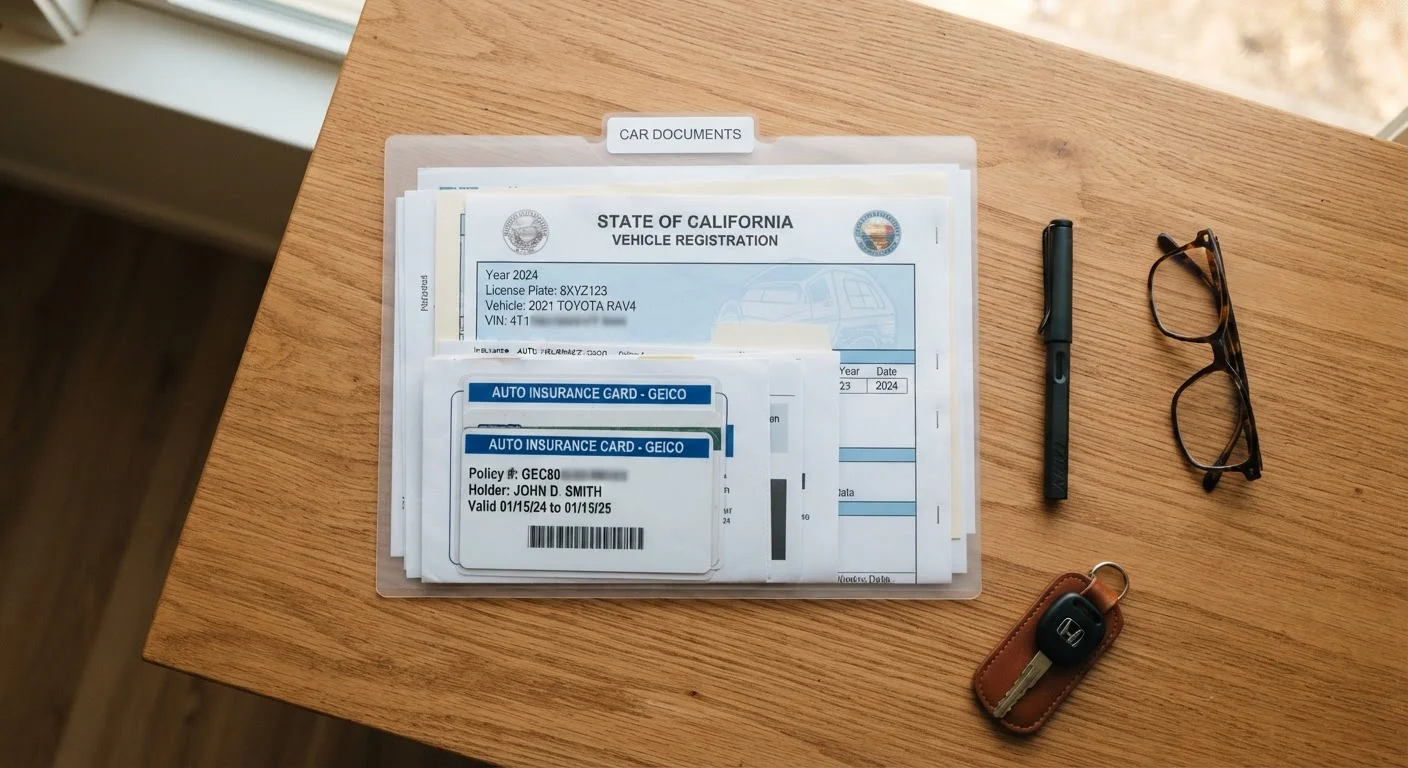
Two documents must be in the vehicle at all times: your current registration card and proof of insurance. Police can request both during any traffic stop. Your driver's license stays on your person.
Your vehicle title belongs at home - ideally in a fireproof box or a safe - not in the glove compartment. A stolen title creates ownership complications that take significant time to resolve.
Also worth preserving: your purchase contract, any warranty documents, and records of every service visit. Documented maintenance history adds credibility if you sell the vehicle and can support warranty claims. For a full system on managing vehicle paperwork over time, see keeping your car paperwork in order over the long term.
Maintenance Basics: What Needs Attention and When
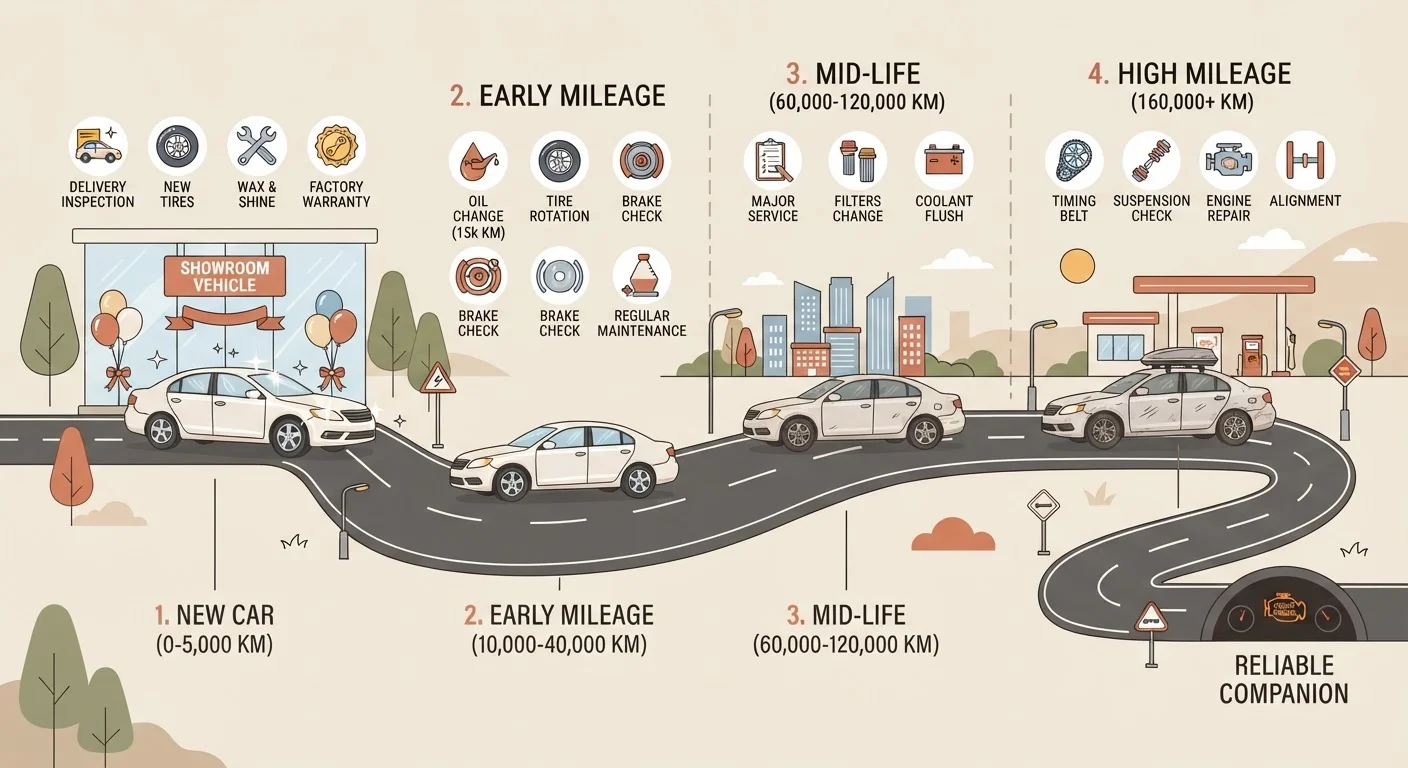
Your owner's manual is the most reliable maintenance guide you have. It lists manufacturer-recommended service intervals for oil changes, tire rotations, brake inspections, filter replacements, and more - all based on your specific engine and drivetrain.
A few items apply broadly regardless of make or model:
- Oil and filter: Follow your manual's interval; synthetic oil typically allows longer intervals than conventional oil.
- Tire pressure: Check monthly and before long trips. Correct pressure is on the sticker inside the driver's door jamb, not on the tire sidewall.
- Brakes: Have them inspected annually or any time you notice squealing, vibration, or longer stopping distances.
- Fluid levels: Coolant, brake fluid, and windshield washer fluid should be checked periodically.
For a deeper look at how upkeep needs shift as your vehicle ages, the guide on car maintenance across a vehicle's lifetime is a useful next step. You can also explore car maintenance essentials for a broader overview of keeping your vehicle road-ready.
Ongoing Costs First-Time Owners Frequently Underestimate
A car payment is only part of what you'll spend each month. Factoring in the full cost of ownership from the start prevents the kind of budget strain that catches many first-time owners off guard.
Common costs beyond the loan payment include:
- Fuel: Varies with driving habits and gas prices, but it's a consistent weekly expense.
- Insurance premiums: Paid monthly, semi-annually, or annually depending on your policy.
- Registration renewal: An annual fee charged by your state, typically due on your birthday or the vehicle's registration anniversary.
- State inspection: Required annually in many states; fees are usually modest but vary.
- Tires: A set of four tires is a significant expense, typically needed every 40,000-70,000 miles depending on type and driving conditions.
- Unexpected repairs: Even well-maintained vehicles need unplanned work. A small emergency fund dedicated to car repairs reduces stress considerably.
Don't Confuse Minimum Coverage With Full Protection
State minimum liability limits are often low enough that a serious accident could leave you personally responsible for costs that exceed your policy. Minimum coverage satisfies the law but may not adequately protect your finances. Review your limits carefully and consider whether they match your real-world exposure before finalizing a policy.
Being realistic about these costs before you buy - not after - is what separates a manageable car budget from a stressful one. If you want to understand what's physically happening under the hood between service visits, a plain-language guide to engine components is a helpful starting point.