
The Documents Every Owner Should Have on Hand
Car ownership comes with a specific set of documents that each serve a distinct legal or financial purpose. Knowing which ones matter - and where they live - prevents scrambling when you're pulled over, selling the vehicle, or filing an insurance claim.
The core set includes:
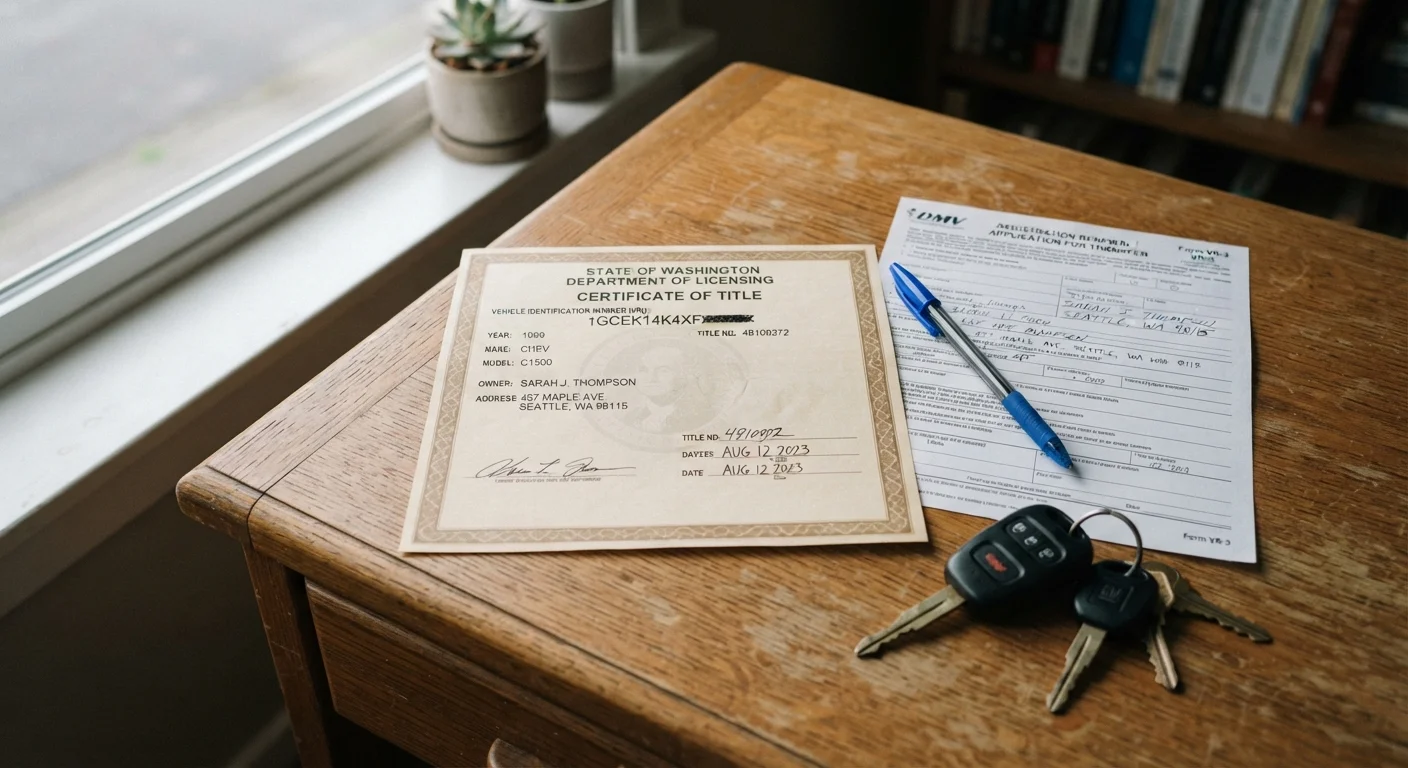
- Title: Proof of legal ownership. Keep this somewhere secure at home, not in the vehicle. If you have an active auto loan, the lender typically holds the title until the loan is paid off.
- Registration: Required in your vehicle at all times while driving. Each state sets its own renewal schedule - typically annual - and sends renewal notices by mail or email.
- Proof of insurance: Your insurer provides a card (physical or digital) showing current coverage. Many states now accept digital proof on a phone.
- Loan or lease documents: Keep these with your home files. They outline your payment obligations, early payoff terms, and mileage caps if you're leasing.
- Emissions or inspection certificates: Some states require periodic smog checks or safety inspections. Keep the most recent certificate with your registration paperwork.
If you're new to ownership, the first-time owner's guide covers how these documents fit into the broader picture of running a vehicle day to day.
Building a Filing System That Actually Holds Up
Most people either throw everything in the glove box or let paperwork pile up on a counter. Neither approach holds up over years of ownership. A simple two-location system works well for most drivers.
Keep Your Glove Box Lean
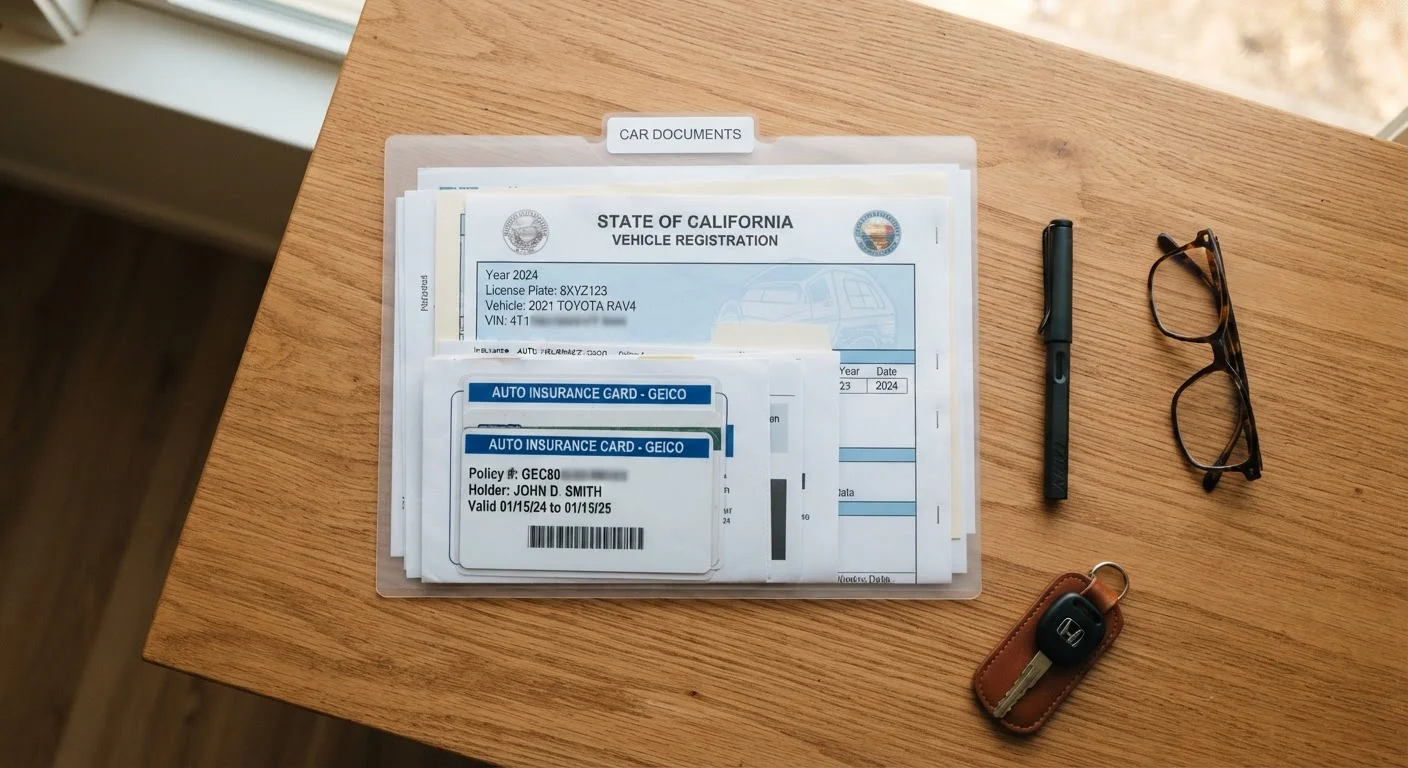
Your glove box should hold only what's legally required while driving: current registration, proof of insurance, and any required inspection certificate. Avoid storing your title or loan documents in the vehicle - these should live in a secure location at home. A leaner glove box means faster access when it counts.
In the vehicle: Keep a small accordion folder or envelope in your glove box holding only the documents you legally need while driving - current registration, proof of insurance, and any required inspection certificate. Everything else belongs at home.
At home: Use a labeled folder or binder for your title, loan documents, warranty paperwork, and maintenance receipts. A fireproof box adds protection against loss from theft or damage.
Digital backups: Photograph or scan your title, registration, and insurance card. Store copies in a secure cloud folder or encrypted drive. This is especially useful if physical documents are stolen from your vehicle or lost during a move.
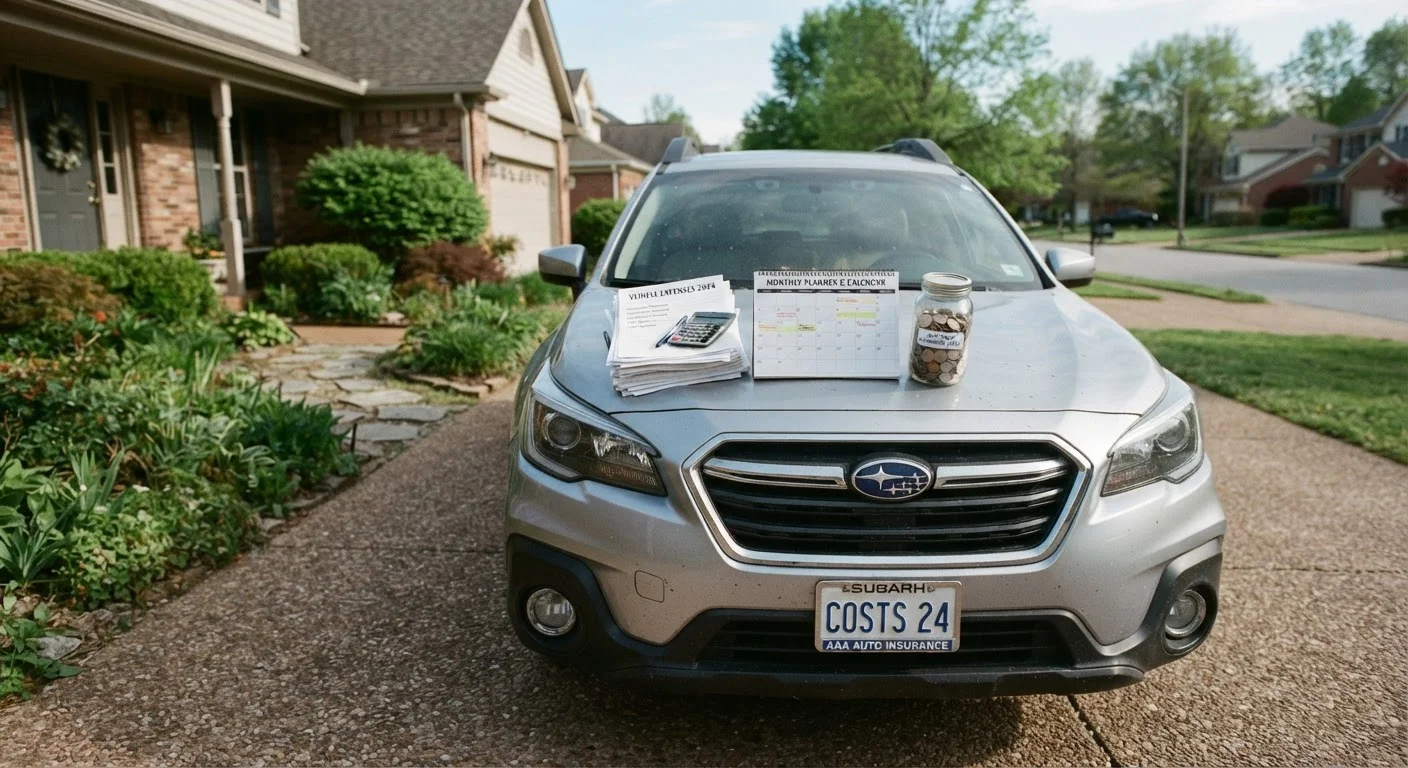
As your vehicle ages and costs accumulate, a well-maintained paper trail also helps you stay on top of recurring ownership costs that tend to catch drivers off guard.
1 in 3
Drivers unsure of their registration expiration date
Industry surveys have consistently found that a significant share of drivers cannot recall when their registration is next due for renewal.
Up to $1,000+
Resale value impact of a documented service history
Automotive valuation guides note that private-party sellers with complete maintenance records often command meaningfully higher offers than those without documentation.
Staying Ahead of Renewals and Deadlines
Registration expirations and inspection deadlines don't announce themselves loudly until it's too late. A simple proactive habit keeps you compliant without last-minute stress.
When you receive a renewal notice, add the deadline to your calendar immediately - set a reminder two to three weeks out so you have time to handle it before it lapses. Some states allow online renewal; others require a visit to a DMV office or a passing inspection first.
Key dates to track annually:
- Registration renewal deadline
- Emissions or safety inspection due date (varies by state and vehicle age)
- Auto insurance policy renewal date
- Any extended warranty expiration
If you move to a new state, registration and title requirements change. Most states give new residents 30 to 90 days to re-register. Check your new state's DMV website directly - requirements differ significantly. If you're selling or buying privately, title transfer missteps are one of the most common points of friction.
Maintaining a Service History That Works for You
A maintenance log is one of the most underused tools in car ownership. It doesn't have to be elaborate - a simple notebook, a spreadsheet, or a dedicated app works fine. The goal is a running record of what was done, when, and by whom.
For each service visit, record the date, mileage, work performed, parts replaced, and the shop or technician. Attach or file the receipt. Over time this record proves invaluable: mechanics can spot patterns, you can verify warranty coverage, and buyers will pay more for a vehicle with a documented history.
See our guide to keeping a service log for a detailed walkthrough of what to include and why it matters at resale. For a broader view of how maintenance priorities shift as a car ages, car maintenance across a vehicle's lifetime breaks it down mile by mile.
Store your vehicle title somewhere secure at home, never in the car.
A title left in a stolen vehicle creates a serious identity and fraud risk. The title is the single document that proves legal ownership, making it one of the most sensitive pieces of paperwork you hold.
Set recurring calendar reminders for every renewal deadline when the notice arrives.
Driving with an expired registration or lapsed insurance can result in fines, license suspension, or gaps in coverage that leave you financially exposed after an accident. Proactive reminders eliminate the risk of oversight.
Create a digital backup of every key ownership document.
Physical documents can be lost in a move, damaged in a flood, or stolen from your vehicle. A secure digital copy means you can access proof of insurance or registration details even when the original is unavailable.
Log every service visit with date, mileage, and work performed.
A complete service history helps mechanics diagnose recurring issues faster, supports warranty claims, and demonstrably increases resale value for private-party sales.
Verify your new state's registration requirements within the first two weeks of moving.
Most states require re-registration within 30 to 90 days of establishing residency, and the window moves faster than it seems. Missing it can result in fines or complications with your insurance coverage.