
Why Title Transfers Go Sideways
Transferring a car title sounds straightforward - both parties sign, money changes hands, paperwork goes to the DMV. In practice, it's one of the most frequently botched steps in a private vehicle sale. The consequences range from minor delays to genuine legal disputes over who actually owns the car.
Most problems trace back to one of a few root causes: unfamiliarity with state-specific rules, careless completion of the title document itself, or unresolved financial claims on the vehicle. If you're buying or selling privately, understanding these failure points in advance saves real headaches. For a broader look at the language around these transactions, the Car Ownership Glossary breaks down terms like lien, title, and odometer disclosure in plain language.
30 days
Typical state deadline to transfer a title
Many U.S. states require buyers to complete a title transfer within 30 days of purchase; some states set shorter windows of 10 to 15 days.
$15-$50+
Common late title transfer penalty range
Late transfer fees vary by state but can compound quickly, with some states adding per-day or tiered penalty charges after the deadline passes.
The Most Common Mistakes - and How to Avoid Them
The errors below aren't rare edge cases - they show up regularly at DMV counters and in post-sale disputes. Walk through each one before you sit down to sign anything.
Leaving sections of the title blank or using correction fluid to fix errors.
Why it happens: Sellers rush through signing and miss required fields, or try to self-correct a mistake rather than requesting a duplicate title.
Recording the wrong odometer reading on the title at the time of sale.
Why it happens: Federal law requires an odometer disclosure for most vehicles under ten years old, but sellers sometimes estimate or transpose digits carelessly.
Selling or buying a vehicle that still has an active lien without resolving it first.
Why it happens: Sellers assume paying off the loan is enough, but the lender must formally release the lien and either return the title or update the state record.
Missing the state's title transfer deadline after purchase.
Why it happens: Buyers assume they have unlimited time, or they confuse the registration deadline with the title transfer deadline - these are often different windows.
Failing to notarize the title when the state requires it.
Why it happens: Requirements vary widely by state, and sellers completing their first private sale are often unaware their state mandates notarization.
Liens Don't Disappear at Sale
If the seller still owes money on the vehicle, the lender holds the title. Buying a car with an undisclosed lien means you could pay full price and still not receive clean ownership. Always run a title search through your state DMV or a recognized vehicle history service before finalizing any private sale.
Completing the Transfer Cleanly
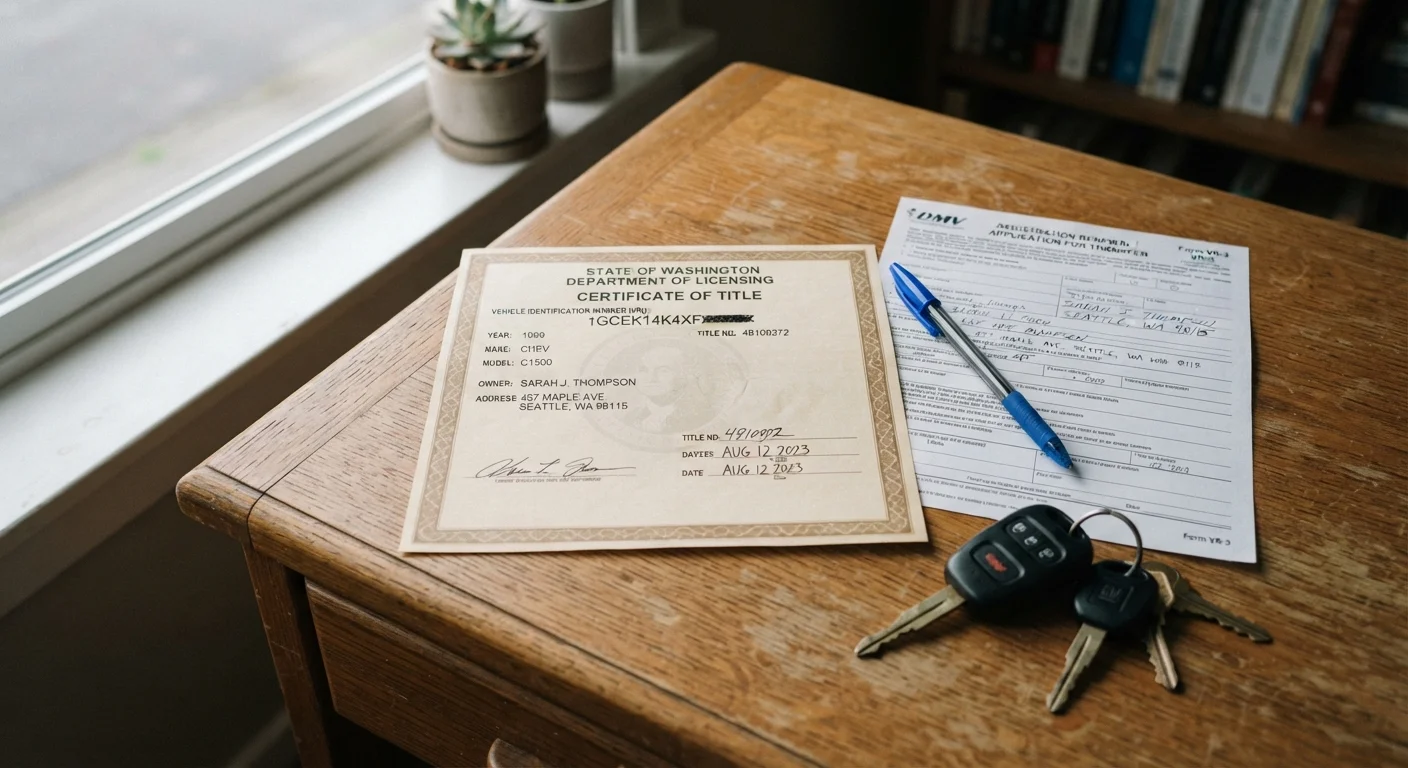
Once you've avoided the mistakes above, the actual submission is usually simple. Bring the signed title, a completed bill of sale, proof of insurance, and any required identification to your state DMV - or use the state's online portal if one is available. The Vehicle Registration walkthrough covers what to expect at that appointment in detail.
Don't Drive on an Untransferred Title
Until the title is officially transferred and re-registered in the buyer's name, legal ownership is unresolved. If the car is involved in an accident or receives a citation during this window, liability questions become complicated - and the seller's name may still appear on record. Complete the transfer as quickly as your state's deadline allows.
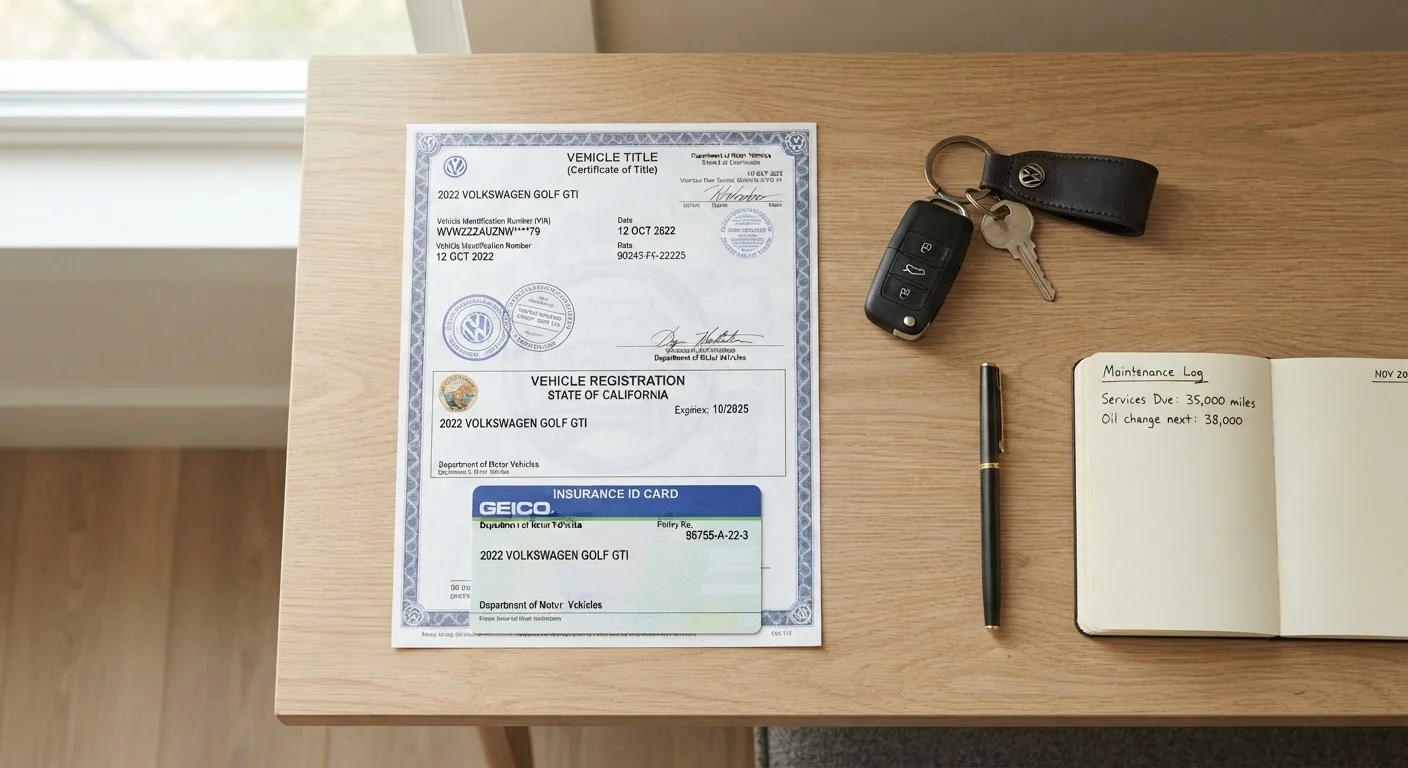
First-time car owners in particular benefit from treating the title transfer as a checklist task, not an afterthought. The guide for first-time car owners covers this step alongside insurance, registration deadlines, and documentation habits that pay off over the long term. Once you've got the title sorted, keeping your car paperwork organized ensures you don't lose track of it again.