

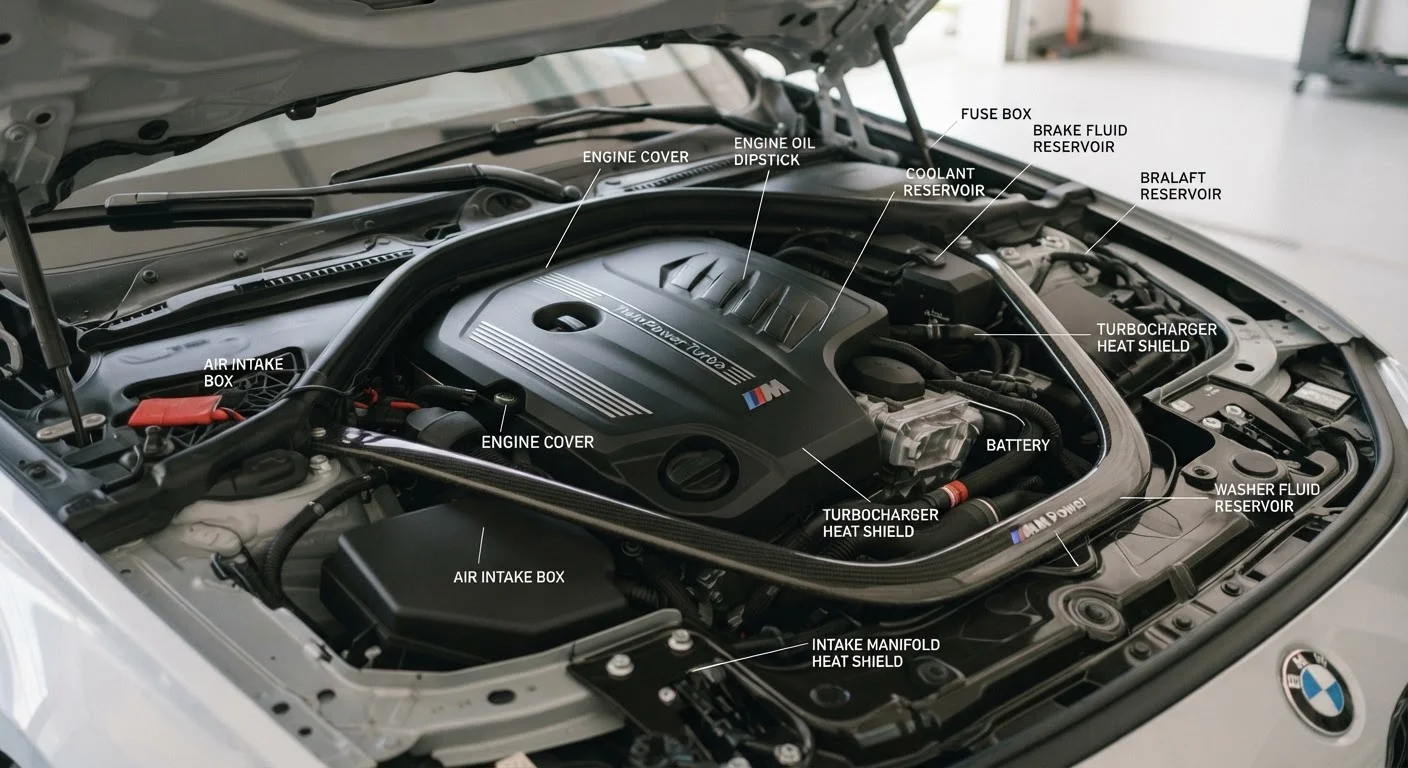
Why Engine Literacy Matters
Most drivers open the hood only when a warning light forces them to. But having a basic mental map of what lives under there pays off in practical ways: you catch small problems earlier, you understand what a mechanic is quoting you on, and you avoid getting charged for work you don't need.
This guide walks through the key components of a typical internal combustion engine found in US passenger vehicles. It isn't a repair manual - for anything beyond a visual check, a qualified mechanic should do the hands-on work. Think of this as a vocabulary lesson so you can follow along confidently.
For a broader set of ownership terms, see our Car Ownership Glossary covering 40 real-world terms. And if you're brand new to owning a vehicle, Everything First-Time Car Owners Need to Know is a solid starting point.
| Typical engine cylinder count | 4 cylinders (most passenger cars), 6 or 8 cylinders (trucks, performance vehicles) |
| Serpentine belt replacement interval | Generally every 60,000-100,000 miles (check your owner's manual) |
| Air filter replacement interval | Typically every 15,000-30,000 miles depending on driving conditions |
| Coolant flush interval | Often every 30,000-50,000 miles; varies by vehicle and coolant type |
| Safe engine inspection practice | Always inspect with the engine off and fully cooled before opening reservoirs |
Core Engine Components Explained
Here's a plain-language breakdown of what you're likely to see - and hear about - when dealing with engine-related issues.
Alternator
A generator driven by the engine's serpentine belt that converts mechanical energy into electrical energy. It keeps the battery charged and powers electrical systems while the car is running.
Coolant Reservoir
A translucent plastic tank that holds overflow coolant (antifreeze). It allows the cooling system to expand and contract with temperature changes without losing fluid.
Serpentine Belt
A single, continuous belt that drives multiple engine accessories - including the alternator, power steering pump, and air conditioning compressor. A snapped belt can disable several systems at once.
Spark Plug
A small electrical device that delivers a timed spark to ignite the compressed fuel-air mixture inside each cylinder. Most modern engines have one spark plug per cylinder.
Radiator
A heat exchanger at the front of the engine bay that cools the hot coolant returning from the engine by passing it through a grid of thin tubes exposed to outside airflow.
Air Filter
A replaceable element inside the air filter housing that removes dust, pollen, and debris before air enters the engine. A dirty filter restricts airflow and can reduce fuel efficiency.
Fuel Injector
An electronically controlled valve that sprays a precise amount of fuel into the engine's intake or cylinder. Modern vehicles rely on fuel injection rather than older carburetor systems.
Throttle Body
A valve assembly that controls how much air enters the engine when you press the accelerator pedal. In fuel-injected engines, it works with the fuel injectors to manage the air-fuel mixture.
Electrical and Cooling Systems
These two systems often generate the most driver anxiety because their failures show up suddenly. The alternator keeps the battery charged while the engine runs; if it fails, the battery drains even on a healthy charge. The coolant reservoir holds extra coolant (also called antifreeze) and is one of the easiest fluid levels to monitor visually - the plastic tank is usually translucent with MIN and MAX markings.
The radiator sits at the front of the engine bay and dissipates heat from the coolant. A clogged or leaking radiator is a common cause of overheating. Never open the radiator cap when the engine is hot - pressurized coolant can cause serious burns.
Air, Fuel, and Ignition
The air filter housing contains a replaceable filter that keeps debris out of the engine. A clogged filter reduces fuel efficiency and engine responsiveness. The fuel injectors (in modern vehicles, carburetors are largely obsolete) spray a precise mist of fuel into each cylinder. The spark plugs ignite that fuel-air mixture; worn plugs cause rough idling and misfires.
For a look at what's fact versus fiction in routine maintenance, our article on car maintenance myths covers common misconceptions mechanics see regularly.
What to Do With This Knowledge
Being able to name a component doesn't mean you should repair it yourself. Many engine repairs require specialized tools, proper safety equipment, and familiarity with your specific vehicle. That said, there are a handful of things most owners can safely monitor between service appointments:
- Visually inspect fluid reservoirs (coolant, brake fluid, washer fluid) for obvious low levels or discoloration
- Check the air filter when the housing is accessible and the engine is cold
- Note any unusual smells, sounds, or smoke and describe them precisely to a mechanic
When you do bring the car in, using accurate component names helps the mechanic diagnose faster and gives you a clearer basis for evaluating the estimate. If a shop recommends replacing a part, you can ask them to show you why - a reputable shop will welcome the question.
Once you're comfortable with engine basics, the next practical skill is knowing how to check fluid levels yourself. Our guide on fluid levels every driver should check walks through each reservoir step by step.
Your Owner's Manual Is the Primary Source
Maintenance intervals, fluid specifications, and component locations vary by make, model, and year. The owner's manual included with your vehicle - or available through the manufacturer's website - is the most reliable guide for your specific car. General intervals cited online (including here) are starting points, not universal rules.