
The Core Coverage Types - Defined Plainly
Every car insurance policy is assembled from individual coverage components. Knowing what each one does - and doesn't - cover prevents unpleasant surprises when you file a claim.
Liability Coverage
Bodily injury liability pays for medical expenses, lost wages, and legal costs for people you injure in an accident you caused. Property damage liability covers repairs to the other person's vehicle or property. Liability never covers your own injuries or your own car - it only protects others from harm you cause. It's expressed as a set of limits, such as 25/50/25, meaning $25,000 per person injured, $50,000 per accident, and $25,000 for property damage.
Collision Coverage
Collision pays to repair or replace your vehicle after it's damaged in an accident - whether you hit another car, a guardrail, or a pothole. It applies regardless of who was at fault. A deductible applies, and the insurer will pay up to the vehicle's actual cash value (ACV), not the amount you paid for it originally.
Comprehensive Coverage
Despite its name, comprehensive doesn't cover everything. It specifically covers damage caused by events other than collisions: theft, fire, flooding, hail, fallen trees, and animal strikes. Like collision, it's subject to a deductible and is capped at the vehicle's ACV.
1 in 8
U.S. drivers estimated to be uninsured
According to the Insurance Research Council, approximately 12.6% of motorists nationwide lack any auto insurance coverage.
$500-$1,000
Typical collision deductible range
Most drivers choose a deductible in this range, balancing manageable out-of-pocket costs against lower monthly premiums.
49 of 50
U.S. states requiring liability insurance
New Hampshire is the only state that does not mandate liability coverage, though it requires drivers to prove financial responsibility.
Coverage You May Not Know You Have - Or Need
Uninsured and Underinsured Motorist Coverage
Roughly one in eight U.S. drivers is uninsured, according to the Insurance Research Council. Uninsured motorist (UM) coverage protects you when an at-fault driver has no insurance. Underinsured motorist (UIM) coverage applies when the at-fault driver's liability limits aren't high enough to cover your losses. Both can cover medical bills and, in some states, vehicle damage.
Medical Payments (MedPay) and Personal Injury Protection (PIP)
MedPay covers medical expenses for you and your passengers after an accident, regardless of fault. Personal Injury Protection (PIP) is similar but broader - it can also cover lost wages and rehabilitation costs. PIP is mandatory in no-fault states, where each driver's own insurer covers their injuries regardless of who caused the crash.
Gap Coverage
If you finance or lease a vehicle, gap coverage is worth understanding. When a car is totaled, insurers pay its ACV - which may be less than what you still owe on the loan. Gap coverage pays the difference, so you're not left making payments on a car you no longer have. For a deeper look at how insurance fits into your overall vehicle budget, see the true cost of owning a car.
Read Your Declarations Page First
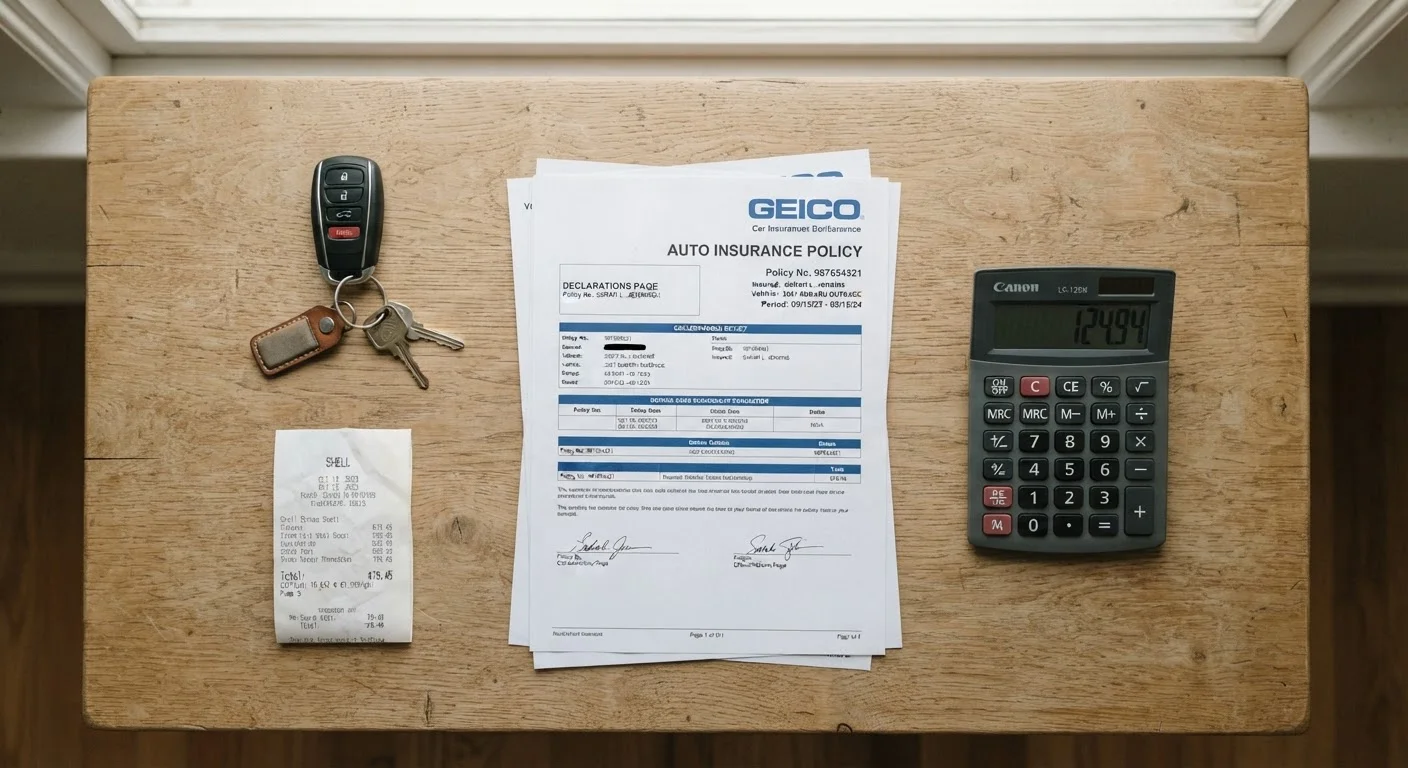
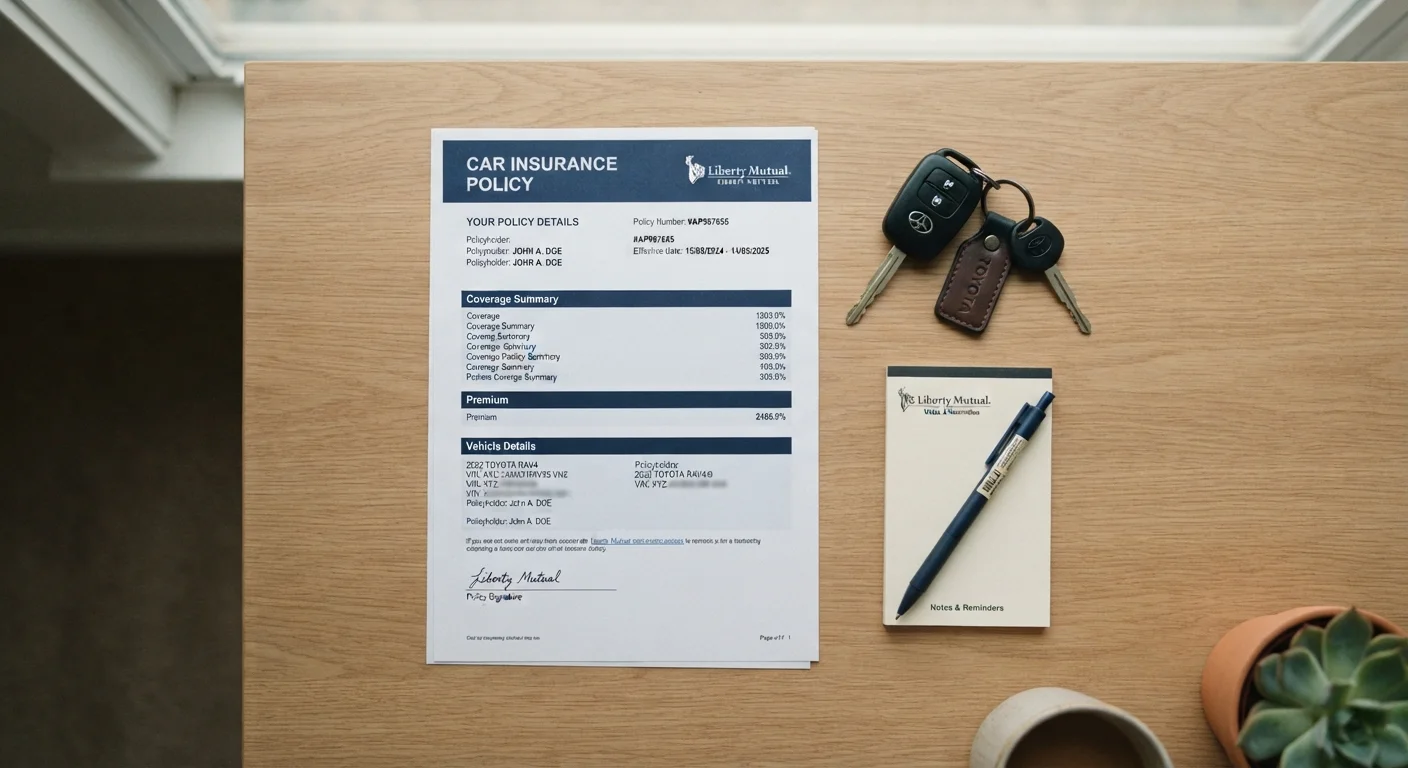
Before an accident happens, locate your policy's declarations page and review each listed coverage type, its limit, and its deductible. It's typically the first page of your policy document. Understanding these numbers in advance means you won't be caught off guard when filing a claim. If any coverage type is unclear, call your insurer and ask them to explain it in plain terms - that's what they're there for.
What Policies Don't Cover - And Common Misconceptions
Even a robust policy has gaps that catch drivers off guard.
- Mechanical failure: Engine breakdowns and normal wear are not covered by any standard auto insurance policy.
- Personal belongings stolen from your car: If someone breaks in and takes your laptop, auto insurance won't cover it - your renters or homeowners policy might.
- Using your car for rideshare or delivery: Standard personal policies typically exclude commercial use. Separate rideshare or commercial endorsements are needed.
- Intentional damage: No insurer covers losses you deliberately caused.
Several widely held beliefs about what policies cover are flat-out wrong. Common insurance misconceptions trip up new and experienced owners alike. It's also worth knowing how to read your declarations page - the summary at the front of your policy that lists each coverage type, its limit, and its deductible. That single page tells you exactly what you've bought.
Coverage Requirements Vary by State
Each U.S. state sets its own mandatory minimum coverage requirements. Some states require PIP; others require uninsured motorist coverage; a few require neither. The minimums set by your state are a legal floor, not a recommendation - many drivers find state minimums fall short of covering real-world accident costs. Check your state's DMV or insurance department website for the specific rules that apply to you.
This article provides general information about car insurance coverage types and is not a substitute for personalized advice. Coverage availability, requirements, and terms vary by state and insurer. Review your specific policy documents and consult a licensed insurance professional for guidance tailored to your situation.