
The Two-Part Equation Most Drivers Overlook
Ask most drivers what determines stopping distance and they'll say speed. Speed matters enormously - but it's only part of the picture. Every stop your car makes involves two separate phases that together determine total stopping distance.
The first is reaction distance: the distance you cover between spotting a hazard and actually pressing the brake pedal. At 60 mph, even a sharp-eyed, alert driver travels roughly 66 feet in the average human reaction time of 0.75 seconds. Add any fatigue, distraction, or surprise to that equation and reaction time stretches - sometimes by a full second or more, adding dozens of additional feet before braking even begins.
The second is braking distance: the ground your car covers while the brakes are working to shed speed. This is where physics takes over. Because kinetic energy increases with the square of velocity, a car traveling at 60 mph doesn't need twice the braking distance of one going 30 mph - it needs roughly four times as much. That relationship is why the posted speed limit isn't always the safe speed in every situation.
~4x
Braking distance increase when speed doubles
Because kinetic energy scales with the square of velocity, doubling speed quadruples braking distance - a core principle of vehicle physics.
66 ft
Distance traveled at 60 mph during average reaction time
At a 0.75-second average reaction time, a vehicle at 60 mph covers roughly 66 feet before the brake pedal is even pressed.
~2x
Stopping distance increase on wet versus dry roads
Wet asphalt can roughly double stopping distance; ice can multiply it eight times or more, according to general traffic safety guidance.
Road Surface and Weather Change Everything
Braking distance figures published in owner's manuals almost always assume clean, dry asphalt in good condition. Real roads rarely cooperate with that assumption.
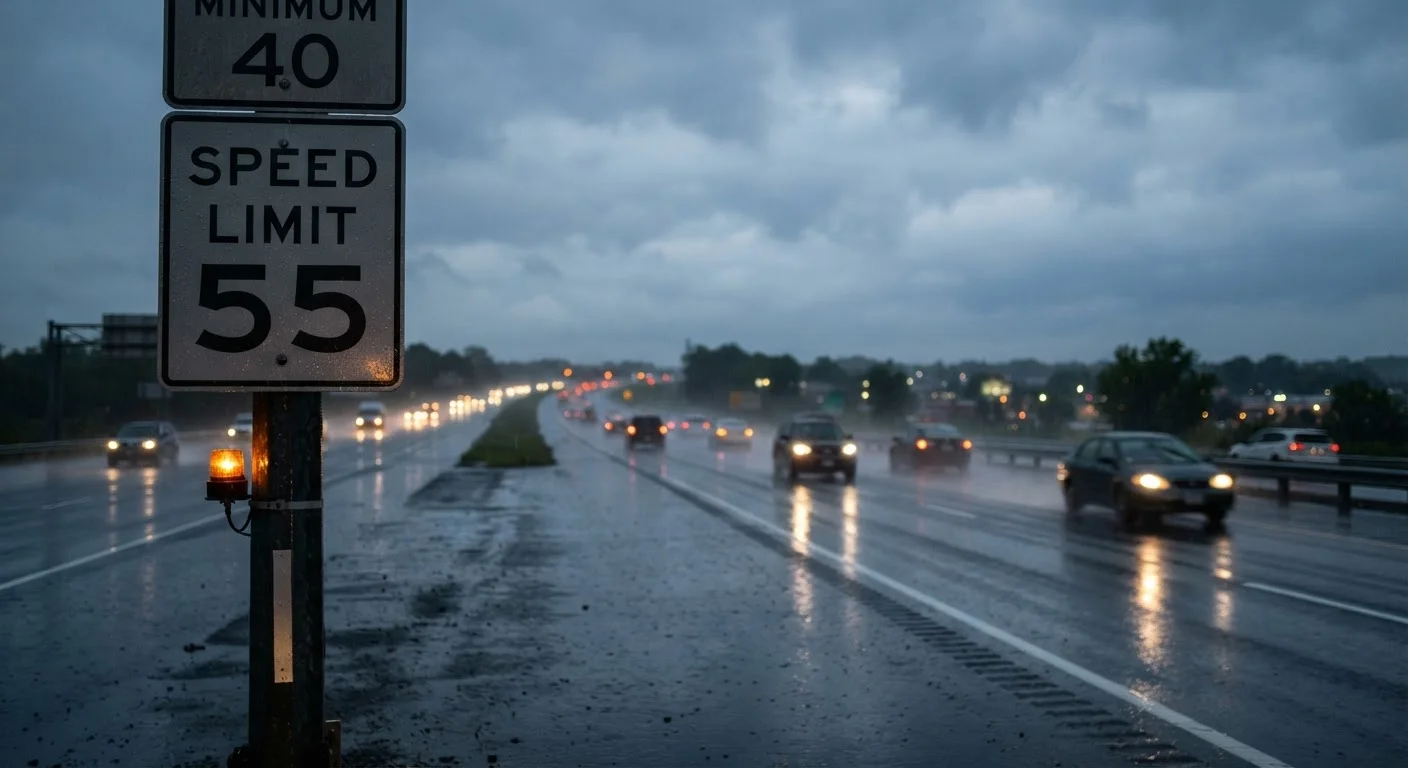
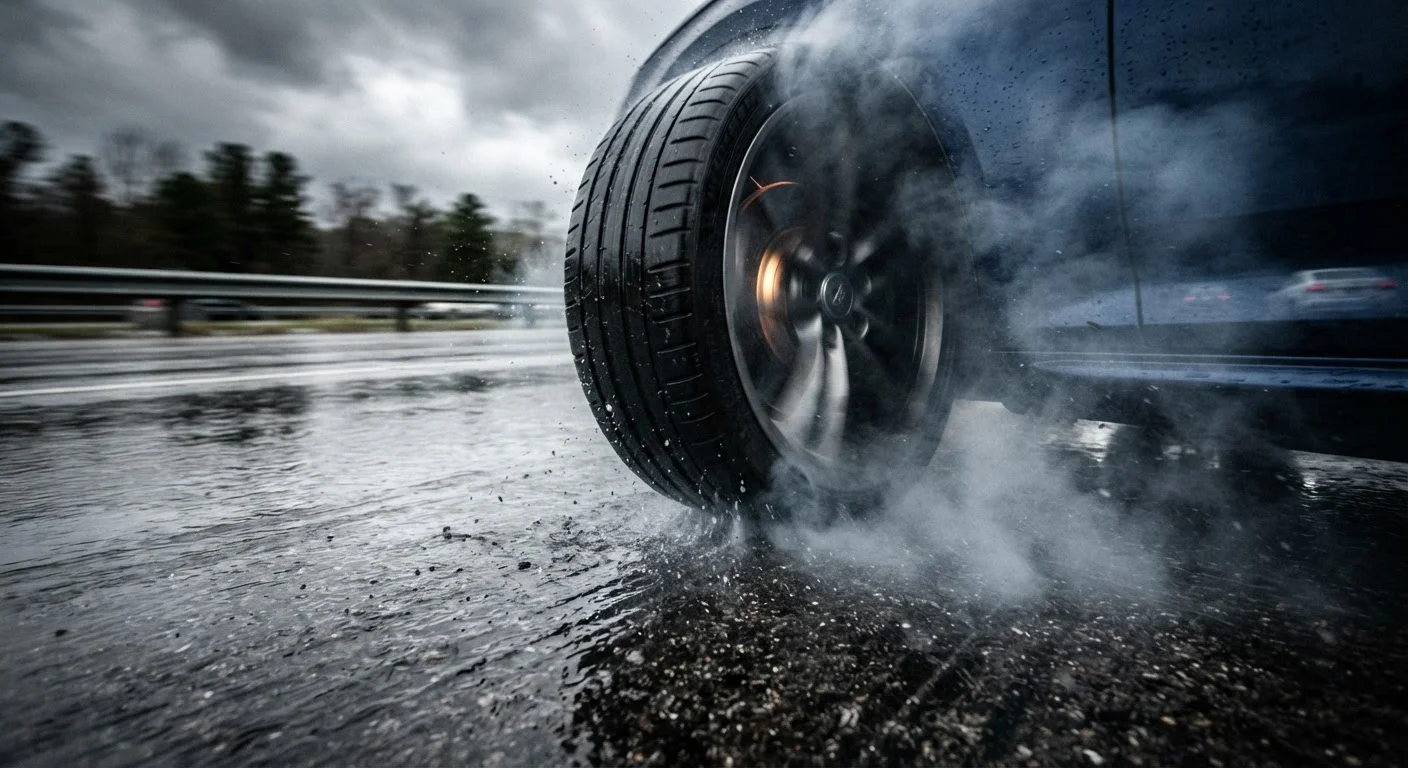
Water reduces the friction between tires and pavement, and even a light rain can nearly double stopping distance. Ice can push that figure to eight or ten times the dry-road baseline. Packed snow, loose gravel, wet leaves, and road debris each degrade grip in different ways and to different degrees. None of them give you a warning before you need to stop hard.
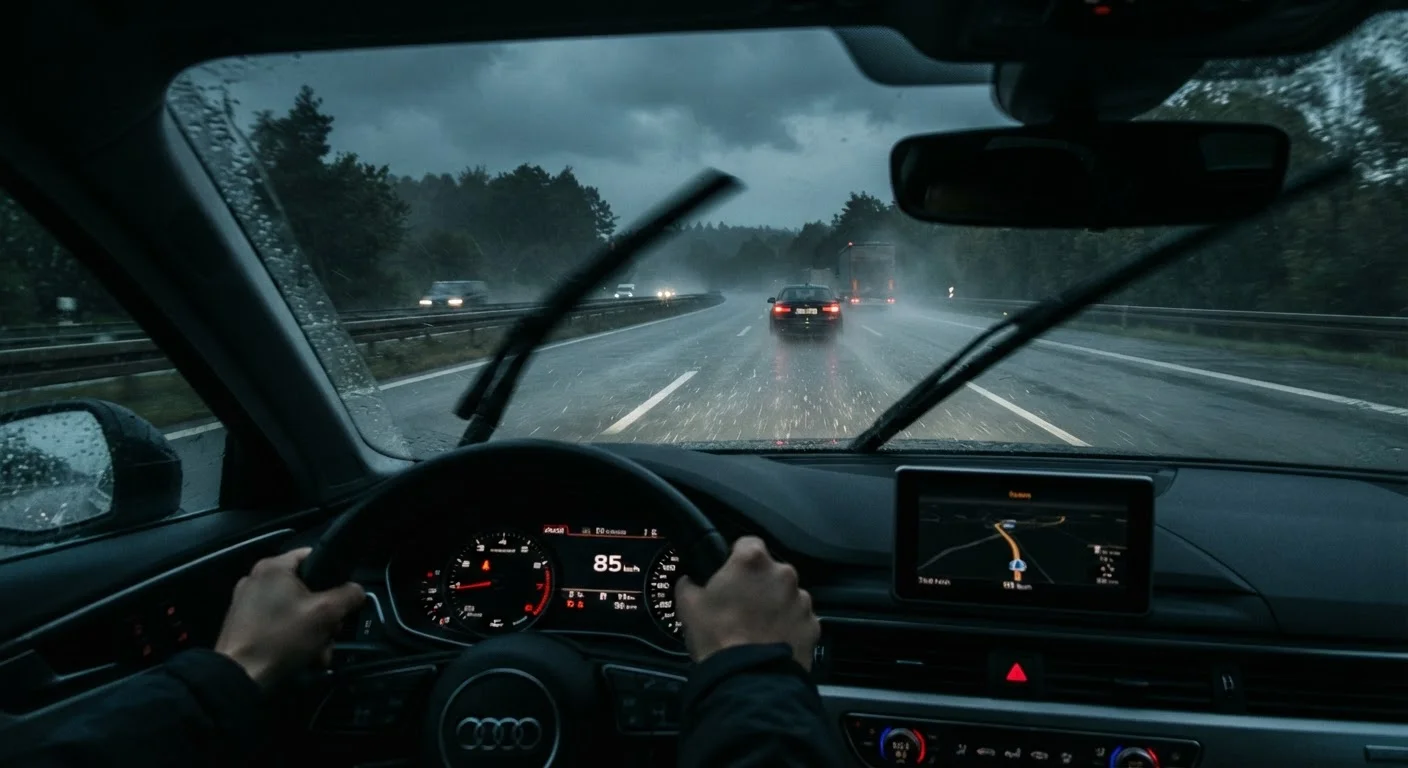
This is why adapting your following distance in poor weather isn't optional - it's compensating for a physics reality. The three-second following-distance rule used in dry conditions often needs to expand to five or six seconds when roads are wet, and further still on ice or snow.
Expand Your Following Distance Before You Need It
Rather than reacting to bad conditions after you're already in them, make it a habit to increase following distance as soon as weather or visibility changes. If roads are wet, aim for at least five seconds of space to the vehicle ahead. On ice or packed snow, even more. That buffer is the space your longer stopping distance actually requires.
Your Vehicle's Condition Plays a Bigger Role Than Most Expect
Two identical cars at the same speed won't necessarily stop in the same distance. The difference often comes down to maintenance.
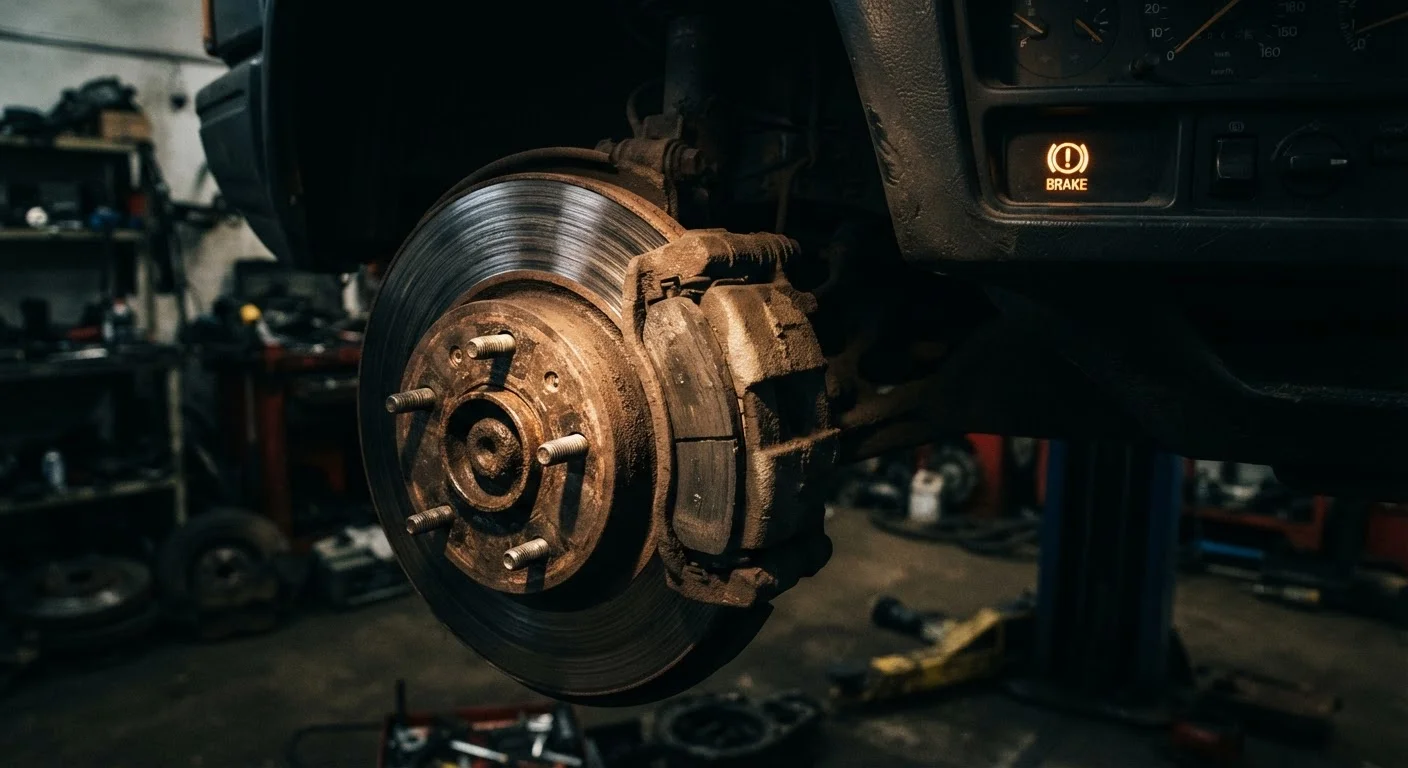
Tire tread is the most direct factor. Worn tires have a smaller, degraded contact patch and reduced ability to expel water, which cuts grip on wet roads substantially. Brake pad thickness matters too - pads near the end of their service life generate less friction and can take longer to engage fully. Brake fluid that has absorbed moisture over time can introduce air into the system, reducing pedal firmness and braking response.
Vehicle load is another variable drivers tend to underestimate. A pickup truck or SUV carrying a full load of passengers and cargo is carrying considerably more kinetic energy at any speed than the same vehicle traveling light. That extra energy has to go somewhere - and it goes into a longer stop. Habits like hard braking also accelerate wear on the components that stopping distance depends on most.
ABS Helps Control, Not Always Distance
Anti-lock Braking Systems are engineered to prevent wheel lockup and preserve steering control during hard stops - an important safety function. However, on some surfaces like loose gravel or deep snow, ABS may not shorten stopping distance compared to locked wheels. The key benefit is that you can still steer around a hazard while braking hard, which often matters more than raw stopping distance.
What This Means for Everyday Driving
Understanding stopping distance isn't an academic exercise - it's what justifies following distance, speed choices, and how early you begin to slow for an intersection. Drivers who recognize that their actual stopping distance on a wet night with worn tires is far longer than the textbook figure tend to build habits that match reality.
Speed misjudgment at junctions is one of the most common causes of collision precisely because drivers apply dry-road, alert-driver assumptions to conditions that don't support them. Slowing down earlier, keeping more space, and maintaining your vehicle's braking system are the practical responses - not dramatic, but reliably effective.
“The gap between where a driver thinks they'll stop and where they actually stop is where most crashes happen. Closing that gap requires understanding the physics, not just the rules.”
— Cars Editorial Team, Automotive safety writers