
Why Weather Conditions Change Everything
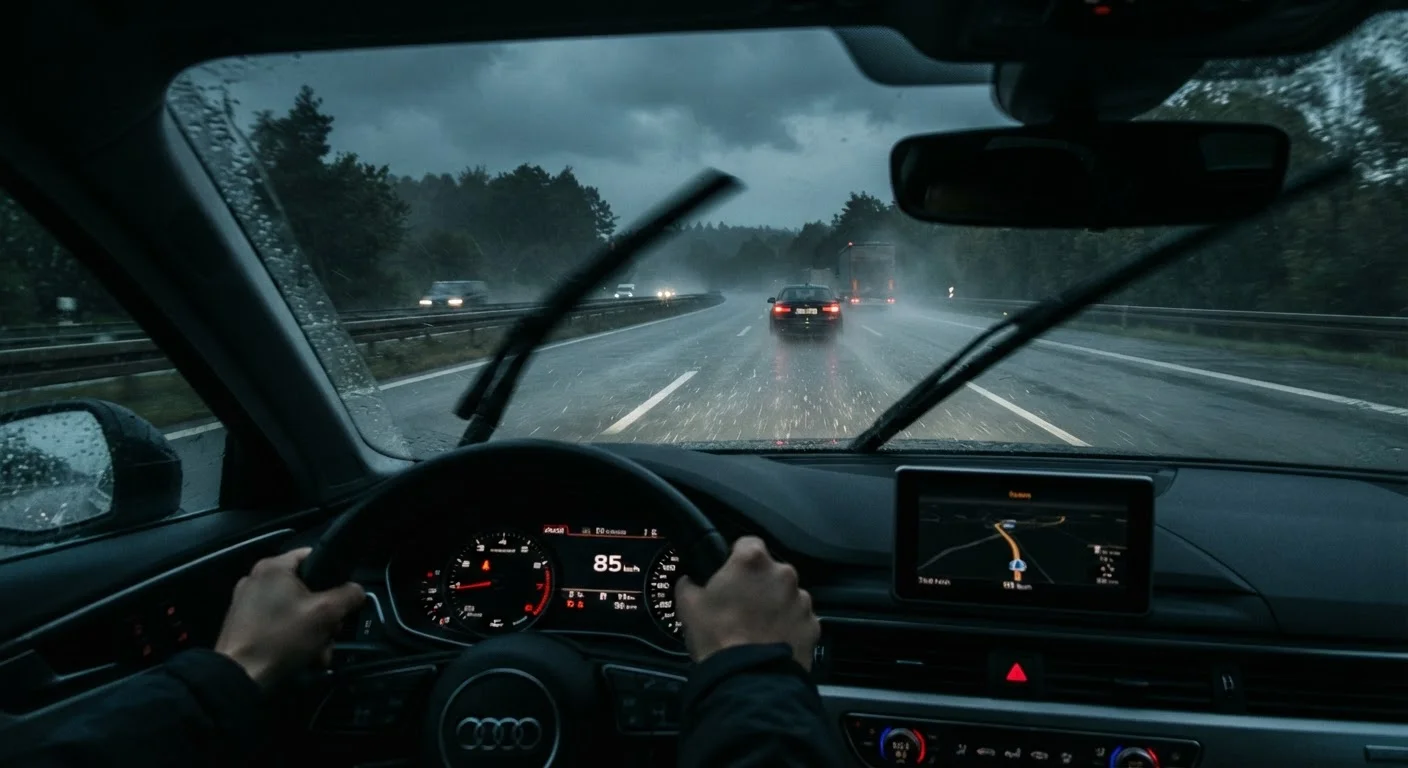
Most drivers understand, in theory, that rain and snow make roads more dangerous. Fewer truly account for just how much the physics of driving change when conditions deteriorate. Grip, visibility, and reaction time - the three pillars of safe driving - are all degraded simultaneously in bad weather.
In dry conditions, a typical passenger car traveling at 60 mph needs roughly 240 feet to stop. On a wet road, that figure increases substantially; on ice, it can be six to ten times the dry-road equivalent. Understanding this isn't meant to alarm - it's meant to recalibrate your instincts. See our deep dive on stopping distance for a fuller breakdown of the physics involved.
The practical implication is simple: the habits that keep you safe on a clear Tuesday morning are not sufficient on a foggy November evening. Adapting deliberately - rather than reacting after something goes wrong - is what separates confident drivers from vulnerable ones.
21%
US crashes linked to weather conditions annually
According to the Federal Highway Administration, approximately 21% of vehicle crashes in the US each year are weather-related.
6-10×
Stopping distance increase on ice vs. dry road
Transportation safety researchers consistently find that stopping distances on ice can be six to ten times greater than on a dry surface at the same speed.
Driving in Rain: Grip, Spray, and Aquaplaning
Rain is the most common adverse weather condition US drivers face, but familiarity breeds complacency. Even light rain can create a film of oil and water on the road surface - particularly in the first 20-30 minutes of a shower - that significantly reduces tire grip.
Slow down before curves and intersections, not during them
Braking while turning on a wet surface splits the grip your tires have between two demands at once, increasing the risk of a skid. Reducing speed before a curve keeps more traction available for steering. This principle applies in dry conditions too, but becomes critical when the road surface is slick.
Double your following distance in rain, triple it in snow or ice
Stopping distances increase dramatically on wet and icy roads, and the driver behind you needs room too. Maintaining a larger gap gives you time to react without emergency braking - which is itself risky on low-grip surfaces. Most rear-end collisions in poor weather trace back to insufficient following distance.
Turn on headlights whenever visibility is reduced - not just in complete darkness
Headlights in rain and fog primarily help other drivers see you, not just help you see ahead. Many states legally require headlights when wipers are in use. Running lights alone are often insufficient - make sure your full headlights are on.
Avoid sudden inputs - brake, steer, and accelerate gradually
On low-grip surfaces, abrupt inputs overwhelm tire traction instantly. Smooth, progressive control keeps tires working within their grip limits. This is the single most effective technique for preventing skids in rain and snow.
Pull over safely if conditions exceed your comfort or capability
There is no obligation to continue driving in conditions that feel genuinely dangerous. Pulling over to a safe location - off the road, lights on - is a legitimate and sensible option. Pushing on when visibility or control is severely compromised puts you and others at risk.
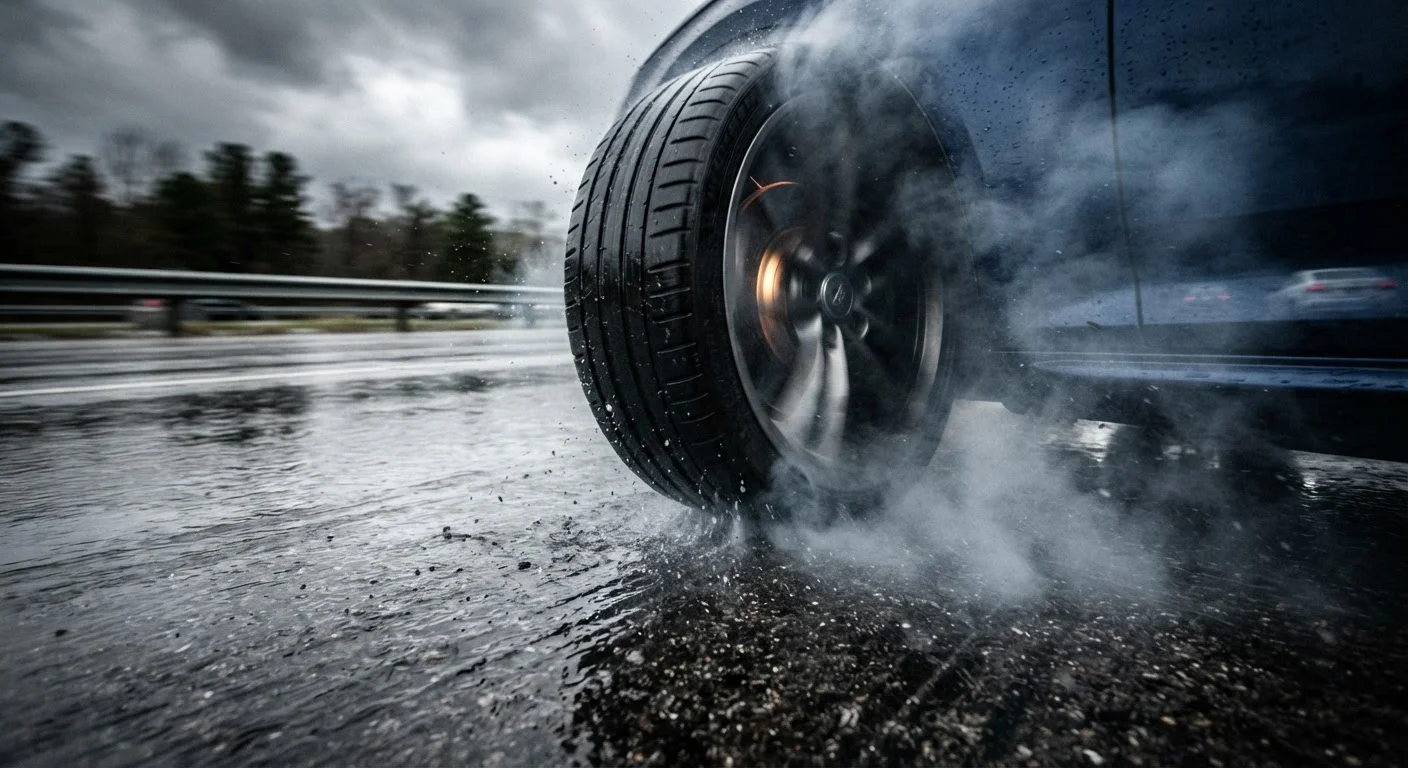
One hazard that surprises even experienced drivers is aquaplaning (also called hydroplaning): when your tires ride up on a layer of water faster than they can disperse it, steering and braking become temporarily ineffective. If it happens, ease off the accelerator gently and avoid sudden steering inputs until you feel grip return. Your seasonal maintenance routine should include checking tread depth - worn tires aquaplane at much lower speeds than tires with adequate tread.
Driving in Fog: The Visibility Trap
Fog is uniquely dangerous because it creates a false sense of the road ahead. Your headlights illuminate the fog itself, not the road beyond it - so what looks like a clear 50-foot window may mask a hazard you'll reach in well under two seconds at highway speeds.
The core rule in fog: drive so that you can stop within the distance you can see. This often means speeds that feel uncomfortably slow. Use low-beam headlights rather than high beams, which reflect off fog and reduce visibility further. If your vehicle has dedicated front fog lights, use them; rear fog lights (if fitted) help drivers behind you see your position - but turn them off once visibility improves, as they can dazzle.
Use Rear Fog Lights Responsibly
Rear fog lights make your vehicle much more visible in dense fog - but they're bright enough to dazzle drivers behind you in normal conditions. Turn them on only when visibility genuinely drops to 100 meters or less, and switch them off as soon as conditions improve. Many drivers forget they've left them on, which creates a real hazard for others.
Keep a much larger following distance than usual, and be alert for tail lights that appear suddenly. Fog also masks sound, so turn off the radio and open a window slightly if you're navigating a particularly thick patch. For more on how reduced visibility affects hazard perception, see our article on night driving risks and perception.
Driving in Snow and Ice: Smoothness Over Speed
Snow and ice demand a fundamentally different driving style - one built around smooth, gradual inputs. Hard braking, sharp steering, and quick acceleration all provoke skids on low-friction surfaces. The goal is to keep tires rotating and gripping, never locking or spinning.
Black ice - a thin, nearly invisible layer of ice on the road - is most common on bridges, overpasses, and shaded stretches of road in temperatures around or just below freezing. If you feel the steering go suddenly light or notice the vehicle drifting without obvious cause, you may be on black ice. Ease off everything and let the car track through it.
All-wheel drive (AWD) and four-wheel drive (4WD) improve traction during acceleration but do nothing for braking or cornering on ice. Drivers in AWD vehicles who believe they're insulated from winter hazards consistently appear in crash statistics. The same applies to electronic stability control - helpful, but not a substitute for appropriate speed and following distance. If you're new to driving in these conditions, our guide to defensive driving covers the anticipation skills that matter most.
What to Check Before You Drive in Bad Weather
Adapting to bad weather starts before you pull out of the driveway. A few minutes of preparation can significantly reduce risk once you're on the road.
When in Doubt, Delay the Trip
Severe weather warnings, ice advisories, and visibility alerts from your local National Weather Service office are worth taking seriously before you leave home. Delaying a non-essential journey by even one or two hours can mean the difference between driving in peak storm conditions and driving on roads that have been treated and cleared. No destination is worth an avoidable crash.
Tires are your only contact with the road. Check that tread depth is adequate (the US minimum is 2/32", but many safety organizations recommend replacing tires at 4/32" for wet or winter conditions) and that pressure is correct - cold temperatures drop tire pressure noticeably. Headlights, taillights, and brake lights should all be working. Clear all snow and ice from your roof, hood, and windows - not just a small patch of windshield. Snow that slides off your roof onto a following driver's windshield is both dangerous and potentially a traffic violation in many states.
For a broader seasonal checklist, see our seasonal car maintenance guide, which covers tires, batteries, wipers, and more. Cold weather in particular can expose battery weakness - read about why batteries struggle in the cold if your vehicle has been slow to start.
This article is for general informational purposes only. Always use your own judgment and consult qualified professionals when questions about vehicle safety arise. Verify local traffic laws and regulations, as rules vary by state.