
What Defensive Driving Actually Means
A lot of drivers hear "defensive driving" and picture someone crawling along the highway at 45 mph, hazard lights blinking. That's a misreading. Defensive driving is an active, systematic approach to managing risk - not timidity behind the wheel.
The core idea is simple: you cannot control other drivers, road conditions, or mechanical failures. You can control your awareness, your positioning, and your reaction time. Defensive driving is the discipline of maximizing those three things consistently.
This matters more than most people realize. According to the National Safety Council, the vast majority of crashes involve some element of driver error - meaning most accidents aren't truly unavoidable. Defensive habits directly target that gap between a close call and a collision.
“The goal of defensive driving is not to be a perfect driver yourself - it is to protect yourself from the imperfect driving of others.”
— National Safety Council, Nonprofit organization focused on eliminating preventable deaths in the US
The Core Skills That Make It Work
Defensive driving breaks down into a handful of practical skills that reinforce each other:
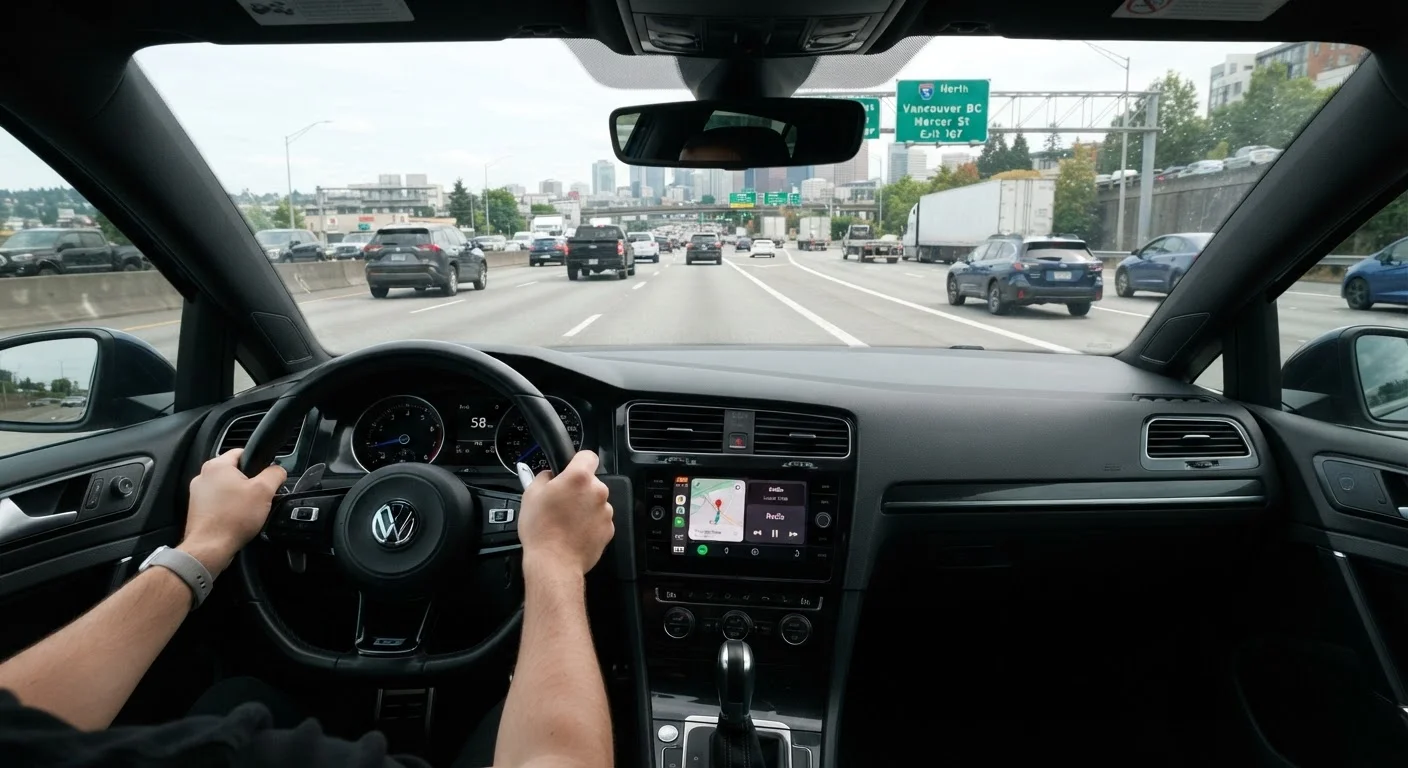
- Scanning ahead, not just immediately in front: Experienced drivers look 10-15 seconds ahead - about a city block at urban speeds. This gives you time to identify braking traffic, pedestrians stepping off curbs, or vehicles about to merge.
- Maintaining following distance: The three-second rule (more in bad weather) gives your brain time to process a hazard and your foot time to act. Tailgating eliminates that buffer entirely.
- Managing your blind spots: Check mirrors every 5-8 seconds and do a quick shoulder check before any lane change. Other vehicles move in and out of blind spots faster than most drivers expect.
- Anticipating driver behavior: Watch for signals of what others might do - a car drifting toward a lane line, brake lights flickering two cars ahead, a pedestrian stepping toward the curb. Acting on these cues early is the difference between a controlled response and a panic stop.
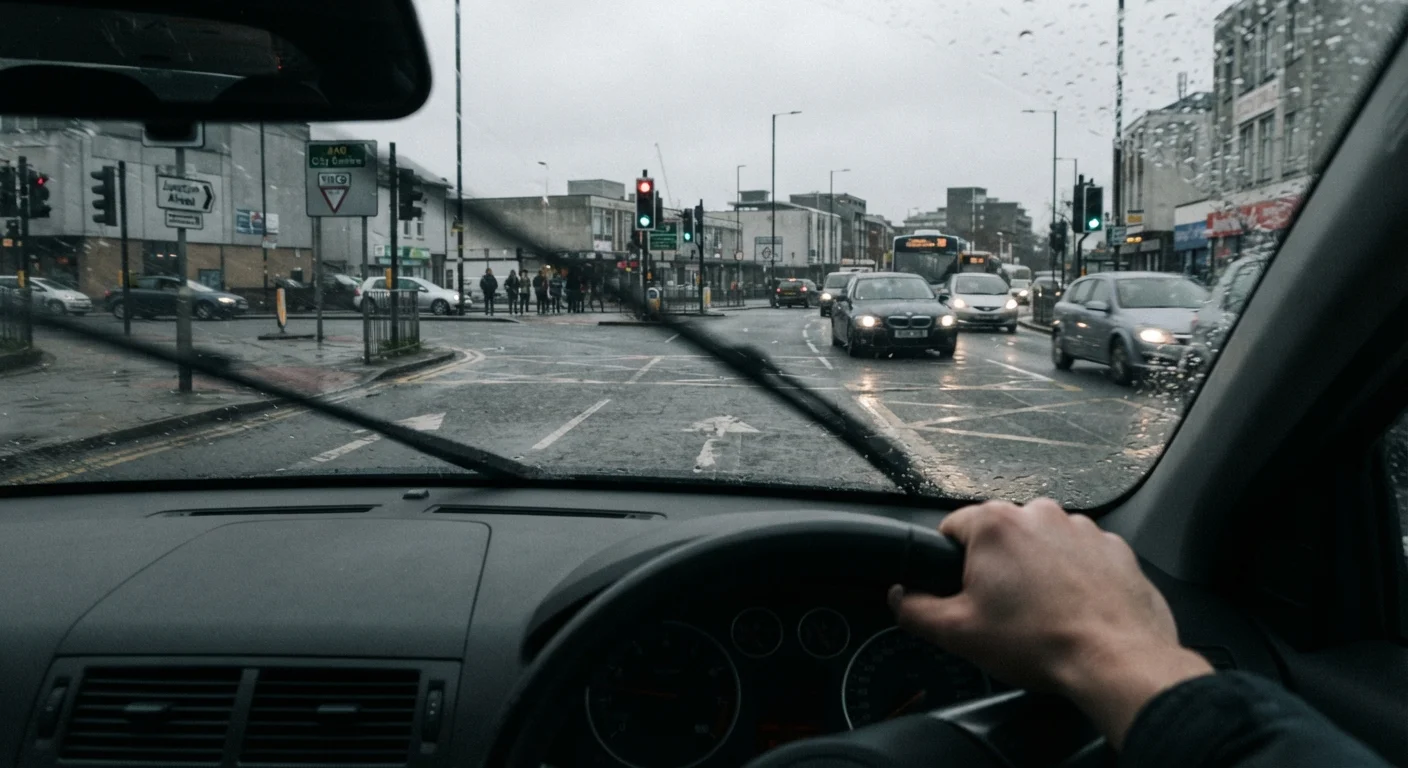
City roads compound these challenges significantly. Urban driving hazards like cyclists and pedestrians at intersections require a sharper version of every one of these skills.
Use the SIPDE Process as a Mental Checklist
Many driving instructors teach SIPDE: Scan, Identify, Predict, Decide, Execute. Running through this sequence - even quickly - before entering a complex situation like a merge or intersection helps prevent the tunnel vision that causes last-second reactions. It sounds formal, but with practice it becomes a background habit.
Conditions That Demand More From Defensive Drivers
Defensive driving isn't one-size-fits-all. Certain conditions raise the stakes and require deliberate adjustments.
Night driving reduces your visibility and changes how hazards appear - headlights can mask distance and closing speed. Night driving carries statistically higher risk than daytime travel, and defensive technique has to account for that reduced reaction window.
Intersections and junctions are where many collisions occur. Speed is routinely misjudged at junctions - a vehicle approaching a cross-street can seem slower than it actually is. Understanding why speed misjudgment happens at junctions helps you pause before pulling out rather than trusting a glance.
Fatigue is one of the most underestimated threats to defensive capability. Reaction time, hazard perception, and decision-making all degrade when you're tired. Recognizing fatigue before it impairs you is itself a defensive driving skill.
~94%
Crashes involving human error
The National Highway Traffic Safety Administration (NHTSA) has estimated that approximately 94% of serious crashes involve some form of driver error.
3 sec
Recommended minimum following distance
A three-second gap at highway speeds gives the average driver enough time to perceive a hazard, decide, and begin braking - the basis of the widely taught three-second rule.
2x
Higher nighttime fatal crash rate
Per mile driven, fatal crash rates are roughly twice as high at night as during the day, according to NHTSA data, underscoring how conditions amplify risk.
Building the Habit: Where to Start
Knowing the principles is the easy part. The harder part is making them automatic so they hold up under pressure.
Start with following distance. It's the single most measurable habit, and it immediately increases your reaction time without requiring any special environment. Pick a fixed object on the road and count seconds after the car ahead passes it. If you reach the same point in under three seconds, you're too close.
Next, practice deliberate scanning. On your next drive, consciously note what you see at the edges of your field of view - parked cars that might open a door, vehicles queuing to merge, pedestrians on a sidewalk approaching a crossing. The goal is to make observation feel automatic rather than effortful.
Formal courses exist if you want structured instruction. Many US states offer approved defensive driving programs - some online, some in person - that cover these principles systematically. Some programs also satisfy court requirements or may be recognized by insurers, though you should verify eligibility directly.
Complex road features like roundabouts also reward a defensive mindset. Understanding roundabout rules - including lane discipline and signaling - helps you navigate them without hesitation, which in turn keeps traffic flowing predictably for everyone.
Defensive driving isn't a skill you perfect once and forget. Roads change, conditions shift, and new distractions emerge. The drivers who stay safest are the ones who treat every drive as a low-stakes opportunity to practice reading traffic - before anything goes wrong.
Defensive Driving Courses Vary by State
Course formats, approval status, and any associated benefits (insurance, traffic school eligibility) differ significantly by state. Before enrolling, verify that the course is recognized by your state's DMV or court system if that matters to your situation. Your insurer can confirm whether they recognize a particular program for any discount purposes.