
Why City Roads Concentrate Risk
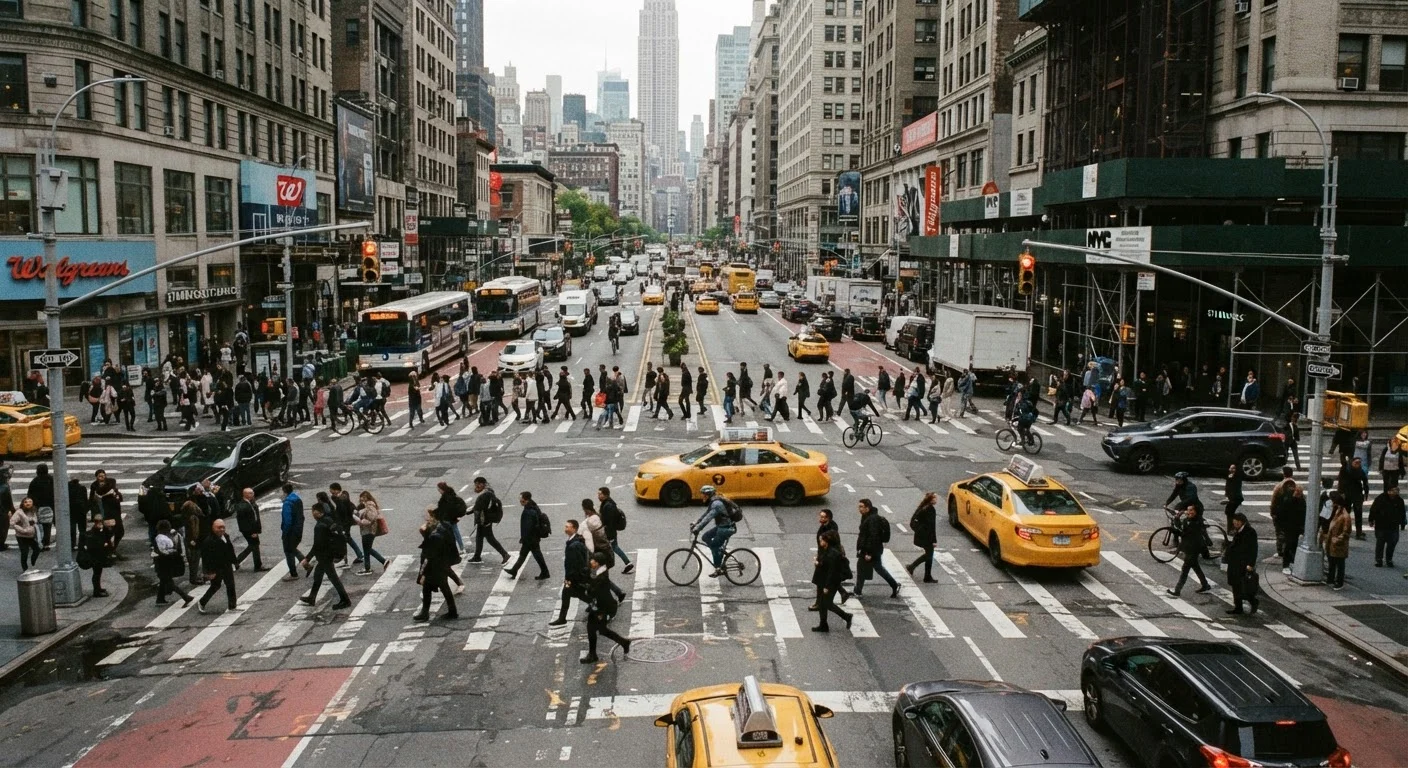
Urban environments compress a remarkable number of variables into a short stretch of road. High pedestrian volumes, dense junctions, delivery vehicles double-parked at curbs, cyclists filtering through traffic, and signal timing that never quite matches actual flow - these factors don't simply add up, they interact. That interaction is what makes city driving statistically different from highway travel, even though highway speeds are far higher.
Data from the National Highway Traffic Safety Administration (NHTSA) consistently show that while fatal crashes per mile driven skew toward rural roads, urban areas generate a higher absolute number of crashes overall - and a disproportionate share of crashes involving pedestrians and cyclists, who face far greater injury severity than vehicle occupants. Understanding which specific hazards drive those numbers is the first step toward navigating them more confidently. If you want a broader framework for reading road situations before they develop, our guide on defensive driving techniques lays out the underlying approach.
Uncontrolled and Multi-Phase Intersections
Intersections are where most urban crashes happen. NHTSA data indicate that roughly half of all traffic injuries in the US occur at or near intersections. The hazard is compounded in cities where complex signal phases, protected-permissive left turns, and high pedestrian call-button activity create conditions where multiple road users are moving through the same space with different assumptions about who has right of way.
Left turns across oncoming traffic remain a particularly consistent contributor to severe crashes. Drivers misjudge gap size, oncoming vehicles travel faster than perceived, or a second vehicle obscures a cyclist or pedestrian in the crosswalk.
Roughly half of all US traffic injuries occur at or near intersections.
Pedestrian Conflicts at Mid-Block and Unmarked Crossings
Not every pedestrian crossing happens at a marked crosswalk or a signalized intersection. Pedestrians cross mid-block in dense urban areas regularly, and drivers accustomed to scanning only marked crossings can be caught off guard. Vehicle speed is the critical variable here: research consistently shows that survival odds for a pedestrian struck at 20 mph are substantially better than at 40 mph, even though 40 mph is within legal limits on many urban arterials.
Parked cars, delivery trucks, and bus stops frequently create visual barriers that hide pedestrians until they're already in the travel lane - a scenario sometimes called the "multiple-threat" scenario, where a driver stopped for a pedestrian obscures the crossing from drivers in adjacent lanes.
Parked vehicles and delivery trucks routinely hide pedestrians until they're already in the travel lane.
Cyclists in and Adjacent to Traffic Flow
Urban cycling infrastructure remains inconsistent across US cities, meaning cyclists frequently share general travel lanes or ride in door-zone bike lanes alongside parked cars. Dooring - a driver or passenger opening a car door into the path of an oncoming cyclist - is a well-documented urban hazard. The Dutch Reach (opening the car door with your far hand, which forces your body to turn toward the mirror) is a simple habit that reduces the risk substantially.
Cyclists are also harder to detect in a driver's peripheral vision than other vehicles, particularly when filtering forward at signals or approaching from the right in slow traffic. Checking mirrors before lane changes and allowing extra buffer distance addresses the gap.
Dooring is a well-documented urban hazard that a single door-opening habit can significantly reduce.
Driver Distraction in Stop-and-Go Conditions
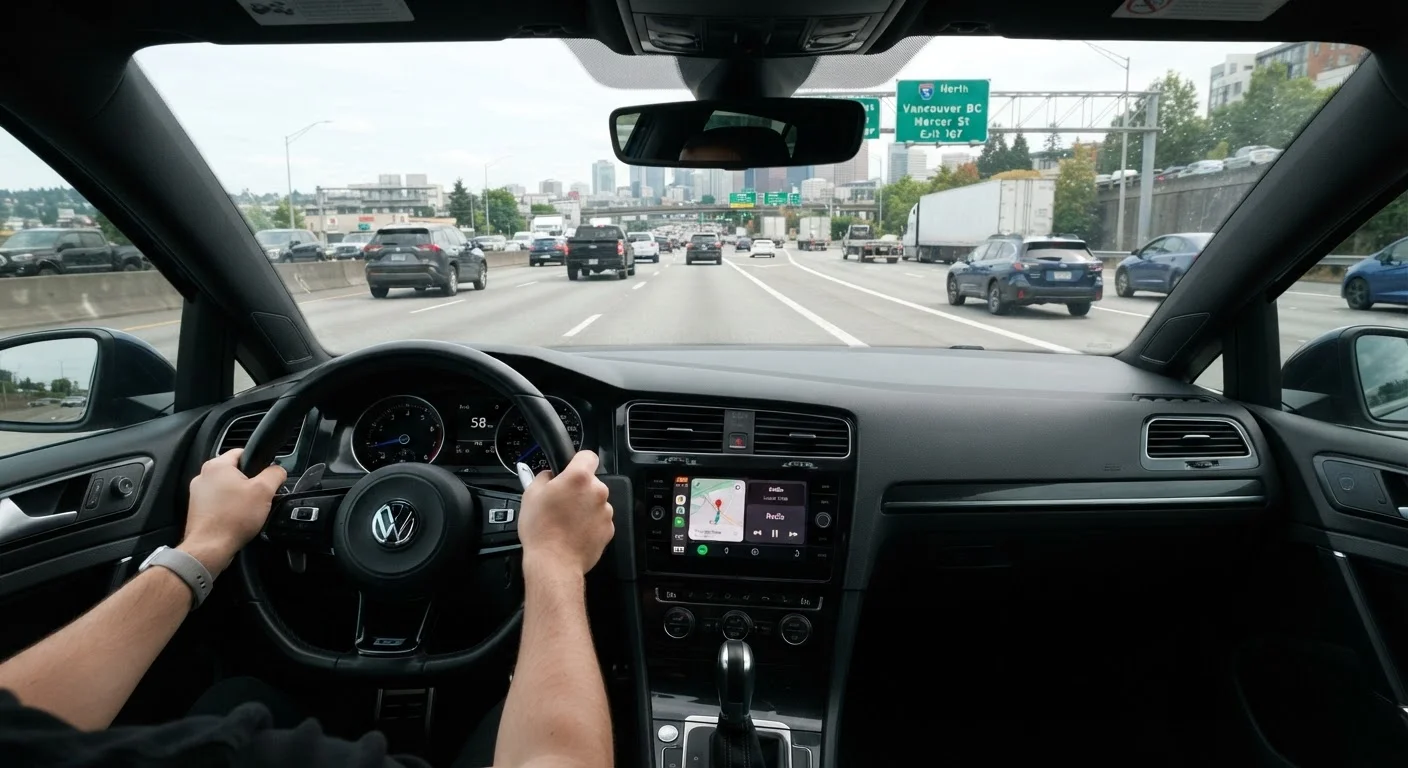
Low-speed urban traffic creates a false sense of safety that makes distraction more tempting. A driver glancing at a phone for five seconds at 25 mph travels roughly 183 feet without eyes on the road - enough to miss a pedestrian stepping from between parked cars, a cyclist pulling left to avoid a pothole, or a vehicle braking suddenly ahead.
Urban distraction-related crashes often involve rear-end collisions and turning conflicts rather than the high-speed crashes more commonly associated with highway distraction. The injuries tend to be less catastrophic but collectively represent a significant share of urban crash volume.
Five seconds of distraction at 25 mph covers roughly 183 feet - enough to miss most urban hazards.
Unpredictable Merges From Bus Stops and Loading Zones
Buses re-entering traffic from stops, rideshare vehicles pulling abruptly to the curb or merging back into flow, and delivery vehicles reversing from loading zones all create sudden, hard-to-predict conflicts. These movements happen frequently on commercial corridors and are often legally protected - buses, for instance, have right-of-way when re-entering traffic in many states once their signal is activated.
Maintaining following distance on urban arterials, rather than closing gaps aggressively, gives you the time to respond when these common maneuvers occur. It's a lower-stakes version of the hazard-anticipation mindset that experienced drivers apply systematically.
Maintaining following distance on urban arterials gives you time to react to bus and delivery vehicle merges.
Speed Differentials in Mixed-Traffic Corridors
Urban roads frequently mix vehicles traveling at significantly different speeds - through-traffic moving at the posted limit alongside cars searching for parking, cyclists at 10-12 mph, and pedestrians near crossings. Speed differentials, not just absolute speed, are a key driver of collision risk. When vehicles in adjacent lanes are traveling 20-25 mph apart, lane changes and merges require precise gap judgment that many drivers underestimate.
This hazard intensifies near schools, markets, and transit hubs where the slowest road users concentrate. Reducing speed proactively in these zones - rather than reacting only to posted school-zone signs - is the more reliable strategy.
Speed differentials between adjacent lanes, not just absolute speed, are a key driver of urban collision risk.
Putting the Hazards in Context
None of the hazards on this list are inevitable outcomes. They're patterns - and patterns can be anticipated. The practical implication is that attentiveness, appropriate speed, and deliberate scanning habits address several of these risks simultaneously. Distraction, by contrast, degrades your ability to respond to all of them at once.
Scan Further Ahead Than You Think Necessary
In city traffic, most drivers focus on the vehicle directly ahead. Extending your scan two or three cars forward, or to the next intersection, gives you more processing time when situations change. This is especially useful on bus corridors and commercial strips where vehicles frequently stop and start without warning.
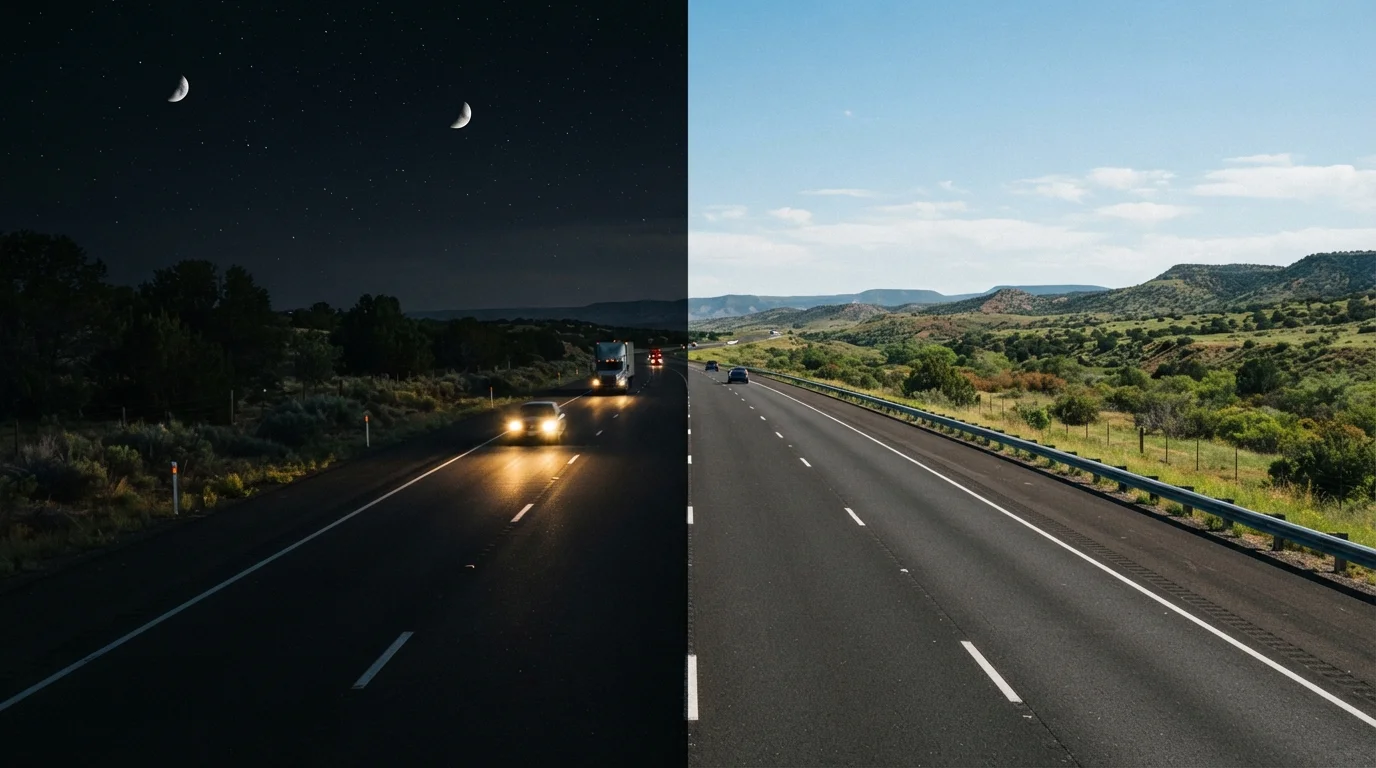
It's also worth noting that urban risk isn't evenly distributed across a day. Rush-hour volumes raise exposure, but mid-afternoon and evening hours see elevated pedestrian activity around schools and entertainment districts. Night driving in urban areas adds a visibility layer on top of the congestion factors described here. Adjusting your approach to match the specific conditions - time, density, road type - is more effective than treating every city street identically.
This article provides general road safety information for educational purposes. Always follow local traffic laws and consult official sources for regulatory guidance in your jurisdiction.