
What the Crash Data Actually Shows
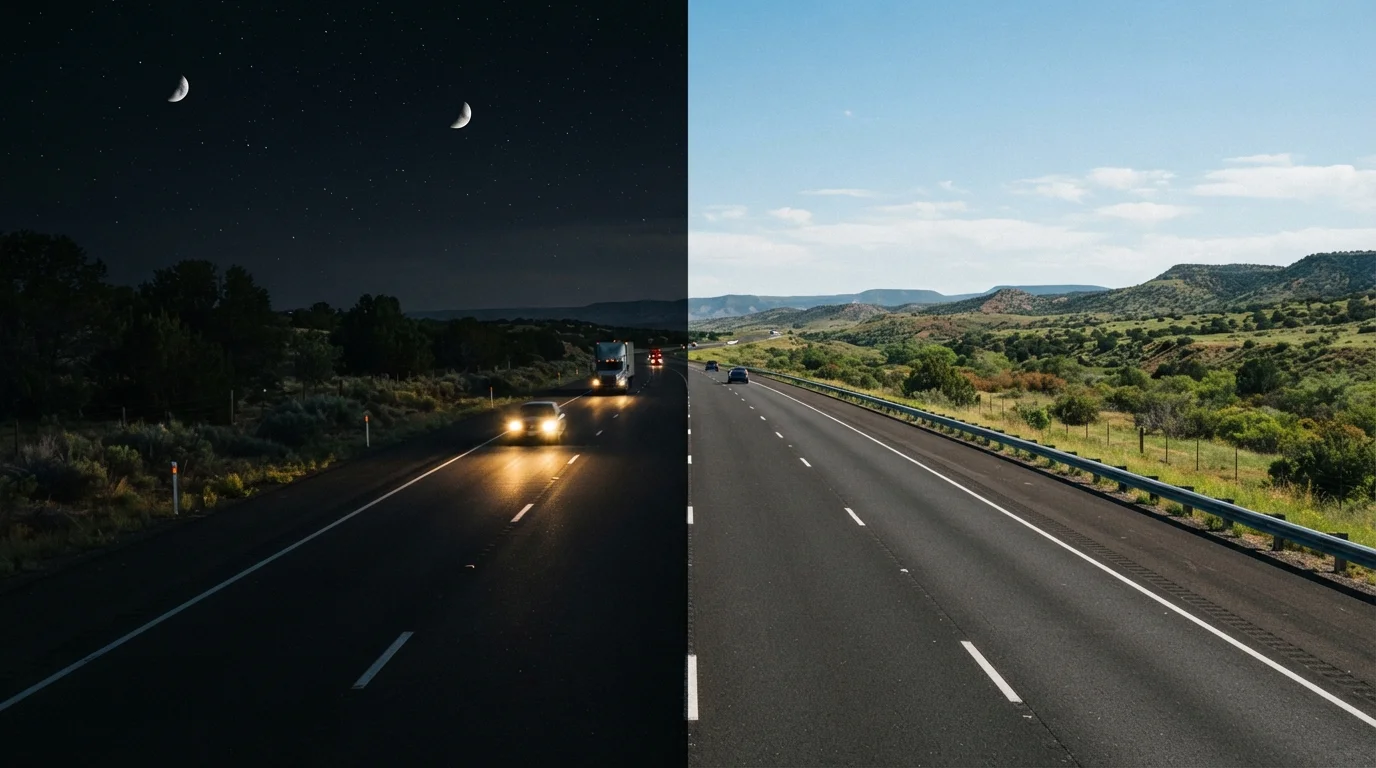
Traffic volumes are lower at night, but fatal crash rates per mile driven are notably higher. According to the National Safety Council, fatal crash rates are roughly three times higher at night than during the day. The reasons aren't random - they trace directly to how darkness degrades both the driver's visual system and the road environment itself.
Daytime driving benefits from natural light that reveals road surface texture, pedestrian movement, vehicle color contrast, and hazard distance simultaneously. Drivers process this information rapidly, often without conscious effort. After dark, that sensory richness collapses. The eye shifts to rod-based peripheral vision, which is poorer at color discrimination and fine detail. Hazards that would be obvious in daylight - a pedestrian in dark clothing, a pothole at the shoulder, a deer at the roadside - can appear with almost no warning.
| Criterion | Daytime Driving | Night Driving |
|---|---|---|
| Visibility range | Full natural light; far horizon | 160-400 ft (headlight-dependent) |
| Fatal crash rate per mile | Lower | Roughly 3× higher |
| Fatigue risk | Lower; circadian alertness higher | Higher; circadian dip after midnight |
| Alcohol-impaired driver exposure | Lower proportion of crashes | Higher proportion of fatal crashes |
| Pedestrian/cyclist detectability | High contrast, color visible | Low contrast; dark clothing nearly invisible |
| Speed perception accuracy | Better; reference points abundant | Poorer; reference points reduced |
| Glare from other vehicles | Minimal | Significant; worsens with age |
The Visibility Gap: Where Perception Breaks Down
Standard low-beam headlights illuminate approximately 160 feet ahead. At 60 mph, a vehicle travels roughly 88 feet per second - meaning a driver has under two seconds to detect, decide, and brake before reaching something the headlights just revealed. Many vehicles' stopping distances at that speed exceed 160 feet. This mismatch between headlight range and braking distance is sometimes called overdriving your headlights, and it's a structural hazard of night driving at highway speeds, not a matter of individual skill.
High beams extend that range to around 350-400 feet but are only usable when no oncoming traffic is present. Glare from oncoming headlights temporarily reduces visual acuity, a problem that worsens with age as the eye's lens scatters light more readily. Drivers over 50 may need significantly more time to recover from glare than younger drivers.
Speed perception also shifts at night. Without reference points like roadside features, building density, or pedestrian movement, drivers tend to underestimate their speed - which is one reason junction speed misjudgment is more dangerous in low-light conditions.
3×
Higher fatal crash rate at night vs. day
The National Safety Council estimates nighttime fatal crash rates are approximately three times higher per mile driven than daytime rates.
160 ft
Typical low-beam headlight range
At highway speeds, 160 feet of illumination often falls short of the distance required to brake safely from full speed.
~50%
Of traffic fatalities occur at night
Despite lower traffic volumes, nighttime hours account for roughly half of all US traffic fatalities, per NHTSA data.
Fatigue, Alcohol, and the Night-Hour Multiplier
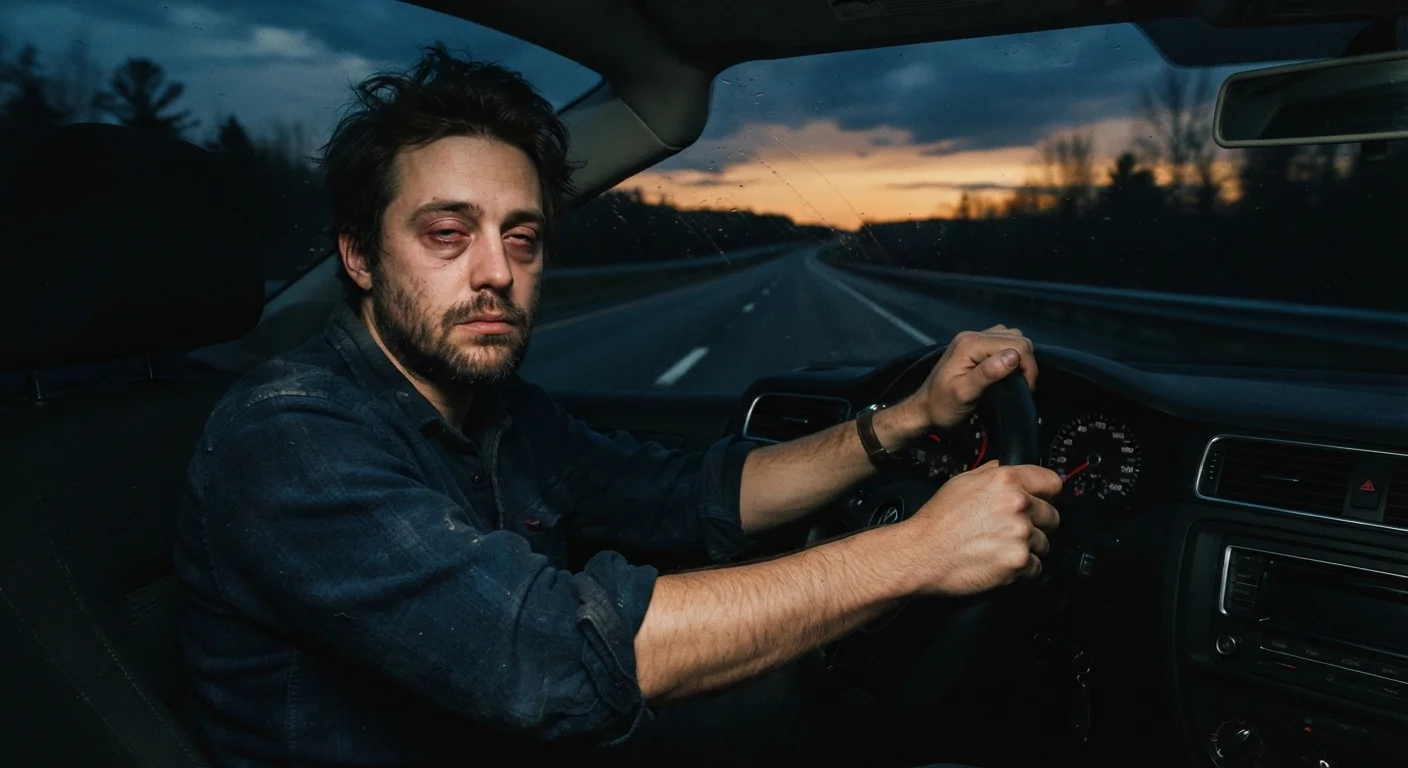
Night driving doesn't just change what you see - it changes your physiological state. The body's circadian rhythm promotes sleepiness in the late-night and early-morning hours, regardless of how much sleep a driver got the previous night. Drowsy driving impairs reaction time in ways that parallel alcohol impairment, and the two risks compound when combined.
Alcohol-impaired driving is also statistically more concentrated at night. The NHTSA has consistently found that a higher proportion of nighttime fatal crashes involve alcohol than daytime fatal crashes. This doesn't mean night driving is inherently reckless - it means the risk environment requires more deliberate management. Our detailed breakdown of fatigue warning signs covers the early indicators worth knowing before any long evening drive.
Night Driving Isn't the Same as Bad-Weather Driving
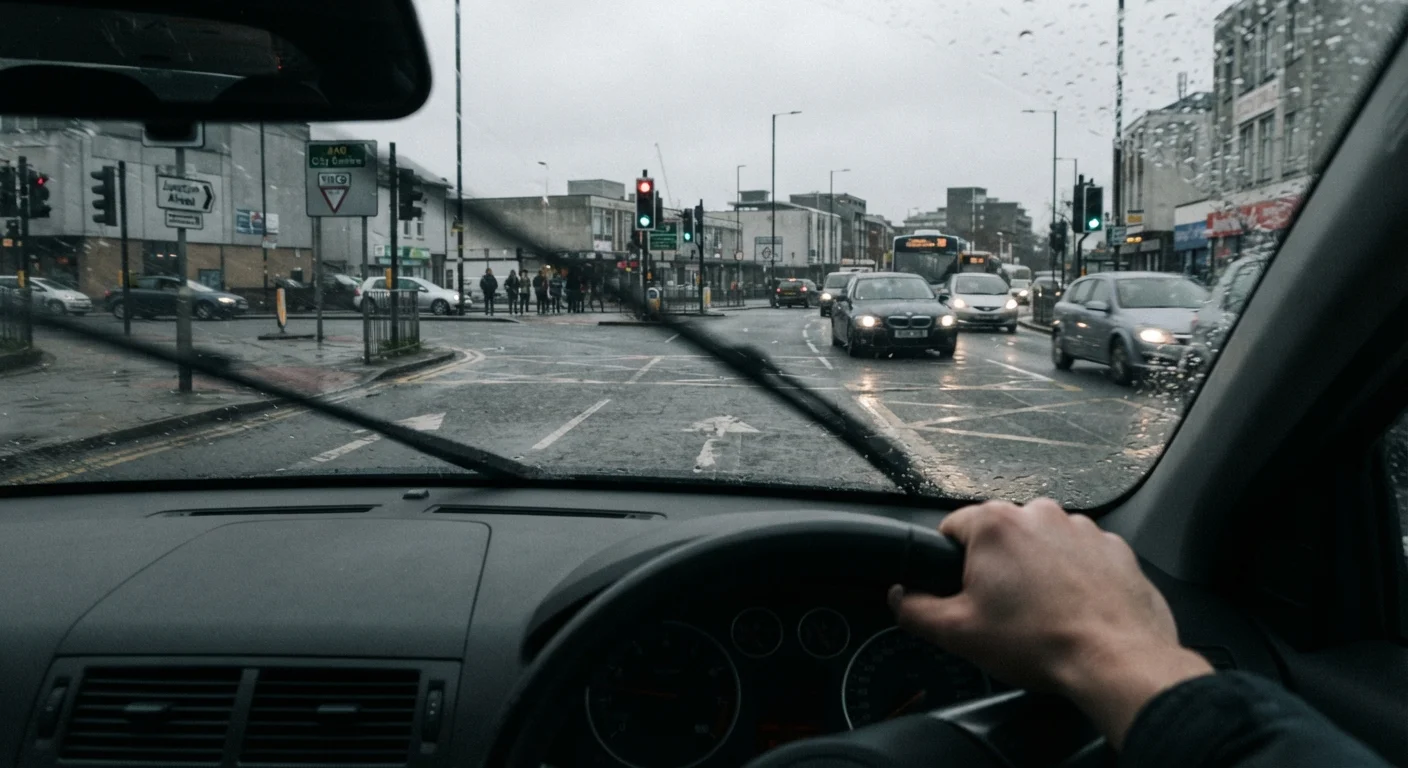
Darkness and poor weather are distinct risk categories, though they can overlap. Rain or fog at night creates a compound visibility problem distinct from either condition alone. Drivers who are confident in clear nighttime conditions should not assume those habits transfer directly to wet or foggy nights. For weather-specific adjustments, see our guide on driving in rain, fog, and snow.
Practical Adjustments That Reduce Night-Driving Risk
Understanding the risk profile of night driving is only useful if it leads to concrete habit changes. A few adjustments meaningfully close the safety gap:
- Reduce speed on unfamiliar roads. Slower speeds extend the time available to react to newly visible hazards, directly compensating for shortened headlight range.
- Increase following distance. The standard three-second gap should extend to four or more seconds after dark, giving more buffer if the vehicle ahead stops suddenly.
- Keep headlights clean and properly aimed. Cloudy or misaligned headlights reduce effective range substantially. Most service centers can check alignment quickly.
- Minimize dashboard and interior lighting. Bright interior light reduces contrast sensitivity for the road ahead - dim or red-filtered cabin lights preserve night vision better.
- Watch the right edge of the road in oncoming headlight glare. Focusing on the right shoulder rather than oncoming lights reduces glare impact and keeps you on line.
For a broader framework on reading road hazards before they develop, defensive driving principles apply especially well in low-visibility conditions where reaction time is already compressed.