
Why Seconds, Not Car Lengths
Older driver education talked about keeping one car length of space for every 10 mph of speed. It sounds intuitive, but it has a flaw: it forces you to estimate distances while moving, which most people do poorly. Time-based gaps - the two-second rule - solve this by using something your perception handles more reliably.
The method is simple. When the vehicle ahead passes a fixed reference point, count: one-Mississippi, two-Mississippi. If you reach that marker before you finish counting, you're too close. This approach automatically scales with speed because the faster you're both traveling, the greater the physical distance those two seconds represent.
What the two-second rule doesn't do is account for anything other than a best-case scenario. Dry asphalt, alert driver, well-maintained brakes, no load in the vehicle. Change any one of those variables and you need more time - often significantly more. See our guide to stopping distance factors for a closer look at the physics involved.
The Variables That Change the Equation
Following distance isn't a single number - it's a calculation you're constantly updating based on conditions. Several factors push that number upward:
~40%
Rear-end crashes among all US crashes
Rear-end collisions are consistently one of the most common crash types reported by the National Highway Traffic Safety Administration, with following-too-closely identified as a major contributing factor.
3-4x
Stopping distance increase on ice vs. dry road
Road safety research generally finds that stopping distances on ice or packed snow can be three to four times greater than on dry asphalt at the same speed.
1.5 sec
Average driver reaction time before braking
General driving safety literature cites average alert-driver reaction times between 1.5 and 2.5 seconds - the interval before the brake pedal is even pressed.
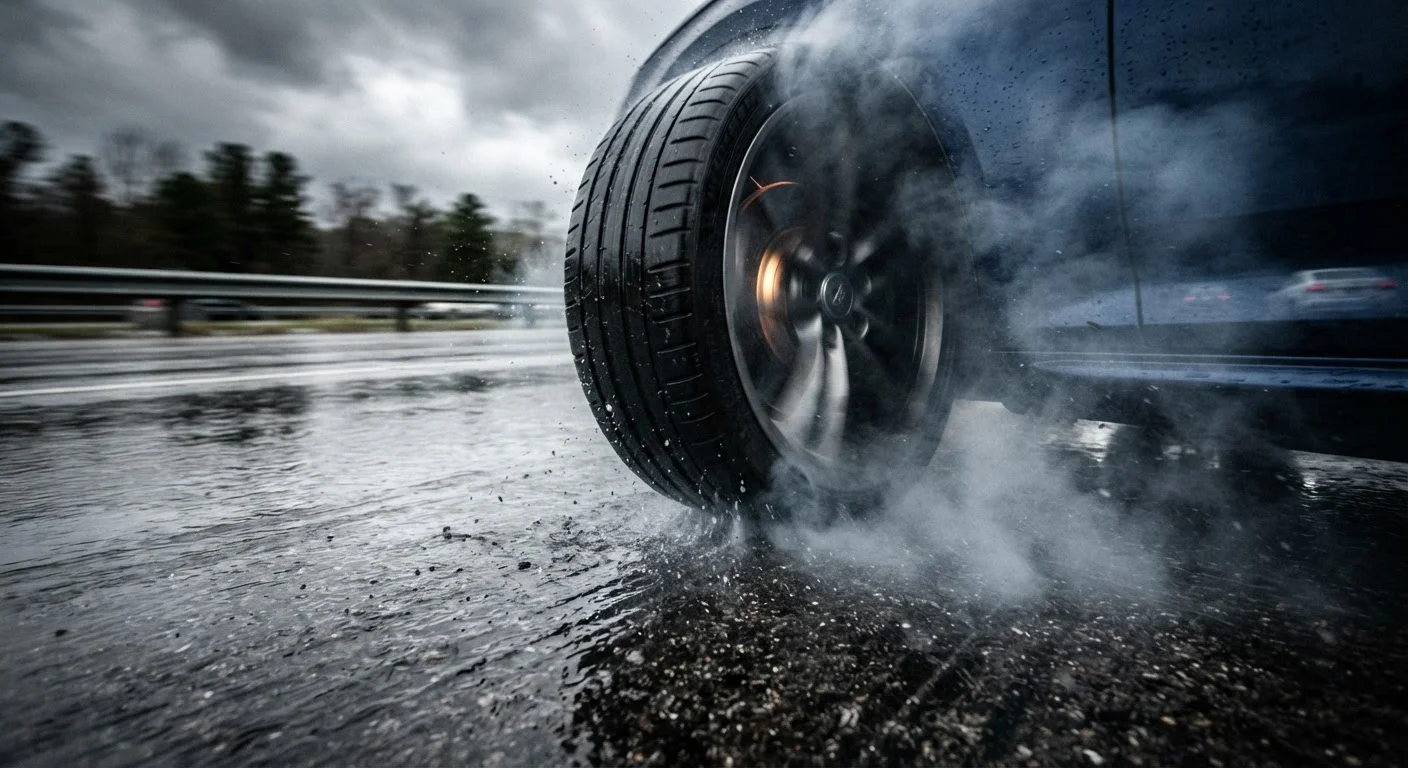
- Road surface: Wet pavement reduces tire grip and extends stopping distance. Ice or packed snow can multiply it several times over. On a rainy highway, three to four seconds is more appropriate than two.
- Vehicle weight and load: A heavier vehicle carries more momentum. A car towing a boat, a pickup with a full bed, or any commercial vehicle takes measurably longer to stop than an empty passenger car at the same speed. If you're driving something heavier, extend your gap.
- Tire and brake condition: Worn tires and degraded brake pads both increase stopping distance. The vehicle you're driving may not perform as well as it did when it was new - something worth factoring in.
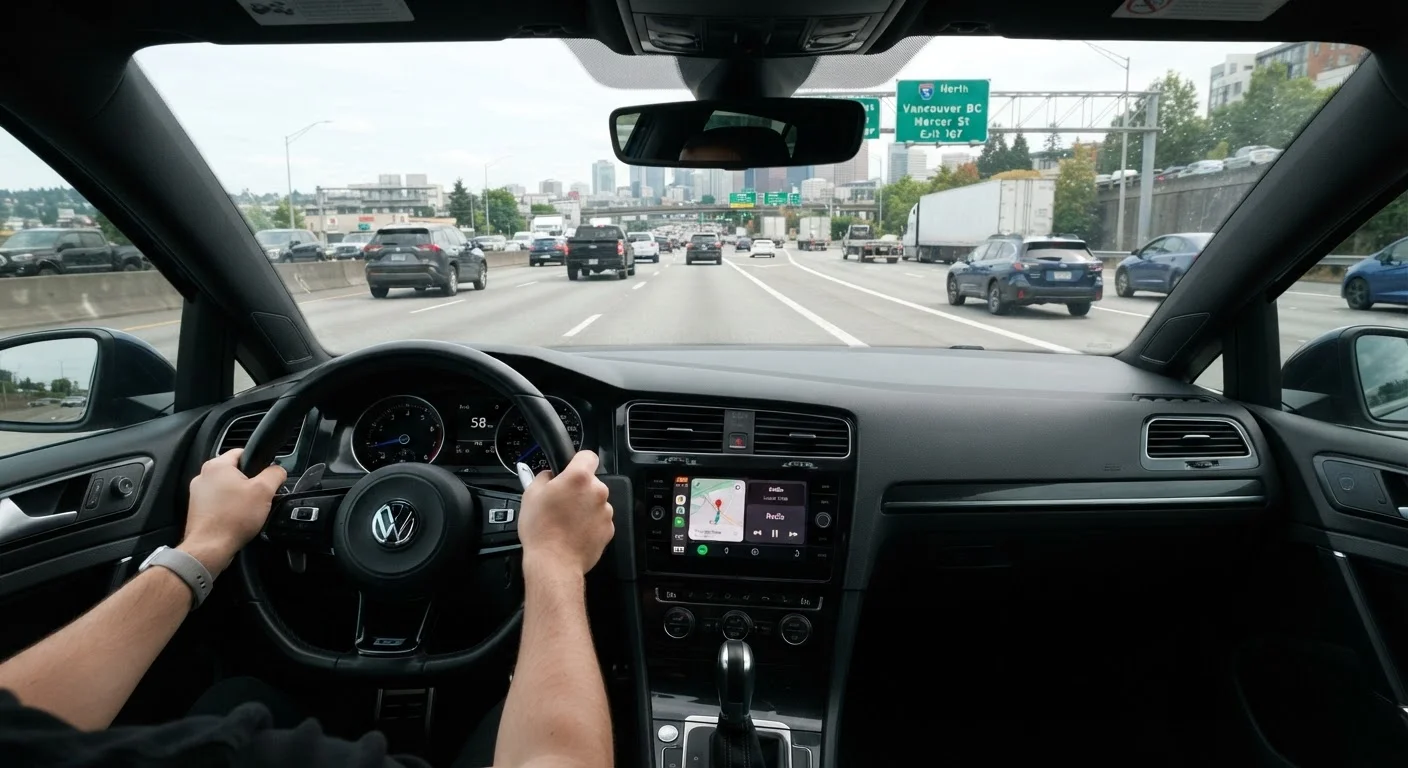
- Your own state: Reaction time is the first component of total stopping distance. Fatigue, distraction, or impairment extends it. Even glancing at a navigation screen adds measurable delay before your foot reaches the brake.
Speed compounds all of these. Because braking distance grows roughly with the square of your speed, the gap between a two-second interval at 30 mph and one at 65 mph is substantial in physical feet - and the consequences of a miscalculation grow accordingly.
Adapting Your Gap to the Situation
Two seconds is a floor, not a target. Most experienced driving educators recommend three to four seconds as a practical default for everyday driving, with adjustments made from there.
Rebuild Your Gap Calmly
When another vehicle merges into your following gap, resist the urge to brake hard or tailgate. Simply ease off the accelerator until you've re-established your two- to four-second cushion. This keeps traffic flow smoother and keeps you safer.
In heavy traffic, the temptation is to close the gap because you're worried about other drivers cutting in. This is counterproductive. A proper following gap actually gives you more options: room to brake gradually rather than suddenly, time to spot hazards the vehicle ahead is blocking, and a buffer if someone does merge in front of you. The right response to a vehicle entering your gap is to ease off the accelerator and quietly rebuild the space.
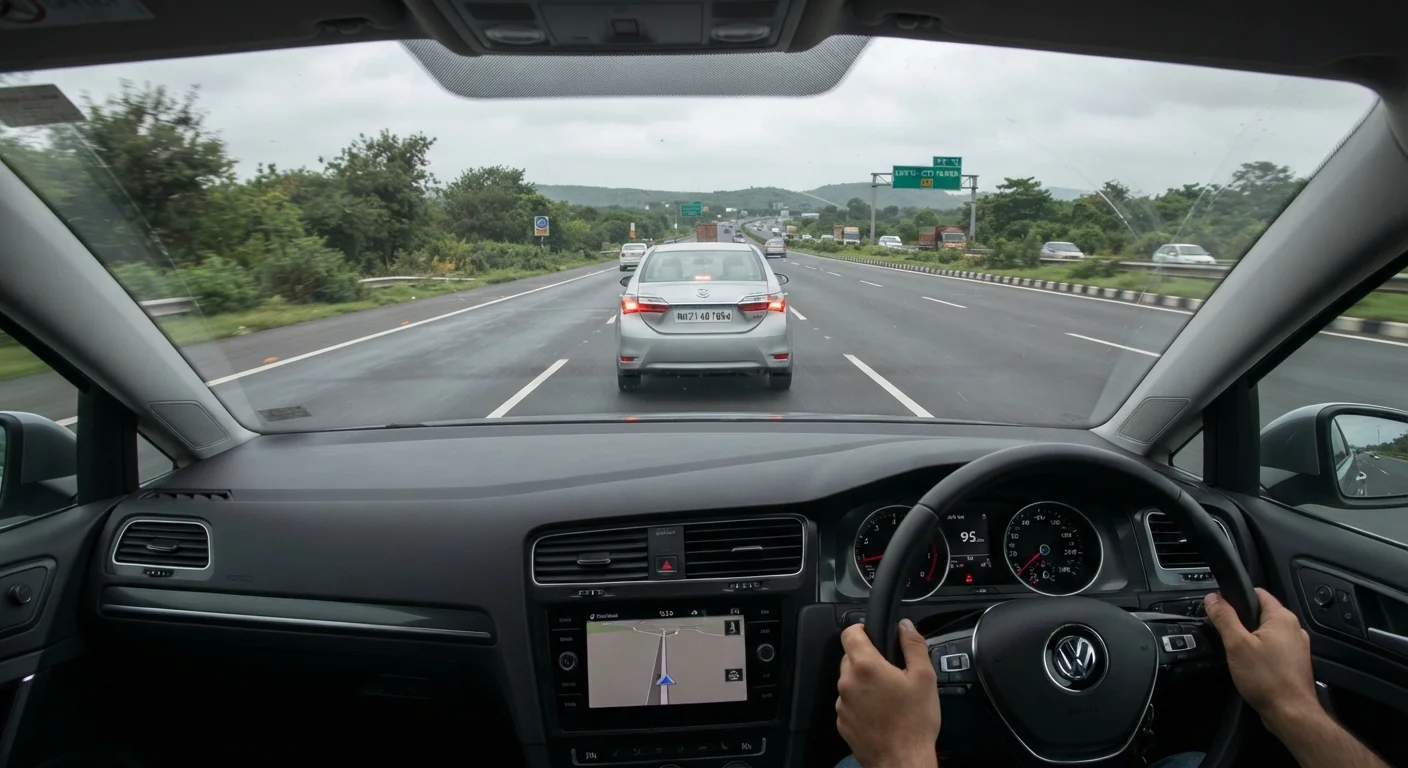
On the highway at higher speeds, four or more seconds becomes important. At 65 mph, four seconds represents roughly 380 feet of buffer - and that's the distance you need to react and brake if the vehicle ahead stops suddenly. Defensive driving builds on this principle: the gap is not just a safety buffer, it's a viewing window into what's happening further down the road.
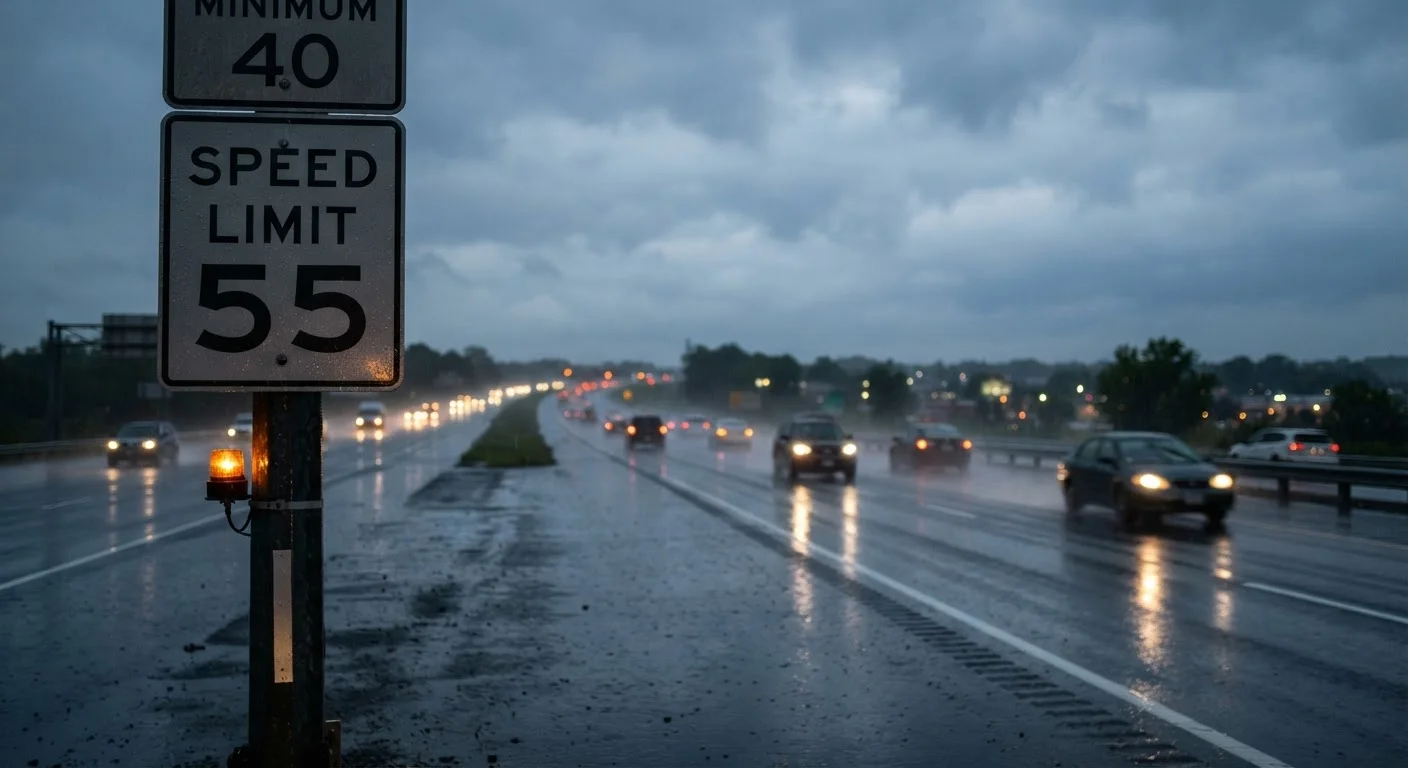
Conditions that warrant extra caution include nighttime driving, fog, towing, unfamiliar roads, and any kind of precipitation. Understanding how posted speed limits differ from genuinely safe speeds helps frame why your following distance decisions matter independently of what the sign says.
Building the Habit
Consistent following distance is a skill that requires conscious practice before it becomes automatic. Most drivers, when asked, overestimate how much gap they're actually leaving. The two-second count is a useful recalibration - do it regularly during normal drives until the spacing starts to feel natural.
It also helps to observe what happens when you give yourself more space: smoother braking, less stress, more time to respond to lane changes and merges. Drivers who maintain proper gaps tend to brake less frequently and less hard, which also extends brake life and improves fuel efficiency - practical side benefits of a safety habit.
Misjudging speed and distance is a common factor in collisions, and following distance is one of the clearest ways to protect yourself from others' errors, not just your own. You can't control the driver behind you, but you can control the cushion in front.