
Why Dashboard Lights Exist (and Why Ignoring Them Is Risky)
Your car's onboard diagnostics system constantly monitors dozens of sensors - from engine temperature to brake pressure. When something falls outside normal parameters, it triggers a warning light on your instrument cluster. These lights aren't suggestions; they're your vehicle's way of flagging that something needs your attention, ranging from routine maintenance to an urgent safety issue.
The color of a warning light is your first clue about urgency. Red lights generally signal stop-now situations - engine overheating, oil pressure loss, or brake system failure. Amber or yellow lights typically mean address-this-soon, such as a loose gas cap or low tire pressure. Green or blue lights are usually informational, confirming that a system is active.
Understanding the distinction helps you make smarter decisions about whether to pull over immediately, schedule a shop visit this week, or simply note it for your next routine service. For a broader look at keeping your vehicle in shape throughout the year, see our seasonal car maintenance guide.
| Number of OBD-II fault codes | Thousands of standardized codes exist across vehicles (Society of Automotive Engineers (SAE) standard J1979) |
| TPMS trigger threshold | 25% or more below recommended tire pressure (NHTSA TPMS rule, FMVSS No. 138) |
| Vehicles required to have OBD-II | All US cars and light trucks, model year 1996 and newer (EPA mandate) |
| TPMS mandatory since | Model year 2008 (US market) (NHTSA ruling under TREAD Act) |
| Red vs. amber light urgency | Red = stop soon; Amber = service needed (General industry convention; verify in your owner's manual) |
The Lights You're Most Likely to See
The following are among the most common dashboard warning lights US drivers encounter, along with what they typically indicate and how urgently you should respond.
- Check Engine (MIL)
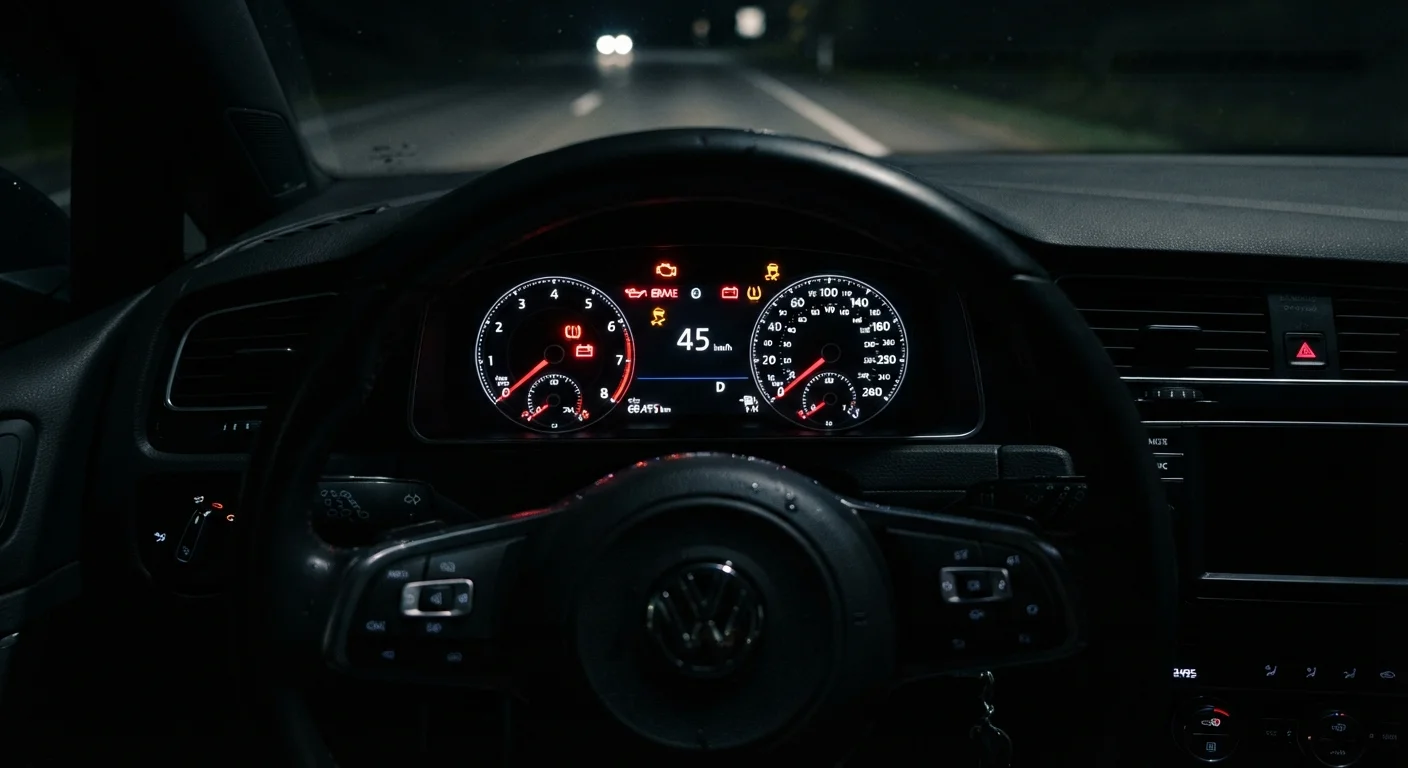
- The MIL - often shown as an engine outline - can mean anything from a loose gas cap to a misfiring cylinder. A steady light usually allows for a prompt (but not emergency) mechanic visit. A flashing check engine light, however, suggests an active misfire that can damage the catalytic converter; reduce speed and get to a shop quickly. A mechanic can read the stored diagnostic trouble codes with an OBD-II scanner to pinpoint the cause.
- Oil Pressure Warning
- This red light - typically an oil can icon - means your engine isn't receiving adequate oil pressure. Pull over safely and shut off the engine as soon as possible. Continuing to drive can cause severe, permanent engine damage within minutes.
- Battery / Charging System
- A battery icon that stays lit while driving usually points to a failing alternator or a charging system problem rather than the battery itself. Your car may run temporarily on battery reserve - get to a mechanic before the vehicle loses power entirely.
- Coolant Temperature
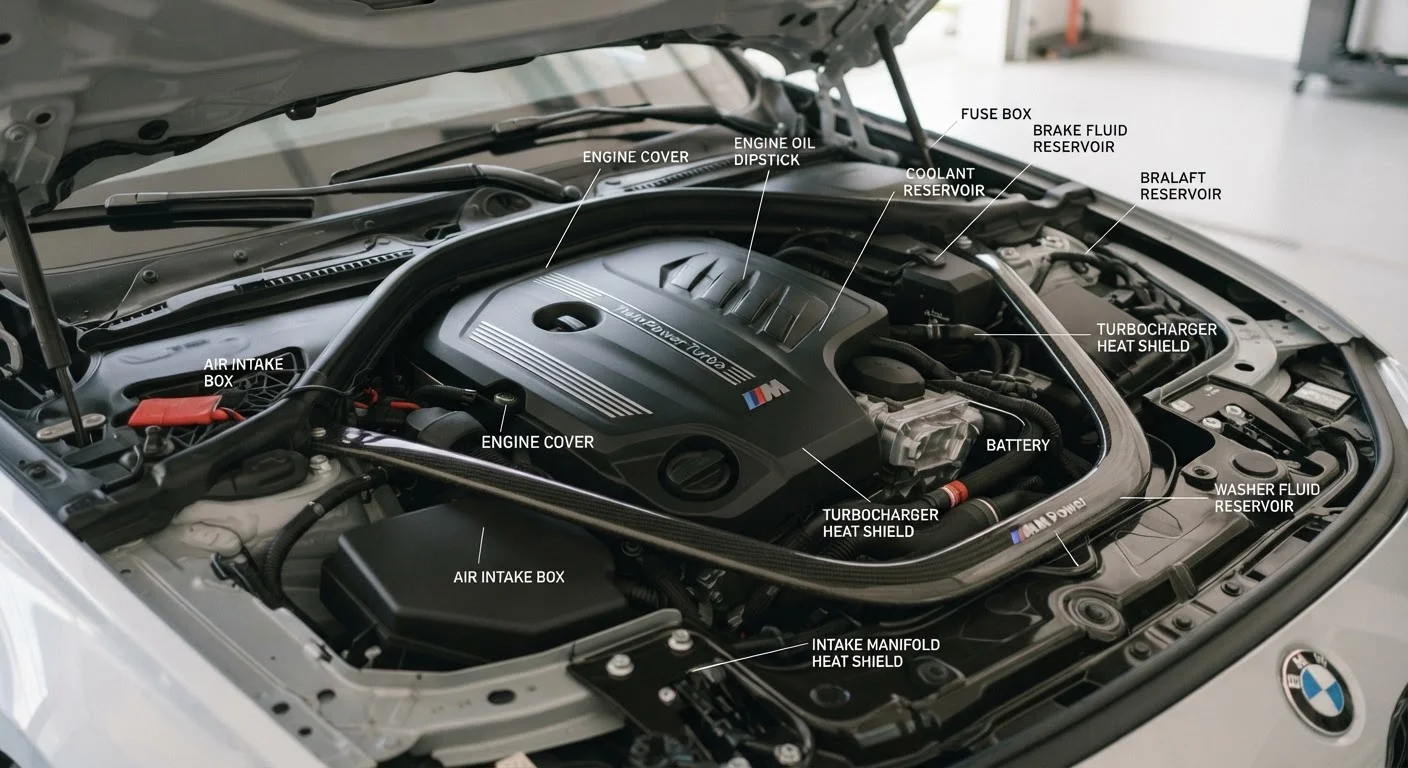
- A thermometer icon in red means the engine is overheating. Pull over safely, turn off the engine, and let it cool before checking the coolant level. Never open a hot radiator cap. See our plain-language guide to engine components for more context on how the cooling system works.
- TPMS (Tire Pressure)
- The TPMS light - an exclamation point inside a tire cross-section - indicates one or more tires are significantly under-inflated (typically 25% or more below the recommended pressure listed on your door jamb sticker). Add air as soon as practical; underinflated tires affect handling, fuel economy, and wear. Before a long trip, always confirm pressures manually - see our pre-long-journey vehicle check for guidance.
- Brake System Warning
- A red circle with an exclamation point or the letter B can signal low brake fluid, worn brake pads, or a fault in the ABS or stability control system. If this appears while driving and your brakes feel soft or spongy, stop safely and call for assistance rather than continuing to drive.
- ABS Warning
- An amber ABS light means the anti-lock braking system has detected a fault. Your standard brakes likely still work, but ABS - which prevents wheels from locking under hard braking - may not engage correctly. Schedule a diagnostic promptly.
OBD-II
On-Board Diagnostics II - a standardized system in all US vehicles built after 1996 that monitors engine and emissions performance and stores diagnostic trouble codes readable by a scanner.
MIL (Malfunction Indicator Lamp)
The technical term for the check engine light. It illuminates when the OBD-II system detects a fault in engine, transmission, or emissions-related components.
TPMS
Tire Pressure Monitoring System - a federally mandated sensor system (required on US vehicles since 2008) that alerts the driver when tire pressure drops to an unsafe level.
ABS
Anti-lock Braking System - a safety feature that prevents wheel lockup during hard braking, helping the driver maintain steering control. An ABS fault does not necessarily disable standard braking.
Catalytic Converter
An emissions control device in the exhaust system that converts harmful combustion byproducts into less harmful gases. Engine misfires can overheat and damage it quickly.
Alternator
A generator driven by the engine that recharges the battery and powers the vehicle's electrical systems while the engine runs. A failing alternator will eventually leave the car without power.
What to Do When a Light Comes On
The right response depends on the light's color and behavior. Here's a practical framework:
- Red light or flashing amber: Take it seriously. Pull over when it's safe to do so, consult your owner's manual, and avoid driving if the light indicates oil pressure, engine overheating, or brake failure.
- Steady amber light: You usually have time to drive home or to a shop without panic, but don't ignore it for weeks. Check your owner's manual first - some manufacturers use the same icon for different issues.
- Light turns off on its own: Don't assume the problem is resolved. Intermittent faults can still store diagnostic codes. A mechanic can check even after the light clears.
- Multiple lights at once: If several lights illuminate simultaneously, particularly after a bump or during rain, suspect an electrical issue or a sensor fault rather than multiple simultaneous failures.
Your owner's manual remains the single most reliable reference for your specific vehicle - dashboard icons aren't fully standardized across all makes and models. For more on separating fact from fiction about vehicle care, our article on car maintenance myths is worth reading.
For broader safe-driving context, visit our Driving & Safety hub.
Your Owner's Manual Is the Final Word
Dashboard icons are not fully standardized across manufacturers. The same symbol can mean different things in a Honda versus a Ford or BMW. Your vehicle's owner's manual - also usually available as a free PDF from the manufacturer's website - is the most accurate reference for your specific make, model, and year. Keep a copy in the glove compartment.