
Where the Idea Comes From
The term "capsule wardrobe" is widely credited to Susie Faux, a London boutique owner who used it in the 1970s to describe a compact set of enduring, well-made clothes that could be refreshed each season with a small number of trend-led additions. The idea was practical at its core: stop buying things impulsively, and instead invest in a stable base that consistently works.
The concept reached a much wider audience when American designer Donna Karan released her "Seven Easy Pieces" collection in 1985 - a coordinated set of foundational items designed to mix, match, and carry a professional woman through her day. It reframed the capsule not as deprivation but as a smarter, less stressful way to get dressed.
Since then, the idea has been interpreted in countless ways - from strict minimalist systems to loosely curated seasonal rotations. What has persisted across all of them is the underlying logic: own less, but make sure what you own actually serves you.
“A capsule wardrobe is not about having less for the sake of less - it's about having exactly what you need, so that everything you own is something you love.”
— Susie Faux, London boutique owner and originator of the capsule wardrobe concept
What Makes a Wardrobe a "Capsule"
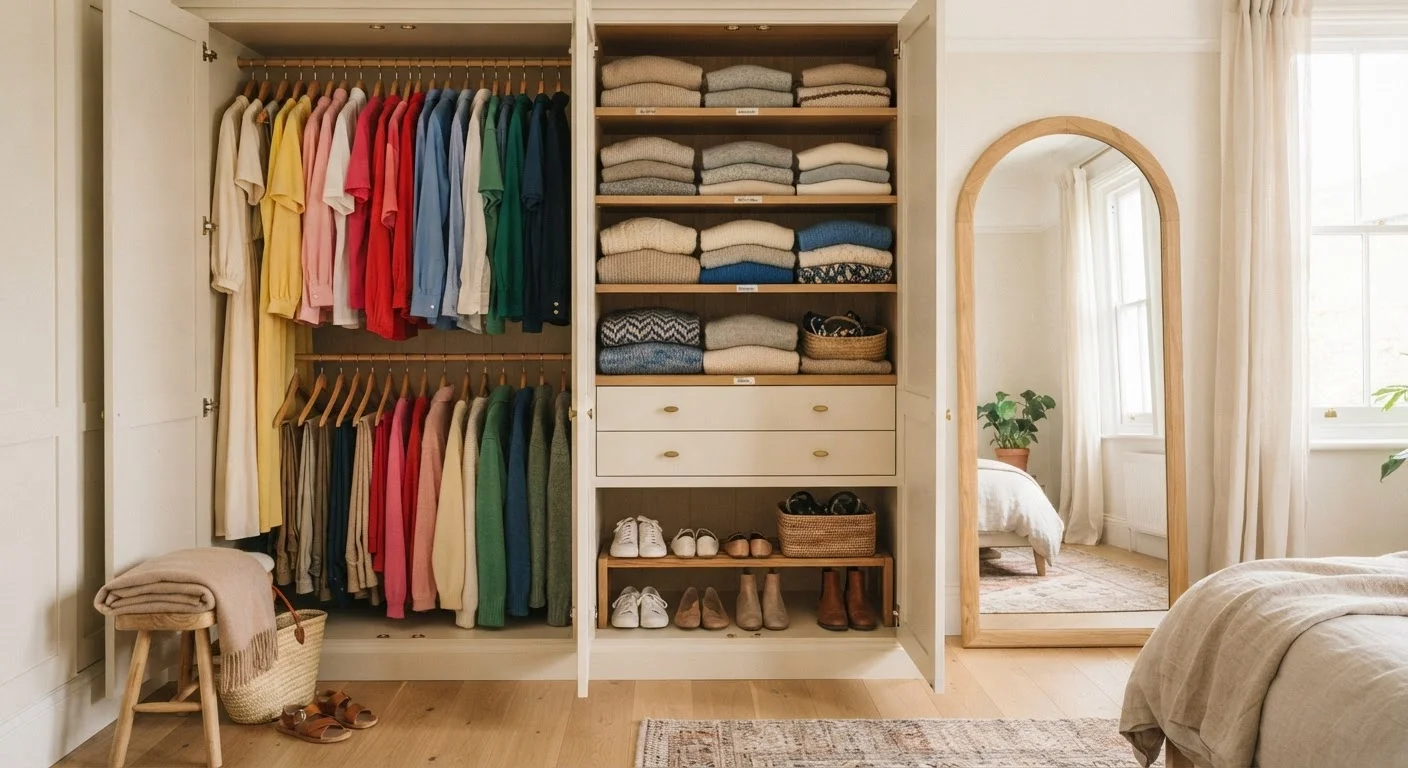
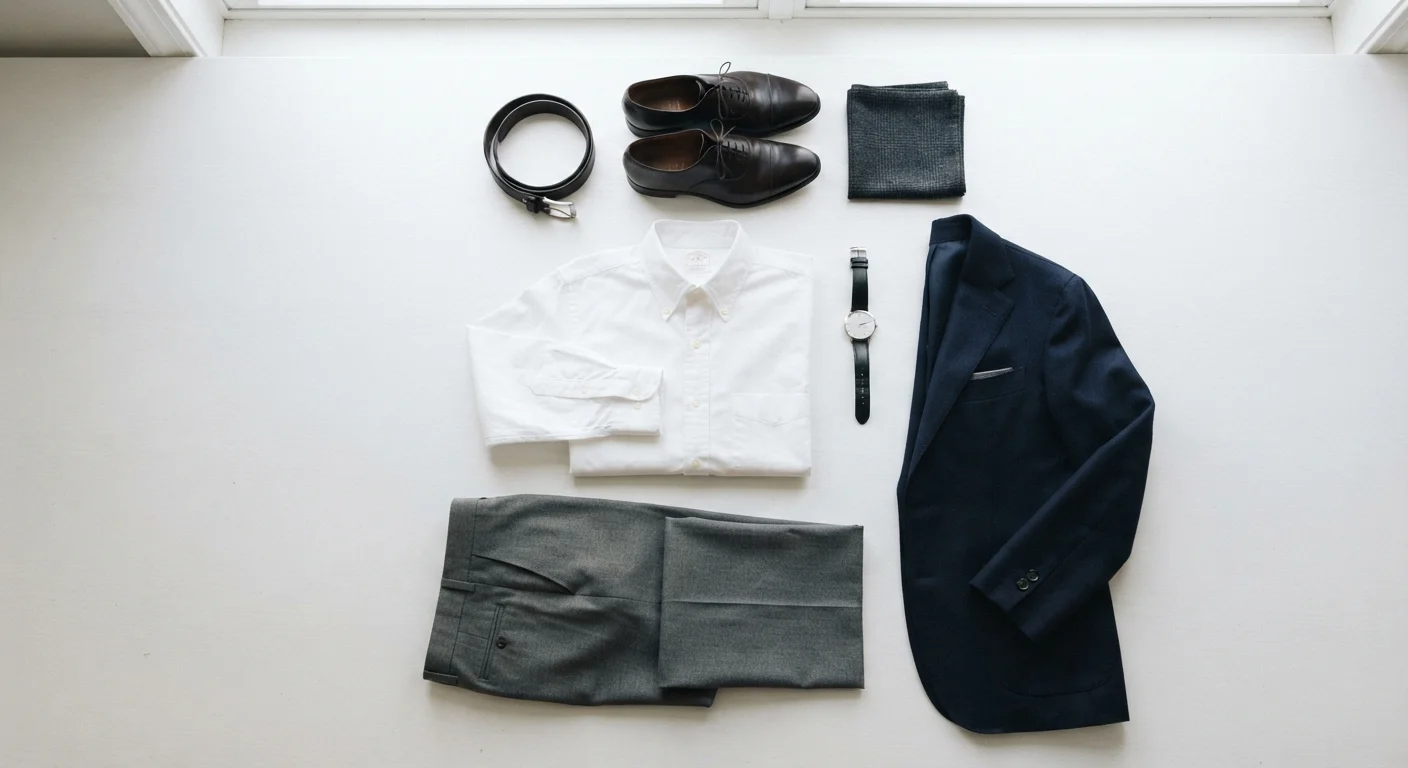
The defining feature of a capsule wardrobe is not a specific number of garments or a particular color palette - it is the relationship between the pieces. In a well-built capsule, most items can be combined with most other items to create a complete outfit. That interoperability is what makes a small wardrobe feel large in practice.
Three qualities tend to define capsule-worthy pieces:
- Versatility: The item can be worn in more than one context or paired with multiple other pieces.
- Personal fit: It reflects how you actually dress, not how you imagine you might dress someday.
- Durability: It holds up through regular wear rather than being purchased for a single occasion.
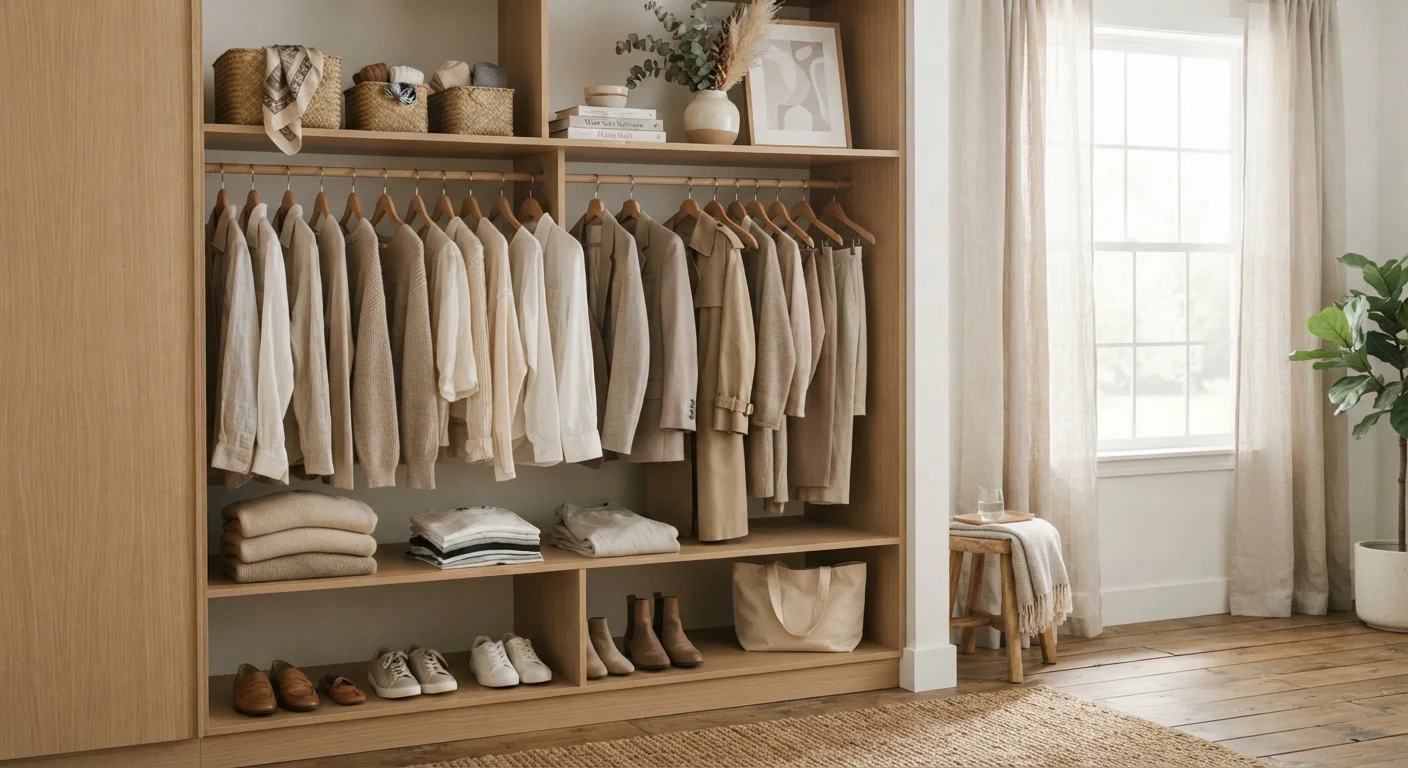
Neutral tones - white, black, navy, grey, tan - are frequently recommended as a foundation because they layer easily, but they are not mandatory. What matters is that your chosen palette is internally cohesive. If you naturally gravitate toward earthy greens and rich burgundies, those can anchor a capsule just as effectively.
Start With What You Already Wear
Before defining your capsule, spend two to four weeks noticing which pieces you naturally reach for. Those items - not a template list - are your real starting foundation. Build outward from what you actually wear, not from an idealized version of your style.
The Practical Case for Trying It
One of the most commonly reported benefits of the capsule approach is decision fatigue reduction. When every item in your closet works with the others, choosing an outfit becomes faster and less stressful. Psychologists who study choice overload suggest that reducing the number of low-stakes daily decisions can free up cognitive energy for higher-priority tasks - though individual results naturally vary.
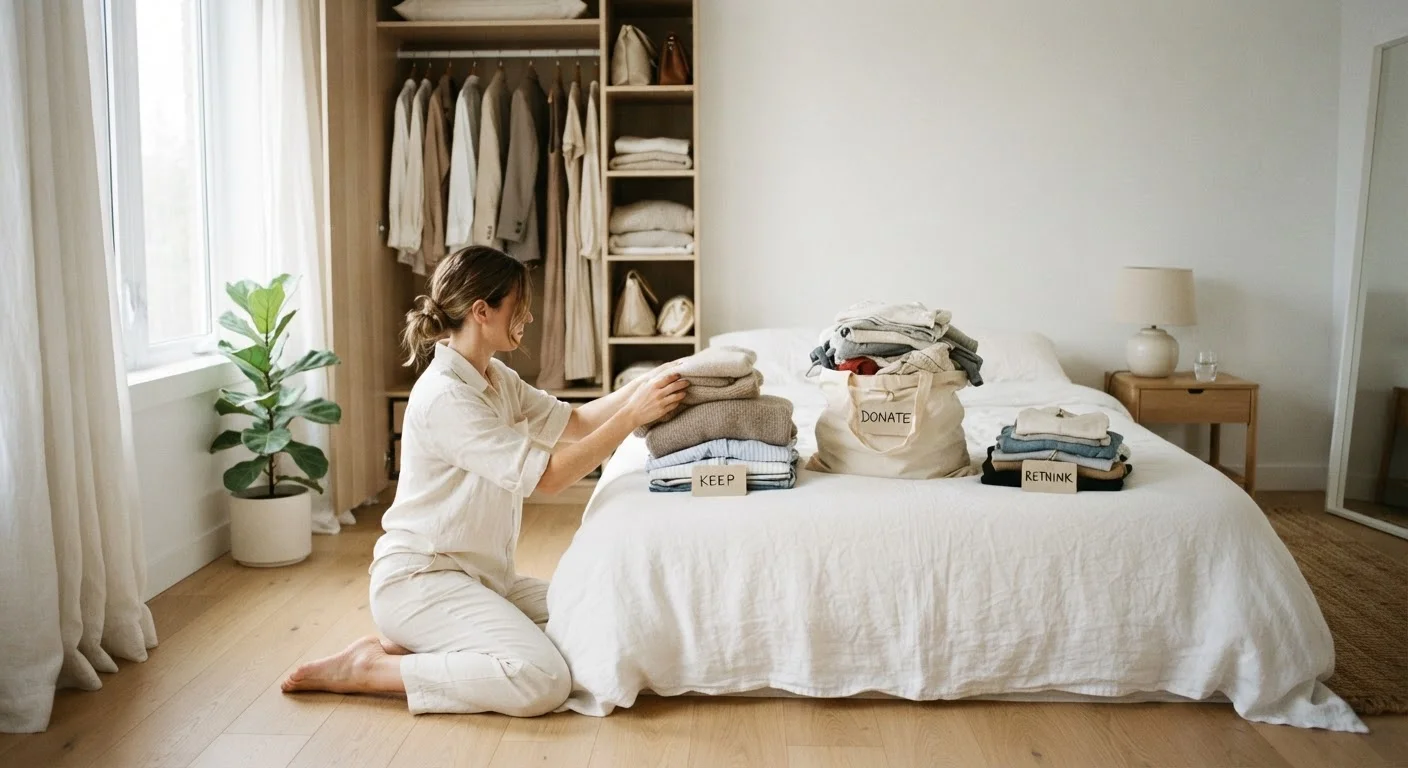
A capsule approach also encourages a wardrobe audit before any new purchases. That audit is itself a useful exercise: it clarifies what you actually wear, identifies gaps, and often surfaces pieces you had forgotten. Many people find this step alone - shopping their existing wardrobe - reshapes how they think about getting dressed.
~30%
Average wardrobe items never worn
Various consumer surveys, including one published by the British Journal of Psychology, have estimated that a significant portion of clothing owned is rarely or never worn.
1970s
Decade the term was coined
Susie Faux introduced the phrase 'capsule wardrobe' in her London boutique during the 1970s as part of a practical approach to intentional dressing.
For those new to the concept, it connects naturally to broader ideas around dressing with intention - making choices based on what genuinely reflects you rather than reacting to trend cycles. It is also a reasonable starting point for anyone building a wardrobe from scratch and unsure where to begin.
Where the Concept Has Limits
The capsule wardrobe works best as a guiding framework rather than a prescriptive rulebook. Taken too literally, it can create its own kind of pressure - the anxiety of not owning the "right" 33 pieces, or guilt over a sentimental item that doesn't technically coordinate. That rigidity defeats the purpose.
It also does not map cleanly onto every lifestyle. Someone with a demanding dress code at work, an active hobby life, and a social calendar spanning formal events and casual weekends has genuinely varied needs. In those cases, a single capsule may not be realistic; a more nuanced approach - such as a comparison of capsule and full wardrobes - may be more useful.
No Single Template Fits Everyone
Capsule wardrobe formulas circulating online - '10 pieces', '33 items', 'only neutrals' - are illustrative examples, not universal rules. Your occupation, climate, body, and lifestyle all shape what a functional capsule looks like for you. Treat published formulas as inspiration, not instruction.
The value in the concept is the mindset it promotes: choosing with intention, wearing what you own, and defining your own style rather than chasing it. How literally you apply the framework is, ultimately, your call.