
Why 'Shopping' Your Closet First Makes Sense
Most of us shop reactively - a new season arrives, a trend catches our eye, or we feel bored with our options. But research on decision fatigue and choice overload suggests that having more options doesn't automatically lead to better outcomes or greater satisfaction. Often, the answer is already in your closet.
Shopping your own wardrobe before buying anything new is a practical way to reset your relationship with what you own. It interrupts the automatic cycle of accumulation, helps you understand your real preferences, and frequently reveals outfits and combinations you've been overlooking for months.
This process complements a broader approach to intentional dressing. If you're interested in building on these ideas, the principles for dressing with intention offer a useful framework for thinking beyond individual pieces. And if you want a parallel tool for deciding what to keep, the wardrobe audit checklist pairs naturally with this process.
What you will need
What You'll Need Before You Start
Full-length mirror
Lets you evaluate how pieces actually look together when worn, not just on a hanger.
Sticky notes or masking tape
Useful for labeling categories or flagging items that need decisions.
Phone camera
Photograph successful outfit combinations so you can recreate them later.
Laundry basket or donation box
A place to set aside items you decide to release during the process.
You don't need anything elaborate to do this well. The most important ingredient is time - rushed decisions during this process tend to result in the same closet you started with.
How to Shop Your Wardrobe Step by Step
Clear your space and pull everything out
Start by removing everything from your closet, drawers, and any overflow storage. Lay it all out where you can see it. This sounds dramatic, but a full reset is the most effective way to break out of the mental habits that make you reach for the same five items every day.
Seeing your entire wardrobe at once gives you an accurate picture of what you actually own - which is often very different from what you think you own.
Do a quick first-pass sort
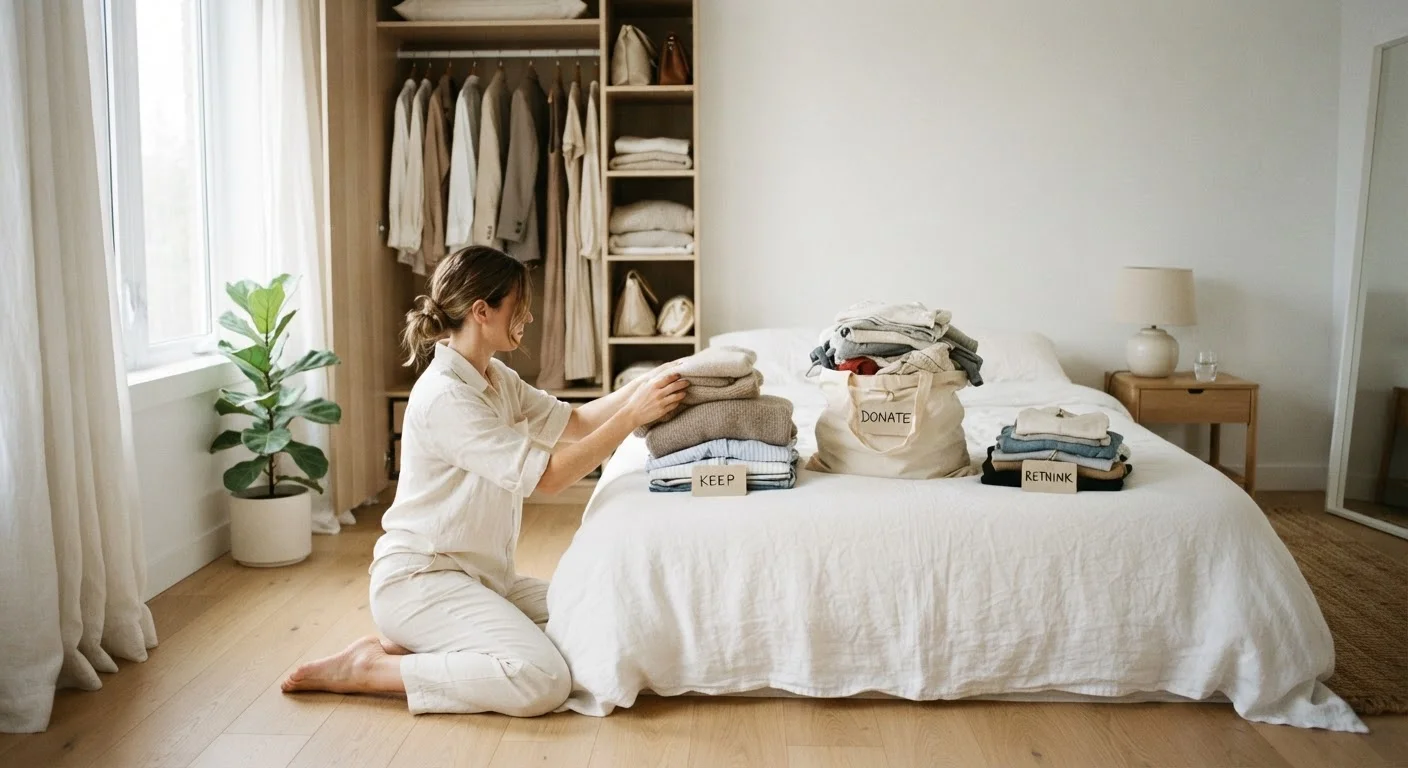
Go through each item and make a fast, instinctive decision: does this feel like you right now? Sort into two temporary piles - Yes (I actually wear and like this) and Maybe/No (I avoid it, it doesn't fit, or I'm unsure).
Don't overthink it. Your gut reaction in the first few seconds is usually more reliable than ten minutes of justification. The Maybe/No pile isn't necessarily a discard pile - it's a closer-look pile.
Try on the items you avoid
Take the pieces you rarely reach for and actually put them on. Many items get ignored not because they're wrong, but because they've never been styled in the right context. You may find that a blouse you dismissed pairs perfectly with something you wear constantly.
Use your mirror honestly. If an item doesn't fit comfortably, doesn't suit how you want to look, or simply doesn't feel like you - note it for the donation or alteration box.
Build new combinations deliberately
Now take your confirmed Yes items and start experimenting. Pair things you've never combined before. Mix casual and more structured pieces. Try a dress over pants, or a blazer over a graphic tee. Challenge the mental rules you've assigned each item.
This is the creative heart of shopping your own wardrobe - and it often yields a surprising number of outfits you hadn't considered before.
Identify real gaps - not wants
Once you have a clearer sense of what you own and what you actually wear, you can begin to identify genuine gaps: pieces that would make existing items more versatile, or categories that are truly missing for your life.
A gap is different from a want. A gap is something that would solve a real, recurring problem - like having no comfortable option for a type of event you attend regularly. Naming real gaps gives you a focused, intentional list if and when you do shop.
Return items to your closet with intention
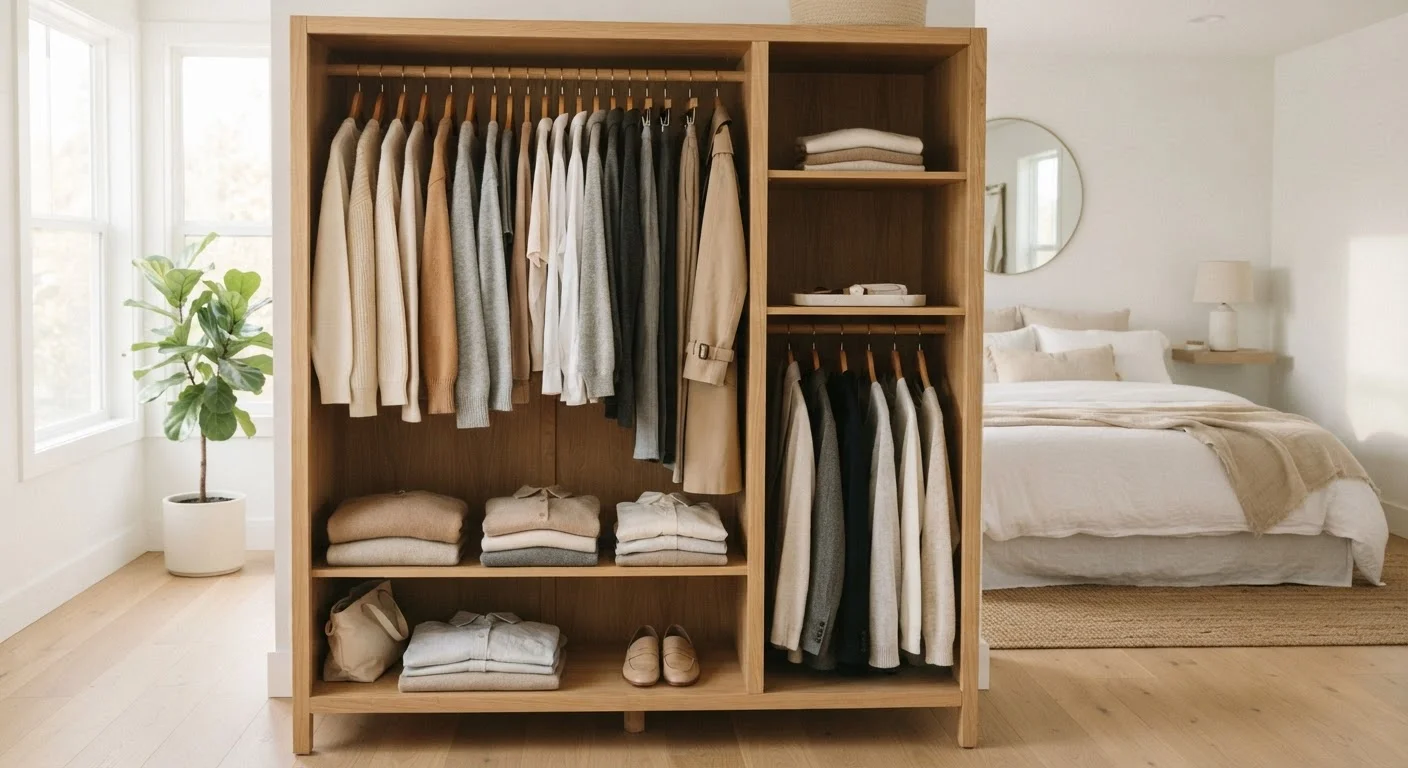
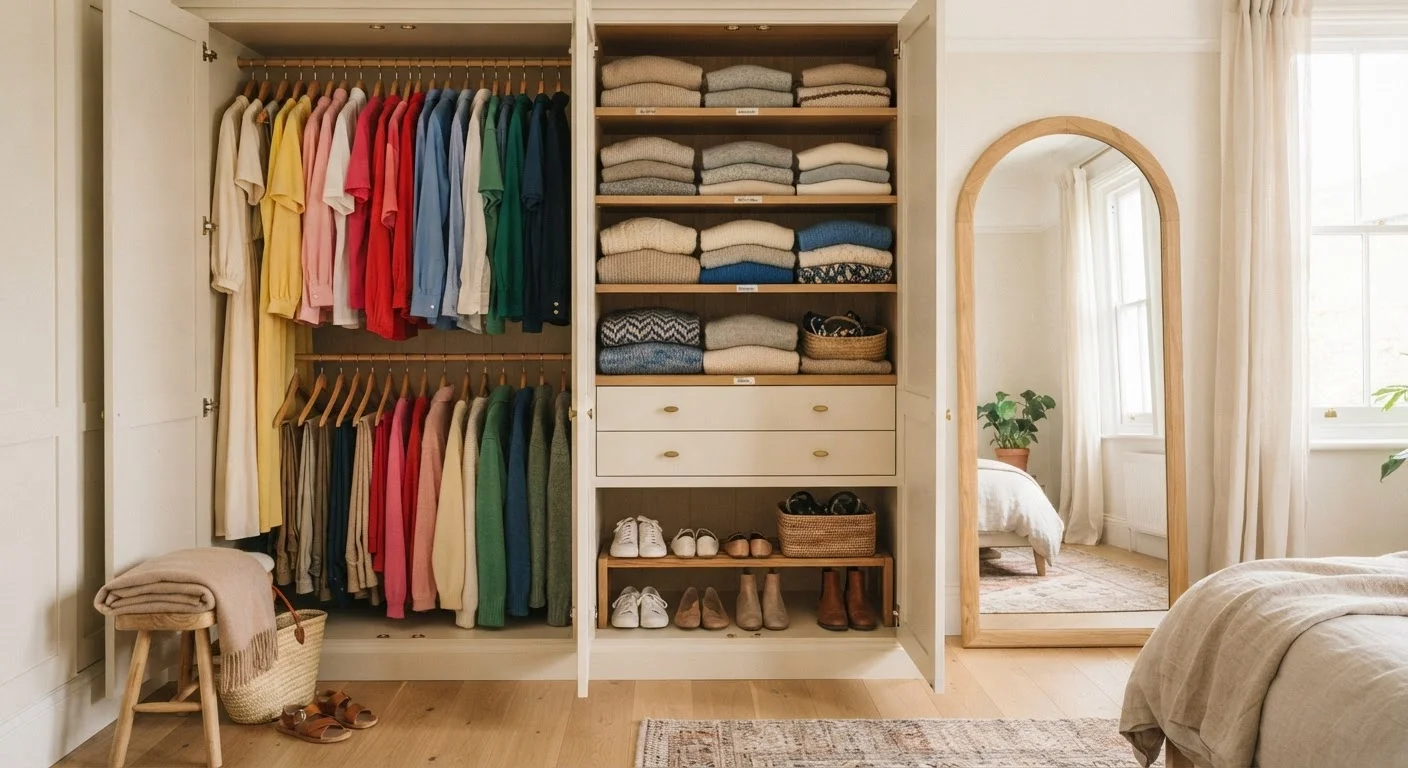
Put your wardrobe back together thoughtfully. Group items in a way that makes getting dressed easier - by color, by outfit type, or by how often you reach for them. The goal is a closet that makes you feel calm and capable, not overwhelmed.
Items in the donation or decision box should be dealt with promptly - don't let them sit indefinitely and creep back in.
Document What Works With Your Phone
As you discover combinations you like, take a quick photo. Building a small lookbook of proven outfits - even just on your camera roll - means you'll actually use what you find rather than forgetting by Monday morning.
Once you've worked through these steps, you'll likely find that your wardrobe feels noticeably more functional - even if nothing has changed except how you're seeing it.
This Process Is About Clarity, Not Pressure
Shopping your own wardrobe isn't about judging your past choices or forcing yourself to love things you don't. The goal is honest self-awareness - understanding what serves your life right now and what doesn't. Approach it with curiosity rather than criticism.
After the Process: What Comes Next
If you've completed this process and genuinely identified gaps - not just wants - you're now in a much stronger position to shop intentionally. You know what you own, what you wear, and what's actually missing. That's a significant shift from browsing without direction.
For readers who feel their wardrobe needs a more fundamental rebuild, building a wardrobe from scratch offers a clear framework without overwhelming rules. If you're weighing a minimalist approach, it's also worth exploring the capsule wardrobe concept as a reference point.
Shopping your own wardrobe is also a habit worth repeating - not just once. Making it a seasonal practice, even briefly, keeps your closet aligned with your life as it actually is right now, rather than the life you were living when you bought each piece.
Avoid Rationalizing Items You Never Reach For
It's tempting to keep something because it was expensive, a gift, or 'might be useful someday.' If an item hasn't been worn in over a year and doesn't genuinely excite you, it's likely taking up mental and physical space. Be honest with yourself during this process.