
What Each Approach Actually Means
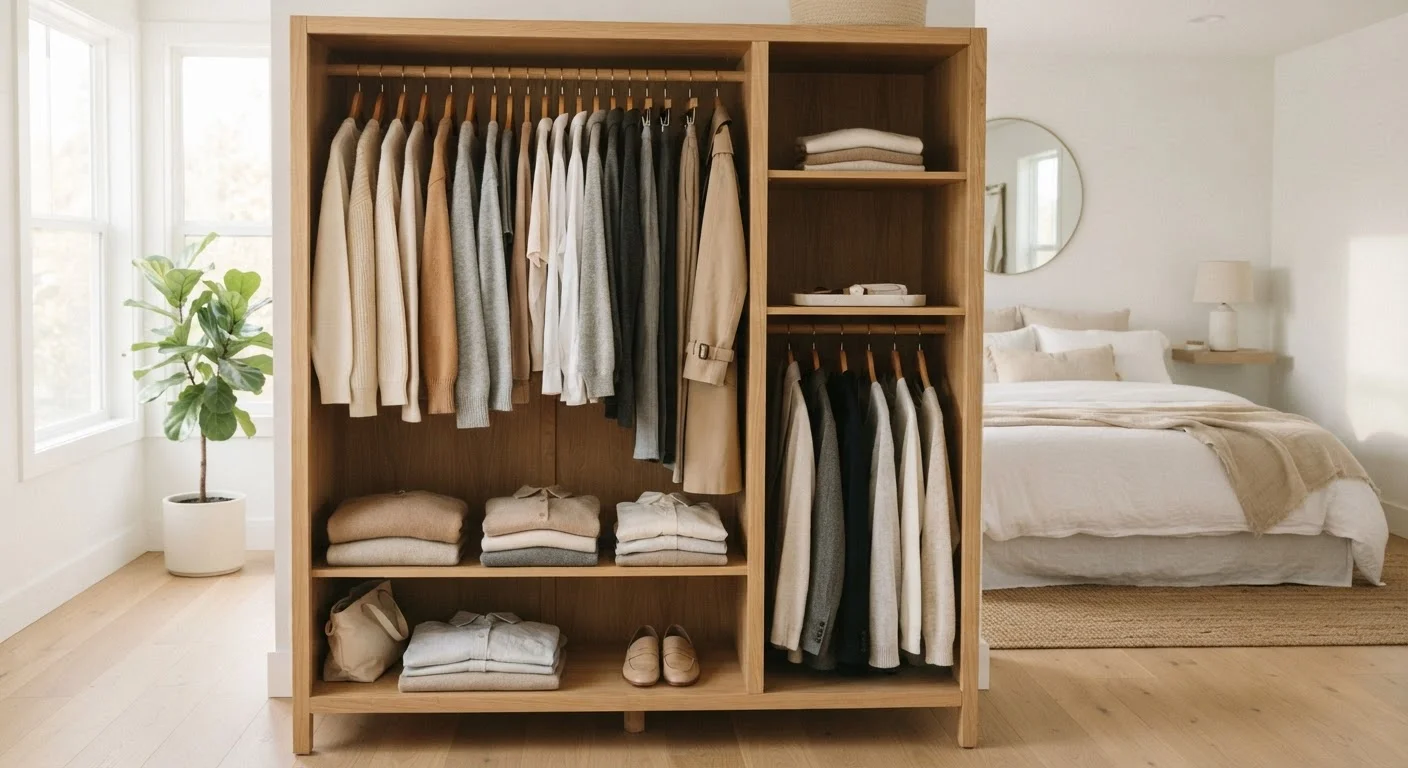
The term capsule wardrobe was popularized in the 1970s by London boutique owner Susie Faux to describe a curated set of classic, interchangeable garments. Today it typically refers to a collection of roughly 30-50 pieces - including shoes and outerwear - selected to work together across many combinations. The appeal is deliberate: fewer items, each earning its place.
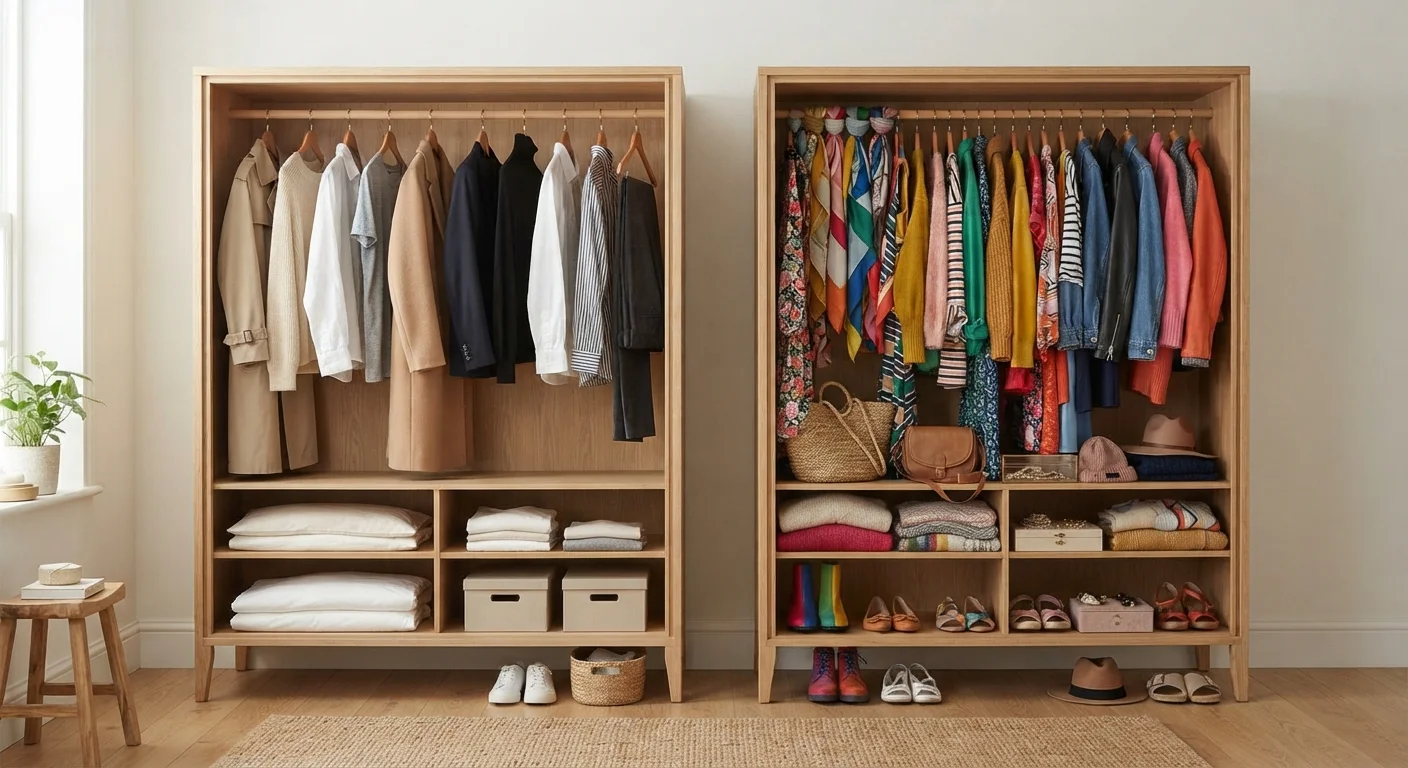
A full wardrobe, by contrast, is less a system than a natural accumulation shaped by your actual life. It might include 100+ pieces spanning occasion wear, seasonal clothing, statement items, and practical basics. The goal isn't minimalism - it's coverage and expression.
Neither is defined by price point. A capsule can be built on a tight budget; a full wardrobe can include thrifted finds alongside investment pieces. The key difference is the philosophy driving what stays and what goes. If you're thinking about building from scratch, it's worth deciding which philosophy you're working toward before you start adding pieces.
The Real Trade-Offs: A Side-by-Side Look
Comparing these two approaches honestly means looking beyond aesthetics to daily practicality - storage, cost per wear, time, and how well each fits your actual routine.
| Criterion | Capsule Wardrobe | Full Wardrobe |
|---|---|---|
| Typical item count | 30-50 pieces | 80-150+ pieces |
| Morning decision time | Faster - fewer combinations | More options, more deliberation |
| Occasion coverage | Limited - may require compromise | Strong - supports varied contexts |
| Storage requirements | Minimal - suits small spaces | Higher - needs adequate closet space |
| Upfront planning required | High - intentional curation needed | Lower - grows organically |
| Room for self-expression | Moderate - within a defined palette | High - more creative range |
| Cost per wear | Typically lower over time | Varies - depends on how much you rotate |
One pattern that often goes unacknowledged: people who switch to a strict capsule sometimes find they're missing items for genuine edge cases - a formal wedding, a hiking weekend, a creative industry event. A full wardrobe absorbs those moments more easily. Conversely, people with large wardrobes frequently report wearing the same 20 items repeatedly, which raises the question of whether the extra items are earning their space.
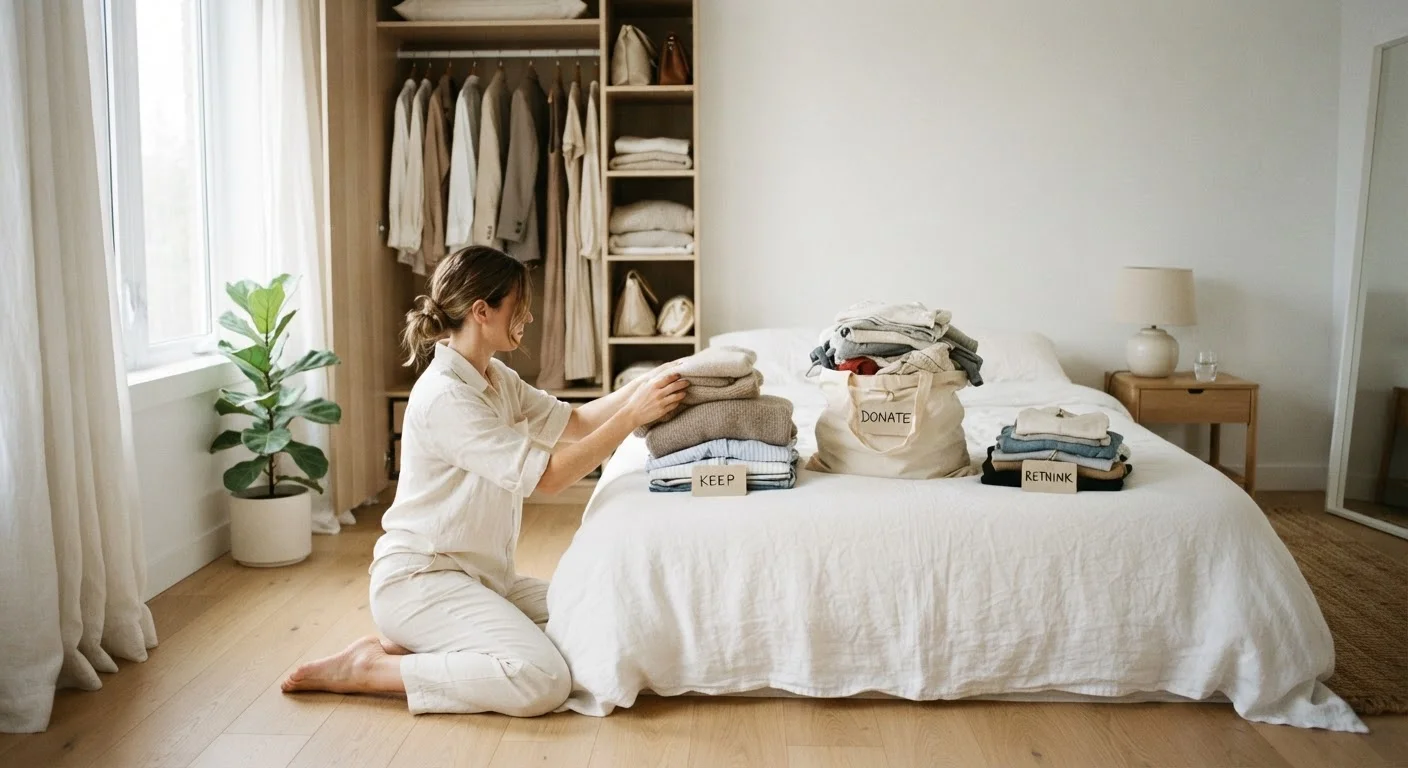
If you suspect your current wardrobe - whatever its size - isn't working efficiently, a structured wardrobe audit is a practical first step before committing to either direction.
When a Capsule Wardrobe Works Well
A capsule approach tends to pay off when your lifestyle is relatively consistent. If you work from home or in a single environment, travel light, and find yourself overwhelmed rather than energized by clothing choices, the system rewards you with simplicity and clarity.
There's also a practical financial argument: concentrating spending on fewer, more durable items can reduce total wardrobe cost over time - though this depends on what you buy and how long items last. The capsule framework encourages asking "does this work with at least five other things I own?" before purchasing, which tends to filter out impulse decisions.
~20%
Clothing worn regularly from the average wardrobe
Consumer research and fashion industry studies consistently estimate that most people wear only around 20% of their clothes on a regular basis, regardless of wardrobe size.
7 min
Average time spent choosing an outfit daily
Survey data from clothing and lifestyle researchers suggests many adults spend five to seven minutes deciding what to wear each morning, time that accumulates significantly over a year.
The psychological side matters too. Research in decision science (most notably work by Sheena Iyengar and Barry Schwartz) supports the idea that reducing the number of daily choices can lower stress. A capsule wardrobe applies this principle directly to getting dressed. That said, if you enjoy choosing outfits and find it energizing rather than draining, the capsule model may feel constraining rather than freeing.
Watch out for a common capsule pitfall: building one so rigidly neutral that it no longer feels like you. A well-designed capsule should still reflect your personal style - not just default to grey and beige. See how common style habits can undermine even a well-intentioned system.
When a Full Wardrobe Makes More Sense
A full wardrobe isn't disorganized by definition - it's a larger, more context-sensitive system. If your week genuinely spans multiple dress codes (professional meetings, casual errands, formal events, active activities), a capsule often forces uncomfortable compromises. Wearing your one blazer to both a board presentation and a casual dinner is doable, but it's not always ideal.
Expressive dressers - people who use clothing to communicate creativity, cultural identity, or mood - may also find the capsule model at odds with how they relate to getting dressed. Clothing is not purely functional for everyone, and there's nothing wrong with that. A full wardrobe gives room to experiment, to hold onto pieces that only emerge a few times a year but feel irreplaceable when they do.
The key is making the full wardrobe intentional rather than passive. Before buying anything new, shopping what you already own is a practical habit that works within either system - and often reveals that you have more to work with than you realized.
Full Wardrobe Doesn't Mean Unedited
Owning more items doesn't have to mean chaos. A full wardrobe works best when organized by category, occasion, or season - making it easy to find what you need without excavating. If your larger wardrobe causes daily friction rather than flexibility, the issue is usually organization rather than size. Applying even basic home organization strategies to your closet can transform how a full wardrobe functions.
A Middle Path Worth Considering
Most people don't live at either extreme. A practical middle approach applies capsule thinking to sections of a full wardrobe - creating a reliable core of high-rotation basics while leaving room for statement pieces, seasonal items, and occasion wear.
For example: your everyday work-from-home uniform might be a true capsule of 10-12 pieces. Your social and occasion wear occupies a separate section with more variety. This preserves the decision-simplicity benefit for daily wear without forcing you to under-dress for meaningful moments.
Whatever size wardrobe you end up with, the underlying principle is the same: every item should have a reason to be there. Whether that reason is "I wear this three times a week" or "this is the only piece that works for formal occasions," intentionality is what turns a collection of clothes into a wardrobe that actually serves your life. The principles behind home organization - keeping what earns its space, removing what creates friction - translate directly to how a wardrobe functions day to day.