

Why Getting Dressed Becomes a Daily Battle
For many people, a full closet and persistent outfit frustration coexist without contradiction. If reaching for something to wear feels like solving a puzzle every morning, the problem usually isn't a shortage of clothes - it's a pattern of wardrobe habits that quietly accumulate over time.
Most of these habits feel reasonable in the moment: buying something aspirational, holding onto a gift you never loved, chasing a trend that felt exciting online. But together, they erode the practical usability of your wardrobe and turn a simple daily task into a chore. The good news is that these patterns are recognizable - and reversible. This article walks through the most common style pitfalls that create that friction, why they happen, and what to do differently. For a broader foundation, see the complete personal style guide that covers everything from aesthetic clarity to building a working wardrobe.
The Most Common Wardrobe Mistakes - and How to Fix Them
The following mistakes show up repeatedly across different wardrobes, lifestyles, and budgets. Recognizing yours is the first step toward making getting dressed feel effortless again.
Buying aspirationally rather than for your actual life. You purchase a blazer for meetings you don't have, or heels for events that never materialize.
Why it happens: Retail environments and social media often present clothing in idealized contexts - an aspirational version of yourself is easy to shop for, even when your real routine looks very different.
Ignoring fit and accepting 'close enough.' Items that almost fit - too long in the sleeve, slightly tight across the shoulders - stay unworn because they never feel quite right.
Why it happens: Size labels carry psychological weight, and many people avoid tailoring under the assumption it's expensive or only for formal wear. It can feel easier to keep a near-fit than to act on it.
Keeping clothes out of guilt rather than genuine use. Gifts, expensive mistakes, and sentimental items occupy prime closet real estate even though they're never worn.
Why it happens: Guilt and sunk-cost thinking make it emotionally difficult to let go of items that cost money or came from someone meaningful, even when they clearly don't work.
Chasing trends without a filter for personal relevance. Your wardrobe ends up full of things that felt exciting online but don't connect to how you actually dress.
Why it happens: Trend content is designed to create desire quickly. Without a clear personal style baseline, it's easy to respond to what looks compelling in a scroll rather than what fits your existing wardrobe or life.
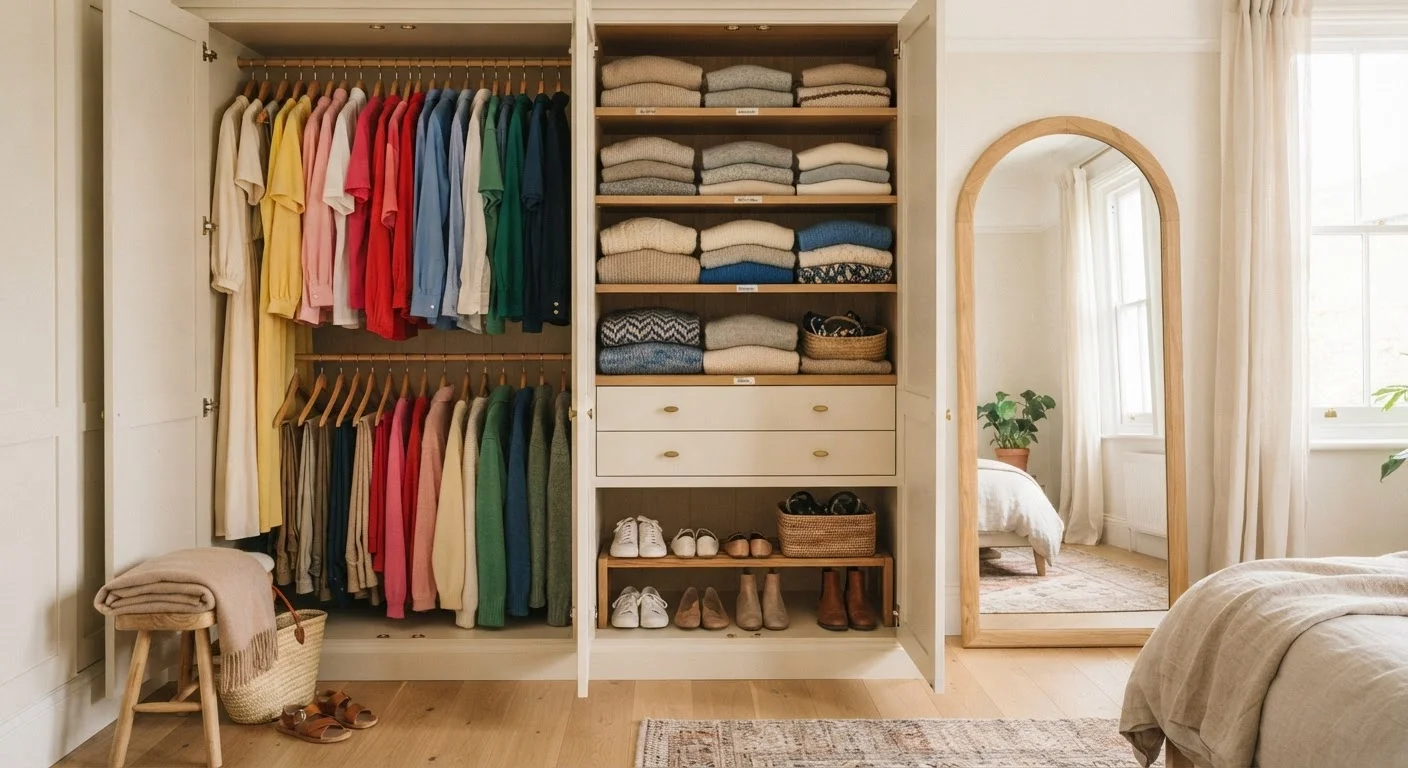
Treating the wardrobe as passive storage rather than an active, working system. Items get stuffed in rather than organized for ease of use, making daily decisions harder than they need to be.
Why it happens: Organization feels time-consuming, and most people deal with clothes reactively - putting things wherever they fit rather than according to any logic that helps with getting dressed.
If your wardrobe situation feels like a blank slate - or you've cleared things out and aren't sure what to build toward - the guide to building a wardrobe from scratch offers a practical, pressure-free starting point.
Shifting From Reactive to Intentional Dressing
Fixing these habits doesn't require a dramatic overhaul or spending money. It often starts with a single honest audit: pull out what you actually reach for each week, and notice what gets bypassed. That gap tells you more about your real style than any trend report can.
Resist the Urge to Buy Your Way Out
When getting dressed feels hard, the instinct is often to shop - to find the one piece that finally makes everything click. In most cases, that instinct adds to the problem rather than solving it. More items mean more decisions, more mismatches, and more guilt over things that don't work. Address the underlying habit first; then shop selectively from a place of clarity.
Before buying anything new, it's worth shopping your own wardrobe first - most people discover combinations and forgotten pieces that solve the problem without adding to it. When you're ready to build something more consistent, dressing with intention provides the principles for making your style feel reliably yours, rather than something you reassemble from scratch each morning.
This article is for informational and educational purposes only. Style guidance is general in nature and may not reflect every individual's circumstances, body, or lifestyle.