
Why a Short Routine Can Work as Well as a Long One
The skincare industry has a talent for making routines feel incomplete unless they involve at least eight products. In reality, most dermatologists point to a much shorter list of what genuinely moves the needle for skin health: keeping the skin barrier intact, staying hydrated, and protecting against UV damage daily. Everything else - serums, essences, facial mists - can be useful additions, but they're optional layers on top of a functional foundation.
A five-minute morning routine built around cleansing, moisturizing, and SPF covers the three pillars that matter most. If you're curious about how that compares to more elaborate approaches, Skincare Minimalism vs. Multi-Step Routines examines both sides without pushing you toward either extreme.
Consistency is more valuable than complexity. A three-step routine you do every single morning will almost always outperform a ten-step routine you do occasionally.
What you will need
What You'll Need Before You Start
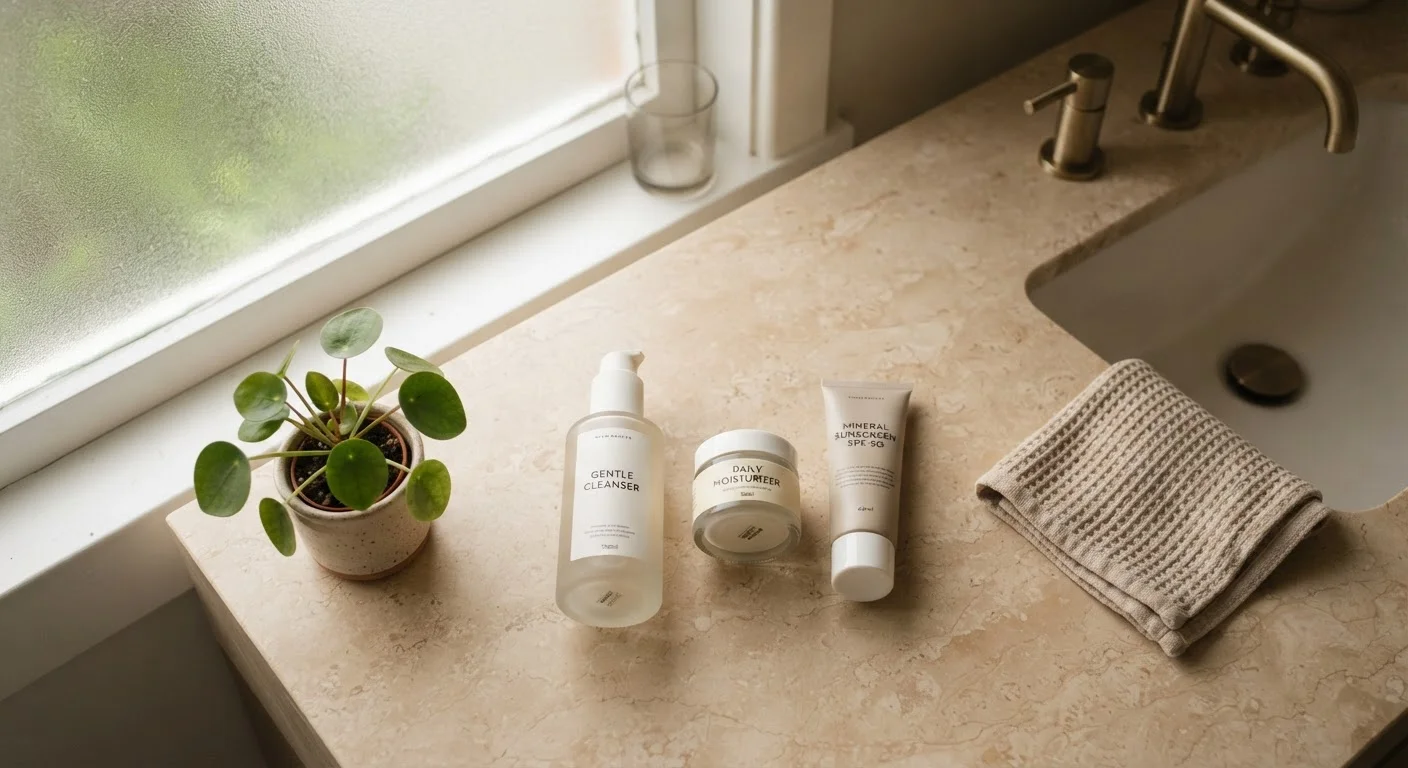
The goal here is to keep your bathroom counter uncluttered and your decisions minimal. You need, at most, three products - and potentially just two if you use a moisturizer with built-in SPF. If you're starting from scratch and not sure where to begin with selecting products, Starting a Skincare Routine From Scratch is a practical next read.
Gentle Facial Cleanser
Removes overnight oils and prepares skin to absorb moisturizer without stripping the moisture barrier.
Daily Moisturizer
Hydrates skin and supports the barrier function throughout the day.
Broad-Spectrum Sunscreen (SPF 30+)
Protects skin from UVA and UVB rays - the most important protective step in any morning routine.
Moisturizer with Built-In SPF
Combines hydration and sun protection into a single step, reducing total routine time.
Multitasking Products Save Real Time
A moisturizer with broad-spectrum SPF built in combines two steps into one, shaving a full minute or more off your routine. Tinted formulas can also double as light coverage, making them a useful bridge if you wear minimal makeup. If you want to explore this approach further, Minimal Makeup, Maximum Consistency is worth reading alongside this guide.
The Three-Step Morning Routine
Follow these steps in order. The entire sequence - once you're familiar with it - takes under five minutes from start to finish. On rushed mornings, steps one and two can be combined if you use a moisturizer with SPF.
Rinse or Gently Cleanse Your Face
Start with clean hands, then either splash your face with cool or lukewarm water or use a small amount of a mild cleanser. Massage it in using gentle circular motions for about 20-30 seconds, then rinse thoroughly. Pat - don't rub - dry with a clean towel.
If your skin felt clean and balanced when you woke up, a simple water rinse is often enough. Overcleansing in the morning is a common habit that can leave skin feeling tight or reactive.
Apply Moisturizer While Skin Is Still Slightly Damp
While your skin is still a little damp from rinsing, apply a pea-sized to dime-sized amount of moisturizer and spread it evenly across your face and neck. Applying to slightly damp skin can help seal in moisture more effectively than applying to bone-dry skin.
Use a formula suited to your skin type: lighter gel-based textures generally work well for oilier skin, while creamier formulas tend to suit drier skin. You don't need a large amount - a thin, even layer is the goal.
Apply Sunscreen as Your Final Step
If your moisturizer doesn't contain SPF, apply a dedicated broad-spectrum sunscreen as your last step before any makeup. Use about a quarter teaspoon for your face, and don't forget your ears, neck, and any exposed skin near the hairline.
Allow it a moment to settle before applying makeup on top. Chemical sunscreens are typically absorbed quickly; mineral formulas may leave a slight white cast on deeper skin tones - keep this in mind when selecting a product.
SPF Is Non-Negotiable Every Morning
UV exposure contributes to premature skin aging and increases the risk of skin damage even on cloudy days. Dermatologists broadly recommend broad-spectrum SPF 30 or higher as a daily step, regardless of how much time you spend outdoors. Skipping it in the morning - even occasionally - adds up over time. For more on how to use it correctly, see Sunscreen as a Skincare Step: What Gets It Wrong.
Don't Over-Cleanse in the Morning
If you cleansed the night before, your skin doesn't accumulate much overnight - just natural oils and some perspiration. Using a harsh face wash every morning can disrupt your skin's moisture barrier over time. A gentle rinse with water, or a very mild cleanser, is often sufficient for most skin types in the morning.
Making It Stick: Fitting Skin Prep Into a Busy Morning
The hardest part of any routine isn't learning it - it's repeating it. A few small habits help: keep your three products together in one visible spot, do the routine at the same point each morning (right after brushing your teeth works well for many people), and resist the urge to add more steps until the basics feel automatic.
Morning skincare pairs naturally with other short self-care habits. If you're interested in building out a broader but still minimal self-care practice, Self-Care on a Tight Schedule covers practical approaches designed for real schedules. For a companion evening practice, Building a Low-Effort Evening Routine offers the same keep-it-simple philosophy applied to nighttime care.
This article is for general informational purposes only and is not medical or dermatological advice. If you have a specific skin condition, persistent sensitivity, or concerns about a product, consult a qualified dermatologist or healthcare professional.