
Why Short Habits Work
Self-care has a reputation problem. For many people, it conjures images of lengthy spa days, elaborate skincare rituals, or expensive wellness classes - none of which fit into a packed Tuesday morning. But the research-backed reality is more practical: small, repeated behaviors are often more effective than occasional grand gestures, precisely because they're sustainable.
Behavioral science consistently shows that habits formed through low-effort repetition are far more likely to stick than ambitious routines that demand significant time or motivation. The goal isn't to carve out a perfect hour of "me time." It's to weave functional, repeatable actions into the day you already have.
The habits below are each designed to take five minutes or fewer. They're not ranked by importance - mix and match based on what fits your schedule and what your body or mind needs most on a given day. For a broader look at how these micro-habits fit into a full daily practice, see our end-to-end self-care overview.
Stack new habits onto existing ones
Behavioral research supports "habit stacking" - attaching a new behavior directly after an established one. For example, applying hand cream immediately after washing dishes, or doing a breathing reset right after closing your laptop at lunchtime. The existing habit acts as a reliable trigger, reducing the mental effort required to start the new one.
Eight Habits That Fit in Five Minutes or Less
Splash cold water on your face
A 30-second cold water rinse in the morning can reduce facial puffiness, refresh tired skin, and signal to your nervous system that it's time to shift into an alert state. It requires no products and no preparation. Follow with a gentle pat dry - rubbing can irritate skin over time.
Cold water on your face takes thirty seconds and costs nothing but habit.
Apply SPF as a standalone step
Broad-spectrum sunscreen is one of the most consistently supported skincare steps in dermatological guidance, yet it's routinely skipped by people who feel rushed. Applying it takes under a minute. Keeping it visible - next to your toothbrush or keys - helps it become automatic rather than optional.
SPF application takes under a minute and is among the most supported daily skincare steps.
Do a two-minute breathing reset
Controlled breathing exercises - such as inhaling for four counts, holding briefly, and exhaling for six - activate the parasympathetic nervous system, which governs the body's rest response. Two minutes is enough to shift your baseline during a stressful moment. No app required; just a quiet spot and a timer.
Two minutes of controlled breathing can shift your stress response mid-day.
Drink a full glass of water first thing
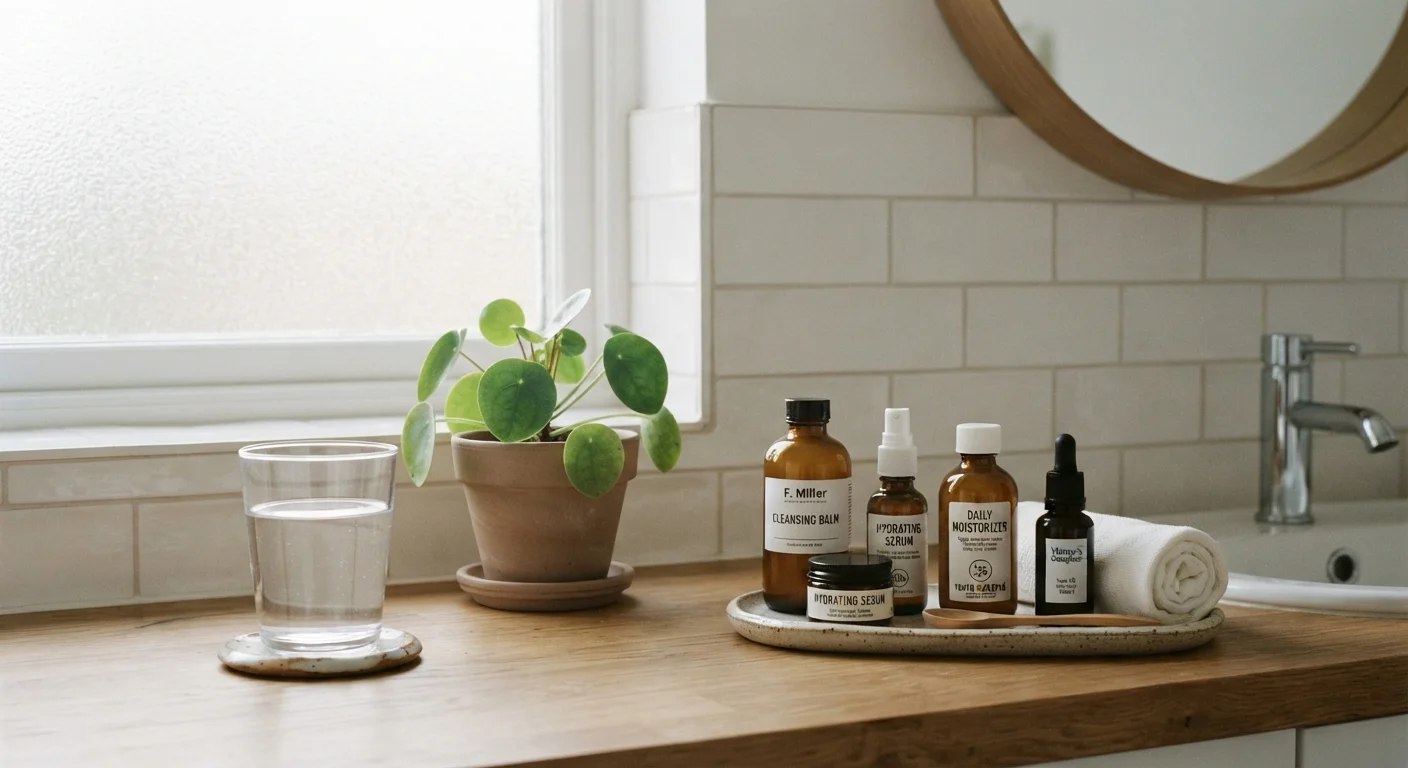
Hydration affects energy, cognition, and skin appearance, yet many people start the day in mild deficit after hours of sleep without fluid intake. Keeping a glass of water on your nightstand or by the kettle gives you a built-in prompt. This habit pairs easily with morning medication, supplements, or coffee prep.
Starting the day with a full glass of water is one of the most accessible hydration habits.
Moisturize your hands after washing
Hands are washed dozens of times daily, which strips natural oils and can lead to dryness and irritation over time. Keeping a small hand cream near the sink or desk makes post-wash moisturizing take under thirty seconds. See our hand and nail care reference for more foundational guidance on everyday upkeep.
Moisturizing after each hand wash takes seconds and prevents long-term dryness.
Do a quick body scan check-in
A body scan is a brief, informal mental check: where are you holding tension? Is your jaw clenched? Are your shoulders raised? Taking 60-90 seconds to notice and consciously release physical tension is a low-effort mindfulness practice with no learning curve. It can be done at a desk, in a car (when parked), or before bed.
A 90-second body scan helps identify tension you may not realize you're carrying.
Step outside for natural light
Exposure to natural light in the morning - even two or three minutes on a porch or near a window - helps regulate circadian rhythm, which governs sleep quality and mood. This doesn't require a walk or workout. Simply stepping outside and looking toward the sky (not directly at the sun) provides the signal your internal clock is looking for.
Two minutes of morning natural light supports circadian rhythm and sleep quality.
Write down one priority for the day
Mental clutter - the ongoing background processing of undone tasks - is a significant low-grade stressor. Writing down a single clear priority for the day externalizes that processing and reduces cognitive load. It takes under two minutes and doesn't require a journal or system. The back of a sticky note works just as well.
Writing one daily priority reduces cognitive load and gives the day a clear anchor point.
These habits are general wellness practices
The habits listed here are general health and self-care practices intended for educational purposes. They are not medical recommendations. If you have a skin condition, chronic health issue, or mental health concern, consult a qualified healthcare professional before making changes to your routine.
Building even two or three of these into your day consistently is more valuable than attempting all eight and burning out. If you want to understand why good intentions often stall, our article on self-care habits people often abandon is a useful companion read.
Making It Stick
The most reliable way to maintain any micro-habit is to attach it to something you already do. Morning face washing pairs naturally with brushing your teeth. A breathing reset fits neatly into a work break. Hand moisturizer sits on your desk and takes thirty seconds to apply. Structure reduces friction, and reduced friction is what separates a habit from a good intention.
If you're building toward a fuller morning structure, our guide to morning routines that hold up on busy days walks through how to sequence habits without adding overwhelm. And if you want a fuller checklist format, the everyday self-care checklist covers mind, skin, and body basics in one place.
This article is for general informational purposes only and is not a substitute for personalized medical or mental health advice. Consult a qualified healthcare professional for guidance on your individual health needs.