
Why Keep It Simple at the Start
The beauty industry generates an enormous volume of products, trends, and advice - much of it aimed at people who already have an established routine. If you're starting from zero, that noise can make something straightforward feel impossibly complex.
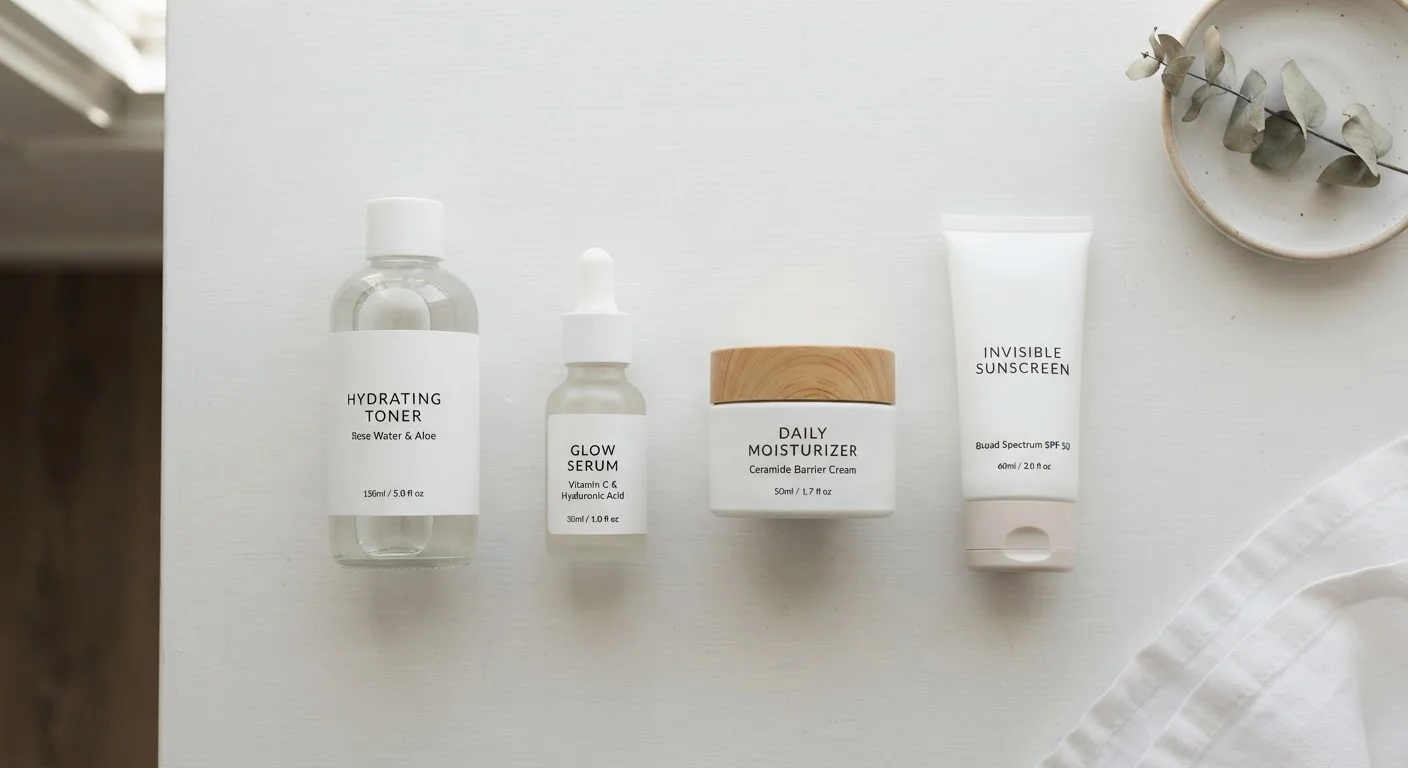
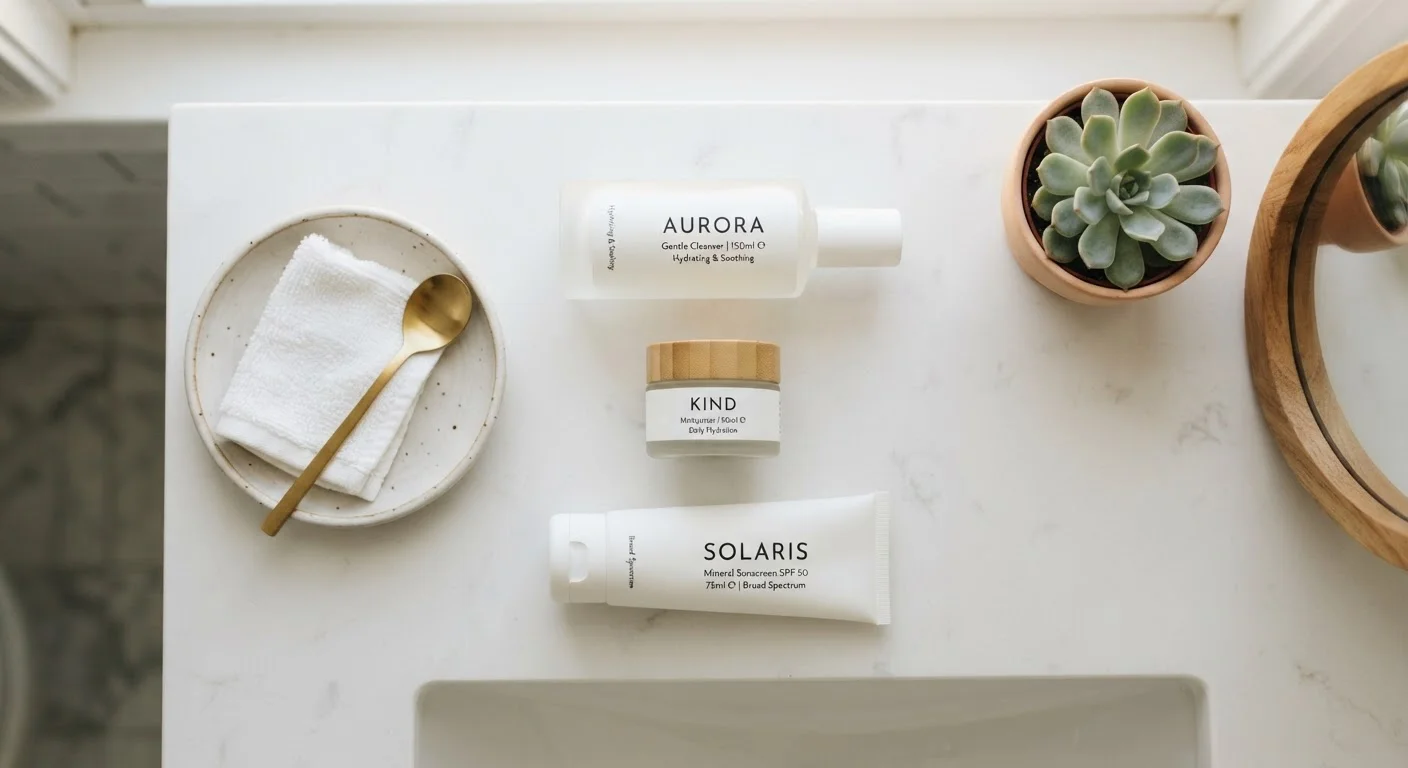
The good news: healthy skin doesn't require a ten-step regimen. Beginning with just three products - a cleanser, a moisturizer, and a sunscreen - gives your skin a stable foundation without the variables that make it hard to know what's helping or hurting. Think of this first phase as gathering baseline data about your own skin. Once you understand how your skin responds to the basics, adding anything else becomes a more informed decision.
This approach also fits naturally into the broader habit-building work covered in our guide to building a self-care practice - start small, stay consistent, and layer in complexity only when you're ready.
Moisture barrier
The outermost layer of your skin that retains hydration and keeps out irritants. Keeping it intact is a central goal of basic skincare.
Broad-spectrum SPF
A sunscreen rating indicating protection against both UVA rays (linked to aging) and UVB rays (linked to burning). SPF 30 or higher is the general recommendation for daily use.
Non-comedogenic
A label indicating a product is formulated to avoid clogging pores. Useful to look for when choosing moisturizers if you're prone to breakouts.
Active ingredient
A component in a skincare product that produces a specific, measurable effect on the skin - such as exfoliating, brightening, or reducing fine lines.
Cell turnover
The natural process by which old skin cells shed and new ones rise to the surface. It takes roughly four to six weeks, which is why skincare results take time to appear.
The Three Non-Negotiables
These three steps form the core of any functional routine, regardless of skin type or concern:
- Cleanser: Removes dirt, oil, and environmental residue accumulated during the day or overnight. Choose a gentle, non-stripping formula. Foaming cleansers suit oily skin; cream or gel cleansers tend to be better for dry or sensitive skin. Aim to cleanse once in the morning and once at night.
- Moisturizer: Supports the skin's moisture barrier - the outermost layer that keeps hydration in and irritants out. Even oily skin benefits from a lightweight, non-comedogenic moisturizer. A compromised barrier is a root cause of many common skin concerns, including sensitivity and breakouts.
- Sunscreen (SPF 30 or higher): Applied every morning as the final step. Broad-spectrum protection guards against both UVA and UVB rays. This is not optional - sunscreen is one of the most misunderstood steps in most beginner routines, and skipping it consistently works against nearly every other effort you make.
Test one product at a time
When you introduce any new product, use it alone for at least one to two weeks before adding something else. This makes it much easier to identify whether a product is causing a reaction or improvement. Introducing several items at once is one of the most common beginner mistakes.
How to Apply Products in the Right Order
Order affects absorption. The general rule for beginners is thinnest to thickest consistency - lighter, water-based products go on before heavier, oil-based ones. Here's a basic morning sequence:
- Cleanse
- Moisturizer (lightweight)
- Sunscreen (always last in the morning)
At night, skip the sunscreen. You can use the same cleanser and moisturizer, or opt for a slightly richer night moisturizer if your skin feels dry after cleansing.
When you eventually add products like serums or treatments, they typically go between cleanser and moisturizer. For a detailed breakdown of the logic behind layering, see our article on skincare product layering.
What to Skip Until You're Ready
Many beginner routines are derailed not by the basics but by products added too early. The following categories are commonly recommended in beauty content but are genuinely better introduced after you've stabilized your core three-step routine:
- Exfoliants (physical or chemical): Scrubs and acids remove dead skin cells, but used too soon or too frequently they can cause irritation. Wait until you understand your skin's baseline sensitivity. When you're ready, our guide to exfoliation methods helps you choose the right approach.
- Retinol and prescription-strength actives: Effective for specific concerns like texture and fine lines, but require a slow introduction and can cause significant irritation if introduced alongside other new products. These are not beginner-phase additions.
- Serums with high-concentration actives (e.g., vitamin C, niacinamide): Useful tools, but introducing multiple new ingredients at once makes it impossible to identify what's causing a reaction - positive or negative.
Irritation is a signal, not something to push through
If a new product causes persistent redness, stinging, peeling, or breakouts, stop using it - don't assume your skin needs time to "purge" unless you've been advised otherwise by a dermatologist. Discontinue the product, return to your basic routine, and let your skin settle before trying again. Some reactions do require professional evaluation.
Building the Habit Over Time
A routine only works if you actually do it. For most people, attaching skincare to an existing habit - brushing teeth, making morning coffee - is more reliable than treating it as a standalone task. Keep your three products visible and within reach of where you already spend time in the morning and evening.
After four to six weeks of consistent use, your skin will give you clearer feedback. Notice whether it feels more balanced, less reactive, or smoother in texture. That feedback informs what, if anything, to add next.
For a broader look at how skincare fits into an ongoing beauty practice, our full overview of beauty routines covers the longer arc from basics to sustainable habits. And if you're building other wellness routines alongside this one, the Everyday Habits hub offers practical frameworks for making small, consistent changes stick.
This article is for general informational purposes only and does not constitute medical or dermatological advice. If you have a skin condition, persistent irritation, or concerns about a specific product, consult a qualified healthcare or skincare professional.