
Why Order Actually Matters
Skincare layering isn't about ritual for its own sake - it's about absorption. Skin can only take in so much at once, and heavier formulas create a physical barrier that thinner ones can't penetrate. Apply a rich cream before your serum, and the active ingredients in that serum may never reach the skin cells they're meant to affect.
The guiding principle is simple: thin to thick, water to oil. Water-based products have smaller molecules that absorb quickly. Oil-based products and emollients sit on top, locking in what's underneath. Understanding this logic - rather than memorizing a rigid list - lets you adapt any routine to your actual products. For a full breakdown of what each step is doing at a functional level, see The Anatomy of a Skincare Routine.
Texture Is Your Fastest Guide
When in doubt about order, squeeze a small amount of each product onto the back of your hand and compare consistency. The runniest goes first; the thickest goes last. This heuristic works even for unfamiliar or newly added products where you're unsure where they fit.
The Core Layering Sequence
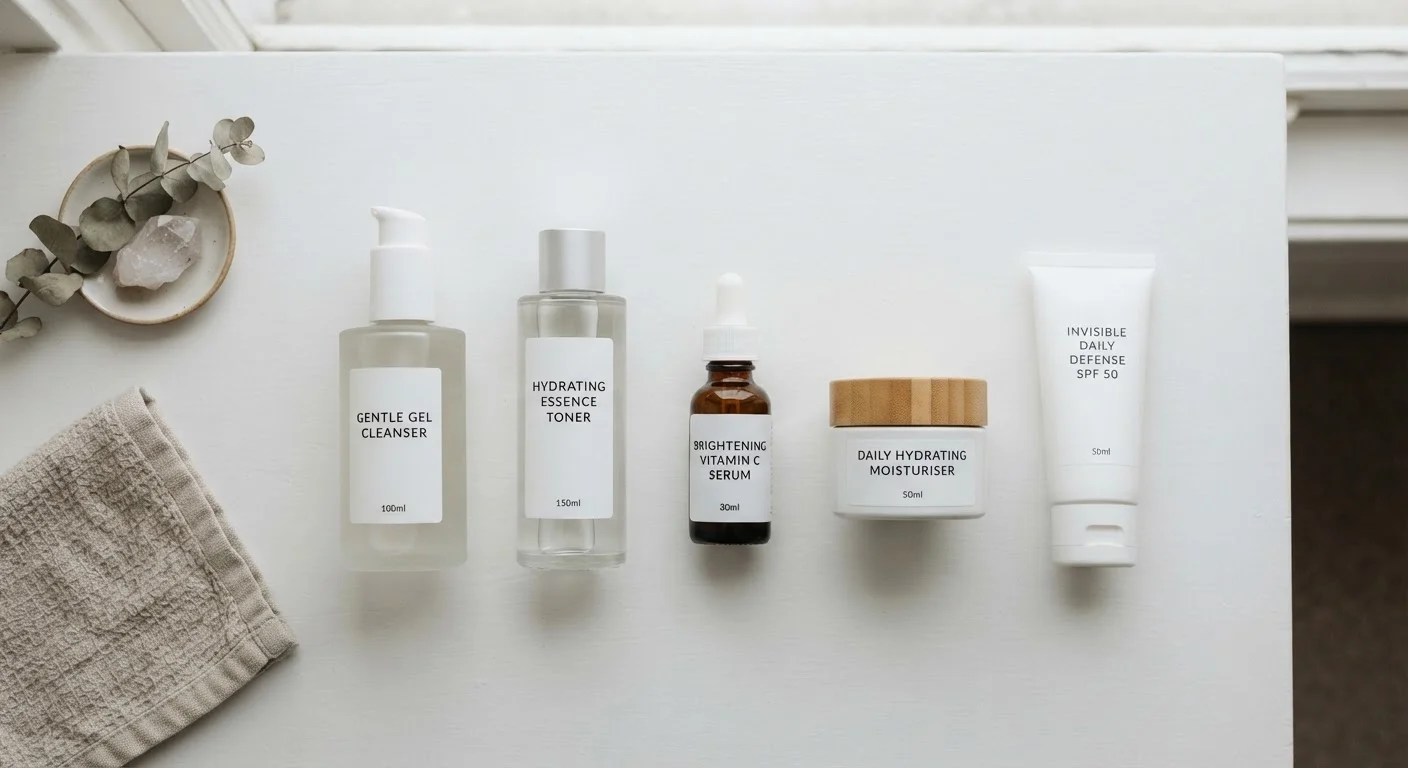
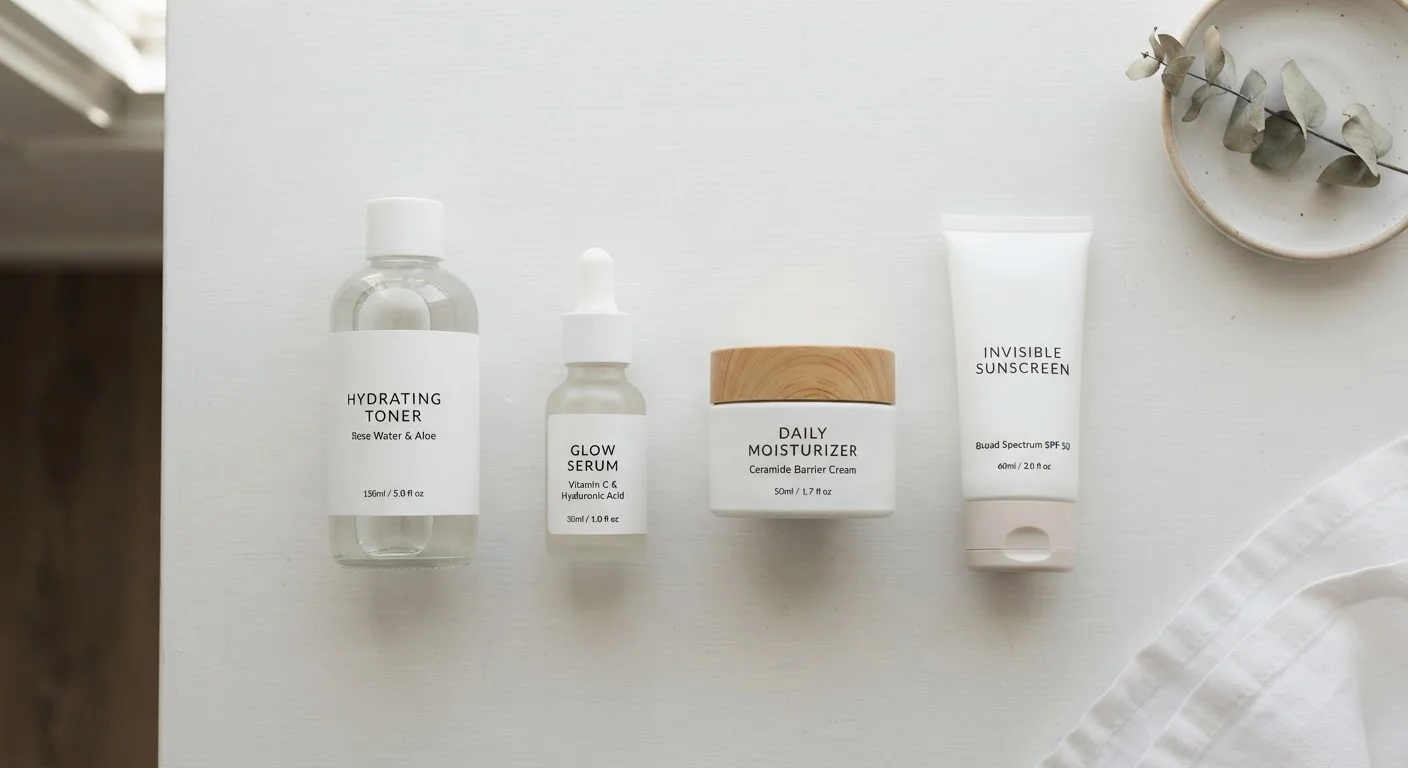
Most routines follow the same general framework regardless of how many steps are involved:
- Cleanser - Always the starting point. Removes surface debris, excess oil, and previous product residue so that everything applied afterward has a clean surface to work with.
- Toner or essence - Lightweight, water-rich steps that prep and hydrate skin. Apply immediately after cleansing while skin is still slightly damp if the formula is hydrating.
- Targeted serums and treatments - These carry the highest concentration of active ingredients. Apply in order of consistency: watery serums first, then gel-textured ones.
- Eye cream - Optional but placed before moisturizer if used. The eye area is thinner and more sensitive; applying it before a heavier face cream prevents the cream from blocking absorption.
- Moisturizer - Locks in the layers beneath and provides a supportive barrier. Even oily skin benefits from a lightweight moisturizer.
- Facial oil (if used) - Goes on after moisturizer, not before. Oils are occlusive and work as a final seal.
- Sunscreen (AM only) - The last step every morning, without exception. Sunscreen must sit on the outermost layer of skin to function correctly.
Always cleanse before any other product, morning and evening.
Residue from sweat, pollution, and previous products sits on the skin's surface and physically blocks absorption. Starting on a clean surface means every subsequent step is more effective.
Wait 30-60 seconds between steps rather than layering immediately.
Each product needs a moment to begin absorbing before it's covered by the next. Rushing layers can cause pilling - that flaky residue that appears when products haven't had time to settle.
Apply sunscreen as the absolute final step in your morning routine.
Sunscreen is a protective shield that must sit on the outermost layer to intercept UV radiation. Anything applied on top - including makeup - reduces its effectiveness.
Use only one strong active per step, not several layered together.
Layering multiple high-concentration actives in quick succession can overwhelm the skin's barrier and cause redness or sensitivity without delivering better results than a single well-chosen product.
Adjust the sequence for your skin's texture signals, not just the label.
"Serum" on a label doesn't always mean the formula is thin. Some serums are gel-thick, and some toners are richer than lightweight serums. Use your fingers to judge viscosity and layer accordingly.
Handling Active Ingredients Without the Conflict
Active ingredients - vitamin C, retinol, AHAs, BHAs, niacinamide - are where most layering confusion happens. The relevant questions are: which step do they belong in, and which ones can share a routine?
Most actives come in serum form, so they slot into step three above. What matters more is when you use them. Vitamin C is best applied in the morning, since it pairs well with sunscreen's protective role. Retinol and most exfoliating acids are typically evening-only - they can increase photosensitivity, and skin repair cycles are more active overnight.
Layering two strong actives in the same step is rarely a good idea. If you're using both a vitamin C serum and a niacinamide product, apply them in separate steps with a brief pause between. For a deeper look at which ingredients play well together - and which combinations to sidestep - skincare ingredient compatibility is worth reading before building a multi-active routine.
pH Matters for Some Actives
Exfoliating acids (AHAs and BHAs) work most effectively at a lower pH - typically between 3 and 4. Applying a higher-pH product immediately afterward can raise the pH before the acid has finished working. If you use a pH-sensitive active, consider applying it first and waiting a few minutes before continuing with other steps. This level of detail is most relevant for dedicated exfoliant formulas, not for typical hydrating serums.
Getting Your Routine to the Right Length
More steps don't equal better results. A carefully ordered three-step routine consistently outperforms a haphazardly applied ten-step one. Consistency beats intensity - what matters most is that the products you use are applied correctly and regularly, not that you use many of them.
If you're building from the ground up or reconsidering a bloated routine, Starting a Skincare Routine From Scratch walks through the essentials without the overwhelm. And if you're weighing a minimal versus multi-step approach more broadly, Skincare Minimalism vs. Multi-Step Routines lays out both honestly.
This article is for general informational purposes only and does not constitute medical or dermatological advice. If you have a skin condition or persistent skin concerns, consult a qualified dermatologist or healthcare professional.