
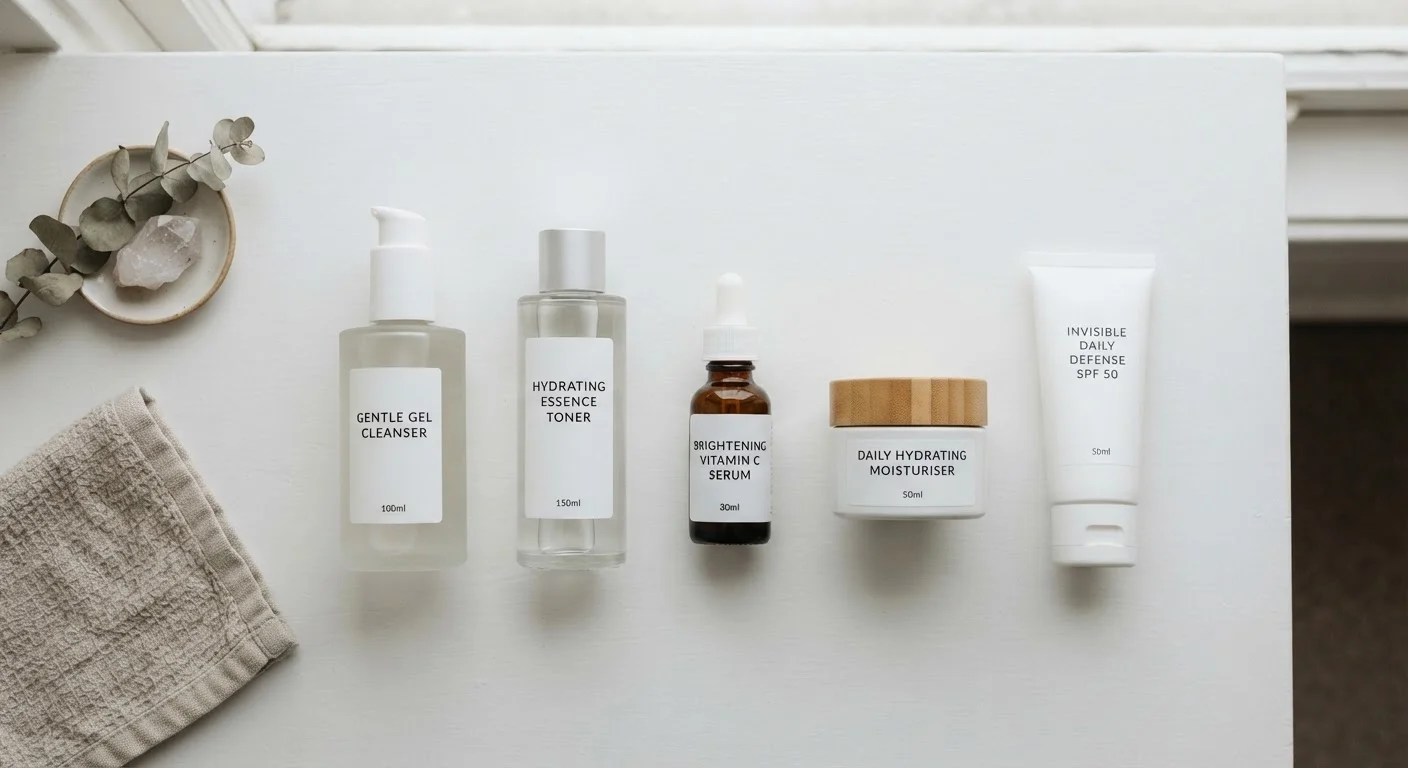
Step One: Cleanser - The Foundation of Every Routine
Cleansing removes surface-level debris: excess oil, dead skin cells, residual makeup, sunscreen, and environmental particles that accumulate during the day. A cleanser prepares the skin to absorb everything applied afterward - skipping or rushing this step means subsequent products are working on a compromised surface.
Cleansers vary in texture (gel, foam, cream, balm, oil) and strength. Gel and foam formulas tend to suit oilier skin types; cream and balm formulas work well for drier or more sensitive skin. The goal isn't stripping - a cleanser that leaves skin feeling tight has likely over-removed the natural oils your skin barrier needs.
Most dermatologists recommend cleansing once in the morning and once at night. Double cleansing at night - first an oil-based cleanser to dissolve sunscreen and makeup, then a water-based cleanser - is a popular approach for thorough removal without abrasion.
Gentle Cleansing Protects Your Skin Barrier
Look for cleansers described as "pH-balanced" or "gentle" - these terms indicate formulas designed to clean without disrupting the skin's natural acid mantle. Avoid scrubbing vigorously or using very hot water, both of which can cause unnecessary irritation over time.
Step Two: Toner and Essence - Optional but Functional
Toners have a complicated reputation because the category has evolved significantly. Older formulations were often high in alcohol, designed to "strip" excess oil. Contemporary toners tend to be hydrating, pH-balancing, or lightly exfoliating - a more targeted tool depending on what your skin needs.
A toner can help restore the skin's natural pH after cleansing, prep the skin to absorb serums more readily, or deliver a first layer of hydration before heavier products. Essences - popular in Korean skincare - sit in similar territory: lightweight, watery, and focused on hydration and skin texture over time.
Neither toner nor essence is a mandatory step. They're most useful when addressing a specific concern - dullness, mild congestion, or dehydration - rather than as a default addition to every routine. Understanding layering logic helps you decide whether a toner earns its place in your sequence.
Step Three: Serum - Where Targeted Treatment Happens
Serums are the workhorses of a skincare routine. They carry high concentrations of active ingredients in a lightweight base that's designed to penetrate beyond the surface. Common active ingredients include vitamin C (antioxidant, brightening), hyaluronic acid (hydration), niacinamide (barrier support, pore appearance), and retinoids (cell turnover, available in both OTC and prescription strengths).
Because serums are potent and targeted, it's worth introducing one at a time so you can observe how your skin responds. Some combinations of actives - like retinoids and exfoliating acids - can cause irritation when layered together. A practical guide to ingredient pairings to use and avoid can help you build an effective, irritation-free stack.
90%
Of visible skin ageing attributed to UV exposure
Estimates from dermatology research broadly attribute the majority of photoageing - including fine lines, dark spots, and texture changes - to cumulative sun exposure over time.
2x
Absorption improvement with correct layering order
Applying lightweight serums before heavier creams is consistently recommended by cosmetic chemists to maximise ingredient penetration into the skin.
Apply serum after toning and before moisturiser. Most serums are water-based, so they sit beneath oil-based or cream products in the layering sequence.
Step Four: Moisturiser and SPF - Seal and Protect
Moisturisers serve two core functions: they deliver hydrating ingredients (humectants like glycerin draw water into the skin) and they create a partial seal that slows moisture loss throughout the day. A moisturiser isn't just for dry skin - even oily skin benefits from a lightweight, non-comedogenic formula that supports the skin barrier.
In the morning, SPF (sun protection factor) is the final and arguably most important step. Broad-spectrum sunscreen protects against both UVA and UVB radiation, which are linked to premature skin ageing and increased skin cancer risk. Most dermatologists recommend SPF 30 or higher as a daily minimum, regardless of weather or skin tone.
The case for consistency over complexity is especially relevant here: applying SPF every morning - even imperfectly - delivers far more long-term benefit than occasional high-effort routines.
SPF Is Not Optional in Daytime Routines
Sunscreen should be the last step of your morning routine, applied after moisturiser and before any makeup. Many moisturisers contain added SPF, but these are generally considered insufficient as your sole sun protection - a dedicated sunscreen product is the more reliable choice for consistent coverage.
This article is for general informational purposes only and does not constitute medical or dermatological advice. If you have specific skin concerns, conditions, or sensitivities, consult a qualified dermatologist or healthcare professional.