
How Each Method Actually Works
Exfoliation is the process of removing dead cells from the skin's outermost layer. Both physical and chemical methods accomplish this, but through completely different mechanisms - and understanding that difference is the starting point for choosing wisely.
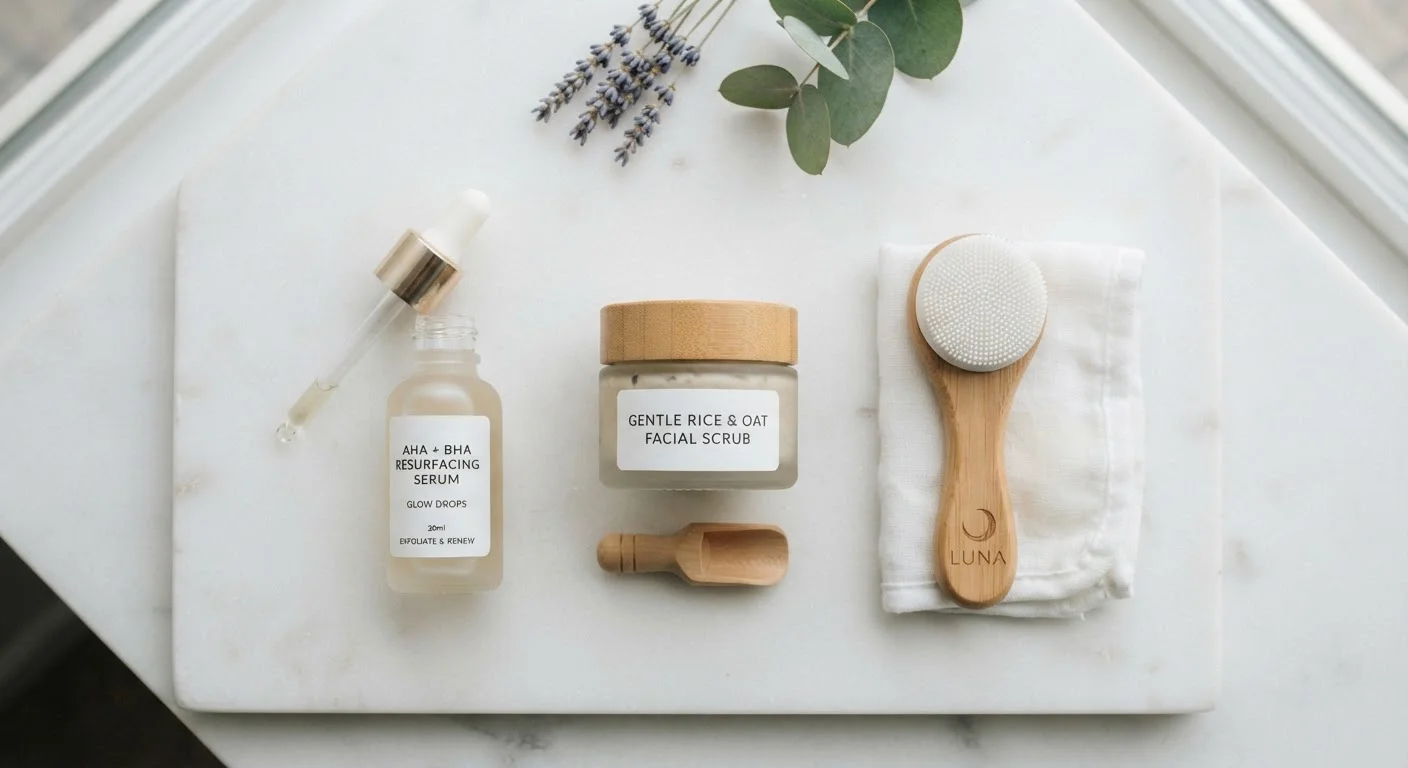
Physical exfoliation relies on friction. Granular scrubs, facial brushes, or textured cloths physically dislodge dead cells from the surface. The result is often immediate: skin can feel smoother right after use. The trade-off is that uneven pressure or coarse particles can cause micro-abrasions, particularly on thinner or more reactive skin. Rounded, uniform particles (such as those derived from jojoba wax) are generally considered gentler than irregular ones like crushed walnut shells.
Chemical exfoliation uses active compounds - primarily alpha-hydroxy acids (AHAs), beta-hydroxy acids (BHAs), or enzymes - to break the bonds that hold dead cells to the skin's surface. AHAs such as glycolic and lactic acid work mainly at the surface and are water-soluble. BHAs like salicylic acid are oil-soluble and can penetrate into the pore lining. Enzymes, often sourced from fruits like papaya or pineapple, offer a milder alternative to acids. None of these require rubbing, which makes them more uniformly distributed across the skin.
For a broader look at where exfoliation sits in your overall routine, see The Anatomy of a Skincare Routine.
| Criterion | Physical Exfoliation | Chemical Exfoliation |
|---|---|---|
| Mechanism | Friction removes surface cells | Acids/enzymes dissolve cell bonds |
| Depth of action | Surface only | Surface and inside pores (BHAs) |
| Best skin types | Normal to oily | Dry, sensitive, acne-prone |
| Irritation risk | Higher with coarse particles | Lower when concentration is appropriate |
| Ease of use | Straightforward, no formula knowledge needed | Requires some understanding of acids/pH |
| Results timeline | Immediate surface smoothness | Gradual, builds over weeks |
| Suitable for active breakouts | Generally not recommended | BHAs are widely cited as appropriate |
Matching the Method to Your Skin Type
Skin type is arguably the most practical lens for this decision. Here's a straightforward breakdown:
- Oily or combination skin: Physical exfoliants can manage surface buildup effectively, but BHAs are often considered the stronger option because they clear inside the pore - where oil and dead cells combine to cause congestion.
- Dry skin: Physical scrubs can disrupt an already compromised moisture barrier. Lactic acid - an AHA with mild humectant properties - is frequently recommended as a gentler starting point.
- Sensitive or reactive skin: Both methods carry risk, but chemical exfoliants with lower concentrations and enzyme-based formulas tend to create fewer issues than abrasive particles. Patch testing is advisable regardless.
- Acne-prone skin: Aggressive scrubbing can spread bacteria and inflame active breakouts. Salicylic acid (a BHA) is widely cited by dermatologists as better suited for acne-prone skin.
- Mature skin: Skin tends to thin and lose resilience over time, making harsh physical friction less appropriate. AHAs are often highlighted for supporting cell turnover in mature skin.
This article is for general informational purposes and does not constitute medical or dermatological advice. Consult a qualified dermatologist for personalised guidance, especially if you have a skin condition or are managing a specific concern.
A Note on Patch Testing
Before introducing any new exfoliant - physical or chemical - it's worth patch testing on a small area of skin for 24-48 hours. This is especially relevant for chemical exfoliants with active acid concentrations. If you have a diagnosed skin condition such as rosacea, eczema, or psoriasis, consult a dermatologist before adding exfoliation to your routine.
Frequency, Combination, and Common Mistakes
Regardless of which method you choose, over-exfoliation is one of the most common skincare mistakes. Signs include persistent redness, stinging, tightness, or a sudden increase in breakouts - all indicators that the skin barrier has been disrupted. Most dermatologists suggest starting with once or twice a week for either method and adjusting based on how your skin responds.
Using both methods in the same routine is generally discouraged. Layering a physical scrub with a chemical exfoliant on the same day stacks irritation risk without proportionate benefit. If you want to use both, alternating them on different days is a more measured approach - and even then, your skin should feel comfortable, not raw.
Consistency matters more than intensity in any exfoliation habit. A moderate routine maintained over weeks will generally outperform aggressive use that forces a rest period. And if you're building a routine from scratch, starting with the basics before adding exfoliation is a practical approach.
1-2×
Recommended exfoliation frequency per week
Dermatologists commonly recommend beginning with once or twice weekly to avoid disrupting the skin barrier.
~28 days
Natural skin cell turnover cycle in young adults
The skin's natural desquamation cycle slows with age, which is one reason exfoliation is more frequently discussed for mature skin.
Finally, exfoliation needs change with the seasons. Skin tends to be drier in winter and more resilient in summer, which may call for switching methods or adjusting frequency. For more on that, see How Seasonal Changes Affect Your Skin Routine. And if you're weighing how exfoliation fits into a broader approach, Skincare Minimalism vs. Multi-Step Routines offers a useful framing.