
Signal Words and Hazard Symbols
The most consequential words on any household product label are often the smallest: Danger, Warning, and Caution. These aren't marketing language - they're standardized signal words regulated by the Consumer Product Safety Commission (CPSC) under the Federal Hazardous Substances Act. Danger indicates the highest level of hazard (including products that are highly toxic, corrosive, or extremely flammable). Warning sits in the middle, and Caution represents the lowest regulated hazard tier.
Alongside these words, look for pictograms: a flame icon signals flammability, a skull and crossbones means acute toxicity, and an exclamation mark typically indicates skin or eye irritation potential. These symbols follow the Globally Harmonized System (GHS), an international framework that standardizes hazard communication across chemicals.
First-aid instructions on hazard labels are required content, not filler - they're formulated based on the specific risks of that product. Read them before you need them, not after an incident.
Green, Natural, and Eco Claims - What They Do and Don't Mean
Terms like natural, non-toxic, eco-friendly, and green appear on a wide range of household products. The problem: most of them are not legally defined for household cleaners in the US. A manufacturer can label a product 'natural' without any third-party verification.
Biodegradable is similarly unregulated as a standalone claim - it doesn't specify how quickly or under what conditions a substance breaks down. Compare that to certified programs like the EPA Safer Choice label or UL ECOLOGO, which require documented ingredient review by a recognized body. If environmental impact matters to you, looking for one of these third-party marks is more informative than relying on adjectives alone.
The word fragrance (or parfum) on an ingredient list is itself a category, not a single ingredient. Due to trade secret protections, manufacturers are not required to disclose the individual chemicals that make up a fragrance blend on household product labels - though some brands voluntarily do so. If you have sensitivities, fragrance-free (meaning no added scent compounds) is a more precise term than unscented, which may still contain masking fragrances.
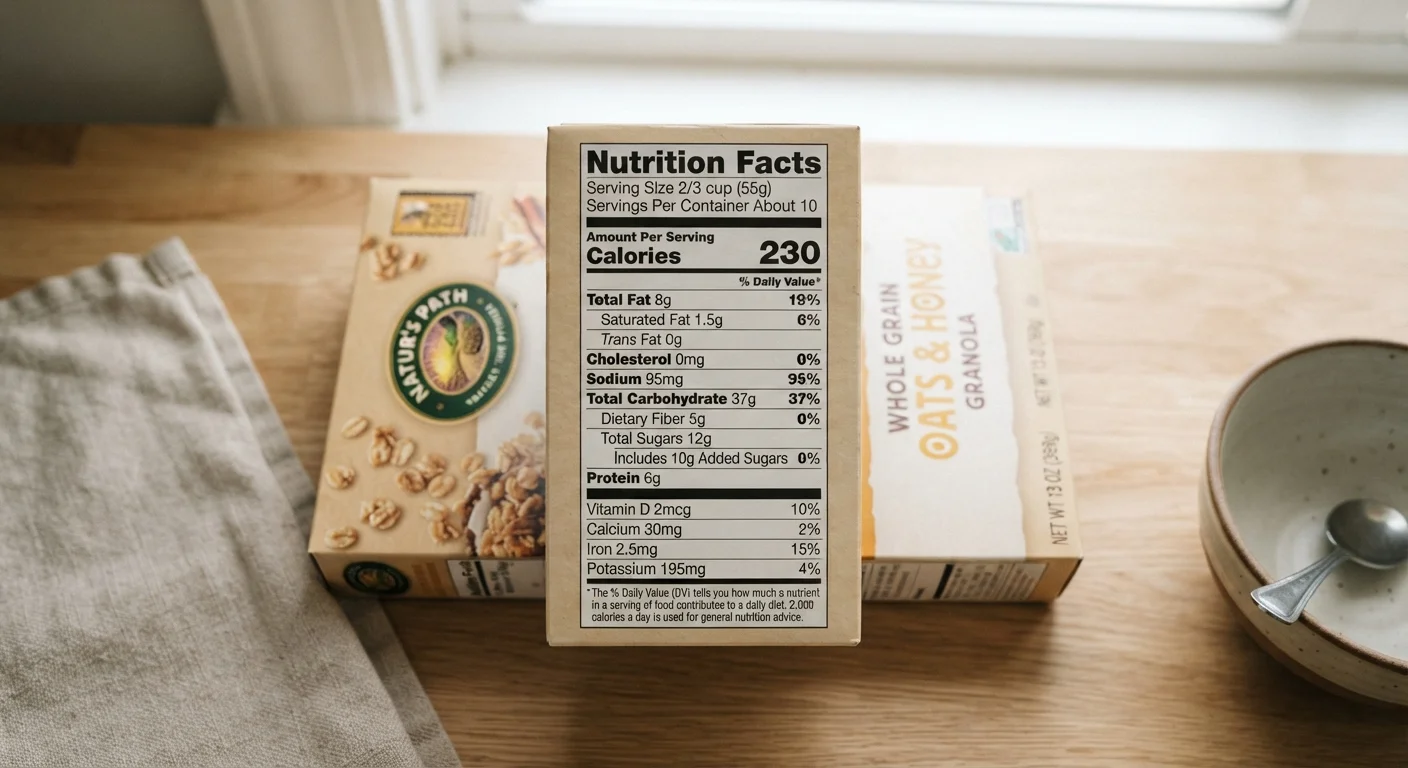
For a parallel look at how label literacy applies elsewhere in your home, see the tradeoffs of labeling systems in your home - and for food packaging, nutrition label decoding covers the same skill applied to what you eat.
Fabric Care Symbols and Cleaning Instructions
Clothing and textile care labels use a set of standardized symbols governed by the ASTM D5489 standard in the US. A wash tub icon with dots indicates water temperature: one dot means cool (around 86°F / 30°C), two dots mean warm (104°F / 40°C), and so on up to five dots for hot. A hand in the tub means hand wash only; an X through the tub means do not wash in water at all.
The triangle symbol relates to bleaching: an empty triangle means any bleach is acceptable, two diagonal lines inside the triangle mean only non-chlorine bleach, and an X means do not bleach. A square with a circle inside represents tumble drying, with dots again indicating heat level. An X through it means lay flat or hang to dry.
On cleaning product bottles themselves, instructions like 'dilute before use' or 'do not mix with bleach' are safety-critical, not suggestions. Mixing bleach with ammonia-based cleaners, for example, produces chloramine vapors - a known respiratory hazard. Always read the full directions panel, not just the front label.
Understanding symbols in everyday contexts is a recurring challenge - whether it's decoding your car's dashboard warning lights or parsing the icons on a detergent bottle. The same habit of looking them up rather than guessing applies in both situations.