
Why Minimum Payments Exist-and Who Benefits
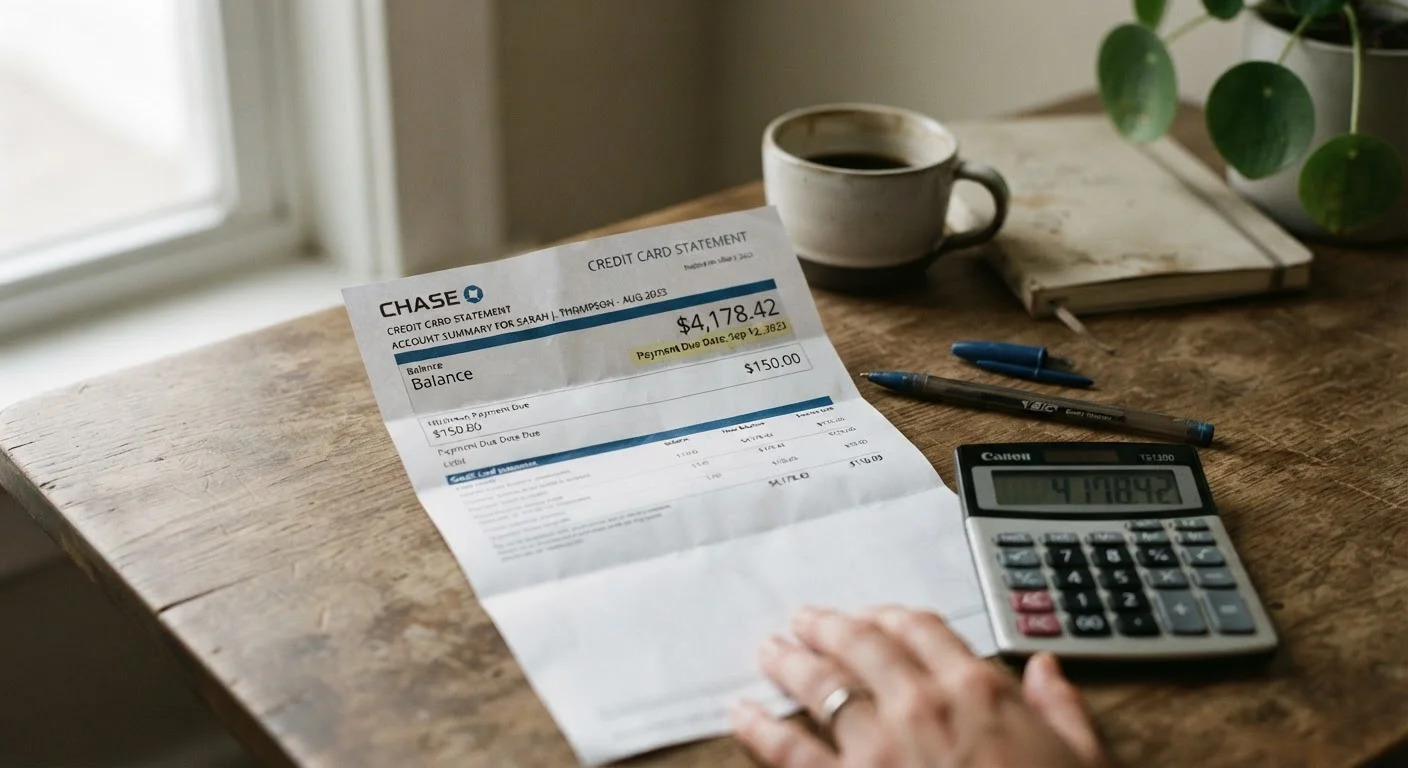
Every credit card statement lists a minimum payment due. It looks reassuringly small-sometimes as little as $25 on a $1,000 balance-and paying it on time keeps your account in good standing. But that low number is not designed with your financial wellbeing in mind. It is designed to keep you in the credit relationship as long as possible.
Credit card issuers earn revenue primarily from interest. The longer a balance remains unpaid, the more interest accumulates. A low minimum payment slows the pace at which you reduce principal, which means the issuer collects more over the life of the debt. That is not a criticism-it is just the business model. Knowing it puts you in a better position to push back against it.
This Is General Financial Education
The examples and figures in this article are illustrative and based on typical market conditions-they are not predictions of what you will pay or save. Interest rates, minimum payment formulas, and payoff timelines vary by card issuer and individual balance. For advice specific to your situation, consult a licensed financial professional.
This article provides general financial education and is not personalized financial advice. If you are managing significant debt or complex financial circumstances, consider speaking with a licensed financial counselor or advisor.
The Math Behind the Minimum
The numbers tell a clear story. Consider a $3,000 credit card balance at an 20% annual percentage rate (APR)-roughly in line with average card rates in recent years. If you pay only the minimum each month (calculated here as 2% of the balance, with a $25 floor), paying off that balance entirely could take well over a decade. Along the way, you would pay hundreds-potentially over a thousand dollars-in interest alone, on top of the original $3,000.
The reason is straightforward: when your minimum is a percentage of the balance, it shrinks as your balance shrinks. That means the pace of repayment slows just as you feel like you are making progress. Early payments are heavily weighted toward interest; only a fraction chips away at principal.
20%+
Average credit card APR in recent years
The Federal Reserve tracks average credit card interest rates; rates above 20% have become common on accounts assessed interest.
10+ years
Typical payoff time on minimum payments alone
On a mid-sized balance at a typical card APR, paying only the minimum can extend repayment well beyond a decade according to standard amortization calculations.
Since 2010
Required minimum payment warning on statements
The Credit CARD Act of 2009 mandated that issuers disclose payoff timelines and total cost of minimum-only payments on every monthly statement.
By contrast, paying a fixed amount each month-say $100 instead of a shrinking minimum-keeps your repayment pace steady and cuts both time and total interest dramatically. The difference between a shrinking minimum and a consistent fixed payment is one of the most consequential choices you can make with revolving debt.
What 'Just Enough' Actually Costs Over Time
It can be hard to feel the cost of minimum payments because the damage is invisible in the short term. Your account stays current. No late fees appear. There is no immediate consequence. The cost accumulates silently in the background, month after month.
One useful way to make it tangible: your card statement is legally required to include a minimum payment warning showing how long it will take to pay off your balance at the minimum rate, and how much you would pay in total. Federal law has required this disclosure since 2010. If you have not looked at that section of your statement before, it is worth finding-it tends to be clarifying.
This slow-burn cost connects to a broader pattern. Everyday financial habits that seem harmless in isolation-like consistently paying the minimum-can compound into years of delayed financial progress. The goal is not guilt; it is awareness.
Practical Ways to Pay More Without Upending Your Budget
You do not need to make dramatic sacrifices to improve on minimum payments. Even a modest fixed increase-paying $20 or $30 more than the minimum each month-shortens your timeline meaningfully. The key is consistency.
A few approaches that work for a range of budgets:
- Fix your payment amount. Instead of paying whatever the minimum is that month, choose a fixed dollar amount above the minimum and treat it like a recurring bill.
- Apply windfalls strategically. Tax refunds, bonuses, or unexpected income can make a significant dent when applied directly to the principal balance.
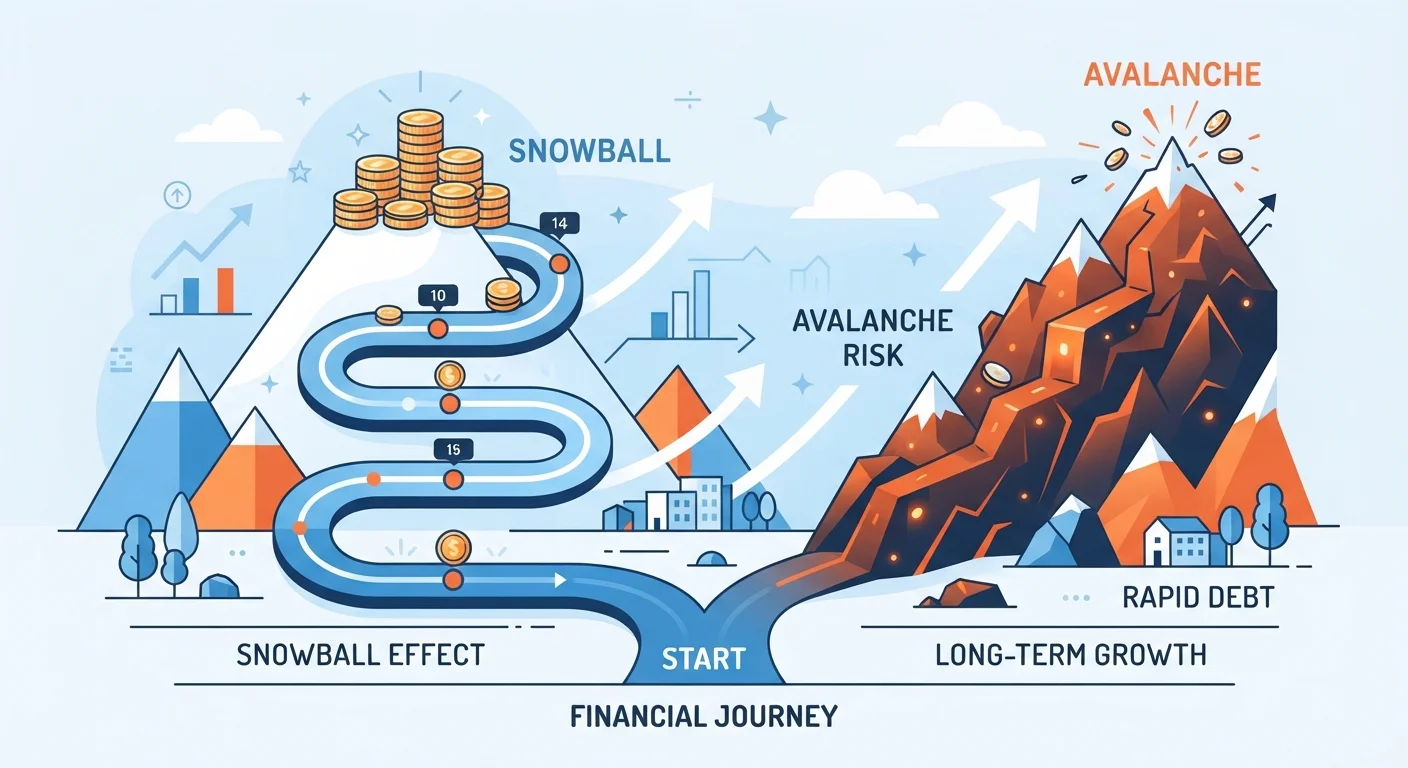
- Use a repayment strategy. Structured methods like the debt avalanche (highest-interest-first) or debt snowball (smallest-balance-first) give your extra payments a clear target. See how these two approaches differ to find what fits your habits.
- Automate where possible. Setting up automatic payments above the minimum removes the decision from your monthly routine. Automating payments can support steady progress without constant attention.
Check Your Statement's Minimum Payment Warning
Federal law requires credit card issuers to print a disclosure on each statement showing how long it will take to pay off your balance paying only the minimum, and how much you will pay in total. Finding and reading that box on your own statement is one of the most useful five minutes you can spend on your finances.
If you are feeling overwhelmed, managing the emotional side of debt repayment is a genuine part of the process-not a distraction from it.
Before You Accelerate: Getting the Sequence Right
Paying more than the minimum is almost always a net positive for high-interest debt. But it helps to check a few things before redirecting large sums toward debt payoff. Do you have a small cash cushion for unexpected expenses? Is your income stable enough to sustain a higher payment? These questions are not reasons to delay indefinitely-they are a way to make sure your plan is durable.
A readiness checklist before accelerating debt repayment can help you sequence your moves so you do not create new financial stress while solving an existing one.
The core insight here is not complicated: minimum payments are a floor, not a strategy. Treating them as a temporary safety net-rather than a default-puts you in a fundamentally different financial position over time.
This article is for general informational and educational purposes only and does not constitute personalized financial, tax, or legal advice. Consult a qualified financial professional for guidance specific to your situation.